Facebook ads analytics: How to track and improve your performance
Aug 20, 202617 minutes

Written by
Saif AliUpdated
A Facebook marketing strategy is a documented plan that defines who you are trying to reach, what content you will publish, how you will distribute it, and how you will measure whether any of it is working.
It includes both organic activities such as page posts, Reels, and Groups, as well as paid activities through Meta Ads Manager. In 2026, neither will be fully effective without the other.
The businesses winning on Facebook are not the ones posting most often. They are the ones with a clear audience model, a content system built for the current algorithm, and a Facebook scheduler with an insights framework that ties activity to real business outcomes.
Let’s cover every layer of that system, in the order you need to build it.
The easiest way to manage and grow your social channels.
Facebook marketing means using Facebook’s business tools to promote your brand, build relationships, and drive measurable outcomes. It combines your Facebook Business Page, Meta Ads Manager, Groups, Shops, and Messenger into one connected system that supports both organic and paid activity.
A strong Facebook marketing strategy simply organizes all of that around clear business goals, defined budgets, and trackable metrics that your leadership team understands.
At the organic level, Facebook marketing covers everything you publish without direct media spend. That includes posts on your Page, Stories, Reels, Lives, and content inside Groups you run. It also includes how you manage comments, reviews, and private messages.
On the paid side, Facebook marketing relies on Meta’s ad platform. You use Meta Ads Manager to create campaigns that reach specific audiences, drive traffic, collect leads, promote events, or sell products directly. Ads run across Facebook, Instagram, Messenger, and the Audience Network, so one campaign can follow the same person from their Facebook feed to Instagram Stories and back to a mobile site.
Facebook still matters in 2026 because it remains the largest social network on earth, with 3.07 billion monthly active users and the widest business-buyer overlap of any platform. Despite the assumption that people are leaving, the data shows the opposite.
Facebook’s user base is also remarkably broad across interests and professions. People follow sports, local news, hobbies, and business topics. They join Groups for parenting, home improvement, professional networking, investing, and more.
That variety makes Facebook relevant whether you sell skincare, accounting services, software, or industrial equipment, because your buyers almost certainly spend time on the platform in one context or another.
For companies, Facebook also acts as a type of public storefront. People check business hours, read reviews, browse photos, and send quick questions through Messenger before they ever visit a website. Skipping Facebook in your social plan often means leaving both audience and revenue untouched.
Even if your brand finds success on channels such as TikTok or LinkedIn, Facebook typically remains one of the most efficient places to combine scale, targeting, and conversion-focused features under one roof.
No other single platform gives you that addressable market at comparable cost.
Facebook vs. Other platforms in 2026:

| Business Type | Facebook’s Primary Value |
| B2C brands | Largest consumer audience + granular ad targeting |
| B2B businesses | Community building (Groups), retargeting, decision-maker nurturing |
| Local/small businesses | Dominant discovery and review platform, especially for 35+ audiences |
| E-commerce | Dynamic product ads, catalog retargeting, Facebook Shops |
The Facebook algorithm in 2026 ranks content in four stages: it gathers eligible posts (inventory), scores each with hundreds of signals, predicts how likely you are to engage, and produces a final relevance score. The biggest shift is unconnected reach: it now shows you posts from accounts you don’t follow, based purely on predicted interest
Meta describes its feed ranking system as a four-stage process. Each stage filters and scores content before it reaches a user’s screen.
| Stage | What It Does |
| Inventory | Assembles the total pool of content eligible to appear in a user’s feed posts from friends, followed by Pages, Groups, and increasingly, content from accounts they do not follow |
| Signals | Evaluates each post using hundreds of inputs: content type, early engagement, publisher history, and passive signals like how long a user paused while scrolling |
| Predictions | Estimates the probability that a specific user will engage meaningfully with a specific post |
| Relevance Score | Produces a final ranking that determines placement and reach |
The most consequential change in recent years is how much weight the algorithm gives to unconnected reach content surfaced to users who do not follow the publisher. This is Meta’s direct response to TikTok’s interest graph, which serves content purely on predicted engagement regardless of social connection.
The practical implication for your strategy: your content no longer competes only against Pages your followers also follow. It competes against every post in the entire inventory pool.
That raises the floor for quality and originality considerably.
→ For a deeper breakdown of how these ranking signals interact, see our full guide on the Facebook algorithm.
Before any content strategy can work, the infrastructure needs to be correct. A poorly configured Page actively limits reach because the algorithm uses Page quality signals category accuracy, profile completeness, and response rate, as inputs in its ranking decisions.
Many small business owners run their business through a personal Profile. This violates Meta’s terms of service, and creates real practical problems that compound over time:
A Business Page unlocks the full Meta Business Suite ecosystem: Ads Manager, Instagram integration, and cross-platform analytics. If you are running your business on a Profile, migrating to a Page is the first fix.
| Element | What to Do |
| Page name | Match your actual business name exactly, no keyword stuffing (“Best Pizza Restaurant Chicago”). Meta penalizes this, and it looks untrustworthy to visitors. |
| Category | Choose the most accurate primary and secondary category. This affects which searches your Page appears in. |
| About/Description | Write clear, specific, keyword-relevant copy that tells both search algorithms and visitors exactly what you do and who you serve. |
| CTA button | Set it to match your primary conversion action (Book Now, Contact Us, Shop) and link it directly to the relevant destination, not your homepage. |
| Vanity URL | Claim facebook.com/yourbrandname. It improves branded search visibility and makes your Page easier to share. |
Connecting your Page to Meta Business Suite is a step many marketers skip and later regret. Business Suite is the central dashboard where you manage your Facebook Page and Instagram account together, access the unified inbox, view cross-platform analytics, and connect to Meta Ads Manager.
Set this up correctly from the start with your Page, Ad Account, Instagram, and Facebook Pixel all linked to a single Business Manager. Fragmented access from ad hoc setup is one of the most common and avoidable operational headaches in Facebook marketing.
→ For the full technical walkthrough, see our guide on how to create a Facebook business page.
Facebook content that performs best mixes eye‑catching visuals with clear value.
Here is the key point: variety helps both the algorithm and your audience. A smart Facebook marketing mix uses different formats for different goals, from quick Stories to long‑form video.
Below is a quick reference table you can keep handy.
| Content format | Best use case | Key specs or notes |
| Image post | Product highlights, behind the scenes, user photos | Use clear, high‑quality images, often around 1200 × 630 pixels for feed posts. |
| Video post | Tutorials, customer stories, brand explainers | Use MP4 or MOV files and hook viewers in the first 5–10 seconds. |
| Facebook Live | Launches, Q&A sessions, events | Live streams get priority in the feed and remain as videos after the broadcast. |
| Reels | Short vertical clips for reach and discovery | Shoot vertical video, use trends carefully, and keep clips snappy and fun. |
| Stories | Time‑sensitive updates, flash offers, casual moments | Stories sit above the main feed and vanish after 24 hours, which suits daily touchpoints. |
| Text post | Questions, quick updates, community prompts | Short, direct text can start conversations, especially in groups or niches. |
To keep your publishing plan simple, you might aim for a content mix such as:

This balance keeps your Page useful, not just promotional.
The most common reason Facebook strategies underperform is not poor content or insufficient budget. It is a vague audience definition.
“Adults who might be interested in our product” is not a target audience. It is an abdication of strategic thinking that the algorithm will punish by serving your content to people unlikely to engage with it, which suppresses your overall reach score.
A useful Facebook audience definition has three layers, and they apply whether you are running paid ads or relying on organic content alone.

Your fundamental demographic and psychographic profile. This includes:
Facebook Audience Insights (inside Meta Business Suite) lets you explore your existing followers against these dimensions.
Even if you are not running ads yet, spending an hour in Audience Insights will tell you whether the people currently engaging with you match your intended customer profile.
Audiences built from your own first-party data. These are the most powerful targeting lever on the platform for businesses with existing customer relationships.
You can build Custom Audiences from:
Meta builds these algorithmically by identifying Facebook users who share behavioral characteristics with your Custom Audience source.
A few things worth knowing:
The quality of the output depends entirely on the quality of the source.
Use the Pages to Watch feature in Facebook Insights to monitor 5–10 competitor Pages. Track which of their posts generate the highest engagement. This is not a plagiarism exercise.
It is audience research. High-engagement competitor content reveals what your shared audience responds to the fastest external signal you can get about content direction before you have enough of your own data to draw conclusions.
Marketers routinely confuse activity metrics with outcome metrics. Posting three times a week is an activity. Getting 500 people to click through to a product page is an outcome. A Facebook strategy needs both, but optimizing for activity at the expense of outcomes is one of the most costly mistakes on the platform.
SMART goals (Specific, Measurable, Attainable, Relevant, Time-bound) work because they force clarity about what success looks like. “Increase brand awareness” is not a goal. “Reach 50,000 unique users per month in the United States with our Page content by the end of Q3” is a goal.
Also Read: 11 Facebook analytics tools you need
| Goal Tier | What You’re Measuring | Primary Metrics |
| Awareness | Reaching people who have never seen your brand | Reach, Impressions, CPM, Brand Lift |
| Engagement | Deepening connection with people who know you | Reactions, Comments, Shares, Saves, Video view rate, ThruPlay rate |
| Traffic | Moving people from Facebook to your website | Link Clicks, CTR, Landing Page Views |
| Conversion | Driving specific downstream actions | Leads, Purchases, Cost Per Result, ROAS |
The algorithm weights engagement types in a specific hierarchy, and understanding this changes how you evaluate content performance.
A post with 10 shares from a 1,000-person reach is outperforming a post with 50 likes from the same reach, by the metrics that actually matter.
Conversion goals require the Facebook Pixel installed on your website and configured to fire on relevant events: Purchase, Lead, Add to Cart, Registration. Without it, Meta Ads Manager cannot track, attribute, or optimize for specific downstream actions.
Install it before you spend a dollar on conversion-objective advertising. The setup takes under an hour, and the cost of not having it is every conversion you cannot attribute or retarget from.
Before making major optimization decisions, run 90 days of consistent activity. That window gives you enough data to identify patterns which content themes perform, which days generate the most reach, and what your average CPM and CTR look like that are statistically meaningful rather than noise from individual posts.
Facebook Reels: The highest-leverage format in 2026

Meta has explicitly stated that short-form video is the fastest-growing content format across its platforms.
The algorithm’s treatment of Reels reflects this: they consistently reach more non-followers per post than any other format, and the recommendation engine surfaces them in dedicated Reels feeds, the main News Feed, and across Instagram if you cross-post.
Try Now: ContentStudio’s free Facebook post generator
When TikTok demonstrated that an interest-graph feed one that shows content based on predicted engagement rather than social connections could generate extraordinary time-on-platform, Meta rebuilt its recommendation system to compete. Reels is the primary vehicle for that rebuilt system on Facebook.
A high-performing Facebook Reel has four parts: a hook in the first two seconds that states the payoff, a fast value section that delivers on it, on-screen captions for silent viewing, and a single clear next step at the end.
For cold viewers, the hook does the heavy lifting; for warm viewers, the payoff and next step matter most.
Meta makes Instagram-to-Facebook cross-posting easy, and it extends distribution. Where possible, create Reels natively for Facebook, or remove Instagram-specific elements before cross-posting.
For production templates and format specifics, see our guide on Facebook Reels strategy for business.
Facebook Groups are widely acknowledged as powerful and consistently underutilized. The reason they work is directly algorithmic: content inside a Group reaches a far higher percentage of members than Page posts reach Page followers, because Group membership implies genuine interest that the algorithm treats as a strong engagement signal.
Approach 1: Build your own branded group
This is a longer-term investment, typically 6–18 months to develop genuine engagement depending on your existing audience size. But the returns compound in ways that Page growth does not.
A well-run branded Group:
The critical distinction between Groups that thrive and Groups that die: the content primarily serves members, not the brand. A Group built around a genuine shared interest or problem will grow through word of mouth and Facebook’s own Group recommendation engine.
A Group used mainly to push promotional posts will lose engagement within weeks and become effectively dead.
Approach 2: Participate in established groups
Lower investment, faster access to a pre-assembled audience of people interested in your topic area.
| Thrives | Stalls |
| Content primarily serves the members | Content primarily serves the brand |
| Consistent moderation maintaining discussion quality | Spam and promotional posts go unchecked |
| Genuine discussion actively encouraged | Posts feel like broadcast announcements |
| Clear, specific community focus | Scope too broad or too narrowly product-focused |
Linking your Page and Group in Meta Business Suite is straightforward and creates a stronger overall ecosystem. The Group appears on your Page, and vice versa, and new visitors see that your brand maintains an active community a trust signal worth having.
Facebook has its own internal search engine, and it is more consequential for business visibility than most marketers realize. When a user searches for a topic, business type, or keyword on Facebook, the results surface Pages, posts, and Groups.
Appearing in those results is a form of organic reach that operates entirely outside the News Feed algorithm.
The ranking signals for Facebook’s internal search are not fully documented by Meta, but the patterns across high-performing Pages are consistent.
| Location | Optimization Approach |
| Page name | Use your real business name, accurate category language, and no keyword stuffing |
| Category selection | Choose categories that reflect how customers search for you, not internal company jargon |
| About/Description | Write with the specific terms your customers use to describe what you do |
| Post captions | Consistent topical language across posts contributes to search indexing over time |
| Image alt text | Custom alt text is indexed — use descriptive, specific language for every image you publish |
The Page name is the strongest single signal. A Page called “Chicago Digital Marketing Agency” will rank more strongly for “digital marketing Chicago” searches than a Page called “Meridian Studio” with identical other signals.
This does not mean keyword-stuffing your name; Meta penalizes that, and it damages trust, but the language in your Page name and category selections should reflect how your target audience actually searches.
Also Read: A complete guide to Facebook SEO
The short answer: minimally, and only in specific contexts. Unlike Instagram or TikTok, Facebook hashtags generate minimal incremental reach in most categories.
The exception is very specific niche topics where dedicated hashtag browsing occurs, and in Reels where hashtags may influence content recommendation clustering.
Meta’s auto-generated alt text is serviceable but generic. Custom alt text added through the image editing interface when uploading affects both Facebook’s internal search indexing and accessibility for users relying on screen readers.
For every image you publish, write genuinely descriptive alt text. Not keyword-stuffed; descriptive and accurate. It compounds over time and takes under a minute per post.
A content calendar is the operational infrastructure that turns a Facebook strategy from a document into a consistent practice. Without one, content decisions get made reactively: “What can we post today?” which produces inconsistent quality, format imbalance, and missed opportunities to build thematic momentum over time.
The research-backed sweet spot for most business Pages is 4–5 posts per week, including at least 1–2 Reels or native videos. Consistency matters more than frequency.
A Page that posts four times every week without gaps will outperform a Page that posts seven times one week and disappears for two. Here is why: the algorithm scores accounts based on historical engagement.
A run of low-engagement posts actively suppresses the reach of subsequent posts. Showing up consistently, at a quality level you can sustain, is more valuable than bursts of activity followed by silence.
Avoid posting multiple times in a single day unless your Insights data specifically shows your audience is active throughout the day and engaging with each post.
General benchmarks to start with:
| Day | Peak Engagement Window |
| Monday | Mid-morning (9–11 am) |
| Tuesday | Mid-morning and early evening |
| Wednesday | Mid-morning — tends to be the strongest weekday overall |
| Thursday | Mid-morning and early evening |
| Friday | Morning only — engagement drops off after noon |
| Weekend | Variable; lower overall but works well for entertainment and lifestyle content |
These are starting points, not rules. Publish consistently for 60–90 days, then use Facebook Insights to identify when your specific audience is most active, and gradually shift your posting schedule toward those windows.
A 30-day planning cycle works well as the standard operating rhythm for most Pages.
Before you write a single ad, use the Meta Ads Library to see what your competitors are running and how they are positioning their creative. Organic content and paid advertising on Facebook are not separate strategies with separate budgets. They are two parts of a single system, and treating them as independent produces suboptimal results from both.
Your best-performing organic content tells you exactly what to put money behind. Your ads data tells you which audiences and messages to prioritize in organic content.
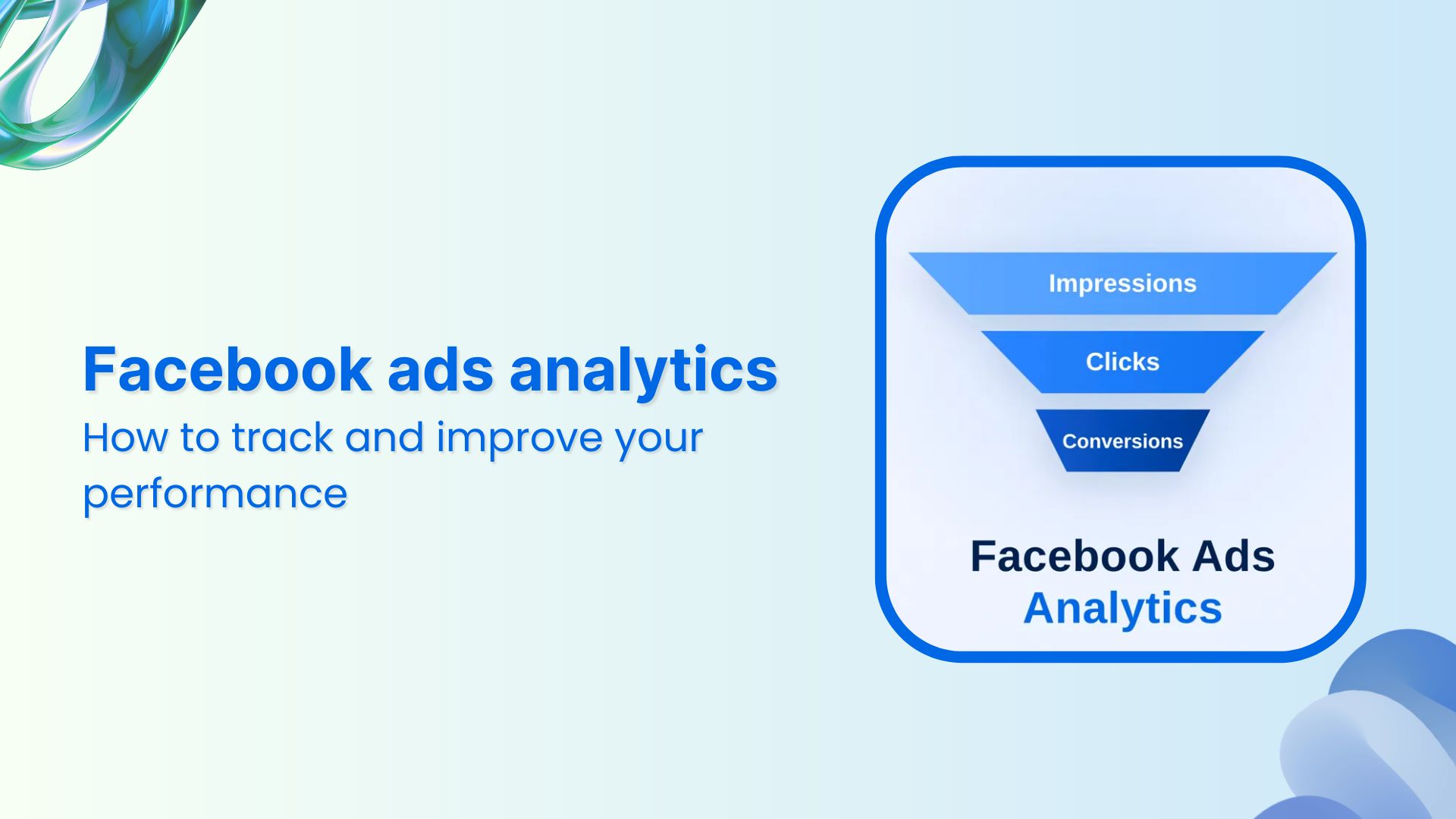
Facebook advertising works most efficiently when campaigns are structured around funnel stages, each with its own distinct objective, audience, and creative approach.
| Funnel Stage | Audience | Campaign Objective | Creative Approach |
| Top of Funnel (Awareness) | Cold: never heard of you | Reach or Brand Awareness | Scroll-stopping, brand-building Reels; self-contained and entertaining |
| Middle of Funnel (Consideration) | Warm: engaged with content or visited your site | Video Views, Engagement, Traffic | Testimonials, case studies, educational content that addresses objections |
| Bottom of Funnel (Conversion) | Hot: website visitors, email list, past engagers | Conversions | Direct-response: product carousels, limited-time offers, retargeting creative |
Top of funnel:
Middle of funnel:
Bottom of funnel:
The strategic framework throughout this guide applies universally. But its implementation looks meaningfully different depending on your business context. Generic advice that ignores these differences produces generic results.
Local businesses have one advantage larger brands cannot replicate: genuine local specificity.
Facebook remains the dominant social discovery platform for local services in most markets, and the algorithm gives preferential treatment to content generating strong local engagement signals.
Highest-ROI activities for local businesses:
Organic reach from a local fanbase that genuinely knows and likes your business often outperforms the organic reach of larger Pages with more passive, geographically dispersed followers.
B2B marketers need to manage expectations carefully about what Facebook can realistically deliver. Facebook is not LinkedIn; it will not consistently generate cold pipeline from decision-makers browsing professionally.
What it can do well for B2B:
| Tactic | Why It Works |
| Retargeting website visitors | Reaches people with demonstrated interest in your solution |
| Thought leadership content | Original founder perspectives and industry commentary build credibility in niche audiences |
| Lead generation ad forms | Users submit contact info without leaving Facebook; cost-effective for well-defined offers |
| Lookalike Audiences from customer lists | More precise than broad interest targeting for finding net-new B2B prospects |
E-commerce has access to some of the most powerful Facebook advertising features available on any platform.
Service businesses: consultants, agencies, coaches, therapists, professional service providers consistently underinvest in social proof content, which is the highest-return format category for this business type.
What works best:
A complete Facebook marketing setup blends Meta’s own tools with a few well‑chosen third‑party platforms. The aim is simple: you want to plan, publish, interact, and report without jumping between a dozen tabs all day.
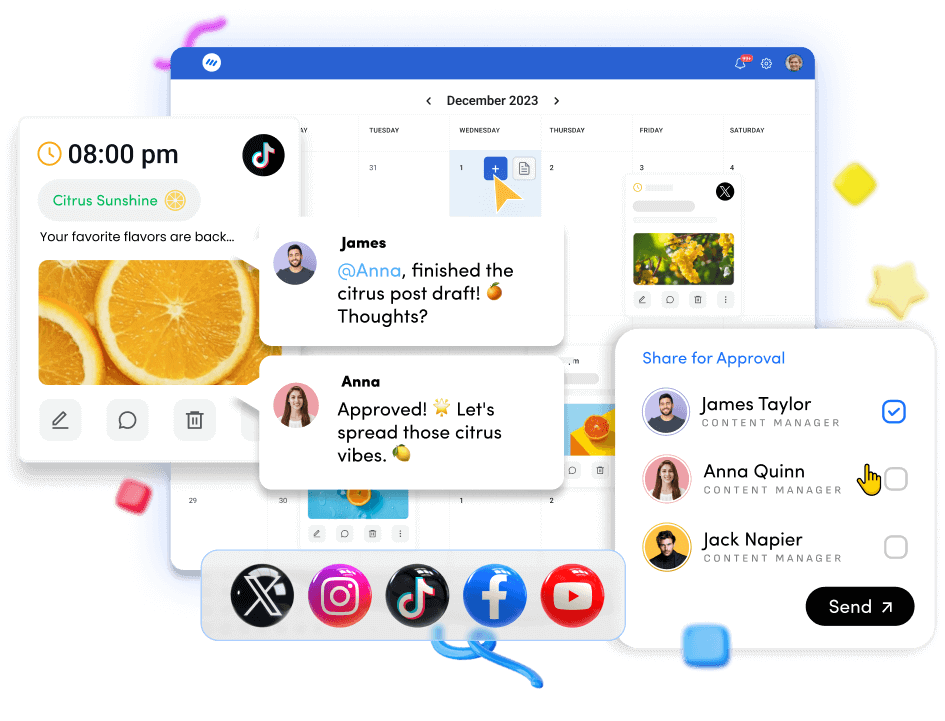
ContentStudio often sits at the center of this stack. It combines multi‑channel scheduling, AI content creation, analytics, competitor tracking, and a unified inbox.
Thousands of marketers use it worldwide, and it holds a strong average rating on Capterra and similar review sites. That track record matters when you trust one system with client accounts and brand pages.
You do not need every tool on day one. Start with your Page, Meta Business Suite, Ads Manager, and a platform like ContentStudio to tie planning and reporting together. Add extra tools only when a clear gap appears.
Strong Facebook marketing rests on a few clear pillars. You need a well‑set‑up Business Page, content formats that match your goals, a written strategy backed by a content calendar, smart use of paid campaigns, and reliable measurement so you can prove results.
With those pieces in place, Facebook stops feeling random and starts acting like a stable channel in your marketing mix.
ContentStudio helps hold these pieces together. It gives you one place to plan posts, use AI for ideas, schedule content across multiple pages, monitor interactions, and present clean reports to clients or leaders.
If you are ready to turn your Facebook marketing strategy into a consistent system, try ContentStudio’s 7‑day free trial with no credit card required and put these steps into action this month.
Facebook Marketing
Manage and grow your brand on Facebook. Create, schedule, and publish posts, videos, and Reels to Facebook pages and groups.
Get Started for FREE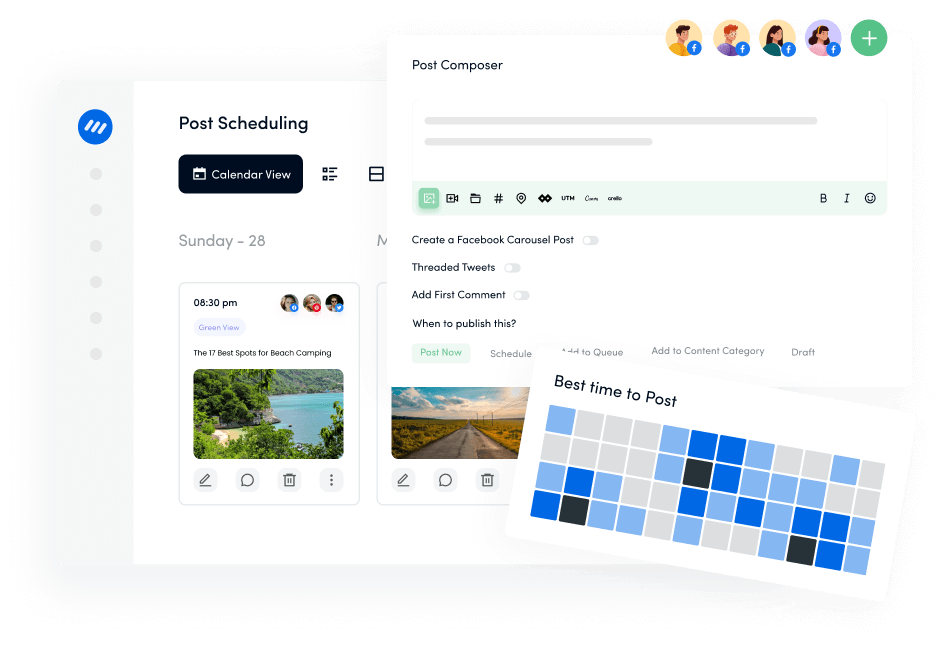
A Facebook marketing strategy is a documented plan defining your target audience, the content you will publish and in what formats, how you will distribute and amplify that content, how paid advertising fits in, and how you will measure results against specific goals.
The research-backed sweet spot is 4–5 posts per week, including at least 1–2 Reels or native videos. Consistency matters more than frequency: a Page posting four times every week without gaps outperforms one that posts seven times one week and disappears for the next two.
Ranked by organic reach potential: Reels (highest), native video, carousels, static images with strong copy, text and link posts (lowest). Reels offer the best opportunity to reach users who do not yet follow your Page. Carousels generate high save rates, a strong engagement signal.
The most effective levers:
Publish Reels consistently; the algorithm actively distributes them to non-followers
Prioritize content that generates comments and shares over passive likes
Maintain a consistent publishing cadence without gaps
Build a Facebook Group connected to your Page
Ensure content is original and natively produced; avoid watermarked cross-posts from other platforms
The more important question is not how much to spend initially, but how to allocate across funnel stages and how to measure whether each stage is generating a return. A reasonable starting split for most businesses new to Facebook ads is 30% awareness / 30% consideration / 40% conversion.
The Facebook Pixel is code installed on your website that tracks visitor behavior and connects it to Facebook user profiles. You need it for conversion-objective advertising, building retargeting audiences, and measuring downstream results from your Facebook traffic.
Define success at the goal level, not the activity level. Track five numbers monthly: Reach, Average Engagement Rate, Link Click CTR, Conversion metrics (Cost Per Result, ROAS), and Follower Growth Rate. Compare month-over-month and against your 90-day baseline.
A Group is a community space where members interact with each other and with content you publish. Pages have lower organic reach but broader public visibility. Groups have higher organic reach among their members but require a community-first approach they stall quickly when used primarily as broadcast channels.
For organic content: allow a minimum of 90 days of consistent, strategy-aligned publishing before drawing conclusions. Newer Pages and dormant accounts see lower reach initially; this improves as the algorithm accumulates positive engagement history.
The 3-3-3 rule is a community posting convention, not official Meta guidance: publish 3 posts a week, engage 3 times a day, and spend 3 minutes replying to each comment. At ContentStudio, we treat it as a floor, not a formula. The real driver is consistency plus genuine replies, which the algorithm rewards as engagement.
The 20% rule was Meta’s old limit blocking ad images with more than 20 percent text. Meta retired the hard rule, so your ad will still run. But the principle holds: image-heavy text still suppresses delivery and raises costs. Keep text minimal and let the visual carry the message, then put detail in the caption.
Plan 0 Days of Content in 0 Minutes
Create, schedule, publish and analyze your content across all your social media channels from one simple dashboard.
4.7 on Capterra • 16,500+ marketers trust ContentStudio
Saif Ali is a Content Marketing Strategist at ContentStudio with over five years of experience across SaaS, IT, and digital marketing. He specializes in SEO-led content, AI content creation, and social media strategy, and leads editorial review at ContentStudio, fact-checking and refining articles for accuracy, SEO, and a consistent brand voice.
View all posts by Saif AliRecommended for you
Facebook ads analytics: How to track and improve your performance
70 ChatGPT prompts for Facebook to drive reach and engagement
Facebook cover photo size: The complete 2026 guide
Ultimate guide to schedule Facebook posts, Reels & Stories