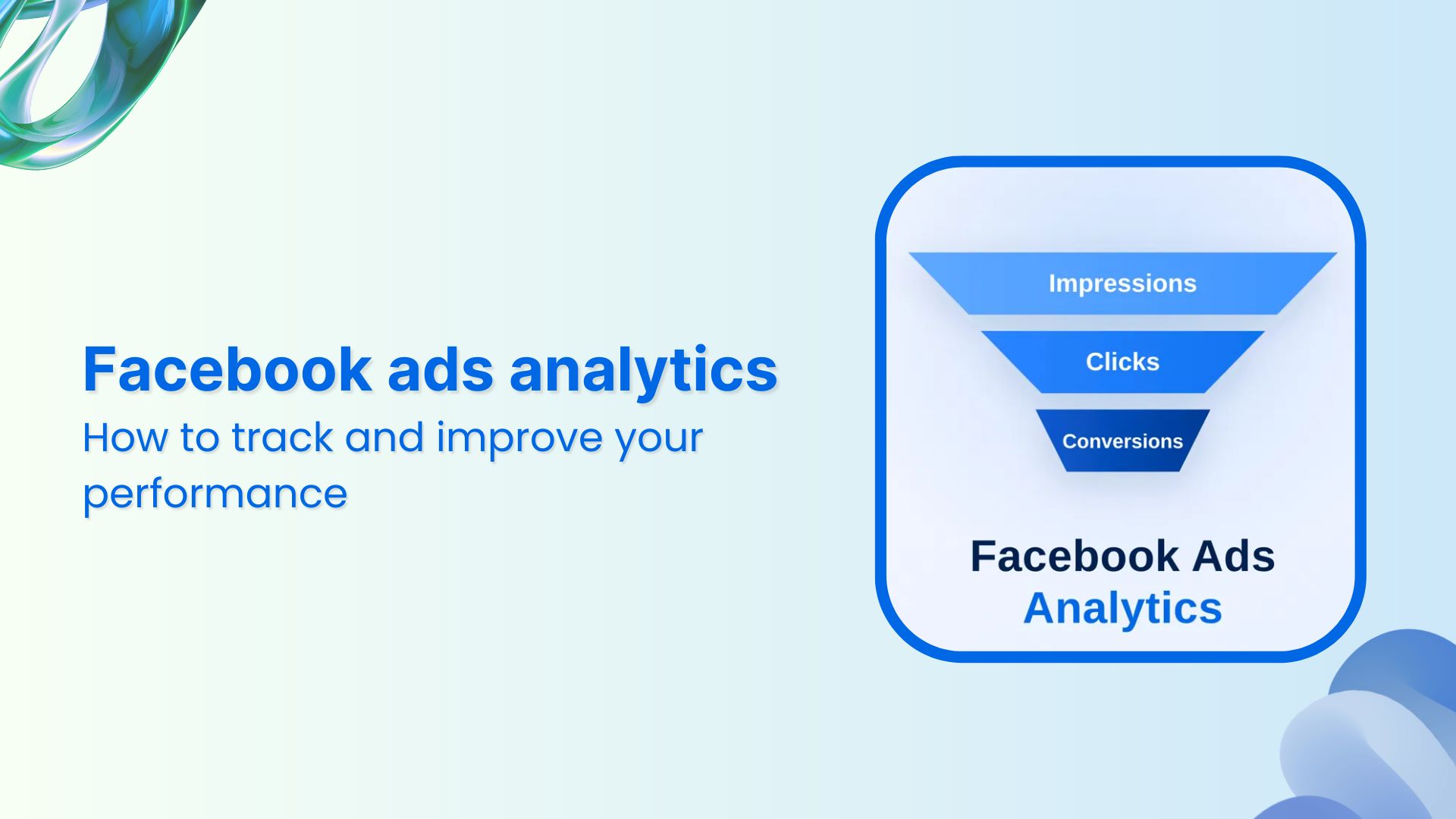
Facebook ads analytics: How to track and improve your performance
Aug 20, 202617 minutes

Written by
Hassaan KhanUpdated
![Facebook Event photo size guide [2026]](https://internal-blog.contentstudio.io/wp-content/uploads/2025/07/Facebook-event-photo-size-guide.jpg)
The recommended Facebook Event photo size for 2026 is 1920 × 1005 pixels, with a 1.91:1 aspect ratio. The minimum Facebook accepts is 1200 × 628 pixels, though anything smaller gets stretched and loses quality.
This is the image most people call an event banner or event header. It’s the large cover visual at the top of every Facebook Event page. The 1920 × 1005 standard replaced the older 1920 × 1080 dimension to prevent top-and-bottom cropping on mobile screens, where more than 70% of Facebook event views now happen.
This guide covers the official 2026 spec table, display sizes across placements, mobile-safe design rules, and a step-by-step upload process for Facebook Events.
The Facebook Event photo is the wide cover image at the top of your event page. It’s the first visual a potential attendee sees before they read the event name or description, and it appears at a different size depending on where someone encounters it.
The image appears at different sizes across each placement.
| Placement | Display size |
|---|---|
| Event page (desktop) | Full-width banner |
| Desktop feed | ~470 × 174 px |
| Mobile feed | ~560 × 208 px |
Facebook also uses this image in event invitations, calendar previews, and notifications, each at a smaller crop. That’s why designing at the full recommended resolution matters even if most of your audience browses on desktop. An image that looks fine in your design tool can render poorly in feed previews if you haven’t accounted for how it gets scaled down.
Facebook Events work best when they’re part of a consistent Facebook marketing strategy, rather than a one-off upload you revisit whenever you have something to announce.
The correct Facebook Event photo size for 2026 is 1920 × 1005 pixels, with a 1.91:1 aspect ratio. Facebook recommends this size to prevent automatic stretching, compression, or cropping across devices.
The full specification covers each dimension and format requirement.
| Spec | Value |
|---|---|
| Recommended size | 1920 × 1005 px |
| Minimum size | 1200 × 628 px |
| Aspect ratio | 1.91:1 |
| Max file size | Under 5 MB recommended |
| Accepted formats | PNG, JPG |
Your Facebook Event cover operates on different specs than your Facebook cover photo sizes for business pages, so don’t assume the same canvas works for both.
Which file format to use
If you’re running events regularly and scheduling event announcements in advance, a Facebook scheduler lets you plan the full promotional sequence alongside the event itself.
Facebook moved from 1920 × 1080 to 1920 × 1005 pixels around June 2024 to fix a specific mobile rendering problem. At the older 16:9 height, the top and bottom of event covers were getting clipped on phone screens, cutting off design elements and text placed near the upper or lower edges.
The 1.91:1 ratio at 1920 × 1005 is shorter in height, which reduces how much the image crops vertically on smaller screens. Given that over 70% of Facebook event page views happen on mobile, that cropping was visible to the majority of people seeing any given event.
For designers working from saved templates, the practical impact is straightforward. Images at 1920 × 1080 still upload without error, but they crop predictably on mobile. Switching the canvas to 1920 × 1005 eliminates that problem without requiring any workaround on the delivery side.
Design your event cover at 1920 × 1005 px and treat the center of the image as your primary safe zone. Keep the event title, date, and key visual elements in the middle. Facebook crops approximately 60 pixels from each side on mobile, and around 50 pixels from top and bottom when the image scales to smaller viewports.
Place your event name, date, and any core visuals in the middle 60% of the canvas. Logos or text near the left and right edges will get cut on most mobile screens. Keep the safe zone tight and test against it before uploading.
Your cover appears at roughly 560 × 208 px in mobile feeds. Text smaller than 18 to 20px at the full 1920-wide canvas often becomes unreadable at that scale. Preview your design at 20% of its original size before you upload to catch readability issues early.
A single clear visual performs better than a cover packed with logos, venue names, speaker headshots, and sponsor banners. Attendees decide in under two seconds whether to click. Give them something clear to look at.
Several Facebook marketing tools include preset event cover templates at exactly 1920 × 1005 px, which removes the manual canvas setup. When exporting, use PNG for designs with text or hard graphic edges, and JPG for photographic backgrounds where compression artifacts are less visible.
After creating your event, the cover photo upload appears at the top of the event creation form, before you fill in any of the event details. The upload area has a photo icon and an option to add a cover image or pick a GIF.
The 2026 upload process for Facebook Events follows these steps.
To update a cover on a live event, open the event page, hover over the cover photo, and click the camera icon or the edit option that appears. Upload the replacement image, adjust the position, and save.
The full walkthrough for creating an event on Facebook covers the complete setup process, including privacy settings, co-hosts, and location fields, if you need more than just the cover photo steps.
Bad event covers aren’t always a design problem. The most common issues come from size and placement errors that don’t show up in the design tool but appear immediately after uploading.
These are the most common mistakes that show up after you upload and view the event on mobile.
The same resolution and compression standards that apply when posting pictures on Facebook apply directly to event cover uploads.
What is the Facebook Event photo size for 2026? The recommended Facebook Event photo size for 2026 is 1920 × 1005 pixels with a 1.91:1 aspect ratio. The minimum size Facebook accepts is 1200 × 628 pixels.
What is the Facebook Event banner size on mobile? Facebook displays event banners at approximately 560 × 208 px in mobile feeds. On the event page itself, the image is wider but still gets cropped based on the viewer’s screen width.
Can I still use 1920 × 1080 for a Facebook Event cover? Facebook still accepts 1920 × 1080 px images, but the top and bottom get cropped on mobile screens. Use 1920 × 1005 px to prevent this across all devices.
What is the Facebook Event header size? The Facebook Event header, or cover photo, should be 1920 × 1005 px. It displays as a wide banner at the top of your event page and is sometimes also called the event banner or event image.
What file format should I use for a Facebook Event photo? Use PNG for designs with text or high-contrast graphics, and JPG for photographic event covers. PNG preserves sharp text edges and prevents the compression artifacts that appear around hard graphic elements.
Why is my Facebook Event photo getting cropped? Cropping happens because the image is either using the old 1920 × 1080 dimensions or has key elements placed too close to the edges. Switch to 1920 × 1005 px and keep critical content in the center 60% of the canvas.
Getting the Facebook Event photo size right is one of the few things in event promotion that takes minutes to fix and has an immediate, visible result. The difference between a properly sized 1920 × 1005 px cover and a stretched or cropped one shows up in every feed placement, on every device, before a single person has read your event description.
The design decisions carry weight too. A clear focal point, readable text at thumbnail scale, and the right export format make a cover do its job without the viewer having to work for it. You can build momentum by scheduling your Facebook posts around the event date, but that traffic lands on the event page first, and the cover is what earns the click on the RSVP button.
If you’re running events regularly as part of growing your Facebook page or your brand’s community presence, a locked template at 1920 × 1005 px is worth setting up once. Every future event starts from a solid baseline.
Plan 0 Days of Content in 0 Minutes
Create, schedule, publish and analyze your content across all your social media channels from one simple dashboard.
4.7 on Capterra • 16,500+ marketers trust ContentStudio
Hassaan Khan is a Senior Contributing Writer and Editor at ContentStudio and a writer for SaaS and e-commerce brands, with bylines at SEMrush, ThriveGlobal, and BloggingCage. He covers social media marketing, technical SEO, and analytics, from Instagram impressions to hashtag analytics, and reviews articles for technical accuracy and SEO soundness.
View all posts by Hassaan KhanRecommended for you
Facebook ads analytics: How to track and improve your performance
70 ChatGPT prompts for Facebook to drive reach and engagement
Facebook cover photo size: The complete 2026 guide
Ultimate guide to schedule Facebook posts, Reels & Stories