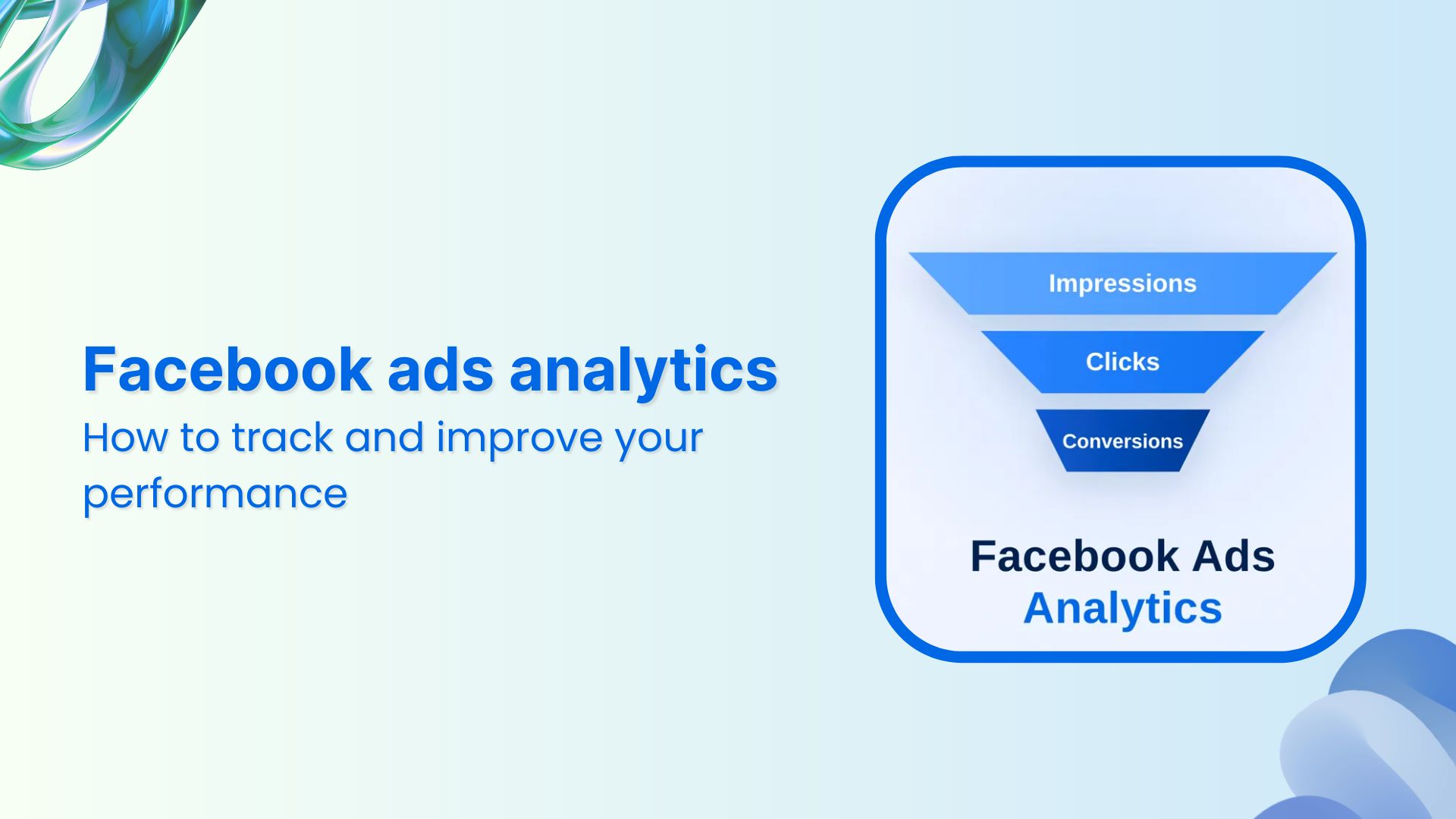
Facebook ads analytics: How to track and improve your performance
Aug 20, 202617 minutes

Written by
Samana BatoolUpdated
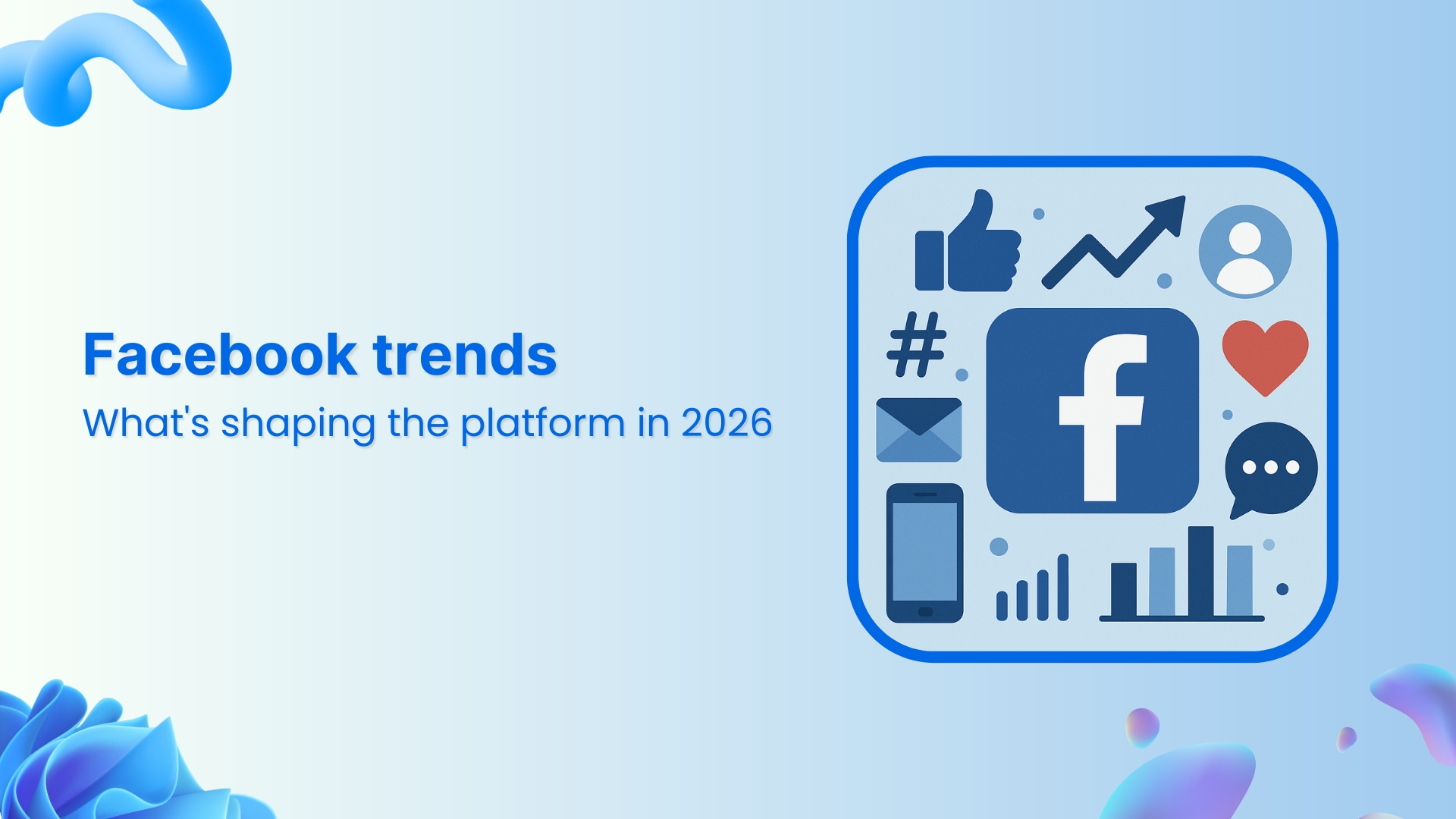
Facebook trends in 2026 center on AI-curated discovery, lo-fi Reels, private community engagement, and a growing role for AI in shopping and transactions. Each shift changes how content gets found, which formats perform, and where meaningful audience interaction actually happens.
The platform has moved beyond serving content to your existing follower base. Facebook now surfaces posts from accounts users have never followed, rewards short-form video that feels genuinely unproduced, and increasingly routes brand interactions toward closed groups, Messenger threads, and AI-assisted commerce experiences. This guide covers the seven trends shaping Facebook in 2026 and a practical framework for where to focus first.
The seven most consequential Facebook trends in 2026 are lo-fi Reels, AI discovery feeds, private community engagement, social SEO, Advantage+, agentic commerce and AI shopping, and employee advocacy. Together they represent a platform that has changed how content gets distributed, how communities form, and how purchases happen.
These trends don’t operate in isolation. A brand that publishes lo-fi Reels consistently benefits from AI discovery distribution. That distribution brings new users into a private group. The group builds the trust that converts into purchases through an AI shopping assistant. Understanding how they connect is what makes a coherent Facebook marketing strategy possible in 2026.
Facebook Reels shot on a phone, in natural light, without heavy editing consistently outperform studio-produced videos for both organic reach and engagement. The algorithm treats completion rate and share behavior as quality signals, and lo-fi content generates both because it feels native to the feed rather than promotional.
Polished video has a role in paid distribution. In organic feed, it often gets scrolled past because it reads as advertising content before anyone has decided they’re interested.
What lo-fi Reels look like in practice:
For building out your Facebook Reels content approach, the shift is about framing. The Reels that earn reach in 2026 feel made for the person watching, not for an internal brand deck.
Reels between 30 and 60 seconds get stronger completion rates than longer clips, and completion rate is one of the signals the algorithm weights most heavily for distribution.
The common mistake is trying to meet in the middle, polished enough to feel branded but casual enough to feel native. That produces content that reads as promotional without the production value that makes paid content worth running. Pick one lane. Lo-fi works for organic. High-production works when you’re putting spend behind it.
Consistency matters more than production quality. Teams that publish three to four Reels per week using a Facebook scheduler stay in the algorithm’s rotation far better than those that post only when a high-production piece is finally ready. Irregular publishing means starting from a lower distribution baseline each time.
Facebook’s algorithm now uses an interest graph to surface content from creators and pages users have never followed. A post from your brand can reach someone with no prior relationship to you, purely because their engagement history suggests they’d find it relevant.
This mirrors how TikTok’s recommendation system works. Meta rebuilt its feed-ranking logic to compete directly, and the practical effect for brands is that content quality now determines reach more than follower count does.
What the algorithm rewards in 2026:
The first frame of a Reel and the first line of a caption now do more work than they did two years ago. You’re writing for someone with no existing reason to keep watching. Hooks and caption openings have become meaningfully more important than they used to be.
Posting frequency also affects your distribution baseline. Accounts that maintain a consistent cadence build a higher engagement floor, and how Facebook ranks content means that floor directly sets the distribution ceiling for every subsequent post.
Group members see a higher percentage of posted content in their feeds than page followers do, because group membership signals genuine interest. In 2026, the engagement gap between active groups and pages with comparable follower counts has widened considerably. Community managers are reporting higher interaction in groups with 5,000 members than on pages with 50,000 followers.
The behavioral shift is as significant as the algorithmic one. Audiences are choosing to have brand conversations in lower-stakes, private settings rather than in public comment threads. A group built around a shared topic, rather than around the brand itself, tends to attract members who are there for the subject and stay active much longer.
What distinguishes groups that grow from groups that stall:
Broadcast channels inside Facebook are worth setting up alongside a group. They give you a direct line to opted-in subscribers without competing in the feed algorithm, and subscribers see channel messages in a dedicated inbox. For time-sensitive content like product drops or event announcements, that’s a meaningfully higher-attention surface than a standard page post.
The approach to building a Facebook community that survives more than a few months is one where the content primarily serves the members. For teams focused on growing your Facebook page organically, a connected group is one of the more reliable ways to build an audience that converts.
Facebook’s internal search engine indexes captions, on-screen text in videos, group descriptions, and image alt text. Keywords in those surfaces now carry more weight for content discoverability than hashtags do. If your captions are generic or thin, your content won’t surface in Facebook search results regardless of hashtag volume.
Users type queries directly into the search bar and expect relevant posts, videos, and groups to appear. Your caption is effectively a search document, and it should be written accordingly.
Where keywords matter most on Facebook:
As for hashtags, their influence on Facebook feed distribution has continued to decline. A deliberate Facebook hashtag strategy in 2026 means one or two categorization-specific tags on Reels, not the five-to-ten stacks that add visual clutter without lifting reach.
Meta’s Advantage+ suite automates the decisions advertisers used to make manually. Audience targeting, placement selection, and creative rotation all shift from human judgment to algorithmic optimization. For most campaign objectives at scale, the automated system now outperforms manual setup consistently.
The core tradeoff is control. Advertisers give up granular audience management in exchange for algorithmic efficiency.
The three main Advantage+ tools:
For brands with established creative assets and a clear campaign objective, Advantage+ tends to outperform manual campaigns. For brands still establishing who converts, removing targeting controls too early leads to wasted spend on audiences that don’t respond.
Using tools for Facebook marketing to monitor Advantage+ performance alongside organic content gives a cleaner picture of which messages and formats are driving results across both channels.
Meta AI is now embedded across Facebook, Instagram, and Messenger, and in 2026 it plays a meaningful role in product discovery. Users can ask Meta AI to find products matching specific criteria, compare options, and in some cases complete transactions without leaving the platform. This is what Meta refers to as agentic commerce, where AI acts on behalf of users within the purchasing flow.
For brands, this changes what discoverability means. A product needs to be findable and understandable by an AI agent that might be comparing dozens of options on a user’s behalf, not just visible in a feed or search result.
What this means for your Facebook Shop setup:
This trend is still maturing on the platform. Brands that have their Facebook Shops well-structured now are ahead of those that will scramble once agentic commerce becomes a standard expectation rather than an emerging feature.
Page reach has declined consistently for years, and in 2026 there is no sign of that reversing. Employee-shared content, by contrast, still benefits from personal graph treatment. Friends and connections of your employees see their posts at a much higher rate than followers see brand page posts.
A coordinated employee advocacy program turns your team into a distributed publishing network. For B2B brands and service businesses, a post from a named employee explaining a client outcome generates more trust than the same content posted from the company page.
How to build an advocacy program that actually runs:
Employee advocacy doesn’t require a formal tool to start. A shared folder of approved posts and a weekly internal prompt will get the first 60 days moving faster than over-engineered infrastructure. Once participation is consistent, then it’s worth evaluating a social media management platform that centralizes scheduling, analytics, and team coordination in one place.
The answer depends on your primary goal. Organic reach, community engagement, and paid performance each point to a different starting place. Lo-fi Reels come first because they have the lowest production barrier and the widest immediate impact across multiple other trends simultaneously.
Here is a practical sequencing framework for working through them.
| Priority | Trend | Why it comes first |
|---|---|---|
| 1 | Lo-fi Reels | Highest organic reach lever with the lowest production cost |
| 2 | AI discovery optimization | Affects every post you publish with no additional production work |
| 3 | Private group strategy | High engagement ROI; consistently underinvested across the industry |
| 4 | Social SEO (captions and on-screen text) | One-time setup change that compounds with every new post |
| 5 | Advantage+ | High impact for ad spend efficiency once you have established creative |
| 6 | AI shopping setup | Low-friction if Facebook Shop is already live; high upside as agentic commerce grows |
| 7 | Employee advocacy | Longest runway; start early, expect meaningful traction at 60 to 90 days |
Social SEO changes take effect as you publish new content and don’t require retroactively updating older posts. Private group strategy takes longer because you’re building a community rather than running a campaign. Start it in parallel with Reels rather than waiting until the Reels rhythm is fully established.
The guide on reading your Facebook analytics covers which metrics to track as you work through this sequence. For monitoring your Facebook page performance week-to-week as you make these changes, having the right setup early prevents you from chasing the wrong numbers.
The thread connecting every 2026 Facebook trend is the same. The platform now rewards content that earns attention from users who didn’t choose to follow you, builds conversation in private settings, and increasingly routes commerce through AI rather than static storefronts. That’s a different discipline than what worked three years ago.
Lo-fi Reels are the most practical starting point because they affect multiple trends at once. Consistent Reels publishing improves your AI discovery signal, on-screen text adds a social SEO surface, and a reliable posting cadence builds the engagement floor your entire page performs from.
The seven dominant Facebook trends in 2026 are lo-fi Reels, AI discovery feeds, private group engagement, social SEO, Advantage+, agentic commerce and AI shopping, and employee advocacy. Each represents a structural shift in how the platform distributes content, builds community, and enables purchasing.
Facebook’s AI discovery feed surfaces content from accounts users have never followed, based on behavioral signals and predicted interests. It functions similarly to TikTok’s recommendation system, meaning strong content can reach non-followers without paid promotion.
Agentic commerce refers to AI agents, powered by Meta AI, that help users discover, compare, and purchase products within Facebook without leaving the platform. For brands, it means product catalog accuracy, complete metadata, and an active Facebook Shop are becoming essential infrastructure rather than optional features.
Hashtags have minimal impact on Facebook reach in 2026. One to two relevant hashtags on Reels may influence how content gets categorized, but stacking hashtags no longer drives distribution. Keywords in captions and on-screen text are the more reliable discoverability lever.
Lo-fi, mobile-shot video in portrait format between 30 and 60 seconds performs best for organic reach. Studio-produced content tends to be scrolled past faster because it reads as promotional rather than native feed content.
Plan 0 Days of Content in 0 Minutes
Create, schedule, publish and analyze your content across all your social media channels from one simple dashboard.
4.7 on Capterra • 16,500+ marketers trust ContentStudio
Samana Batool is a Social Media and Content Marketing Specialist at ContentStudio who turns complex tactics into user-friendly strategies. She covers social media management, content strategy, posting schedules, and agency growth, plus tool comparisons like Hootsuite versus Sprout Social, and reviews content for clarity and practical accuracy, drawing on hands-on digital marketing experience.
View all posts by Samana BatoolRecommended for you
Facebook ads analytics: How to track and improve your performance
70 ChatGPT prompts for Facebook to drive reach and engagement
Facebook cover photo size: The complete 2026 guide
Ultimate guide to schedule Facebook posts, Reels & Stories