Facebook ads analytics: How to track and improve your performance
Aug 20, 202617 minutes

Written by
Esha ShabbirUpdated
The best Facebook marketing tools split into two categories. The first is the native tools Meta provides free with the platform. The second is the third-party platforms you add on top for scheduling, design, automation, analytics, and approvals. Facebook has 2.11 billion daily active users as of 2026, and running a business page without the right tools means doing manually what your competitors handle automatically.
This guide covers every major tool category, what each tool does in 2026, how to choose between them based on your goals, and what a practical stack looks like at different budget levels.
Facebook marketing tools are software platforms that help you plan, publish, run, track, or improve performance on Facebook. They range from what Meta builds natively into the platform to third-party tools connected via the Meta API.
Your approach to Facebook marketing covers paid ads, organic content, audience building, and conversion tracking. No single tool handles all of those equally well. The native Meta tools cover platform-level functions: ad creation, website tracking code, scheduling through Meta, and store management. Third-party tools fill the gaps: cleaner scheduling interfaces, better analytics dashboards, team approval processes, design workflows, and automation rules that Meta’s own tools don’t support.
Both matter. The question is which third-party tools belong in your stack and which ones are overhead you don’t need.
Meta provides four tools natively, and all four are free to use. They form the foundation of any Facebook marketing setup regardless of what else you add.
Here’s what each tool covers:
| Tool | Primary use | Best for |
|---|---|---|
| Meta Business Suite | Organic posts, inbox, basic scheduling | All businesses |
| Ads Manager | Paid campaign creation and tracking | Any business running ads |
| Meta Pixel | Website conversion tracking and retargeting | Businesses with a website |
| Commerce Manager | Facebook and Instagram storefronts | eCommerce businesses |
Meta Business Suite is your free hub for organic Facebook activity. You use it to draft and schedule posts, respond to messages and comments from a combined inbox that pulls from both Facebook and Instagram, and view basic engagement metrics for your Page.
For a small business posting two or three times a week, it works adequately. The interface is cleaner than it was in earlier years, and the scheduling is reliable. The limitations show up fast when you’re managing multiple pages, working with a team, or posting daily across more than two platforms.
Bulk scheduling, drag-and-drop calendar management, client approval workflows, cross-network publishing to LinkedIn, TikTok, or YouTube, and competitor analytics are not part of what Meta Business Suite does. When you need those, a dedicated Facebook scheduler handles those workflows without requiring you to live inside Meta’s interface.
For a full breakdown of every feature Meta Business Suite currently includes, the Meta Business Suite features guide covers the complete interface and 2026 updates.
Ads Manager is where all paid Facebook advertising lives. You build campaigns, define audiences, set budgets, upload creative, run A/B tests, and track performance from one dashboard. Every Facebook ad that has ever run went through Ads Manager.
In 2026, Meta has integrated AI-assisted tools directly into the Ads Manager workflow. Advantage+ campaigns automate audience targeting and delivery decisions based on your stated conversion goal, removing the need to define every targeting parameter manually. Meta’s generative AI features inside the campaign builder can produce ad copy and image variations from a brief, which reduces production time for teams running multiple creative tests simultaneously.
The common approach is to run Advantage+ for broad prospecting and switch to manual audiences for retargeting high-intent segments built from Pixel data.
Reporting inside Ads Manager shows spend, reach, frequency, CPM, CPC, cost per result, and ROAS for conversion-optimized campaigns with the Pixel installed. It also supports custom columns and attribution window settings, which matter significantly for businesses with longer consideration cycles.
The Meta Pixel is a piece of code you add to your website. Once installed, it tracks what visitors do after clicking your Facebook ads. It records which pages they view, which products they add to a cart, and which purchases they complete. That data flows back into Ads Manager and powers conversion optimization and custom audience building.
Without the Pixel, you’re running campaigns with impressions and clicks as your only metrics. You can’t tell whether those clicks converted into anything, and you can’t build retargeting audiences from people who showed purchase intent. Retargeting audiences built from Pixel data (visitors to a specific product page who didn’t buy, for example) consistently outperform cold audiences across most advertiser categories.
Meta’s Conversions API now supplements the Pixel for server-side event tracking, which maintains data accuracy in browsers that restrict third-party cookies. For standard campaigns with modest budgets, the Pixel alone covers most tracking needs. For high-volume eCommerce stores where accurate conversion data directly affects budget decisions, setting up both is worth the additional technical work.
Installing the Pixel takes roughly 15 minutes via Meta’s Events Manager, or a single toggle if you’re running Shopify or WooCommerce. Do it before your first ad goes live.
Commerce Manager lets you create a product catalog and build a storefront inside Facebook and Instagram. Customers can discover and buy products without leaving the platform, which cuts the friction between seeing an ad and completing a purchase.
It integrates with Shopify, WooCommerce, BigCommerce, and other major eCommerce platforms. Products from your existing catalog sync automatically once the connection is established. For eCommerce businesses, the combination of Commerce Manager for organic product discovery and Dynamic Product Ads in Ads Manager for paid retargeting is one of the most effective Facebook setups available.
The Shopping tab on your Facebook Page acts as a native storefront. Customers can browse, save products, and purchase. Meta has also expanded checkout availability in certain markets, allowing the full transaction to happen inside Facebook without any redirect to an external site.
Third-party platforms extend what Meta’s native tools can do. These are the tools worth adding based on your workflow, team size, and whether you’re focused on organic content, paid campaigns, or both. The critical distinction when evaluating any of them is whether the tool solves a problem you actually have today, not a problem you might have at three times your current scale.
The table below gives a quick reference before the detailed breakdowns:
| Tool | Best for | Starting price |
|---|---|---|
| ContentStudio | Scheduling, analytics, approvals, AI captions | $19/month |
| Manychat | Messenger automation, lead capture | Free (limited); Pro from ~$39/month |
| HubSpot | CRM-connected Facebook ad attribution | $800/month (Marketing Hub Pro) |
| Canva | Visual content design for posts and ads | Free; Pro $18/month |
| Planable | Content approval workflows for agencies | From $33/workspace/month |
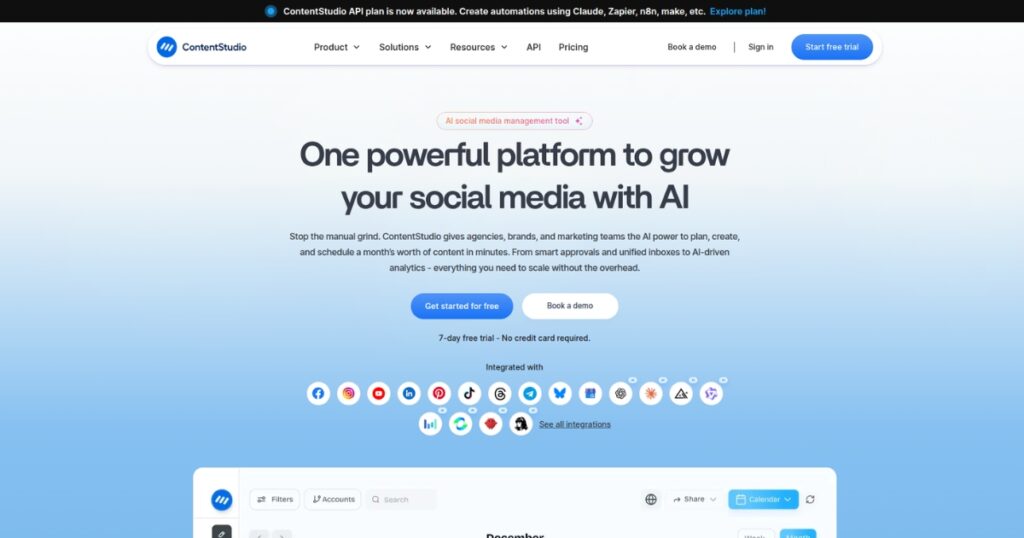
ContentStudio is a social media management platform built for teams and agencies managing content across multiple networks. For Facebook specifically, it’s the only tool on this list that combines publishing, AI caption generation, competitor analytics, and client approval workflows in one dashboard. The distinction matters for teams that currently manage those tasks across three or four separate tools.
Best for: Teams, agencies, and businesses managing more than two social accounts who want scheduling, analytics, AI caption generation, and client approvals in one place.

Manychat automates Facebook Messenger conversations using a visual flow builder. A user messages your Page, a sequence fires based on their keywords or choices, and automated replies handle questions, deliver lead magnets, or route them to purchase. Manychat restructured its pricing in March 2026, and the free tier shrank significantly, so the pricing section below reflects current reality rather than older guides still quoting legacy numbers.
Best for: eCommerce stores, course creators, and service businesses with recurring Messenger volume who want to automate lead capture and handle FAQ responses without manual staffing.
HubSpot connects your Facebook ad performance to CRM and revenue data. When you run Lead Ads through Facebook, HubSpot captures those leads into contact records automatically and follows them through your pipeline. This closes the measurement gap that most social media tools leave open. You see cost per lead in Ads Manager, but not whether those leads ever became paying customers.
Best for: B2B companies with defined sales pipelines who need to connect Facebook lead generation to CRM records and closed revenue data.
Canva is the design tool the majority of Facebook marketers use for visual content creation. The drag-and-drop editor covers templates for Facebook posts, Stories, Reels covers, cover photos, carousels, and ad creative with a minimal learning curve. In 2026, the AI features built into Canva’s paid tier have made it possible to go from brief to finished Facebook graphic in under five minutes.
Best for: Anyone creating Facebook visual content without an in-house designer. Particularly valuable for agencies producing high volumes of branded creative for multiple clients.
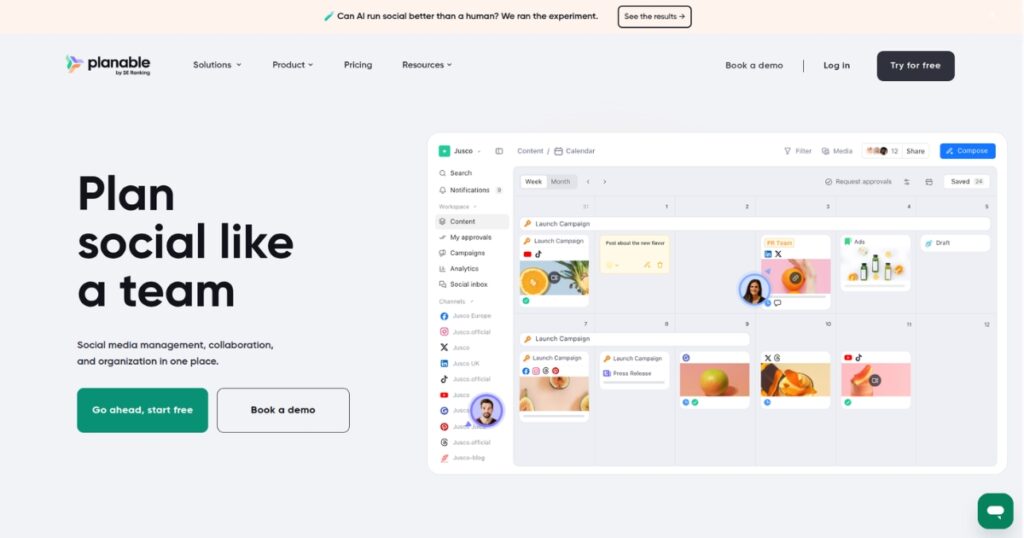
Planable is a content planning and approval platform built specifically for team and client review workflows. You draft Facebook posts inside Planable, your team or client reviews them in a preview that renders exactly as it will appear in the Facebook feed, and approvals happen in one click. For agencies where client sign-off over email consistently delays publication by 24–48 hours, the structured approval layer is the direct fix.
Best for: Agencies and in-house teams that need a structured stakeholder or client approval step before content publishes.
The right tool depends on what problem you’re actually trying to solve. The question to start with is where your time goes. If it goes into manually drafting and posting content, a scheduling tool solves that. If it goes into chasing client approvals, a workflow tool solves that. If it goes into monitoring ad spend without a clear picture of what’s converting, a tracking or automation tool solves that.
There are typically four scenarios most Facebook marketers fall into.
Solo creator or small business managing one or two pages
Small team (2–5 people) managing multiple pages
Agency managing multiple client accounts
B2B company with a defined sales pipeline
For B2B companies, the native reporting in Ads Manager is rarely enough. You can see how many leads a campaign generated, but not whether those leads were qualified or whether they converted into pipeline. HubSpot’s CRM connection closes that gap, so you’re reporting to leadership on revenue impact rather than lead volume.
One thing worth noting across all scenarios. The right tool is usually the one that removes friction from whatever task currently takes the most time. If you spend 20 minutes per post formatting and uploading manually, a scheduler with bulk upload and drag-and-drop calendar recovers that time immediately. If you spend 45 minutes per client chasing approval emails, a platform with a one-click approval link recovers that time per client, per week. The tools pay for themselves faster when you’re solving a real time sink rather than adding a feature you might use eventually.
Choosing tools that work with how Facebook distributes content matters as much as choosing the right features. Understanding the Facebook algorithm and reach in 2026 means knowing the platform prioritizes content earning early engagement, consistent publishing history, and formats like Reels that keep people on-platform.
This has direct implications for which tools you use and how.
Third-party scheduling doesn’t hurt reach. Every major platform (ContentStudio, Sprout Social, Planable) uses Meta’s official Graph API, the same publishing channel Meta’s own tools use. The concern about third-party scheduling reducing organic reach dates to 2015 has been consistently contradicted by Meta’s documentation.
Consistency is more important than teams typically give it credit for. If you’re scheduling Facebook posts manually, day by day, the friction causes irregular cadences. Batching a full week of content in one sitting and letting a scheduler handle the publishing produces a more consistent cadence with the same creative time investment. The algorithm rewards accounts that post regularly at predictable intervals. A team that posts twice a week on a schedule consistently outperforms a team that posts five times in a good week and goes quiet for two weeks afterward.
Post-level analytics miss the pattern. Checking Facebook page analytics post by post inside Meta Business Suite misses what’s happening across weeks and months. Tools that aggregate performance data over time make it much easier to identify which content types consistently earn early engagement. That is the signal the algorithm responds to most.
Video tools are worth prioritising. Growing reach with Facebook Reels now produces more reach per post than static images for most Page categories. Tools that support native Reels scheduling with in-platform video preview reduce the friction of committing to a format that rewards high publishing volume.
The underlying principle across all four implications is the same. The algorithm rewards accounts that behave consistently, earn engagement quickly, and use formats the platform is currently pushing. Your tools either make that easier, or they don’t. Choose based on that filter, not on feature count.
Organic reach on Facebook sits between 1% and 5% for most business Pages. That number has been stable for several years and isn’t going up significantly. The tools and tactics that move results within that range come down to five things.
The tools that support these five things are the ones worth paying for. A scheduler solves consistency. A post performance tracker solves format decisions. An analytics platform solves the question of which content earns early engagement. You don’t need all of them at once. You need the one that addresses whatever is currently holding your results back.
The tools available for Facebook marketing in 2026 are more capable than they were two years ago, and they cover a much wider range of workflows. That makes choosing thoughtfully more important, not less. Starting with Meta’s native tools and adding one solid third-party platform for your primary workflow is enough to outperform the majority of pages still managing everything manually.
The stack that works for your situation is the one that removes the specific friction you actually face. A solo creator posting three times a week has different needs than an agency running paid campaigns and managing approvals for 12 clients. The tools exist for both situations. The exercise is matching the right tool to the right problem, not collecting everything available.
Meta Business Suite covers basic scheduling and messaging for free. Adding ContentStudio’s Standard plan at $19/month gives you analytics, AI-assisted captions, and bulk scheduling, which covers most small business needs without significant overhead.
Meta Business Suite manages your organic posts, combined inbox, and basic Page analytics for free. Ads Manager is where paid ad campaigns are created, launched, and tracked. They are separate tools that both sit within your Meta Business account.
The Meta Pixel is a free tracking code you add to your website to record what visitors do after clicking your Facebook ads. Without it, you can’t track conversions, build retargeting audiences, or measure true ROI on paid campaigns.
No. Business Manager (now integrated into Meta Business Suite) is the account layer where you manage page access, ad accounts, and team permissions. Ads Manager is the campaign creation and reporting tool you access through it.
Plan 0 Days of Content in 0 Minutes
Create, schedule, publish and analyze your content across all your social media channels from one simple dashboard.
4.7 on Capterra • 16,500+ marketers trust ContentStudio
Esha Shabbir is a content marketer at ContentStudio, specializing in social media strategy, SEO-led content, and editorial workflows for marketing teams. She writes practical, research-backed content that helps marketers understand what to publish, how to organize their content, and how to build a more consistent social media presence.
View all posts by Esha ShabbirRecommended for you
Facebook ads analytics: How to track and improve your performance
70 ChatGPT prompts for Facebook to drive reach and engagement
Facebook cover photo size: The complete 2026 guide
Ultimate guide to schedule Facebook posts, Reels & Stories