LinkedIn Premium: Plans, features, cost, and whether it’s worth it
May 6, 202517 minutes

Written by
Khadija AnwarUpdated
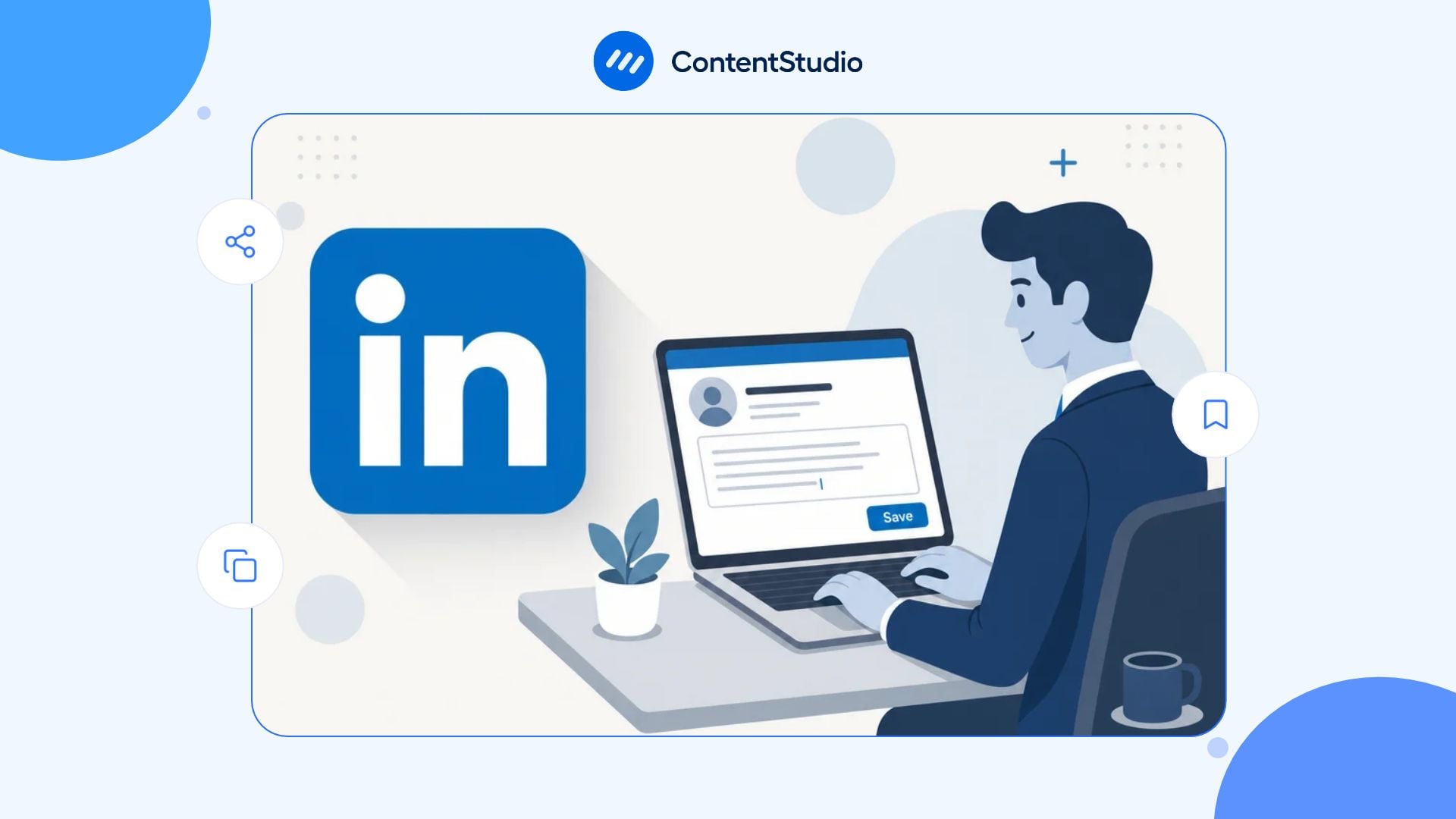
When someone visits your LinkedIn profile, they want to understand who you are, what you do, and what makes your experience relevant. Your About section helps answer these questions by connecting your skills, achievements, and professional goals in your own words.
As part of a broader LinkedIn marketing strategy, this section provides context for people who discover you through posts, comments, search, or referrals. A clear, authentic summary helps visitors understand your value and decide whether to connect.
This guide explains how to add or edit your About section and write a summary that reflects your experience.
LinkedIn calls a profile summary the About section. It gives you space to explain your expertise, experience, professional goals, and value in your own words.
Your headline serves a different purpose. It quickly describes your professional position, while the About section provides more context.
A LinkedIn summary is the written introduction on your profile, officially labeled the About section. It is an open-ended space where you can describe your professional identity without being limited to job titles, dates, or employer names.
LinkedIn explains that the About section lets members express their mission, motivation, and skills to people who view their profiles. It is different from the headline, which appears directly under your name and must communicate your role or positioning much more quickly.
Your summary can help visitors understand:
A good summary does not need to include every role, skill, project, or life detail. Your Experience, Skills, Education, Licenses and Certifications, Featured, and Recommendations sections can carry much of that information. The About section should connect the most relevant parts into a clear professional narrative.
Your posts can give visitors examples of the expertise described in that narrative. If your summary emphasizes customer education, for instance, share practical insights about onboarding or product adoption. A LinkedIn scheduler can help you plan those posts in advance, while your summary explains the experience and professional focus behind them.
Your summary helps people make sense of your profile when they arrive from several different paths.
A visitor may find you through:
They may want to answer a basic question:
“Is this person relevant to what I need?”
Your summary should help them answer it quickly.
A summary can clarify your target role, transferable experience, skills, achievements, career transition, and the value you can bring to an employer.
A summary can explain who you serve, the problem you help address, your approach, areas of expertise, proof points, and how prospective customers or partners can contact you.
A summary can establish a leadership perspective, connect experience across roles, explain the business problems you work on, and articulate the principles that guide your work.
A summary can clarify the roles, functions, industries, or candidate communities you support, along with the professional approach you take to candidate and hiring-manager relationships.
A summary can explain the topics you write, speak, research, teach, or build around—giving new followers context when they discover your content.
An optimized profile on LinkedIn should make the headline, About section, Experience section, Featured resources, skills, and professional activity reinforce one another.
You can add or update your summary from the About section of your LinkedIn Profile.
LinkedIn’s current help guidance uses this desktop path for editing the About section.
Open your profile, scroll to About, and select its edit icon. Update the text and save. On desktop, open your profile through Me → View Profile. In the app, tap your profile picture, then tap it again.
If About is missing, use Add profile section on desktop or Add section in the app, then look under Core. Check that you are viewing your own profile.
If an edit does not appear where expected, confirm that you saved it and edited the correct language profile. LinkedIn specifically identifies language-profile selection as a check. Refresh the page or app after saving.
LinkedIn allows up to 2,600 characters in the About section. That is a limit, not a target.
A useful summary is long enough to make your professional relevance clear and short enough that someone can scan it without losing the point.
LinkedIn allows up to 2,600 characters in the About section. Use only the space needed to explain your professional focus, relevant experience, and next step. Start with a concise draft, then add details that help the intended reader. Remove repetition rather than expanding the text to reach the limit.
There is no single perfect formula. The best summary depends on your audience and goal. However, most strong summaries include several of the following elements.
| Summary element | What it does | Example question to answer |
| Opening | Gives the visitor a reason to keep reading | What is the most useful thing to know about me? |
| Current focus | Explains what you do now | What work, role, or professional problem am I focused on? |
| Audience or stakeholder | Clarifies who benefits from your work | Who do I work with or serve? |
| Value or outcome | Explains why your work matters | What becomes easier, better, clearer, safer, or more effective? |
| Experience | Adds relevant background | What experience gives me a credible perspective? |
| Proof | Supports your positioning | Which approved accomplishment, project, credential, or result is relevant? |
| Specialties | Helps with professional context and relevant search terms | Which skills, industries, methods, or topics define my work? |
| Personality or motivation | Makes the summary more human | What principle, interest, or perspective informs how I work? |
| Current goal | Gives readers a next step | What opportunities, conversations, or projects am I open to? |
| Call to action | Makes contact easier | Should visitors connect, message, visit a resource, or explore my work? |
You do not need every element. A technical specialist may focus on expertise, proof, and topics. A career changer may need to spend more space connecting previous experience to a new direction. A founder may center the summary on customers, business mission, and market problem.
Use this structure when you need a starting point.
I help [audience] with [specific problem, responsibility, or outcome].
In my current role as [role], I focus on [relevant work, industry, function, or area of expertise].
My background includes [relevant experience, career path, education, or professional context], which has taught me [specific insight, approach, or principle].
I have contributed to [verified project, achievement, result, responsibility, or scope].
My areas of focus include: [skills, methods, industries, or topics].
I am especially interested in [professional interest, mission, or area of learning].
I welcome conversations with [relevant people] about [relevant topic, opportunity, or collaboration].
Replace every bracket with facts you can support. Do not turn the template into a generic list of buzzwords.
The first line should make it easier for a visitor to understand your professional relevance. LinkedIn recommends making the opening count and avoiding filler such as “Hi, I’m [name]” or “Thanks for visiting my profile.”
I help B2B SaaS teams improve customer onboarding and product adoption.
I work with regional healthcare organizations hiring clinical and administrative leadership talent.
I am a product marketer focused on making complex software easier for buyers and customers to understand.
I build learning programs that help managers turn new skills into better day-to-day decisions.
My career has moved through editing, content strategy, and product education, all centered on one question: how can complex information become more useful?
Strong customer education does not begin with more content. It begins with knowing which action customers need to take next.
Avoid starting with phrases that could describe nearly anyone:
Instead of claiming a trait, show it through a professional focus, example, or outcome.
Job titles can be unclear outside your company or industry. Your summary should explain your work in terms a relevant visitor can understand.
Less clear:
I lead transformative initiatives across strategic enablement, organizational synergy, and stakeholder alignment.
Clearer:
I help cross-functional teams define project ownership, simplify approval processes, and improve the information handed from one team to the next.
Less clear:
I am a customer-centric go-to-market professional who drives scalable value.
Clearer:
I work with product and customer-success teams to turn product changes into clear onboarding, education, and adoption resources.
Plain language makes your summary easier to understand and more credible.
Your summary can include relevant proof, but it should not repeat every accomplishment from the Experience section.
Choose one to three examples that support your positioning.
Over the past eight years, I have worked across customer education, onboarding, and lifecycle communication for B2B software products used by operations teams.
Most recently, I led the content and enablement work for a new onboarding program that standardized product education across sales, implementation, and customer success.
The second sentence gives proof without turning the summary into a metric-heavy list.
Numbers can strengthen a summary when they are accurate and meaningful.
Good:
Led a 12-person customer-success team supporting mid-market SaaS accounts across North America.
Good:
Built a training program adopted by more than 200 internal users.
Avoid:
Increased engagement by 400%.
Unless you can explain the metric, time period, baseline, responsibility, and permission to publish it.
Do not share confidential client details, internal financial information, sensitive personal data, or unapproved customer results.
Your About section can help relevant visitors understand your expertise, and it may support discovery through professional search. LinkedIn recommends using words that highlight top skills and relevant specialties, including language found in job descriptions and related professional profiles.
Use keywords naturally in sentences.
Less useful:
Marketing | Growth | SEO | Social Media | B2B | Strategy | Content | Leadership | Innovation
More useful:
My work spans B2B content strategy, LinkedIn marketing, social media planning, customer education, and organic growth programs for SaaS and professional-services teams.
Look at:
Only include terms that accurately describe your experience. Keyword stuffing creates an unclear profile and can undermine trust.
A strong LinkedIn summary can sound human without becoming a personal diary. LinkedIn’s examples show that authentic career stories, motivations, interests, and a sense of humor can help a summary become more memorable when they reinforce professional relevance.
You might include:
Outside work, I volunteer with a local mentoring program for early-career marketers. It keeps me grounded in the questions new professionals ask before they learn the industry language.
This detail supports the person’s professional focus. It is more useful than adding unrelated personal facts solely to fill space.
Share only what you are comfortable making public and what fits the audience you want to attract.
Your About section should usually sound like you speaking to a professional contact.
Use first person:
I help operations teams improve cross-functional handoffs.
Avoid third person:
Sarah is an experienced operations professional who helps teams improve cross-functional handoffs.
LinkedIn recommends writing as you speak, reading the summary aloud, using first person, avoiding excessive special characters or emojis, and creating white space with short paragraphs or lists.
I help mid-market SaaS companies improve customer onboarding, product adoption, and customer education.
My work sits at the intersection of customer success, content strategy, and product communication. I translate product complexity into guidance teams and customers can actually use.
My focus areas include:
I enjoy connecting with customer-success, product, and content leaders working on better customer experiences.
Use these as structural examples. Replace the details with your experience and voice.
I am a marketing coordinator with experience supporting B2B content, campaign operations, event promotion, and performance reporting.
I enjoy the work behind a clear campaign: understanding the audience, organizing the message, coordinating stakeholders, and measuring what happens after launch.
In my recent role, I supported content calendars, email campaigns, webinar promotion, and reporting for a SaaS business serving operations teams.
My strengths include content coordination, project management, social media planning, campaign reporting, and cross-functional communication.
I am currently exploring marketing-coordinator and content-operations roles where I can contribute to an organized, audience-focused marketing team.
I am transitioning from customer support into customer success and customer education.
Over six years in support, I learned that many customer issues are not caused by a lack of effort. They happen when customers do not have clear guidance at the moment they need it.
I have experience identifying recurring support themes, improving knowledge-base content, working with product teams on customer feedback, and helping users navigate complex workflows.
I am now building deeper experience in onboarding, customer education, lifecycle communication, and adoption measurement.
I welcome conversations with customer-success leaders, education teams, and mentors working in SaaS customer experience.
I help professional-services firms turn unclear content operations into practical, repeatable publishing systems.
My work focuses on content strategy, editorial workflows, social media planning, subject-matter-expert collaboration, and measurement. I work with teams that have useful expertise but struggle to turn it into consistent, audience-focused content.
I have led content planning, blog programs, LinkedIn campaigns, executive thought-leadership workflows, and analytics reporting for B2B organizations.
My focus areas include:
If your team is building a more reliable content workflow, I am always interested in comparing notes.
I founded [Company] to help [audience] solve [specific problem].
We work with [type of organization] that need [outcome]. Our approach combines [service, product, or method] with a focus on [differentiator].
My background in [industry, function, or prior experience] shaped how I think about the problem: [brief insight].
I write about [three relevant topics], particularly where [audience] needs clearer decisions, stronger processes, or better information.
I welcome conversations with [customers, partners, industry peers, candidates, or other relevant people].
I work with healthcare organizations and candidates navigating specialist and leadership hiring.
Recruitment is not only about filling an open role. It is about helping organizations define what they need, helping candidates understand the opportunity, and creating a process that respects both sides of the decision.
My experience includes talent sourcing, candidate engagement, hiring-manager partnership, interview process design, and workforce-planning conversations.
I share practical insights on healthcare hiring, candidate experience, recruitment operations, and leadership talent.
I am always open to connecting with healthcare professionals, talent leaders, and organizations building stronger teams.
I am a data analyst focused on turning operational data into decisions people can use.
I work with teams that have dashboards, reports, and systems—but still struggle to identify which metric matters, who should act on it, and what should happen next.
My work includes data modeling, dashboard design, performance reporting, data-quality review, and stakeholder enablement.
I am particularly interested in analytics adoption, data storytelling, operational measurement, and making reporting more useful for non-technical teams.
I enjoy connecting with analysts, operations leaders, and product teams working to make data more actionable.
AI can help you organize your experience, identify vague wording, create outline options, simplify language, compare drafts, and check whether your summary reflects a target role or audience.
It should not write a fictional professional identity for you.
Use ChatGPT for LinkedIn profile writing as a drafting and editing assistant, then verify every claim and rewrite the final summary until it sounds like you.
I am updating my LinkedIn About section.
Here is my verified work history, experience, skills, education, and career goal: [paste information].
My target audience is: [recruiters, prospective clients, hiring managers, partners, peers, or another group].
My desired tone is: [practical, warm, direct, analytical, concise, etc.].
Create three outline options before drafting. Each should include:
Do not invent metrics, clients, job titles, qualifications, awards, certifications, personal stories, or results. Flag any claim that needs me to verify it.
For more examples of structured instructions, use these AI prompts for LinkedIn posts and profile content.
Avoid these common LinkedIn About section mistakes to keep your summary clear, credible, and easy to read:
Use this checklist before saving your LinkedIn About section.
| Review area | Question |
| Opening | Does the first sentence explain my professional relevance? |
| Audience | Is it clear who I work with, support, or want to reach? |
| Role | Does it explain what I actually do, beyond my job title? |
| Value | Does it describe the problem I help solve or the outcome I support? |
| Experience | Does it include enough relevant background to be credible? |
| Proof | Are all projects, outcomes, titles, metrics, and credentials accurate? |
| Keywords | Are relevant skills and industry terms included naturally? |
| Voice | Does it sound like me when read aloud? |
| Readability | Are the paragraphs short and easy to scan? |
| Privacy | Have I removed confidential, personal, customer, and employer-sensitive information? |
| Goal | Is it clear what kind of opportunity or conversation I welcome? |
| Freshness | Does it reflect my current role, focus, and goals? |
Your summary is not an isolated profile field. It should match the professional story people see elsewhere.
For example:
A well-aligned summary gives new visitors context when they discover your content. A practical LinkedIn content strategy helps ensure the posts you publish reinforce the expertise and audience focus stated in your profile.
ContentStudio does not edit your LinkedIn About section for you, but it can help you build the professional activity that brings relevant people to your profile.
Use ContentStudio to:
Use a LinkedIn content publishing workflow to connect your profile positioning with consistent, relevant activity.
A LinkedIn summary is your opportunity to explain your professional value beyond a title and résumé timeline. It should help the right visitor understand what you do, who you help, what experience supports your work, and why they may want to connect.
Start with a clear opening. Use plain language. Add evidence rather than buzzwords. Include only information you can stand behind. Give the reader a relevant next step. Then review the summary whenever your professional direction changes.
First, confirm that you selected Save after editing. If the updated version is not visible, refresh the page or app, check whether you are viewing the correct profile, and confirm that you edited the correct language profile. LinkedIn specifically notes that language-profile settings can affect whether changes appear as expected.
Focus on your direction, education, transferable skills, practical projects, volunteer work, coursework, internships, interests, and the type of opportunity you want to pursue. You do not need to pretend to have years of experience. Be specific about what you have learned and what you are prepared to contribute.
Include personal details only when they help someone understand your professional values, career story, interests, or point of view. A brief hobby, volunteer role, or motivation can make the profile more memorable, but it is optional. Avoid information you would not want widely visible to recruiters, customers, colleagues, or strangers.
Use relevant projects, coursework, volunteering, internships, and transferable skills. Explain what you contributed and the direction you want to pursue. Do not present study or practice as employment experience.
Keep the facts consistent, but adapt the emphasis. Use the résumé for the application and the About section to explain your broader professional focus and relevant experience.
Identify the connection between them, then lead with the work most relevant to your current audience. Avoid presenting several unrelated job targets as one long skills list.
Choose a contact route you are comfortable making visible. You can invite a LinkedIn message without publishing a personal phone number or email address.
Plan 0 Days of Content in 0 Minutes
Create, schedule, publish and analyze your content across all your social media channels from one simple dashboard.
4.7 on Capterra • 16,500+ marketers trust ContentStudio
Khadija Anwar is a Senior Technical Writer at ContentStudio with over 500 published write-ups across the ContentStudio blog and beyond. She specializes in step-by-step platform guides and Help Center content across Facebook, Instagram, LinkedIn, YouTube, TikTok, and X, and reviews how-to articles to verify every step and platform detail is accurate and current.
View all posts by Khadija AnwarRecommended for you
LinkedIn Premium: Plans, features, cost, and whether it’s worth it
75 LinkedIn post ideas for professionals and Company pages
How to View LinkedIn Profiles Anonymously?
ChatGPT for LinkedIn: For profiles, posts, messages, and content planning