How to grow LinkedIn followers organically: Strategy for sustainable growth
Apr 19, 202121 minutes

Written by
Khadija AnwarUpdated
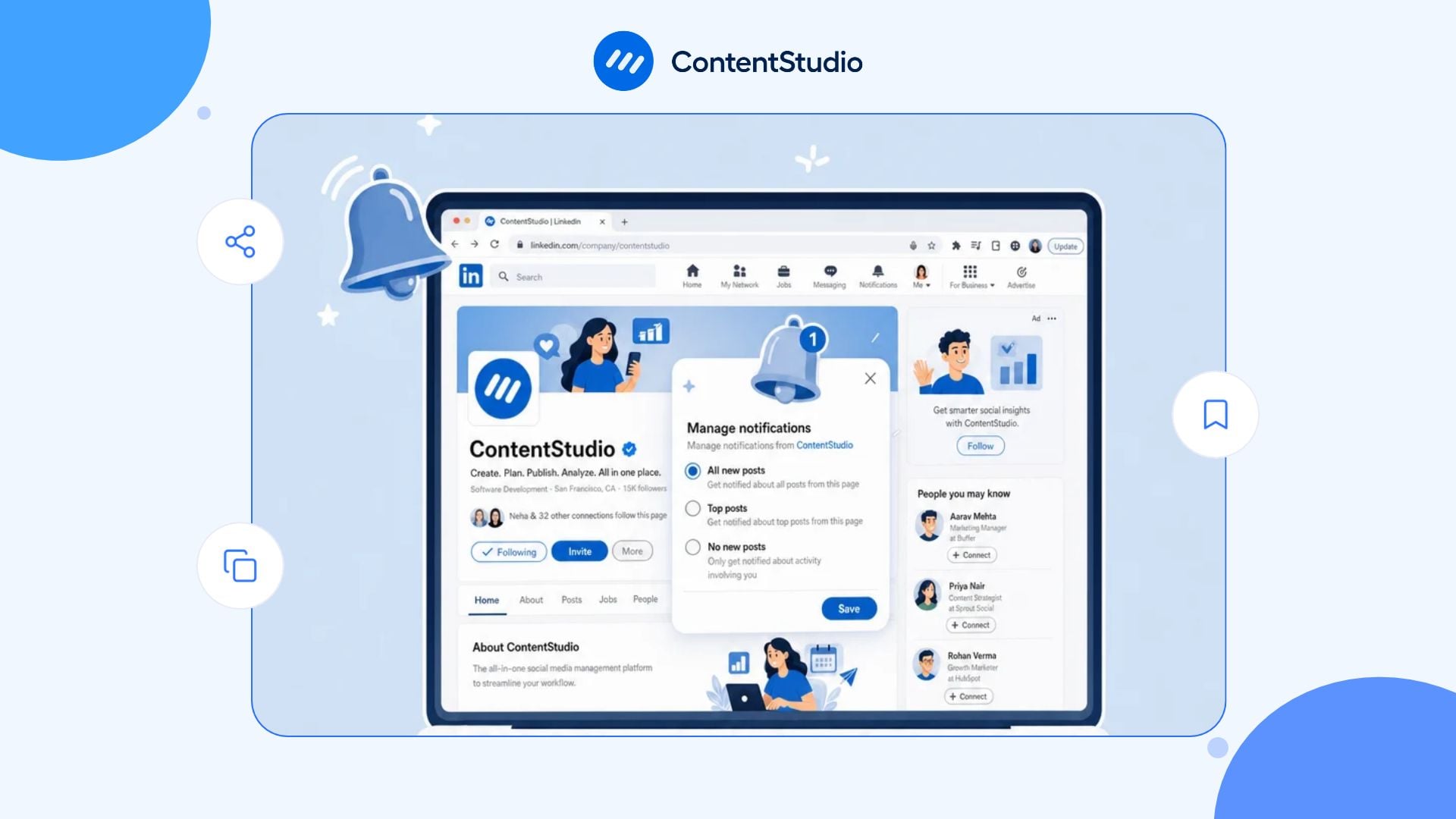
LinkedIn notifications help you stay informed about messages, comments, job updates, connection requests, and account-security issues. However, reactions, work anniversaries, group discussions, suggested connections, newsletters, and marketing emails can quickly fill your notification feed and interrupt your work.
A clear LinkedIn marketing strategy helps individuals and teams focus on LinkedIn activities that support their goals, such as customer conversations, recruiting, partnerships, content engagement, and professional visibility.
This guide explains how to customize LinkedIn notifications on desktop and mobile, reduce email alerts, mute message threads, manage group and newsletter notifications, and control profile-update sharing. You will also learn how to protect your focus without missing important professional activity.
LinkedIn sends notifications through several channels. You may see an alert in the app, receive a mobile push notification, get an email, or find an update in LinkedIn’s Notifications feed.
LinkedIn groups many of these controls under Notifications you receive, where you can review categories and change the available settings.
Depending on your account and LinkedIn’s current interface, you may be able to manage notifications for:
The right notification settings depend on how you use LinkedIn. A job seeker may prioritize recruiter messages and application updates, while a sales professional may need customer inquiries and relevant account activity. Recruiters, founders, consultants, and social media managers may have different priorities.
A consistent publishing routine can also reduce the pressure to check LinkedIn constantly. ContentStudio’s LinkedIn scheduling tool helps you plan and organize content creation, approvals, publishing, and reporting, so you can focus on meaningful interactions instead of repeatedly checking your feed.
Review each notification category based on its relevance to your work. Keep alerts that require timely action, reduce repetitive updates, and disable optional notifications that rarely provide useful information.
Before switching off notifications, separate high-priority alerts from activity that can wait.
| Notification type | Recommended setting | Reason |
| Direct messages | Keep on | May include customer questions, recruiter outreach, referrals, or time-sensitive professional context |
| Connection requests | Keep on or review daily | Helps you review requests intentionally rather than accepting automatically |
| Comments on your posts | Keep on | Can reveal useful questions, feedback, customer interest, or concerns |
| Mentions | Keep on | Someone may be asking for your perspective or referencing your work |
| Job application updates | Keep on while applying | Employers may send time-sensitive updates |
| Event changes | Keep on for registered events | Access details, timings, speakers, and links can change |
| Security alerts | Keep on | Important for account protection and unusual-activity monitoring |
| Reactions | Reduce or turn off | Individual reactions rarely require immediate action |
| Birthdays and work anniversaries | Reduce or turn off | Often low-priority unless they suit your relationship-building style |
| Suggested connections | Reduce or turn off | Can create noise without enough professional context |
| General marketing emails | Reduce or unsubscribe | Keep only messages that genuinely support your work |
| Group notifications | Customize by group | Some groups are useful; others create unnecessary volume |
| Newsletter notifications | Review periodically | Retain only publications you actually read |
A notification setting should reflect the value of the possible action behind the alert—not merely the type of activity LinkedIn generates.
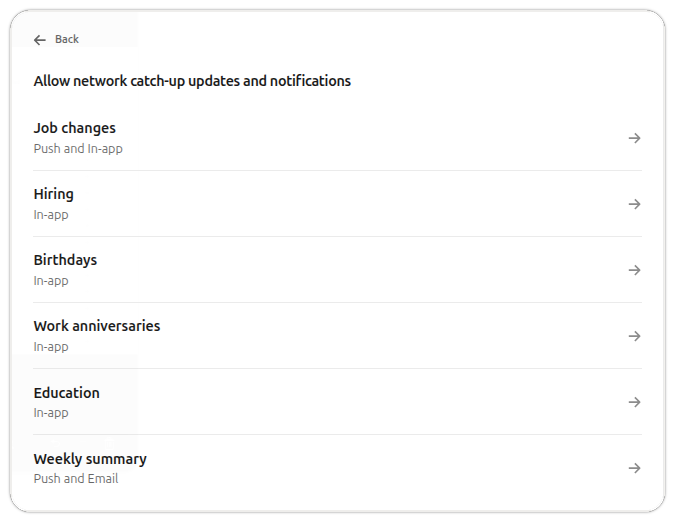
LinkedIn lets you change notification preferences from Settings & Privacy.
LinkedIn’s official guidance identifies the desktop route through profile settings, Notifications, and the notification categories available under Notifications you receive.
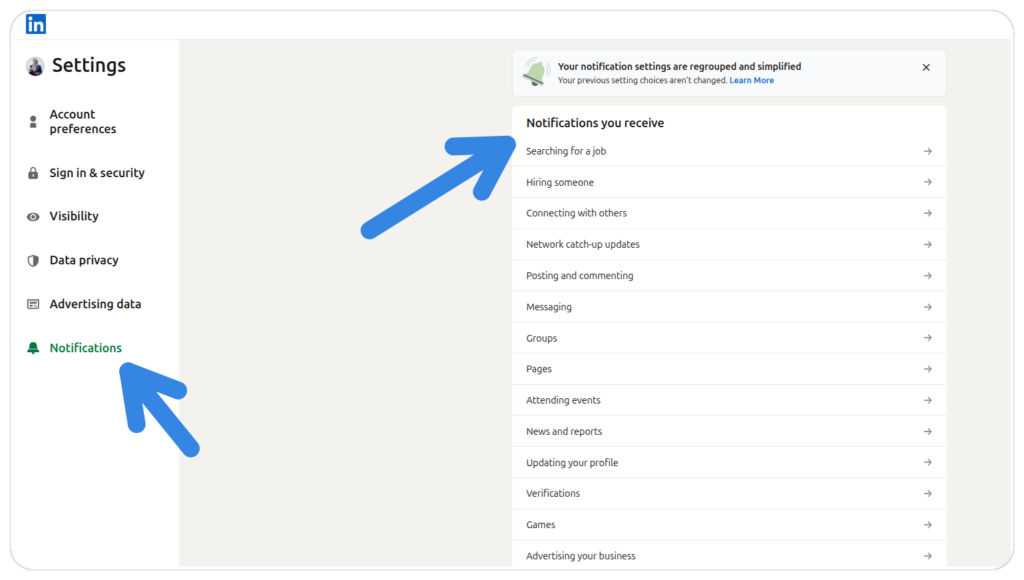
You need to avoid turning every category off in one session. Start with the alerts that create the most interruption but rarely require an immediate response.
For example:
Settings may save automatically, but check the visible status before leaving the page.
The mobile app uses the same general category-based approach.
LinkedIn’s mobile instructions similarly direct members to profile settings, then Notifications, where categories can be managed individually.
In-app settings may not be the only reason your phone continues to display LinkedIn alerts. Review the operating-system permissions for the app as well.
Android menus differ by manufacturer and operating-system version. If you still receive alerts after changing LinkedIn settings, check your device permissions and any focus, do-not-disturb, or notification-summary settings.
LinkedIn email can include professional alerts that are useful, but it can also become a source of repetitive marketing, recommendation, and network-update messages.
LinkedIn’s notification-management guidance covers both email and mobile alerts through the settings area.
Many promotional, newsletter, recommendation, and marketing emails include an unsubscribe or preference-management option near the bottom.
Use it for:
Do not disable security or account-access emails just to reduce inbox volume. Those messages may be important when LinkedIn detects unusual sign-ins, password changes, account changes, or other security-related activity.
If some LinkedIn emails are useful but do not deserve immediate attention, use folders, labels, or filters.
| Email type | Suggested action |
| Job alerts | Route to a Job Search folder and review daily |
| Event updates | Keep in primary inbox until the event ends |
| LinkedIn newsletters | Send to a Professional Reading folder |
| Network updates | Archive or mark low priority |
| Post-comment alerts | Keep visible if you manage an active professional profile |
| Marketing emails | Unsubscribe or filter to a review folder |
| Security notifications | Keep in primary inbox and mark important |
This gives you control without losing access to relevant information.
Muting is useful when a message thread is distracting but does not require blocking, reporting, or ending the relationship.
The exact wording can vary by device. In some mobile versions, you may need to swipe on a conversation, select More, and then choose Mute.
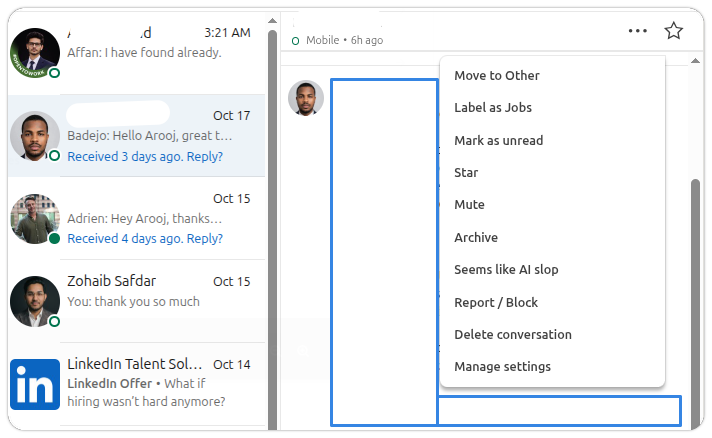
Mute a conversation when:
Muting protects your attention without ending a relationship that may still be useful. The same principle applies to managing LinkedIn messages professionally: respond when there is genuine context, then reduce interruptions when a conversation no longer needs immediate attention.
Use stronger actions if a person is:
For serious conduct, use LinkedIn’s block and report options rather than relying only on mute.
Not every notification comes from an individual connection. Groups, events, and newsletters can create a large share of LinkedIn alerts.
Groups are useful only when they provide relevant discussion, professional learning, industry context, hiring information, or community value.
For each group, decide whether to:
Do not stay subscribed to a group solely because it has a large member count. Retain groups that are relevant to your current work, career direction, audience, or professional interests.
Keep alerts enabled for webinars, industry sessions, recruitment events, partner discussions, and professional roundtables you genuinely plan to attend. Event timing, speakers, access links, agendas, and reminders can change close to the start time.
For live sessions that support a campaign, schedule reminder posts and registration content ahead of time rather than relying on last-minute alerts; this guide to scheduling LinkedIn posts explains how to build that publishing rhythm without losing room for timely updates.
Reduce alerts for events you no longer plan to attend.
LinkedIn newsletters can help you track industry research, professional education, company updates, and expert commentary. They can also become a hidden source of inbox overload.
Review subscriptions periodically:
Profile-update sharing is separate from standard notification settings. It controls whether LinkedIn may notify your network when you update parts of your profile.
The labels can vary over time, but the setting is often described as Share profile updates with your network, Sharing profile edits, or similar wording.
Older LinkedIn guidance refers to this setting as sharing profile edits or profile updates with your network, though the current label and menu placement can change.
Turn profile sharing off when you are:
When several profile sections need attention, update them as one coherent professional story rather than making isolated edits. A practical LinkedIn profile optimization guide can help align your headline, About section, Experience, skills, Featured assets, and public proof before you decide which changes to share.
If you are announcing a new role, business, promotion, service, project, milestone, or career transition, write a deliberate post rather than relying on a passive profile update.
A thoughtful announcement can explain:
This gives your network context that an automatic update cannot provide.
Notification preferences are more effective when paired with a clear routine for checking LinkedIn.
Teams should also separate real engagement from routine publishing reminders. A documented LinkedIn content-planning process clarifies who owns drafts, approvals, comments, campaign alerts, and follow-up, so notifications do not become the team’s only operating system.
For people and teams who publish regularly, comments, mentions, and messages can contain important information. They may reveal customer questions, recruitment interest, partner requests, product concerns, or useful audience feedback.
The answer is not always to turn them off. Instead:
If frequent reactions and comment alerts are creating pressure to publish more, remember that more posts are not automatically better. The principles behind building relevant LinkedIn reach prioritize useful content and credible participation over constant activity.
When several people share responsibility for comments, mentions, and direct messages, a social media inbox for team responses can route conversations to the person with the right customer, product, recruiting, or legal context instead of leaving every alert with one social-media manager.
Turning down alerts creates more time for the activity that contributes to meaningful professional outcomes:
A notification should serve a real action. If an alert does not help you decide, respond, learn, protect your account, or follow through, it may not need immediate delivery.
Avoid these common mistakes to manage notifications without missing important updates.
A clear LinkedIn performance measurement framework helps you track meaningful results instead of treating notification activity as a measure of success.
ContentStudio does not control personal LinkedIn notification settings. It helps teams reduce operational noise by organizing the content and engagement workflows that otherwise create last-minute alerts and scattered responsibilities.
Use ContentStudio to:
The result is not fewer meaningful LinkedIn interactions. It is a more deliberate system for deciding which interactions deserve attention and who should respond.
LinkedIn notifications should support your work, not constantly pull you away from it. Keep messages, meaningful comments, job updates, event changes, and account-security alerts available. Reduce reaction-only alerts, irrelevant group activity, low-value suggestions, and marketing emails that no longer help you.
Use settings together with a routine. Check LinkedIn when you have time to respond thoughtfully, not every time a phone alert appears. The result is a quieter inbox, more focused work, and better attention for the conversations that matter.
You can reduce or disable many LinkedIn email, mobile, and in-app notification categories through Settings & Privacy and the Notifications menu.
However, it is usually safer to retain messages, important comments, job updates, event changes, and security alerts. Turning every category off can make you miss time-sensitive professional activity.
Open the LinkedIn app, tap your profile image, select the Settings icon, open Notifications, and manage categories of notifications you receive.
If alerts continue, check the LinkedIn notification permissions in your phone’s operating-system settings.
Yes. Open Settings & Privacy, select Visibility, and look for Share profile updates with your network, Sharing profile edits, or a similar setting. Turn it off before making profile edits you prefer to complete quietly.
Check the current options in your account because LinkedIn labels and menu locations can change.
No. A social media management platform cannot change your personal LinkedIn notification settings. It can help teams plan publishing, organize approval, manage supported engagement, and evaluate performance so they do not need to monitor LinkedIn constantly.
No. Your personal notification preferences do not directly determine how LinkedIn distributes your posts. Reach depends on content relevance, audience fit, account credibility, meaningful engagement, format, timing, and other platform factors.
Plan 0 Days of Content in 0 Minutes
Create, schedule, publish and analyze your content across all your social media channels from one simple dashboard.
4.7 on Capterra • 16,500+ marketers trust ContentStudio
Khadija Anwar is a Senior Technical Writer at ContentStudio with over 500 published write-ups across the ContentStudio blog and beyond. She specializes in step-by-step platform guides and Help Center content across Facebook, Instagram, LinkedIn, YouTube, TikTok, and X, and reviews how-to articles to verify every step and platform detail is accurate and current.
View all posts by Khadija AnwarRecommended for you
How to grow LinkedIn followers organically: Strategy for sustainable growth
How to remove connections on LinkedIn?
How to optimize your LinkedIn profile?
12 best LinkedIn analytics tools in 2026