Messenger

What is a messenger?
Messenger refers to a communication platform that allows users to exchange messages, media, and other content in real-time.
These applications have evolved from simple text-based services to comprehensive communication tools featuring voice calls, video chats, file sharing, and integration with various business tools.
The most prominent examples include Facebook Messenger, WhatsApp, Telegram, and WeChat.
History and evolution of messenger applications
The concept of instant messaging has come a long way since the early days of the internet. Early messenger applications like ICQ and AOL Instant Messenger (AIM) paved the way for modern messaging platforms.
These simple text-based services allowed users to communicate in real-time, revolutionizing online interactions.
As technology evolved, messenger applications expanded their features and capabilities.
The introduction of smartphones accelerated this evolution, with mobile-first messengers gaining prominence. Facebook's acquisition of WhatsApp in 2014 for $19 billion highlighted the growing importance of messaging platforms in the digital ecosystem.
Today's messenger applications offer much more than simple text exchanges. They have become comprehensive communication hubs that integrate with various aspects of users' digital lives, including social media management and content planning.
Key features of modern messenger platforms
Modern messenger platforms offer a wide range of features designed to enhance communication and engagement:
- Real-time messaging: Instant text communication with read receipts and typing indicators
- Media sharing: Ability to send photos, videos, documents, and other file types
- Voice and video calls: High-quality audio and video communication
- Group conversations: Creating and managing group chats for multiple participants
- End-to-end encryption: Secure messaging that protects the privacy of conversations
- Bots and integrations: Automated assistants and third-party service integrations
- Payment options: Peer-to-peer money transfers within the messaging platform
- Cross-platform availability: Synchronization across multiple devices and operating systems
The integration of these features makes messengers essential tools for both personal and business communication.
Business applications of messenger platforms
Messenger platforms have become vital channels for business communication and marketing. Many brands use messengers to provide customer support, deliver personalized marketing messages, and facilitate e-commerce transactions.
Customer service and support
Messengers offer direct, immediate communication channels between businesses and customers.
Companies can provide real-time support, answer queries, and resolve issues efficiently through messenger platforms. This approach allows for personalized interactions that can enhance customer satisfaction and loyalty.
According to research, over 64% of consumers prefer to message rather than call a business, highlighting the importance of messenger-based customer service. Integrating messenger-based support with your social media management strategy can create a cohesive customer experience.
Marketing and engagement
Messenger platforms offer unique marketing opportunities through:
- Personalized messaging: Direct communication with individual customers
- Chatbots: Automated systems that can provide information, collect data, and guide users
- Broadcast lists: Sending announcements and updates to multiple users simultaneously
- Rich media content: Sharing interactive content like carousels, videos, and polls
Incorporating messenger marketing into your social media content strategy can significantly boost engagement and conversion rates.
E-commerce integration
Many messenger platforms now support e-commerce functionalities, allowing businesses to:
- Display product catalogs directly within the messenger
- Process payments without leaving the conversation
- Send order confirmations and shipping updates
- Provide post-purchase support
These capabilities have transformed messengers into effective social commerce channels, particularly for businesses targeting younger demographics who spend significant time on these platforms.
Popular messenger platforms
Several messenger applications dominate the global market, each with unique features and regional preferences.
Facebook Messenger
Facebook Messenger is one of the most widely used messaging platforms, with over 1.3 billion monthly active users. Integrated with Facebook's ecosystem, Messenger offers businesses tools for customer engagement, advertising, and automated interactions through chatbots.
Companies that actively invest in Messenger as part of their Facebook marketing strategy can deliver seamless, personalized customer experiences that build lasting loyalty. Businesses managing a consistent content calendar with a Facebook post scheduler are better positioned to pair timely posts with responsive Messenger interactions, creating a cohesive presence that nurtures audiences from first touch to conversion.
With over 2 billion active users worldwide, WhatsApp is the most popular messaging application globally. The platform offers end-to-end encryption, making it a secure option for both personal and business communications.
WhatsApp Business provides specialized tools for small and medium enterprises, including business profiles, quick replies, and automated messages. Larger organizations can use the WhatsApp Business API to integrate the platform with their customer service systems and social media management tools.
Telegram
Telegram has gained popularity for its emphasis on security, speed, and the ability to create large groups of up to 200,000 members. The platform supports channels that allow broadcasting messages to unlimited audiences, making it a powerful tool for content distribution.
Businesses can use Telegram to create communities around their brands, share social media content, and provide updates to large groups of followers simultaneously. The platform's bot API also enables the creation of sophisticated automated services.
Other notable messengers
Several other messaging platforms have significant user bases in specific regions or offer unique features:
- WeChat: Dominant in China, WeChat is a comprehensive ecosystem that includes messaging, social media, and payment services
- Line: Popular in Japan, Thailand, and other Asian countries
- Signal: Focused on privacy and security with advanced encryption features
- Slack: Primarily designed for business communication and team collaboration
Best practices for using messengers in business
To effectively leverage messenger platforms for business purposes, organizations should:
- Develop a clear messenger strategy: Determine goals, target audience, and key performance indicators
- Maintain consistent brand voice: Ensure messaging aligns with overall brand voice
- Balance automation and human interaction: Use chatbots for routine queries but provide human support for complex issues
- Respect privacy and data protection: Adhere to regulations and platform guidelines regarding user data
- Track and analyze performance: Monitor engagement, response times, and conversion rates
- Integrate with other channels: Coordinate messenger communications with email marketing and social media efforts
By following these practices, businesses can maximize the effectiveness of messenger platforms as part of their overall communication strategy.
Future trends in messenger applications
The messenger landscape continues to evolve, with several emerging trends shaping the future of these platforms:
Enhanced AI integration
Artificial intelligence is becoming increasingly sophisticated in messenger applications, powering more capable chatbots and providing features like smart replies, automatic translation, and content recommendations. This technology helps businesses scale their customer service operations without sacrificing quality.
Augmented reality features
Many messenger platforms now offer augmented reality (AR) filters, effects, and virtual backgrounds. Businesses can leverage these features for immersive marketing experiences, product demonstrations, and engaging customer interactions.
Focus on privacy and security
As privacy concerns grow, messenger platforms are emphasizing enhanced security features like end-to-end encryption, disappearing messages, and greater user control over data. Organizations must adapt their social media strategies to respect these privacy expectations.
Expanded payment and commerce capabilities
Messengers are increasingly becoming hubs for financial transactions, with improved payment systems and e-commerce integrations. This trend is creating new opportunities for businesses to monetize their messenger presence and streamline the customer journey.
By staying informed about these trends and adapting strategies accordingly, businesses can continue to leverage messenger platforms as valuable channels for customer engagement and marketing.
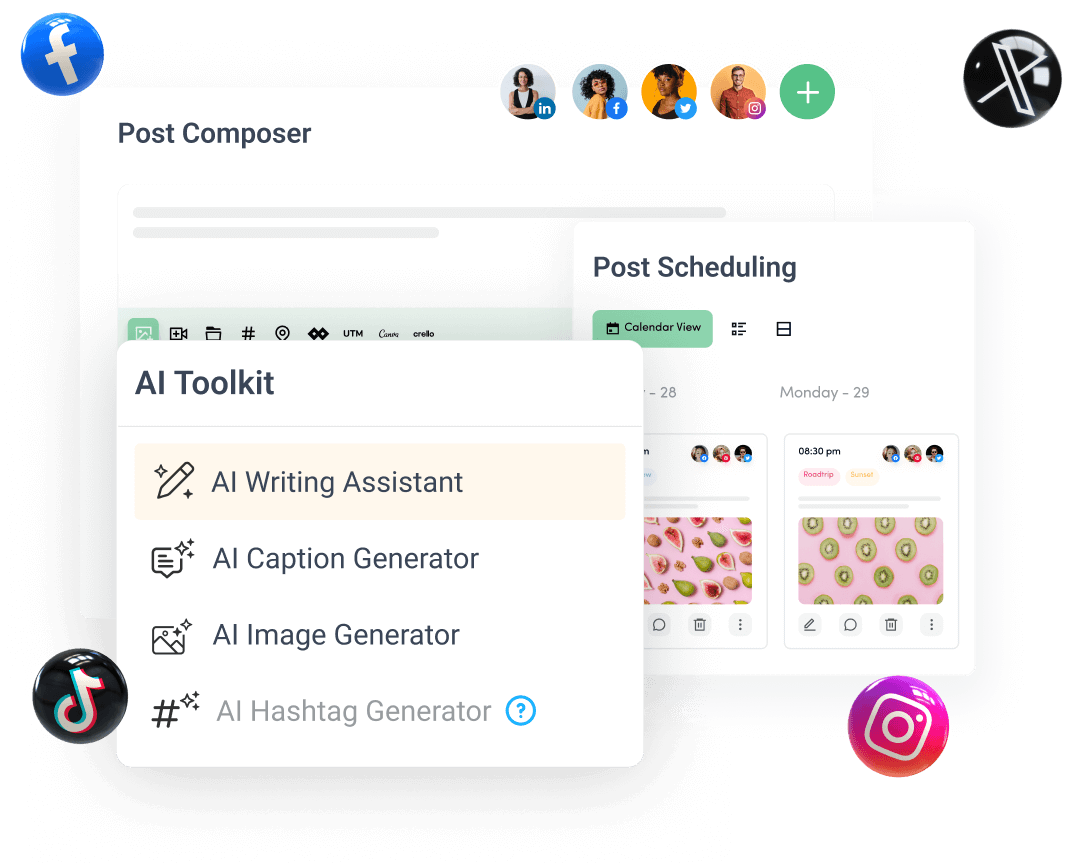
Create, plan, schedule, and publish posts on all social media networks