95% of marketers use AI. Only 39% see better performance. The gap isn’t the AI
Oct 7, 20268 minutes

Written by
Abdullah MansoorUpdated
Black Friday rewards speed. The brands that post first with the clearest offer usually win the scroll, and the ones scrambling for a caption at 11 PM usually don’t.
This page gives you the words for that: quotes, social captions, hashtags, slogans, and email subject lines for Black Friday 2026, grouped by use case so you can find what fits your channel and either use it as written or adapt it to your brand’s voice in a minute or two.
None of this replaces a real plan. If your offer, timing, and channels for the day aren’t settled yet, start with your Black Friday campaign strategy and come back here once that’s locked, since the right words only work when they’re attached to the right offer.
Humor travels. A funny line is more likely to get shared, saved, or sent to a friend than a straight discount announcement, and it works almost anywhere: a caption, a T-shirt, a store sign, or the subject line of an email.
It also does something a plain discount callout can’t: it makes a brand feel like a person, not a pricing engine, which matters on days when every competitor is shouting the same percentage off.
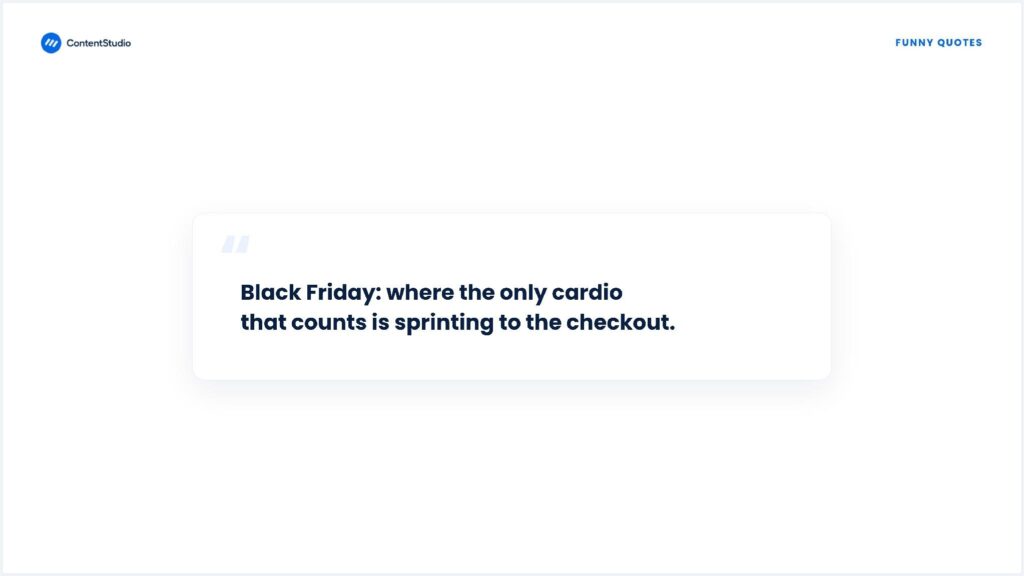
Use these where your audience already expects a lighter tone, feeds, Stories, a closing line in an email, or a sign near the register. Save the more serious lines below for channels where a joke would feel out of place, like a formal B2B announcement.
Not every Black Friday post needs to be loud. A warmer, calmer line works well for gift guides, thank-you posts, or brands that want to lead with value instead of urgency, especially for an audience that’s a little tired of being shouted at by every other brand in their feed that week.
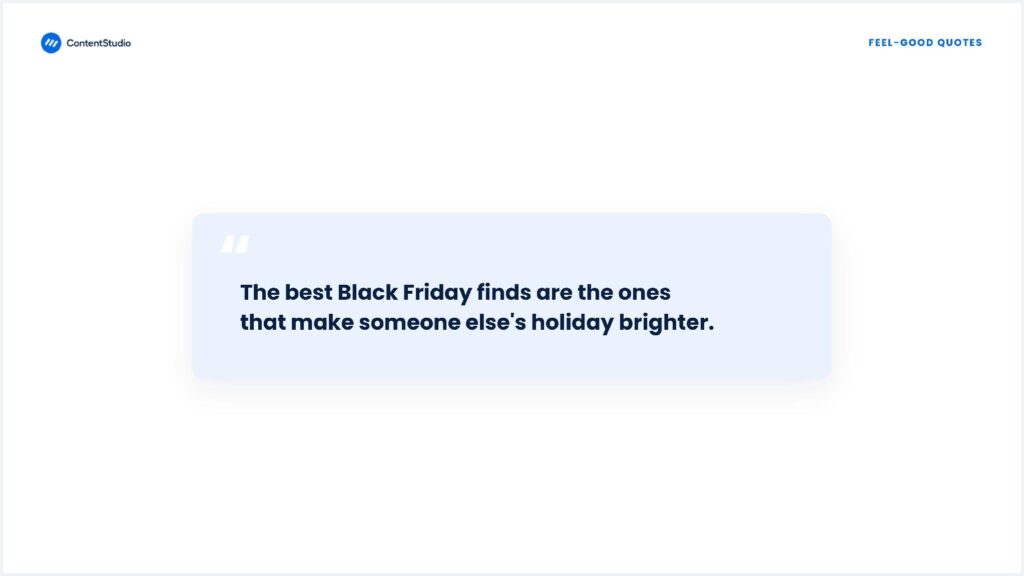
These lines also hold up better after the sale ends. A funny countdown post stops making sense on Cyber Monday; a line about gratitude or giving still works in a thank-you email a week later.
Keep a couple of these in reserve for your post-purchase and follow-up messages, not just the launch push.
Some of your audience treats Black Friday like a sport. These lines lean into that energy, competitive, a little dramatic, very online, and they tend to perform well as standalone posts or as the hook in a longer caption, since they describe a feeling your most engaged shoppers already recognize in themselves.
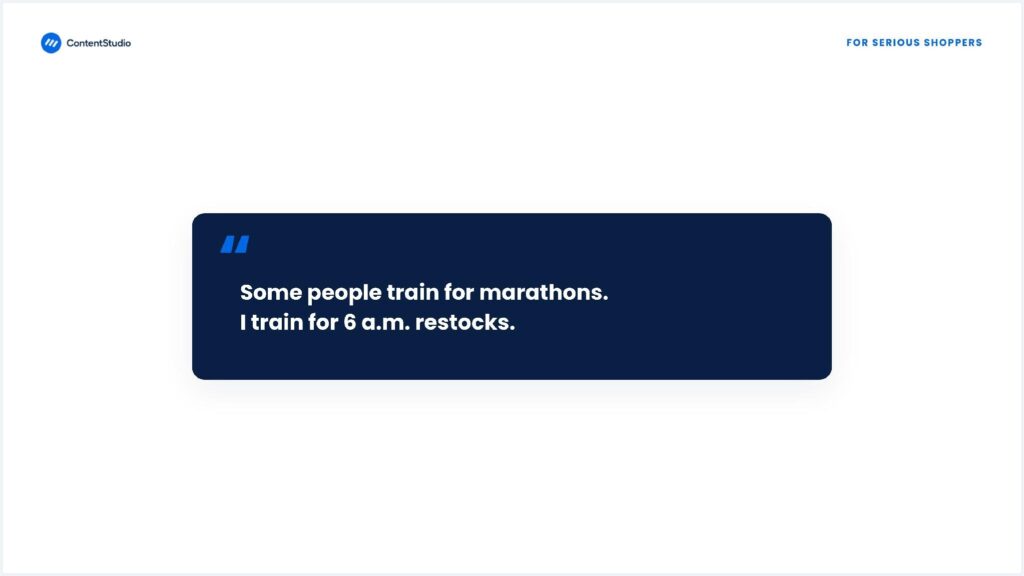
This tone works especially well paired with a countdown, a waitlist, or an early-access offer, since all three reward the kind of person who plans ahead for a sale.
If your brand has a loyalty program or a VIP list, these lines make a natural fit for the emails and posts that go to that group specifically.
A slogan has one job: land in the half second someone gives it before scrolling past. That means short, punchy lines with no setup and no punchline, just a clear idea of what’s on offer and why it matters right now.
Save the longer, more personal quotes above for captions and emails where someone is already reading; use slogans for ads, banners, product pages, and anywhere else your copy has to work in a single glance.
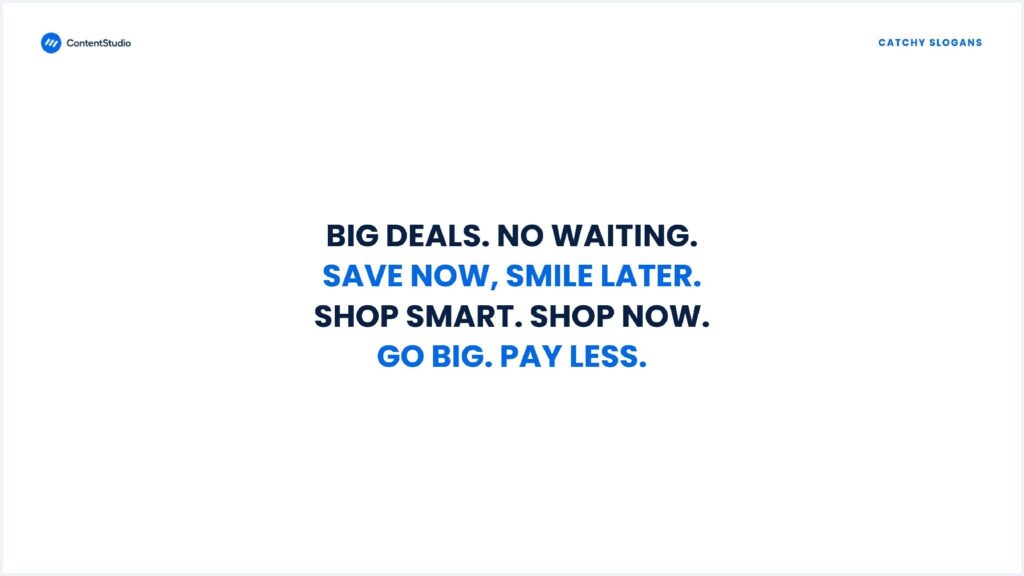
A few guidelines that make slogans perform better across channels: keep each one to six words or fewer where you can, lead with the benefit rather than the brand name, and test two or three against each other rather than betting the whole campaign on one line you like best.
These work as-is or as a starting point, add your own offer, emoji, or brand voice on top. Unlike the slogans above, a caption gets to breathe a little: it can carry a complete sentence, a bit of personality, and a call to action, because the format gives the reader a beat longer to engage before moving on.
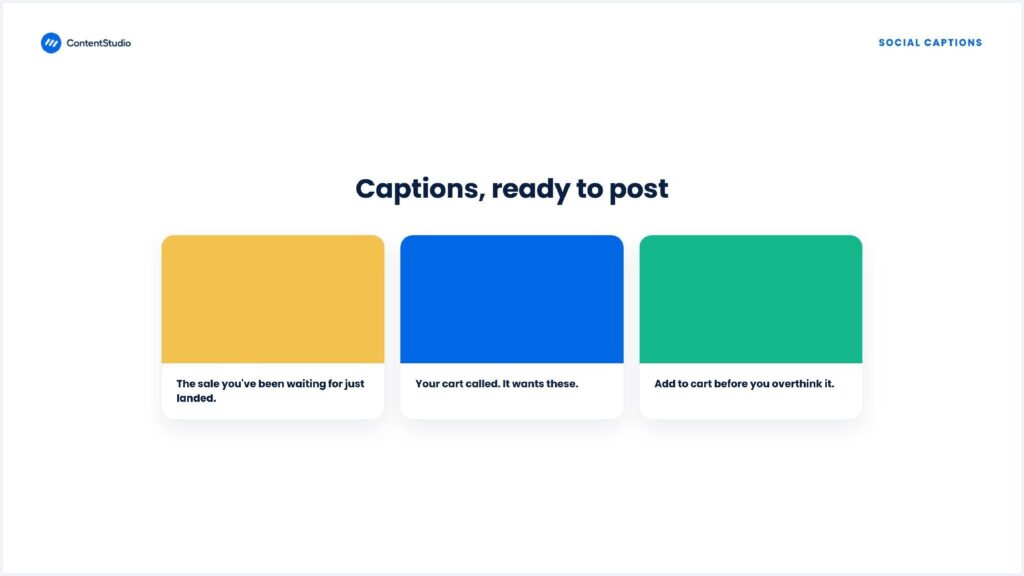
If you’re running the same offer across Instagram, Facebook, X, TikTok, and LinkedIn, resist the urge to post the exact same caption everywhere.
The line itself can stay close to identical, but the format around it should change: a short, punchy version for X and LinkedIn, a slightly longer one with more hashtags for Instagram, and something built around a hook for the first second of a TikTok or Reel.
Planning that out post by post gets tedious fast once you’re covering more than two platforms, which is where scheduling the whole batch in one sitting, rather than logging into each app separately, saves the most time during launch week.
A short set of broad hashtags plus a few relevant category tags usually outperforms stuffing a post with every tag you can think of.
The broad tags put you in front of people actively browsing Black Friday content; the category tags put you in front of the smaller, more specific audience that’s actually likely to buy what you sell. Here’s a starting set, organized by purpose.
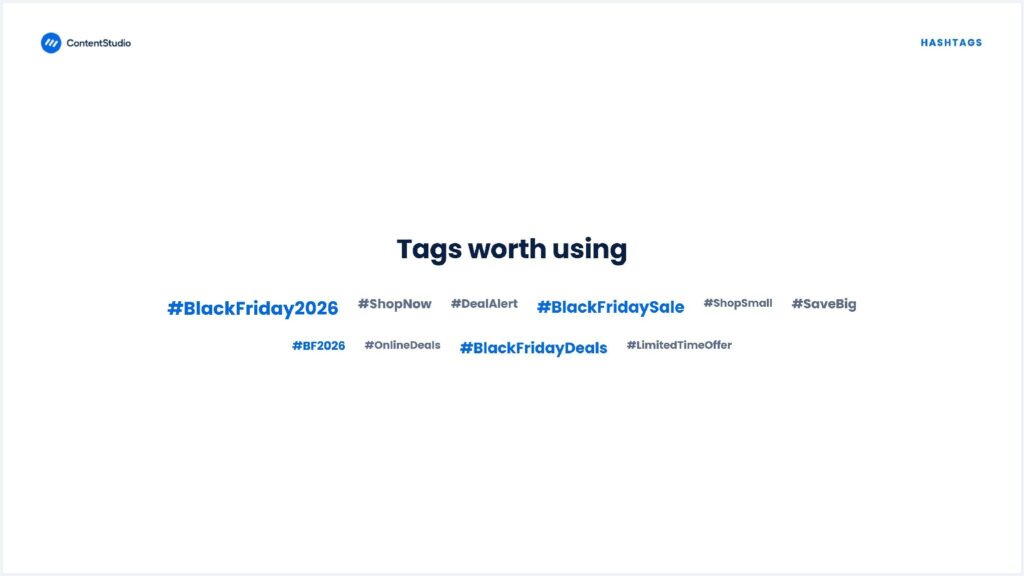
#BlackFriday2026, #BlackFridaySale, #BlackFridayDeals, #BF2026, #ShopBlackFriday, #BlackFridaySpecials, #BlackFridaySavings
| Category | Hashtags |
| Funny / lighthearted | #ShoppingIsMyCardio, #DealHunter, #RetailTherapyDay, #CartWars, #NoSleepJustDeals |
| Deal-specific | #DealAlert, #ShopNow, #SaveBig, #PriceDrop, #LimitedTimeOffer |
| Industry-specific | #BlackFridayFashion, #BlackFridayTech, #BlackFridayBeauty, #BlackFridayHome, #BlackFridayGaming |
| Online shopping | #ShopFromHome, #OnlineDeals, #ClickAndSave, #CyberSavings |
| Engagement-driving | #ShowUsYourHaul, #MyBlackFridayFind, #TagYourDeals, #ShopAndShare |
| Small business | #ShopSmall, #SupportSmallBusiness, #SmallBusinessSaturday |
A tip worth repeating: match hashtags to the platform. Instagram and TikTok can carry several tags in a caption without it looking cluttered; LinkedIn and X read better with one or two, placed naturally in the sentence rather than stacked at the end.
Rotate your category tags through the week too. Using the exact same five tags on every post for four days in a row tells the algorithm (and your audience) that nothing is new, even when the offer underneath has changed.
If you’re tracking which tags actually drive traffic rather than just engagement, pull that data from your social media analytics after the first day or two of the sale and adjust the mix for the rest of the week rather than waiting until the retrospective to find out what worked.
Also read: Black Friday Software Deals for 2026, a roundup for anyone shopping for tools rather than selling them.
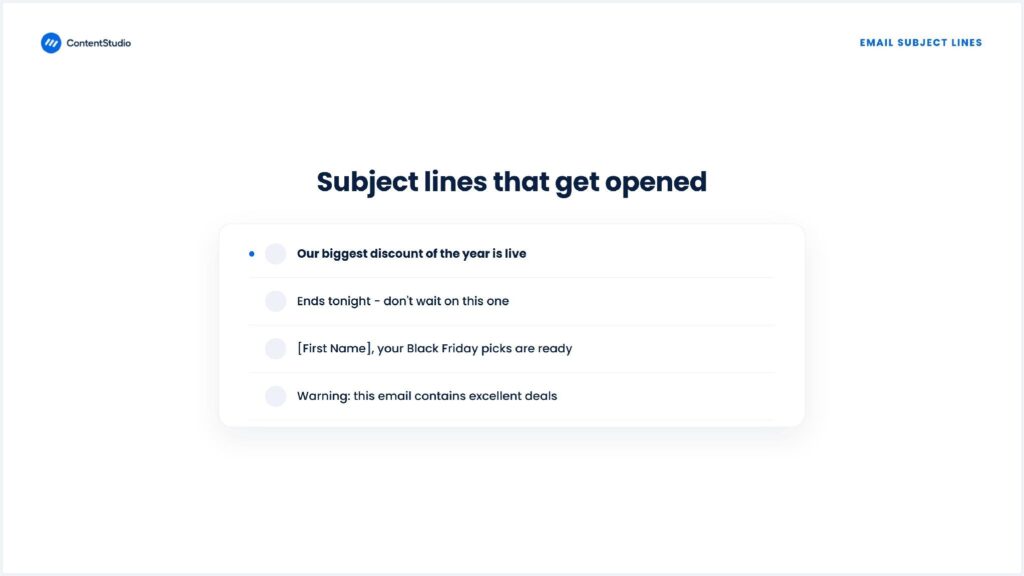
Your subject line decides whether the email gets opened at all. The body copy, the offer, the design, none of it matters if the subject line doesn’t earn the open first.
These are grouped by the angle they take, so you can match the tone to where that email sits in your sequence.
The same line rarely works everywhere unchanged. A few notes on adapting them by channel, and on actually getting them out the door once you’ve picked your favorites.
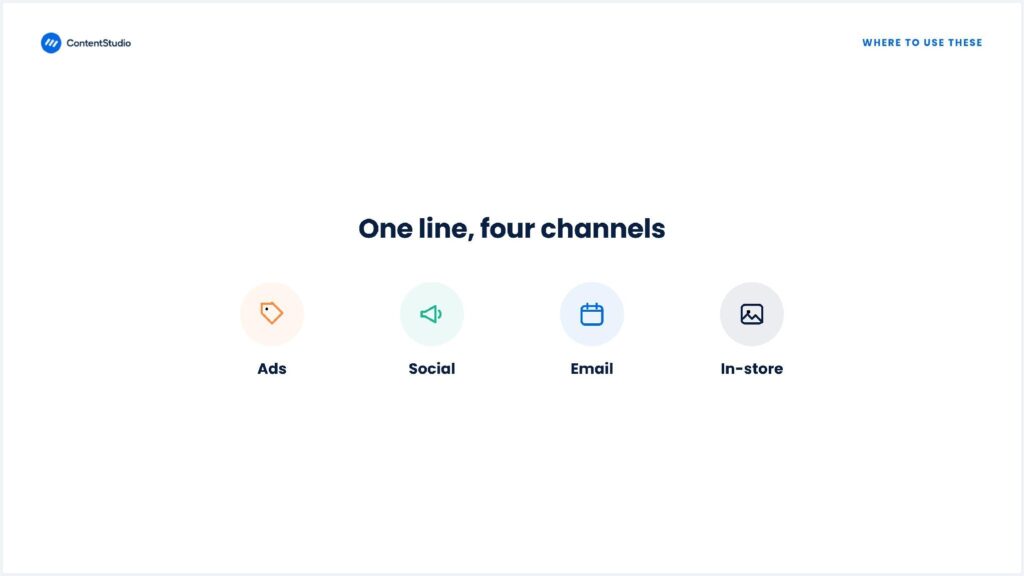
Keep it to one slogan and one number (the discount or the deadline). Anything longer gets skipped, since most people glance at an ad for less than a second before deciding whether to keep looking. If you’re running the same creative across multiple ad platforms, keep the slogan identical between them; only the surrounding design needs to change.
Put the strongest line in the subject, then let the body do the explaining, don’t repeat the same hook twice. Save a second, different hook for the preview text, since that’s the second thing a reader sees before they decide to open.
Plan your whole send sequence (teaser, launch, reminder, last call) in one sitting rather than writing each email the day it goes out; it’s easier to keep the tone consistent across four emails when you’re writing them back to back instead of across four separate days.
Captions can carry more personality than ads. This is where the funny or shopper-energy lines work best. Pair with two to five relevant hashtags, not a wall of them, and vary the format by platform, a photo carousel on Instagram, a short video on TikTok, a plain-text post on X or LinkedIn.
This is also the channel where the volume of work adds up fastest. A single Black Friday push across five platforms, with a teaser, a launch post, a reminder, and a last-call message on each, is twenty separate posts before you’ve even started on Stories or Reels.
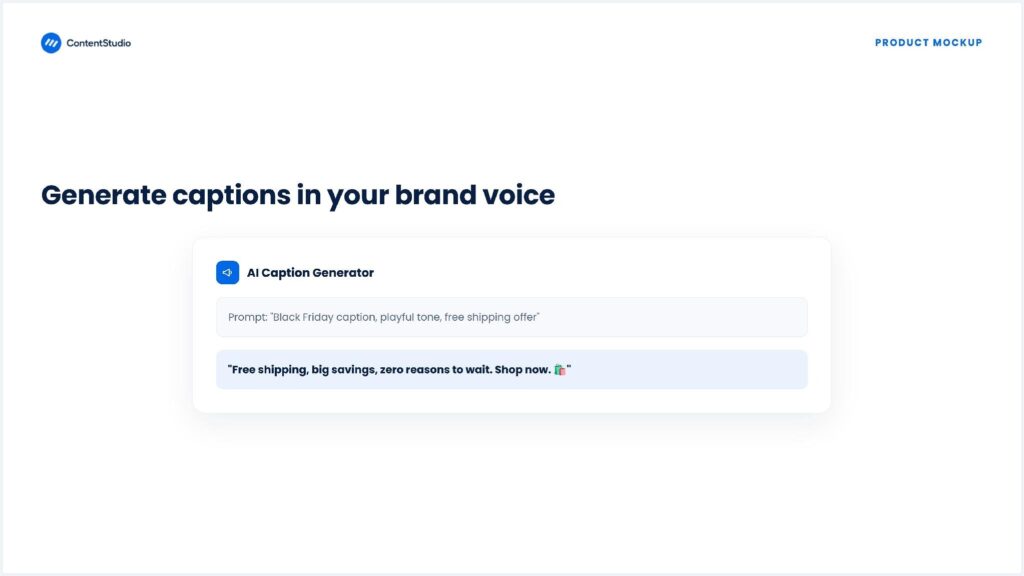
Writing and scheduling that many posts one login at a time is where most small teams lose their week. ContentStudio’s social media scheduler lets you lay out the entire week of posts in one view and schedule all of them in a single sitting, rather than hopping between five different platform dashboards every time you want to publish something new.
For the volume specifically, bulk scheduling lets you queue up a week’s worth of posts at once instead of creating and scheduling them one by one, and ContentStudio’s AI Studio can take any line from this page and adapt it to your brand voice in a few seconds if you want a quick variation rather than writing one from scratch.
Short slogans work better than captions written for a feed, they need to read in half a second from across a room. Keep the font large, the discount number bigger than anything else on the sign, and the end date visible without anyone having to walk up and squint at it.
A Black Friday caption doesn’t need to reinvent anything; it needs to be ready when you are. Pull from the lists above, adjust for your brand’s tone, and match the format to the channel: short and punchy for ads, warmer for email, a little more personality for social.
The deals get people’s attention. The words are what make them stop and read, and the plan behind them is what turns that attention into a sale.
None of that has to mean more manual work during the one week of the year when your team has the least time to spare. With the content mapped out, ContentStudio handles the rest: scheduling, approvals, and inbox.
Lead with the offer and keep it short: what’s on sale, how much is saved, and how long it lasts. A line like “Our biggest sale of the year is live, save now before it’s gone” covers all three in one sentence.
Keep it warm and brief: “Happy Black Friday, hope your cart is full and your budget behaves.” Add humor if it fits your brand voice, or keep it simple if it doesn’t.
State the discount, the start time, and the deadline clearly in the first line, then follow with a direct call to action like “Shop now” or “See the deals.”
A mix of two or three broad tags (like #BlackFriday2026 or #BlackFridaySale) and one or two specific to your category usually performs better than ten generic ones stacked together.
A good slogan is short, states the benefit, and skips the setup. “Big Deals. No Waiting.” and “Go Big. Pay Less.” both work because they fit in a glance and don’t need explanation.
Most brands post more during Black Friday week than any other week of the year, often a teaser, a launch post, a reminder, and a last-call message on each platform they use.
Captions that name the offer and add urgency perform best, for example: “Deals this good deserve a screenshot” or “This weekend’s only job: saving you money.”
Yes. Black Friday is a proper noun referring to a specific day, so both words are capitalized in sentences, headlines, and hashtags.
Black Friday leans into in-the-moment urgency and crowd energy; Cyber Monday messaging usually works better framed as a last chance or an online-only extension of the same deal.
Keep it under eight or nine words, lead with the discount or the deadline, and use at most one emoji. “Ends tonight, don’t wait on this one” is a solid template to adapt.
Plan 0 Days of Content in 0 Minutes
Create, schedule, publish and analyze your content across all your social media channels from one simple dashboard.
4.7 on Capterra • 16,500+ marketers trust ContentStudio
Abdullah Mansoor is a Senior Content Writer at ContentStudio with a proven track record creating engaging content across SaaS, technology, marketing, and e-commerce. He focuses on Instagram growth, how-to guides, carousel posts, user-generated content, and white-label social media management, and reviews blog content for structure, clarity, accuracy, and a consistent brand voice.
View all posts by Abdullah MansoorRecommended for you
95% of marketers use AI. Only 39% see better performance. The gap isn’t the AI

Seedance 2.0: What it does, key features, and use cases
Evergreen content: How to create Long-lasting traffic for your website
6 proven ways to build backlinks with content marketing for SEO