
LinkedIn Company page guide: How to create, optimize, and grow it
Sep 24, 202621 minutes

Written by
Arooj IshtiaqUpdated
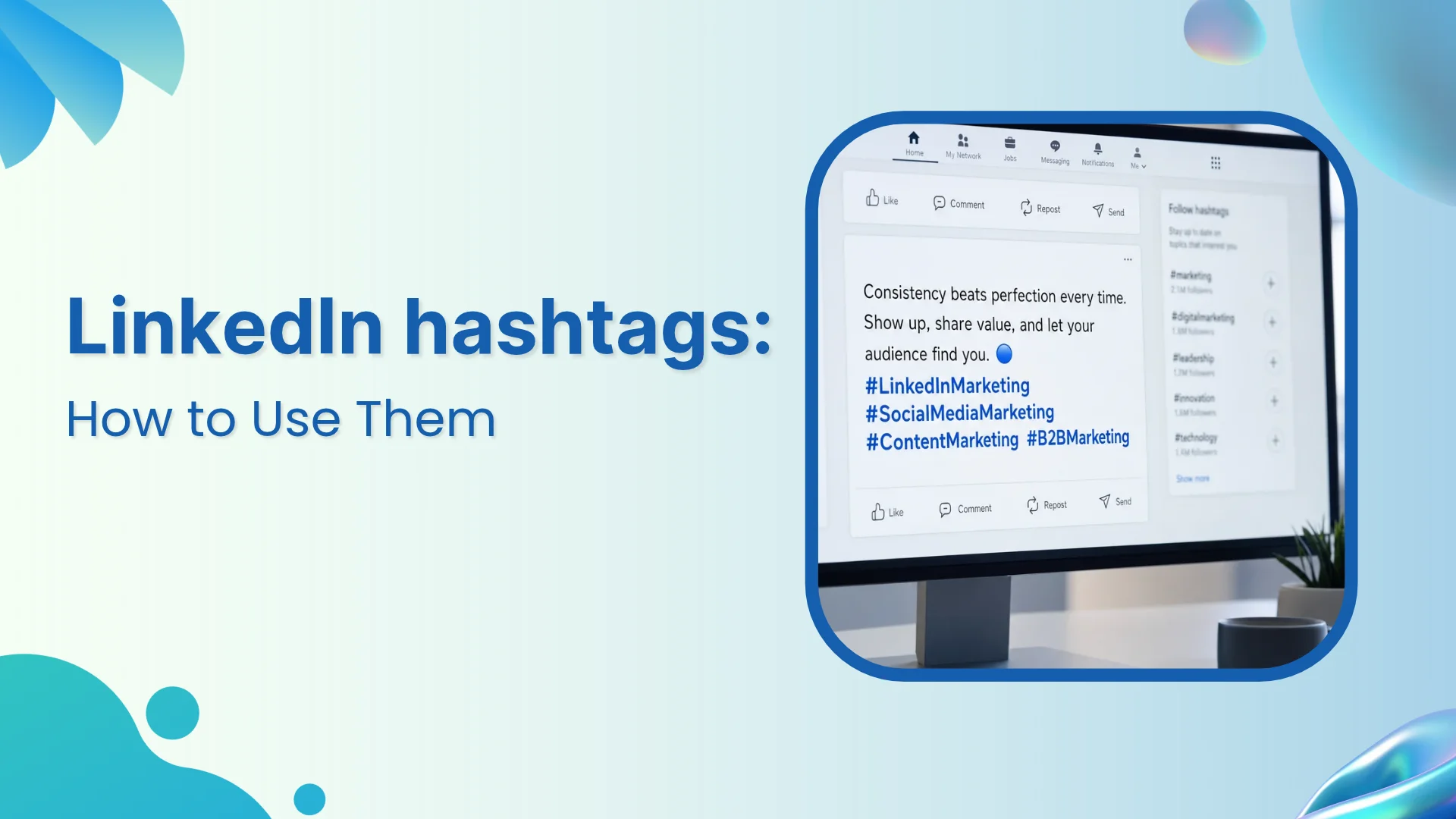
LinkedIn hashtags can still help readers identify a topic and explore related conversations, but they are not a shortcut to guaranteed reach. A post with a clear point of view, useful evidence, and a specific professional audience will usually be more valuable than a post padded with popular-looking tags.
A focused marketing plan for LinkedIn helps determine whether a hashtag supports a genuine audience need, campaign theme, event, or professional conversation. Teams that coordinate content across several contributors can use a good scheduler for LinkedIn to keep topic choices, approvals, publishing, and review in one workflow.
The practical role of a hashtag is modest: it can provide additional topic context, make the subject obvious at a glance, and connect a post with a recognizable professional conversation. It should support the message, not become the message.
Use these principles when deciding whether, and how, to attach hashtags to a post.
LinkedIn hashtags are clickable topic labels that begin with the # symbol. They can help readers recognize the subject of a post and explore other posts using the same term, but they are not a guaranteed distribution mechanism, and LinkedIn does not state that adding a hashtag automatically expands a post’s reach.
A post’s visibility is influenced by much more than one tag. Topic relevance, the relationship between the author and audience, content quality, professional context, reader behavior, competing updates, and the way people respond all affect how a post performs. LinkedIn’s individual-post analytics can show in-network and out-of-network impressions for eligible posts, but those figures cannot prove that a particular hashtag caused discovery.
The most reliable use of a hashtag is therefore editorial rather than mechanical. It should clarify the professional topic for the reader, reinforce the language used in the post, and connect naturally to an established conversation. For example, a post about preparing customer-success teams for onboarding questions may use #CustomerOnboarding because the post itself discusses that subject. Adding #Leadership, #Innovation, or #Business would be less useful unless those concepts are genuinely central to the point.
Hashtags still have a useful editorial role even though they are not a guaranteed reach tactic. They can help readers recognize a topic at a glance, create consistency around a campaign or event, and make it easier for contributors to use shared professional vocabulary.
For businesses, they can also create a light organizational layer across content from a Company Page, subject-matter experts, event speakers, customers, partners, or employee advocates. The value comes from consistency and topic clarity, not from adding a tag to every post.
A post about a customer webinar, for example, may use an event-specific hashtag alongside a descriptive topic tag. The event label connects related updates, while the descriptive tag explains the broader professional subject for people outside the event community.
A useful hashtag reinforces the language already present in the post. If the post discusses a specific operational challenge, the opening, examples, and conclusion should make that challenge clear even if the hashtag is removed. For example:
Customer education fails when teams answer the same implementation questions repeatedly but never turn those answers into a reusable resource.
#CustomerEducation #B2BContent
The tags make the themes easy to recognize, but the post itself explains the reader’s problem. That is a stronger approach than publishing a generic statement followed by a long list of unrelated labels.
Keywords are the natural language words that explain a topic throughout a post, profile, Page, article, or document. Hashtags are optional topic markers.
A post can be understandable and relevant without hashtags if the language is specific. A post can also be unclear despite using several hashtags if it never explains the audience problem, perspective, or intended takeaway.
For that reason, use precise language first. Add a hashtag only when it gives the reader a useful label for the conversation.
LinkedIn hashtags still exist in posts and remain searchable. Their role is more limited than many older “hashtag hacks” suggest. They may help with topical context and discovery, but they do not replace audience relevance, useful content, clear positioning, or genuine participation in professional conversations.
It is better to view hashtags as one optional editorial element in a broader content system. A consistent content strategy on LinkedIn gives teams stronger foundations for discovery by defining the audience, content themes, proof sources, formats, and intended next steps.
A relevant hashtag can help when it:
A hashtag cannot:
The difference between LinkedIn reach and impressions also matters here. Reach estimates the distinct members and Pages exposed to a post, while impressions estimate total displays. A hashtag may be part of the content context, but it does not provide enough evidence to claim it caused either result.
When creating multi-word LinkedIn hashtags, you can use PascalCase or camelCase to make them easier to read. With PascalCase, capitalize the first letter of every word, such as #LinkedInMarketing or #SocialMediaStrategy. With camelCase, the first word begins with a lowercase letter while the following words are capitalized, such as #linkedinMarketing or #socialMediaStrategy.
Both formats keep multiple words visually distinct, but PascalCase is usually easier to scan and more consistent with how professional LinkedIn hashtags are commonly written. Capitalization does not change the hashtag itself or give it additional reach, so prioritize relevance and readability when choosing between the two.
The key is not hitting a fixed number. It is choosing tags that genuinely relate to the content and make sense for the intended professional audience.
LinkedIn does not publish an official optimal hashtag range, nor does it publish a fixed hashtag count that triggers a distribution penalty. That means claims such as “3–5 is always best” or “10+ hashtags reduce reach” should not be treated as platform rules.
A practical editorial approach is:
| Hashtag use | Appropriate situation |
|---|---|
| No hashtags | The topic is already unmistakable, and extra labels would make the post less readable |
| One hashtag | One professional topic or campaign label accurately captures the post |
| Two to three hashtags | The post genuinely spans a primary topic, a specialist context, and possibly an event or campaign |
| More than three | Use only when each additional term adds distinct reader value; reassess whether the post is trying to cover too many subjects |
This is a readability framework, not an algorithm formula. A post about AI governance might use #ResponsibleAI and #AIGovernance. Adding #Leadership, #Innovation, #DigitalTransformation, #FutureOfWork, and #Business usually makes the label set broader without making the content clearer.
A broad label can be technically relevant without helping the reader understand the post. #Innovation, #Business, and #Success are often too general to describe a specific professional problem or insight.
A more useful selection process favors terms that reflect the actual work, decision, role, or process discussed in the content. A post about making onboarding clearer for enterprise software customers may benefit from #CustomerOnboarding and #CustomerSuccess. Adding #Leadership, #Growth, and #Entrepreneurship would broaden the labels without improving the context.
The reader should understand the post from the writing first. Hashtags should confirm the subject, not carry the whole meaning.
Before adding a hashtag, ask:
If the answer is no, leave it out.
A long string of broad hashtags can make a professional post look unfocused. It also asks readers to infer the topic from labels rather than from the writing itself. Compare these approaches:
Less focused
Our team had an exciting quarter and learned a lot along the way.
#Business #Success #Leadership #Innovation #Growth #Marketing #Strategy #Entrepreneurship #Motivation
More useful
A quarterly review is more useful when the team identifies one recurring customer question, one weak handoff, and one operating decision to improve next.
#CustomerExperience #Operations
The second version provides a clear idea first. The hashtags simply reinforce the professional context.
Placement should protect readability. Most posts are easier to read when hashtags appear after the main message, following a line break.
A LinkedIn hashtag begins with # and does not contain spaces. For a multiword phrase, remove spaces and use capitalization to improve readability, such as #CustomerSuccess, #SupplyChainManagement, or #ResponsibleAI.
Avoid punctuation inside a hashtag because punctuation usually ends the clickable phrase. For example, #B2B-Marketing may not function as intended, while #B2BMarketing is clearer.
Use capitalization consistently for multiword terms. It can help readers interpret the phrase correctly, especially when a tag contains several words.
End placement keeps the post’s main argument, example, or call to action free from unnecessary interruption.
A strong client onboarding process does not need more documents. It needs fewer unclear handoffs and a shared answer to the questions customers ask most often.
#CustomerOnboarding #B2BOperations
This approach works well when tags are supplementary labels rather than essential terms in the sentence.
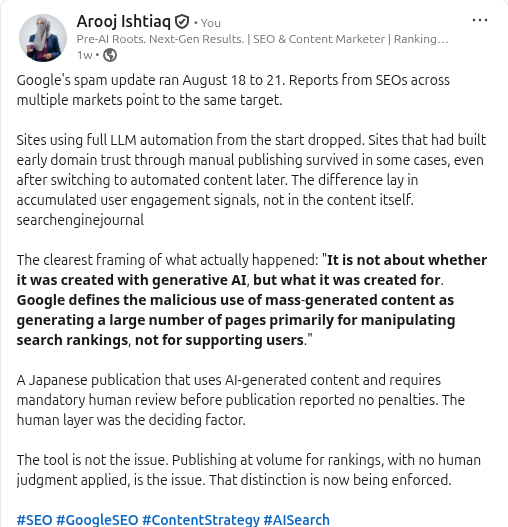
Use a hashtag within a sentence only when it reads naturally and the label itself is part of the point.
The discussion around #ResponsibleAI becomes more useful when teams explain the governance decision behind the policy, not just the policy’s final wording.
Do not insert a hashtag mid-sentence merely to add a clickable word. If it makes the sentence harder to read, move it to the end or remove it.
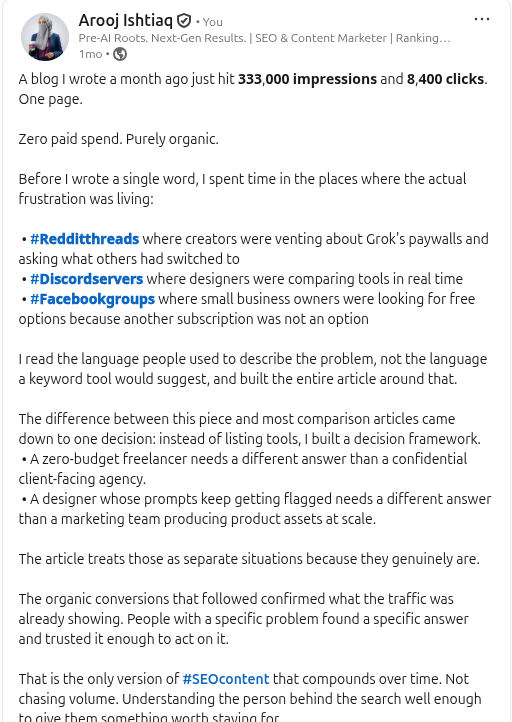
A hashtag in a comment should follow the same rule as one in a post: add it only when it gives useful context. Do not use a first comment to add a hidden block of tags or to simulate extra distribution signals.
Comments are more valuable when they expand the discussion, answer a question, provide an example, or acknowledge a useful perspective. Thoughtful participation is a stronger reason for visibility than keyword-stuffed replies.
Hashtags can be used in text posts, image posts, documents, videos, articles, newsletters, event posts, and Company Page updates when they add useful context. The same relevance standard applies across every format.
| Content type | Appropriate hashtag use |
|---|---|
| Text post | Add one to three topical labels after the main message when they clarify the subject |
| Document or carousel | Use tags in the accompanying post text; make the document understandable without them |
| Native video | Use tags in the post copy when they reflect the video’s professional topic |
| Article or newsletter | Use sparingly in the promotional post; rely on clear headings and natural keywords in the long-form content |
| Event post | Combine an event-specific tag with one descriptive topic tag when both add context |
| Company Page update | Use terms that reflect the business topic, audience problem, resource, or campaign |
| Personal-profile post | Use tags that align with expertise the person can genuinely explain |
| Comment | Add a tag only when it improves topic clarity; never use comments to hide a block of extra tags |
| Paid ad | Do not rely on hashtags for delivery; campaign targeting, creative, offer, and destination drive advertising performance |
Finding appropriate LinkedIn hashtags is a research task, not a search for a universally high-performing list. Start with the language your target audience already uses to describe its role, problem, process, or field.
Use LinkedIn search to look for the exact professional term connected to the post, checking it both with and without the # symbol so you can compare hashtag-specific results against the wider conversation. Add a hashtag before the phrase, then review recent posts associated with that topic. Look for whether the conversation is current, relevant, and populated by the kinds of professionals you want to reach.
For a post about AI governance, search terms such as #ResponsibleAI, #AIGovernance, #AICompliance, and #RiskManagement. The purpose is not to copy every tag used in search results. It is to check whether the term accurately describes the conversation and whether the related posts match the professional context of your own work.
Useful hashtags often come from the wording that customers, prospects, candidates, peers, and subject-matter experts already use. Review:
This approach produces more relevant tags than starting with generic labels such as #Success, #Growth, or #Innovation.
Before adding a hashtag, inspect several recent posts using it. Ask:
If the tag does not meet these tests, leave it out.
Many business subjects have several valid labels. A team publishing about responsible use of AI might compare #ResponsibleAI, #AIGovernance, #AICompliance, and #RiskManagement.
Do not use every variation. Select the one or two labels that best match the actual point of the post. If the content is about governance policy, #AIGovernance may be more precise than #ArtificialIntelligence. If the post focuses on legal or regulatory obligations, #AICompliance may be more appropriate.
A small topic bank can make editorial work faster without encouraging copy-and-paste behavior. Organize possible tags by audience theme, content purpose, or campaign, not by a promise that the same tags will always improve reach.
For example, a B2B SaaS company might keep options such as:
The point is not to add every relevant tag. It is to select the one or two terms that best match the specific post.
A branded LinkedIn hashtag works best when it identifies something that people can recognize and reuse: an event, customer community, recurring research series, employee initiative, campaign, or named professional program.
For example, a company that runs a quarterly operations roundtable could establish #OperationsExchange if that phrase consistently appears in event announcements, speaker posts, recap content, attendee discussion, and related resources. The tag becomes meaningful because it points to a continuing body of work, not because it contains the company name.
Before creating a branded hashtag:
A branded tag should not replace descriptive topic language. A reader who does not know the campaign still needs to understand what the post is about.
The following examples are topic labels, not a list of “trending” or guaranteed high-performing hashtags. Use them only when they accurately describe the content and audience.
The same hashtag can mean different things depending on who publishes it and why. B2B organizations and individual experts should use tags in ways that support their distinct roles.
B2B hashtags should usually describe a business function, operational challenge, industry, professional role, or campaign theme. Specific context is more useful than aspirational language.
For example, a post aimed at operations leaders might use #RevenueOperations, #SalesEnablement, or #CustomerOnboarding when those subjects are central to the message. It should not rely on broad labels such as #BusinessSuccess to reach a professional audience.
A LinkedIn business page should also make the connection between those topics and the company’s expertise clear. Hashtags may bring context to a post, but the Page must show why the organization has credibility in that conversation.
Individual experts should choose tags that reflect areas they can explain through experience, evidence, or informed perspective. The tags should align with the person’s headline, About section, featured work, and recurring content themes.
A consultant who regularly discusses customer retention may use #CustomerSuccess or #CustomerRetention when relevant. Reusing the same tag on every post is unnecessary; the goal is to create a coherent body of expertise, not force a label into unrelated updates.
Hashtags become less useful when they are treated as decoration or distribution hacks. The following mistakes can make a post harder to read and less credible.
Terms such as #Business, #Success, #Motivation, and #Growth may be broad enough to fit almost anything, which is exactly why they rarely clarify what a specific post is about. Choose a tag only when it names the actual professional topic or situation.
Adding #AI, #Leadership, or #Innovation to a post that does not genuinely address those subjects weakens the content’s context. Readers who encounter the post through that topic may not find what they expected.
Copying the same set of tags onto every post can make different ideas look indistinguishable. Reassess whether each term still fits the subject, audience, and purpose of the individual update.
A list of tags cannot explain a complicated point. Use the post itself to give the reader a reason to care: a clear observation, relevant example, practical framework, lesson, or question.
Do not assume a tag worked because a post received high impressions or reactions. Review the audience, conversation quality, profile or Page visits, clicks, follows, and intended next-step behavior. A practical LinkedIn performance metrics approach connects topic choices with distribution, curiosity, and business outcomes instead of crediting a single label for a complex result.
LinkedIn interfaces and available options can change, but users can generally search a hashtag to explore the posts connected to that term. Where a Follow option is available in the relevant hashtag or topic view, following it can help a user keep track of that subject’s conversations.
Following a topic should be treated as a research and discovery habit, not as a promise that every post using that tag will appear in a feed. Use it to observe professional vocabulary, recurring questions, credible contributors, event activity, and emerging themes.
A useful routine is to follow or periodically review a small number of topics directly connected to your audience. That is more manageable than monitoring broad generic labels that produce a large volume of unrelated content.
A light review process can help teams use hashtags consistently without turning them into a major production task.
Confirm that the post has a clear audience, topic, and purpose. Write the post so it stands alone without hashtags. Then select one to three tags only if they improve topical clarity.
Review whether the post attracted useful activity from the people you intended to reach. Look at the quality of comments, Page or profile visits, follows, messages, clicks, and any relevant website or campaign activity.
Do not try to attribute every result to a hashtag. Instead, compare similar posts over time and record what you learned about the topic, framing, format, publishing layer, and audience response.
Do not test hashtags in isolation and assume they caused a result. Content performance changes with topic, format, author, audience, posting context, conversation quality, and many other variables. Instead, use a controlled editorial test:
This keeps the focus on the quality of the professional conversation rather than on trying to reverse-engineer a distribution formula.
If you use a branded or event-specific hashtag, make sure contributors understand its purpose and use it consistently. Give them the core message, factual context, and examples they can adapt in their own voice. A coherent LinkedIn business page gives people who discover campaign content a clear destination, while individual contributors can strengthen the message when their profiles explain the expertise behind their perspective.
In the competitive LinkedIn landscape of 2025, hashtag generator tools have evolved from simple suggestion engines to sophisticated AI-powered platforms that analyze context, predict performance, and optimize for engagement.
These tools save hours of research time while providing data-driven insights that manual research simply can’t match. Here are the five most effective free tools, with ContentStudio leading the pack.
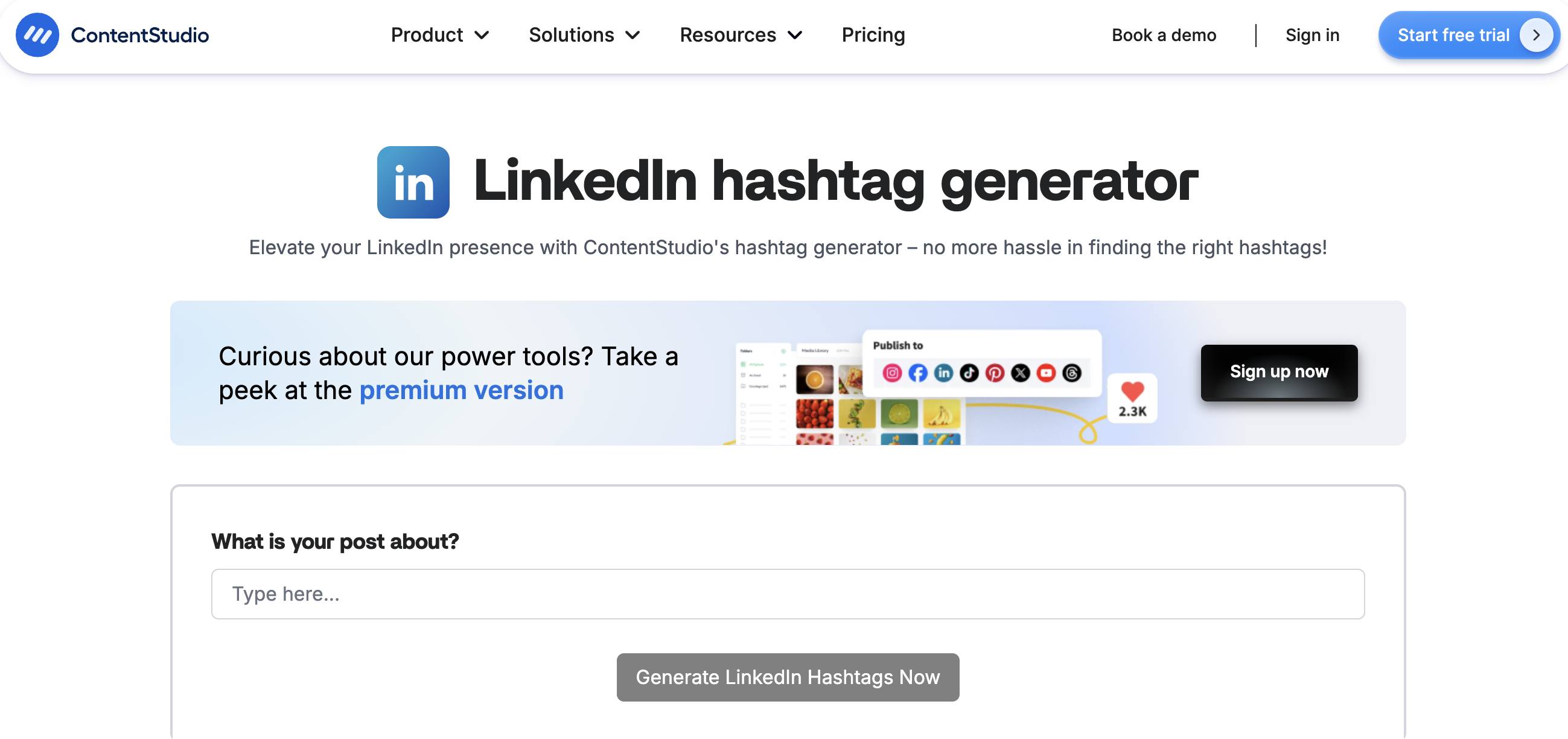
ContentStudio’s hashtag generator stands out as the most comprehensive free tool available, combining AI intelligence with deep LinkedIn analytics to deliver highly targeted hashtag recommendations.
ContentStudio’s generator utilizes advanced machine learning algorithms to analyze the context, industry relevance, and target audience of your content. Unlike basic keyword matchers, it understands the nuanced relationships between hashtags and content performance on LinkedIn specifically. The tool processes millions of LinkedIn posts daily to identify trending patterns and emerging hashtags before they become saturated.
Key Features:
Best For:
ContentStudio is ideal for serious LinkedIn marketers, social media managers, and businesses that view LinkedIn as a primary growth channel. It’s particularly powerful for:
Hootsuite’s generator represents years of social media intelligence gathering. The tool processes content from millions of LinkedIn posts to understand what makes hashtags successful. Its AI has been trained on engagement patterns across industries, making it particularly effective at predicting which hashtags will resonate with professional audiences.
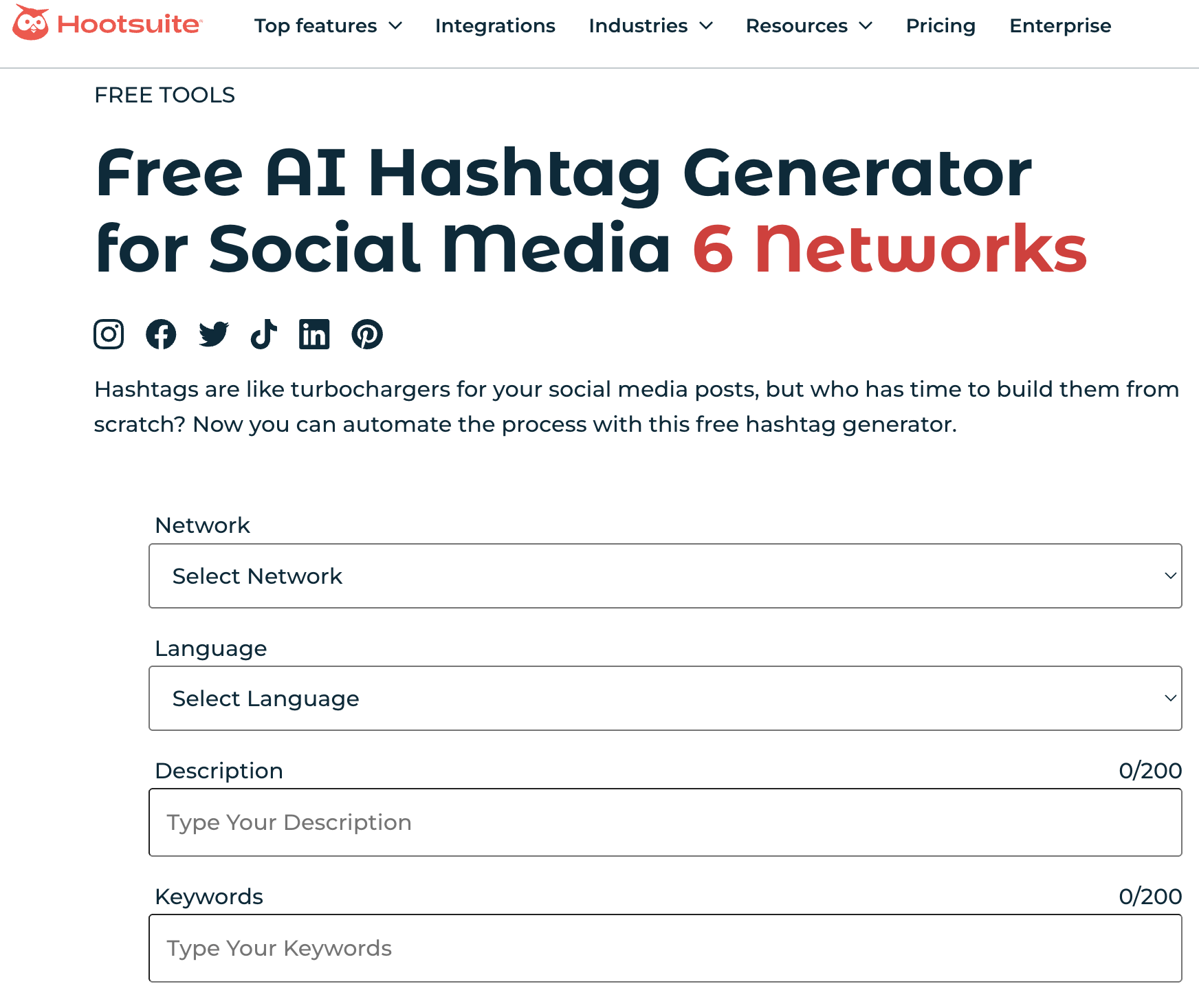
Key Features:
Best For:
Hootsuite’s generator excels for users who:
It stands out for its focus on consistent brand voice. The AI learns from your previous posts to suggest hashtags that maintain your professional tone while maximizing reach. This tool is particularly sophisticated in understanding the subtle differences between B2B and B2C LinkedIn content, adjusting suggestions accordingly.
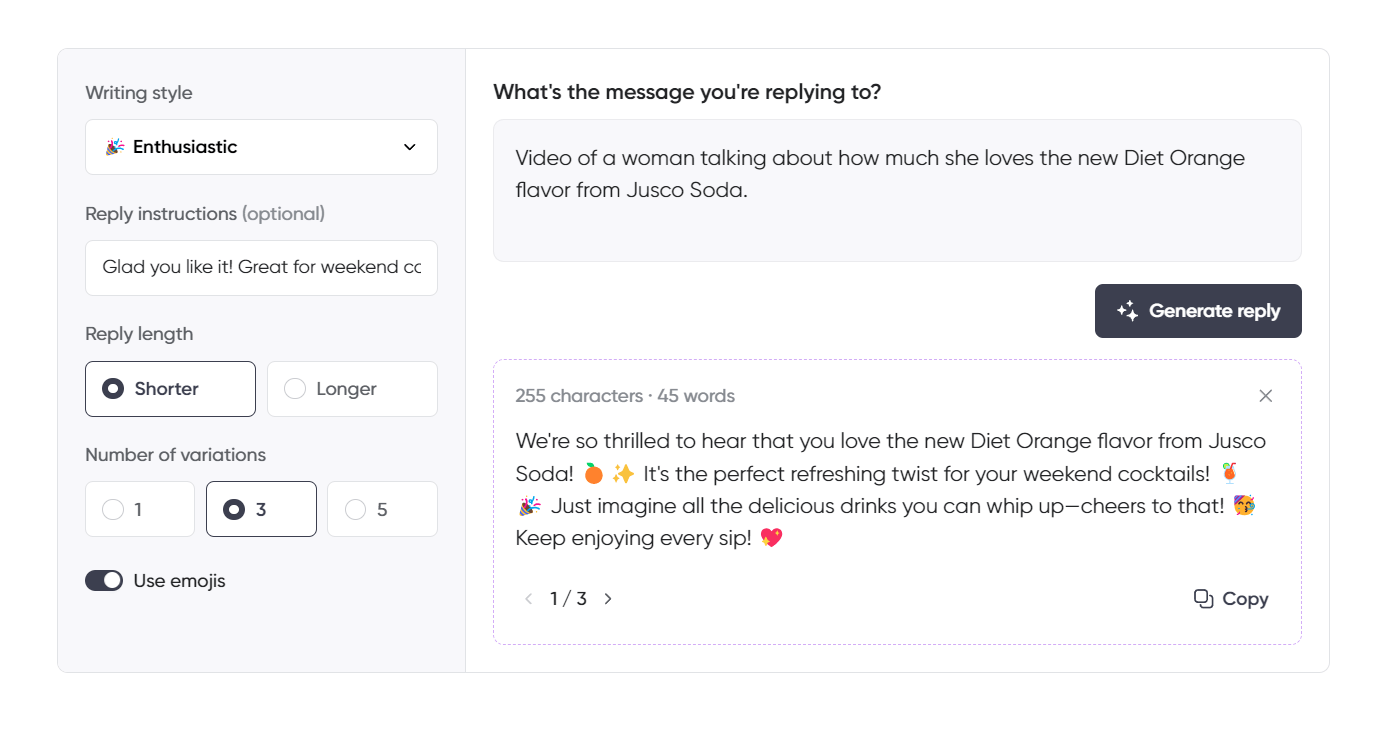
Key Features:
Best For:
It excels at understanding cultural context and language nuances. It doesn’t simply translate hashtags—it identifies which hashtags native speakers use in different markets. This cultural intelligence makes it invaluable for companies expanding internationally or professionals working across borders.
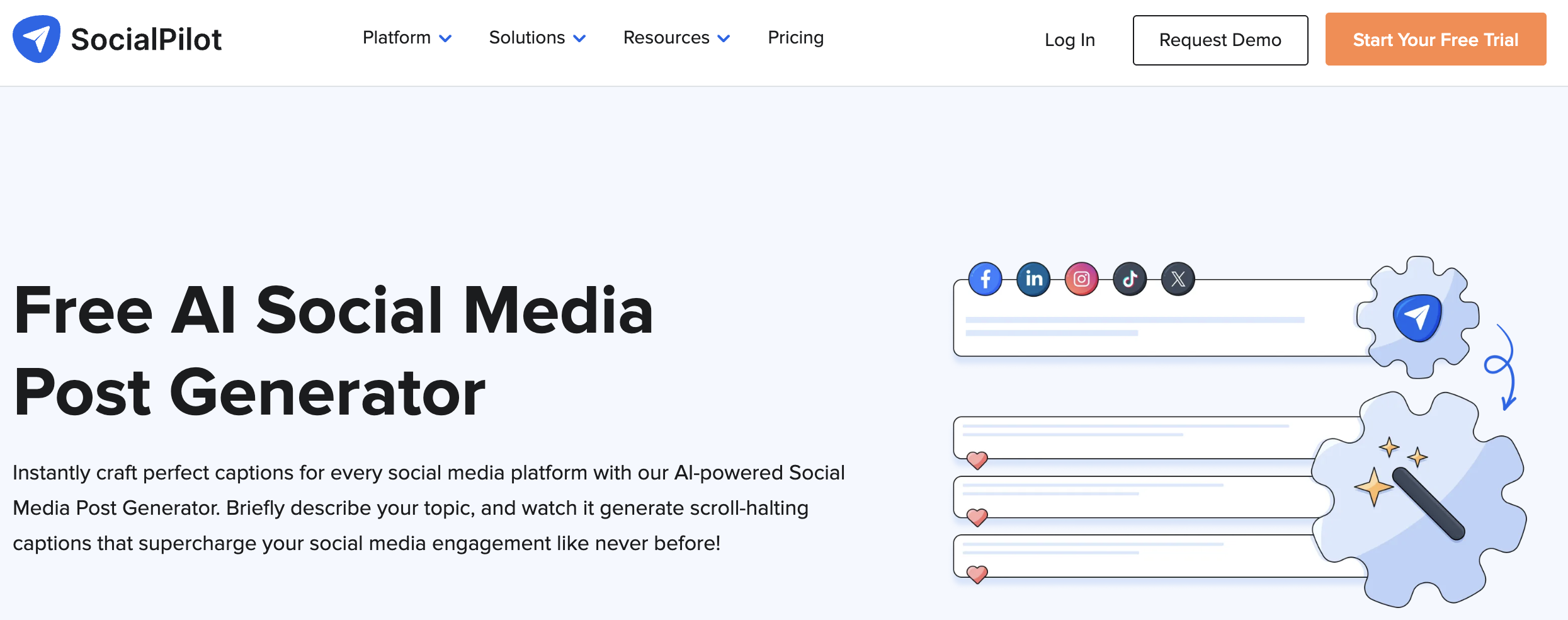
Key Features:
Best For:
It focuses on currency and relevance. Its AI monitors LinkedIn conversations in real-time, identifying hashtags that are gaining momentum before they peak. This predictive capability helps you ride trends early, when competition is lower but interest is building.
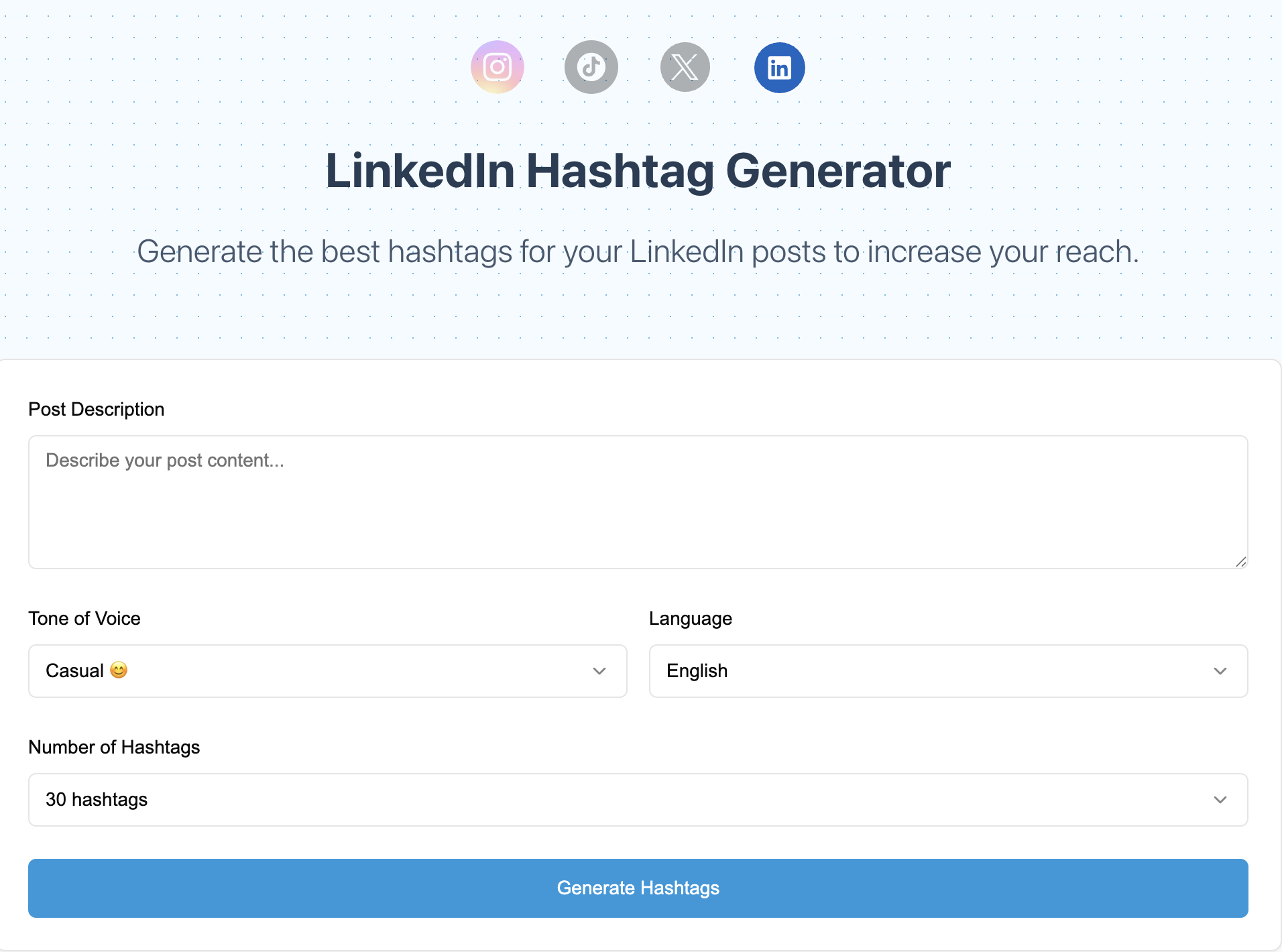
Key Features:
Best For:
LinkedIn hashtags still have a place, but their role is straightforward: they can add topic context and support discovery when they accurately describe useful professional content.
They are not a replacement for clear writing, audience knowledge, credible expertise, or consistent participation. Use the smallest number of relevant hashtags that improve clarity, keep them connected to the actual subject of the post, and evaluate success through the quality of the audience and the actions that follow.
Yes. LinkedIn hashtags remain searchable and can help label a topic, but they do not guarantee reach or engagement. The quality and relevance of the post, the audience relationship, and the wider professional context matter more than the number of tags.
They serve different purposes. Keywords explain a subject through natural language in the post, profile, Page, or article. Hashtags are optional topic labels. Clear keywords and useful writing should come first.
Yes. Branded tags work best when they identify a real campaign, event, series, or community initiative and when multiple contributors have a reason to use them consistently. A tag created for a single post is unlikely to create meaningful discovery by itself.
You can, but they should add meaningful topic context. Do not use comments to hide a block of additional tags or to simulate engagement. A useful comment contributes an observation, example, answer, or perspective.
Plan 0 Days of Content in 0 Minutes
Create, schedule, publish and analyze your content across all your social media channels from one simple dashboard.
4.7 on Capterra • 16,500+ marketers trust ContentStudio
Arooj Ishtiaq is a Content Marketing Strategist with 5+ years of experience writing about social media, SaaS, and AI. At ContentStudio, she creates practical guides, tutorials, and how-to content that help marketers navigate social media trends, sharpen their strategies, and get more from their content.
View all posts by Arooj IshtiaqRecommended for you
LinkedIn Company page guide: How to create, optimize, and grow it
LinkedIn marketing in 2026: Strategy, content, and growth

How to see scheduled posts on LinkedIn | Step-by-step
Best times to post on LinkedIn: Day, industry & location