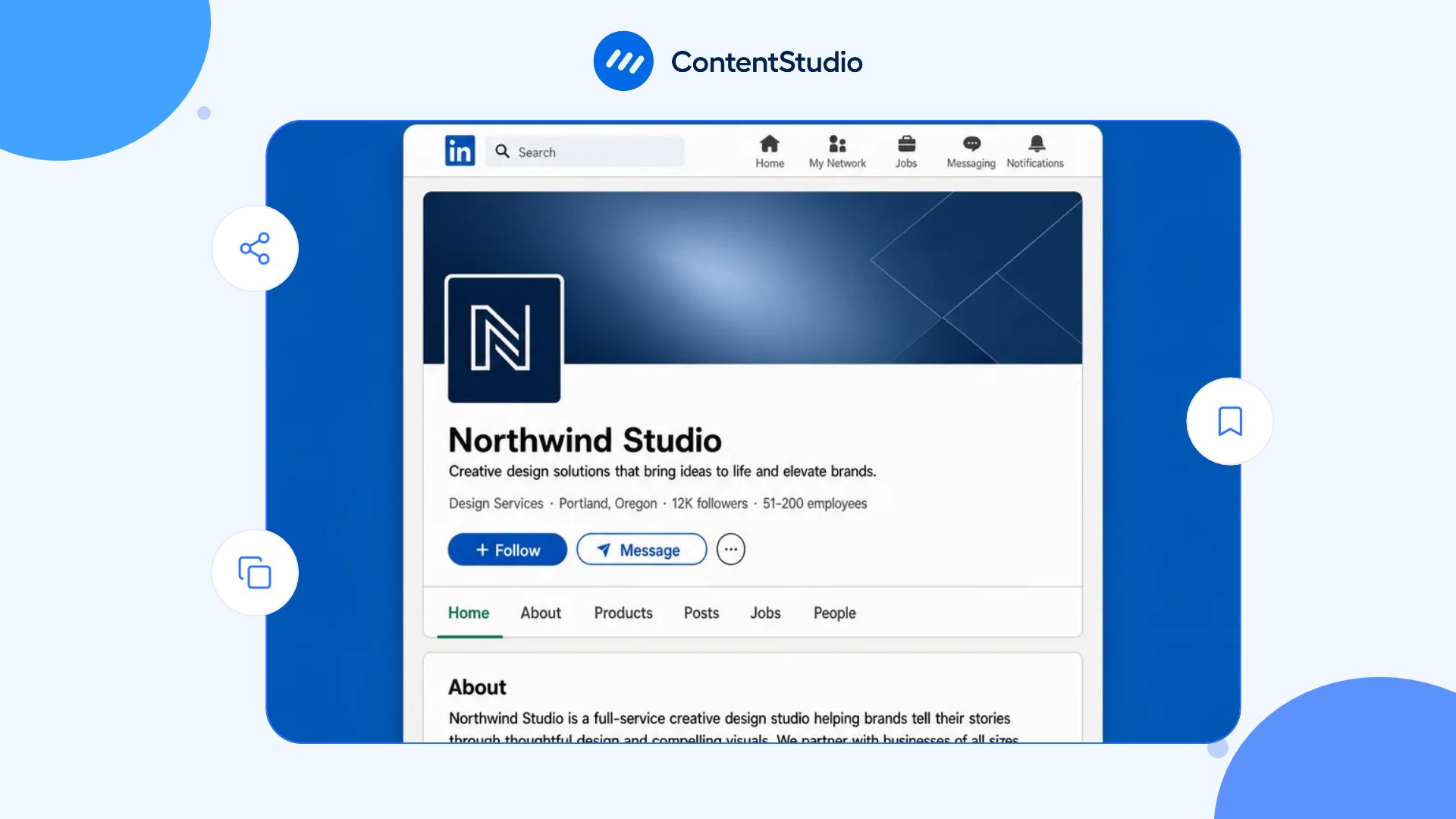
LinkedIn Company page guide: How to create, optimize, and grow it
Sep 24, 202621 minutes

Written by
Arooj IshtiaqUpdated
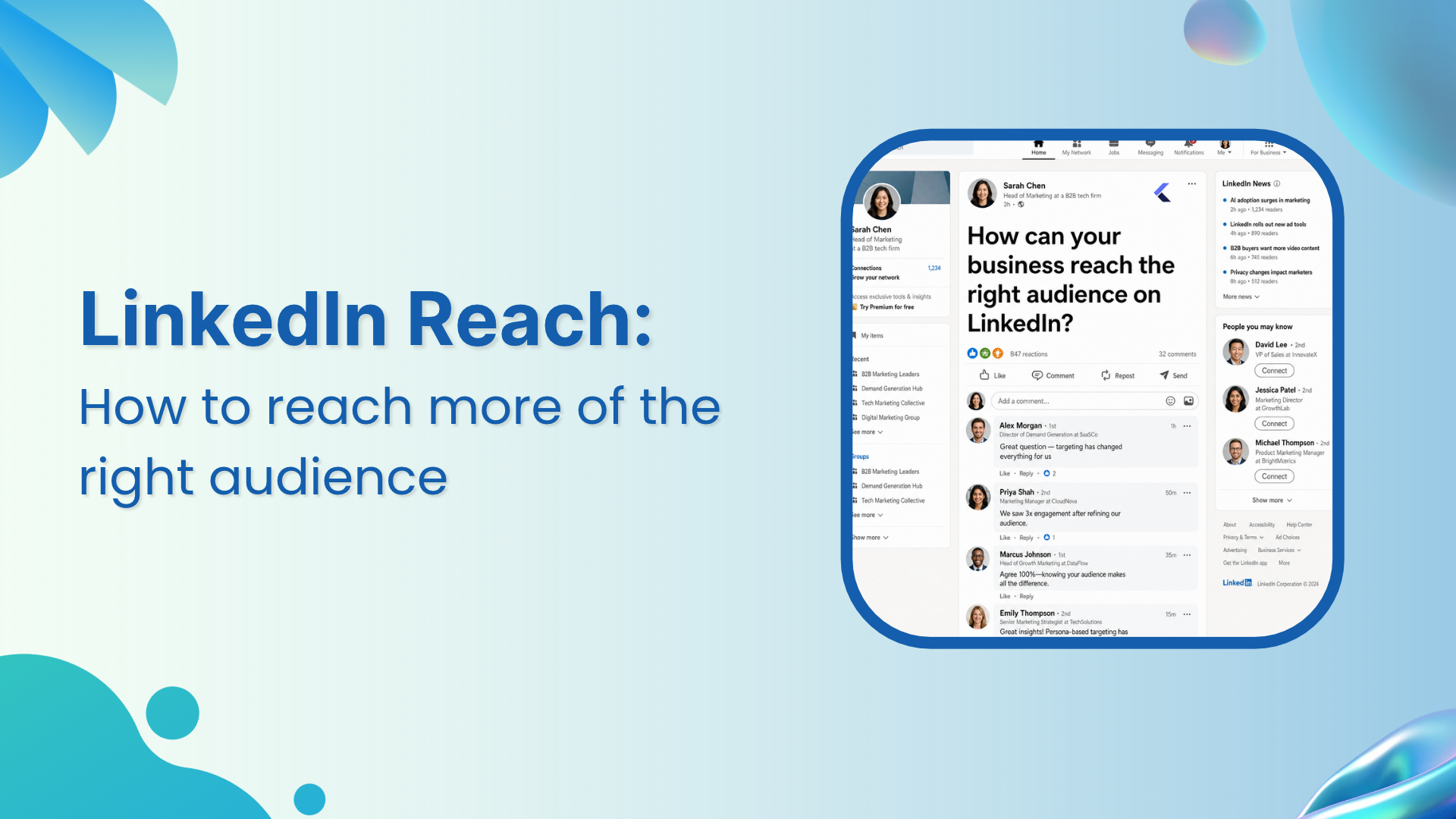
LinkedIn reach can look impressive and still create little value. A post may be shown to thousands of people who are outside your market, do not recognize the problem you solve, and are unlikely to take a meaningful next step.
A focused plan for LinkedIn marketing gives reach a job to do before a post is published, whether that job is building awareness, supporting demand, attracting candidates, or strengthening professional relationships. Teams that need a dependable publishing rhythm can use a scheduler for LinkedIn to connect planning, approvals, publishing, and review.
The better goal is relevant reach: increasing the number of distinct professionals who are likely to care about your expertise, company, or point of view. This article explains what reach means, where it comes from, why it stalls, and how to build more useful visibility without engagement bait or copied content.
Use these principles when deciding whether a reach number represents real progress or just wider distribution.
LinkedIn reach generally refers to members reached: the estimated number of distinct members and Pages that saw a post. It is a measure of unique exposure, not a measure of attention, agreement, clicks, leads, or revenue.
Reach is therefore an early distribution signal. It can help a team understand whether work is finding new people or circulating mainly within a familiar audience. It cannot, on its own, show whether the audience was relevant or whether the content contributed to a business outcome.
Members reached counts distinct viewers. Impressions count the number of times a post was displayed, including repeat displays to the same person. A post can therefore have more impressions than members reached.
That distinction matters when you review distribution. High impressions with limited unique reach can indicate repeated exposure within a smaller group; high members reached with a lower impression-to-reach ratio can indicate broader discovery. Impressions on LinkedIn cover the display-volume side of the picture, while this article focuses on the unique-audience question.
Broad reach is the number of distinct people exposed to a post. Relevant reach describes how closely those people match the roles, companies, industries, communities, or situations connected to the objective.
A specialist consultant may prefer 300 people in a target industry to 10,000 unrelated viewers. A B2B company may care most about whether buyer roles, influencers, customers, or target accounts are becoming familiar with its expertise. A recruiter may prioritize qualified interest from candidates in a particular location or discipline.
The right definition changes with the goal, but it should be written down before publication. Without an audience definition, teams often mistake large distribution for useful distribution.
Reach has more meaning when it is reviewed alongside evidence of relevance, curiosity, and follow-through. The following questions help turn a top-line number into a practical assessment.
| Question | Useful evidence | Warning sign |
|---|---|---|
| Did new people see the work? | Members reached grows and new audiences appear in activity | Repeat exposure rises while unique audience growth stays flat |
| Were they relevant? | Target roles, industries, accounts, or communities appear in comments, visits, and follow activity | Broad visibility with little sign of audience fit |
| Did they become curious? | Relevant follows, profile or Page visits, saves, useful replies, or resource activity | High reach with no meaningful action |
| Did the content support a goal? | Messages, event registrations, qualified conversations, customer context, or sales context | No sensible next-step behavior after exposure |
| Can the lesson be repeated? | A similar topic or approach produces quality signals more than once | One isolated spike becomes the entire strategy |
None of these signals means much in isolation, which is why a consistent LinkedIn analytics process matters: it connects these signals across posts, Pages, profiles, and reporting periods so no single number gets treated as a verdict.
Reach does not come from one place or one publishing behavior. Different parts of LinkedIn expose content to different professional audiences, and each should serve a clear role in the overall approach.
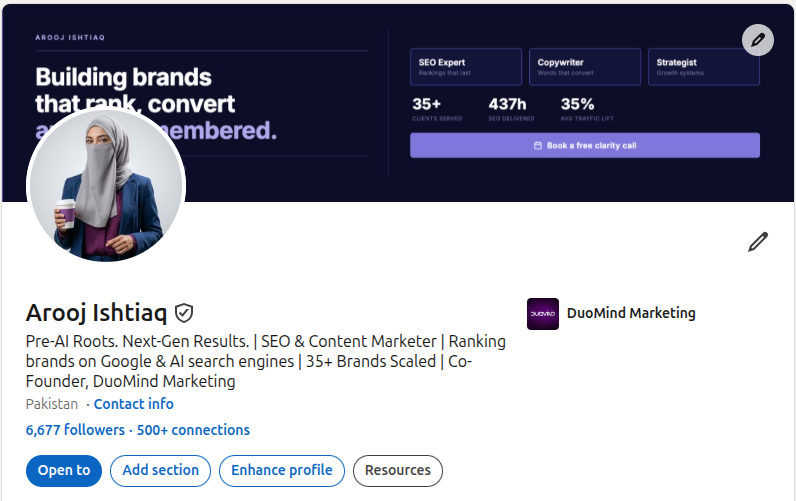
Personal profiles are often the strongest place for lived experience, individual judgment, specialist observations, and constructive points of view. A profile post earns attention more naturally when the author can genuinely explain the idea, answer follow-up questions, and connect it to real work. When a post begins to attract profile visits, the profile itself needs to make that attention worthwhile: optimizing a LinkedIn profile helps new visitors understand the person’s expertise, current role, proof, and reason to stay connected.
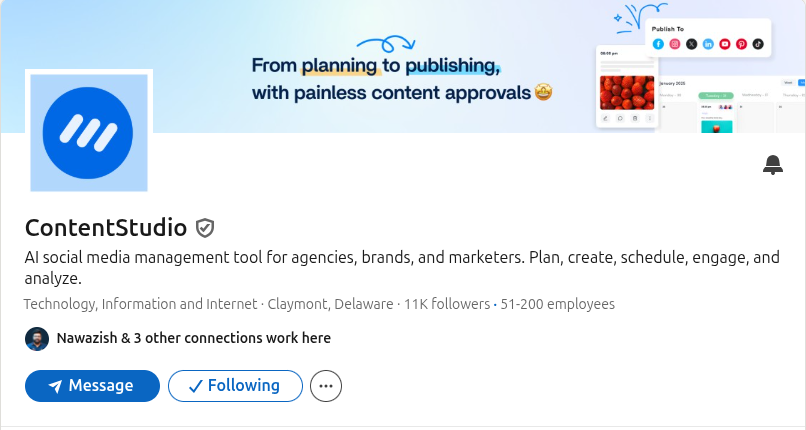
Company Pages give a business a stable destination for official expertise, resources, product context, event information, and announcements. They are especially useful when content needs an organization-level perspective rather than a personal one, and a clear LinkedIn business page makes it easier for new visitors to understand who the company helps, what it knows, and where to go next after discovering a post.
Employee participation can bring useful ideas into additional professional networks, but it works best when people contribute their own relevant perspective. Copying the same caption across many profiles creates duplicate material and gives readers little reason to engage with more than one version. Treating LinkedIn for business as a shared effort between the company and its subject-matter experts makes employee activity more credible: give contributors factual context, a defined theme, and optional proof points, then let them decide how the topic connects to their role.
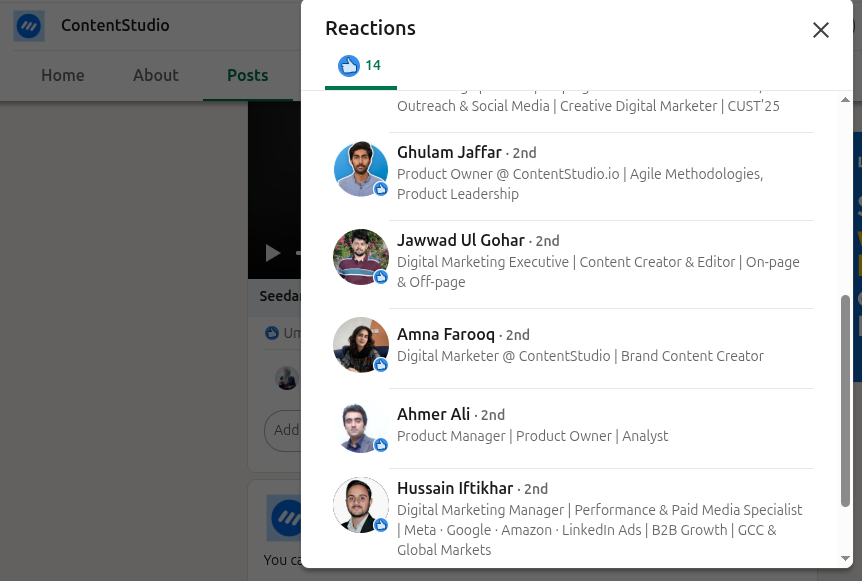
Thoughtful comments can create relevant visibility when they add a useful observation, an example, a counterpoint, or an answer. The goal is not to comment everywhere. It is to be recognizable as someone who improves discussions that matter to the audience you want to reach.
Reposts can introduce an idea to another network, but they work best when the person reposting adds context. A short explanation of why the point matters to that person’s work is more useful than a copied caption or a generic endorsement.
Reach can continue beyond the first feed appearance. Event-related content can connect with people who have a defined professional interest. Newsletter posts may bring readers back to a consistent subject area. Search appearances and profile discovery can introduce people to expertise even when they did not encounter a particular post first.
The value of these sources depends on whether the Page or profile provides a coherent next step. Visibility creates an opportunity; positioning determines whether that opportunity becomes a relationship.
Organic reach improves when a defined audience repeatedly finds the work useful. The objective is not to manipulate distribution with mass tagging, engagement groups, copied comments, or vague questions written only to collect replies. Those tactics may create activity, but they rarely create durable professional trust.
A topic that repeatedly attracts relevant people deserves more than one post. Develop it into a connected series of observations, examples, frameworks, answers, or case-based lessons. That helps the audience understand what you are known for and gives the team a reliable source of ideas. A focused content strategy for LinkedIn keeps these recurring themes from becoming repetitive by defining the audience question, editorial angle, proof source, format, and intended outcome for each piece.
Posts tend to be more useful when they address a situation a defined reader recognizes. Instead of writing for “business leaders,” write for a person dealing with a specific decision, process, risk, or trade-off.
For example, “How B2B teams can improve content performance” is broad. “What a B2B team should review when posts earn clicks but few qualified conversations” gives the reader a concrete situation and makes the promised insight easier to evaluate.
A short written observation may be the clearest form for a focused opinion. A process, comparison, checklist, or framework may be easier to use as a document. A short video can help when voice, demonstration, or visual context adds genuine clarity, and LinkedIn carousel posts can make a process or comparison easier to revisit when the reader benefits from moving through information step by step. The format should serve the idea, not replace it.
Publishing is only one form of visibility. Relevant conversations often reveal what the audience is confused about, what language it uses, and what follow-up ideas would be useful. Add a thoughtful comment when you have a clear contribution, and avoid superficial responses written only to appear active. Private follow-up should be earned by that context: relationship-led LinkedIn messages help teams turn relevant interactions into helpful conversations without treating a reaction or a click as permission for an immediate pitch.
Consistency does not mean posting every day. It means creating enough comparable activity to learn which themes, formats, and publishing layers attract the right audience. A sustainable rhythm leaves time for research, expert input, editorial review, replies, and reflection. When a useful evergreen idea remains relevant after its first publication, scheduling a repeat post on LinkedIn can extend its usefulness if the framing, examples, or supporting evidence are refreshed.
Reach can come from people who already follow or know you and from people outside that immediate audience. Both patterns can be useful.
In-network exposure can deepen familiarity with current customers, peers, prospects, and professional contacts. Out-of-network exposure can introduce your work to people who may become future followers, connections, customers, candidates, or advocates.
The useful question is whether the pattern fits the post’s purpose. A customer-education update may perform well within an existing audience. A strong market observation may need to travel more broadly. Neither outcome is automatically better without the surrounding objective.
A plateau does not necessarily mean the audience has stopped caring. It can mean that a topic has become predictable, the message is too broad, first-time visitors do not find a clear reason to follow, or the team is relying on one publishing layer to carry every idea.
Before increasing volume, inspect the recent pattern.
Use the following patterns to investigate a decline before changing the entire publishing approach.
| Pattern | What to investigate | Focused response |
|---|---|---|
| Unique reach falls across several posts | Topic relevance, repeated framing, publishing-layer mix, and audience definition | Test one more specific audience problem or a distinct expert perspective |
| Impressions rise but relevant activity is weak | Audience fit, generic framing, and whether the content has a clear next step | Narrow the scenario, strengthen the point of view, and review who is responding |
| Reach stays within the same audience | Network overlap, employee participation, and participation in relevant conversations | Introduce a new angle through the most credible publishing layer |
| Posts create interest but few follows | Page or profile positioning, proof, and reason to stay connected | Make expertise, resources, and future value easier to understand |
| Content attracts comments but not qualified conversations | Comment quality, response ownership, and the relationship stage | Define a qualified conversation and respond with useful, context-led follow-up |
| A one-off post spikes | Whether the topic can produce more useful material without repetition | Build a series around the audience question rather than copying the original post |
Organic reach develops through unpaid content, existing relationships, professional discovery, and ongoing participation. Paid reach comes from campaign delivery to a selected audience. The two should be reported separately because their delivery models, targeting controls, budgets, and expected outcomes are different.
Organic activity is useful for building credibility and learning which themes resonate with relevant audiences over time. Paid distribution is useful when a specific campaign needs predictable delivery, such as a resource launch, event registration, lead-generation offer, recruitment campaign, or time-sensitive announcement.
Paid activity cannot make an unclear message relevant. It can help a defined audience see a message; the content, offer, destination, and follow-up still need to make sense for that audience.
A focused experiment produces better learning than a long list of tactics. Keep the audience and business objective clear, change one variable at a time, and evaluate whether the quality of attention improves.
| Week | Focus | Action | Review |
|---|---|---|---|
| Week 1 | Baseline | Publish two posts within established themes and record members reached, audience clues, and useful interactions | Normal reach pattern and audience quality |
| Week 2 | Framing | Test a problem-led opening against a point-of-view opening on related topics | Which version attracts more relevant comments, visits, or follows |
| Week 3 | Publishing layer | Publish one idea through a personal profile and a distinct version from the Company Page | Which layer creates more relevant visibility and follow-through |
| Week 4 | Format and response | Rework the strongest topic into a suitable format and respond to substantive questions | Whether presentation or follow-up improves audience quality |
At the end of the month, do not simply select the post with the highest reach. Select the approach that created the clearest evidence of relevant audience growth, useful conversation, and a lesson worth repeating.
Stakeholders do not need a page of isolated numbers. They need a concise explanation of whether the brand is becoming more visible to people it needs to influence, what that attention led to, and how the next cycle will improve.
| Stakeholder question | Evidence to include | Decision |
|---|---|---|
| Did we reach new people? | Members reached trend and signs of discovery beyond the immediate network | Whether audience discovery is improving |
| Did we reach the right people? | Relevant roles, industries, accounts, visits, and comment quality | Whether audience fit is improving |
| Did visibility create curiosity? | Follows, Page or profile visits, saves, messages, and useful replies | Whether content is building interest |
| Did it support an outcome? | Website activity, registrations, qualified conversations, or sales context | Whether activity supports the original goal |
| What happens next? | One theme, publishing layer, format, or audience question to test | How the next month will improve |
Use this checklist before the next publishing and reporting cycle.
LinkedIn reach is most useful when it brings more of the right people into your professional orbit. Members reached can show how broad a post’s unique audience was, but it cannot show whether those people were relevant, whether they understood the message, or whether the visibility created an opportunity.
Treat reach as the beginning of the analysis. Combine it with audience quality, Page or profile interest, useful conversation, and the action that followed. That turns reach from a number to celebrate or explain away into evidence that helps a team build a more relevant audience over time.
Reach estimates distinct members and Pages who saw a post. Impressions count every display, including repeat exposure. A post can have more impressions than reach because the same person may see it more than once.
Open an eligible post and use the available analytics view to find members reached. Company Page administrators can use content analytics to compare post distribution over time. Available fields can differ by account type and platform updates.
Low reach can result from weak audience fit, vague framing, limited relationship context, duplicated content, an unclear profile or Page destination, or normal competition for attention. Review several comparable posts before assuming a single cause.
They serve different purposes. Personal profiles can make it easier to share a human point of view and participate in professional conversations, while Company Pages provide a stable brand destination. Use both according to the objective rather than relying on a universal ratio.
Yes. A narrow post can reach fewer people while still creating a valuable discussion with a target account, bringing a relevant visitor to a profile or Page, answering a customer question, or supporting a qualified next step.
Track audience relevance, meaningful comments, saves, reposts, profile or Page visits, clicks, website activity, qualified messages, and the outcome the post was designed to support.
Plan 0 Days of Content in 0 Minutes
Create, schedule, publish and analyze your content across all your social media channels from one simple dashboard.
4.7 on Capterra • 16,500+ marketers trust ContentStudio
Arooj Ishtiaq is a Content Marketing Strategist with 5+ years of experience writing about social media, SaaS, and AI. At ContentStudio, she creates practical guides, tutorials, and how-to content that help marketers navigate social media trends, sharpen their strategies, and get more from their content.
View all posts by Arooj IshtiaqRecommended for you
LinkedIn Company page guide: How to create, optimize, and grow it
LinkedIn marketing in 2026: Strategy, content, and growth

How to see scheduled posts on LinkedIn | Step-by-step
LinkedIn articles: How to write, publish, and use long-form content