Social media feed

What is a social media feed?
A social media feed is a continuously updating stream of content that appears on social media platforms, displaying posts from users, pages, or accounts that an individual follows or that the platform's algorithm determines might be of interest.
It serves as the central browsing experience on most social networks, presenting a curated mix of text, images, videos, and other content types. The feed functions as both a personalized content delivery system and the primary interface through which users interact with social platforms.
Types of social media feeds
Social media feeds come in several variations, each with distinct characteristics and purposes:
Chronological feeds
Chronological feeds display content in reverse time order, with the newest posts appearing at the top.
This traditional approach:
- Provides a predictable, time-based organization
- Shows all content from followed accounts
- Minimizes algorithmic filtering
- Creates a more transparent user experience
While many platforms have moved away from purely chronological feeds, some like Twitter still offer a chronological view option, and scheduling posts for optimal timing remains important.
Algorithmic feeds
Algorithmic feeds use complex formulas to determine content relevance and engagement potential:
- Content is organized based on predicted user interest rather than posting time
- Engagement metrics (likes, comments, shares) heavily influence visibility
- User behavior patterns inform content selection
- Platform-specific factors affect ranking (Instagram's algorithm, Facebook's algorithm, LinkedIn's algorithm, etc.)
Understanding platform algorithms is crucial for achieving content visibility and engagement, making tools like ContentStudio's analytics valuable for optimization.
Hybrid feeds
Many platforms now employ hybrid approaches that blend chronological and algorithmic elements:
- "Most relevant" content may appear first, followed by chronological content
- Users can often toggle between different feed views
- Certain content types (Stories, Reels) may follow different organizational rules
- Paid content integrates with organic content based on complex placement algorithms
Specialized feeds
Beyond main feeds, most platforms offer specialized content streams:
- Explore/Discover feeds showcasing trending or recommended content
- Topic-based feeds focused on specific interests or hashtags
- Stories feeds featuring ephemeral, time-limited content
- Shopping feeds highlighting purchasable products
- Video-specific feeds (Reels, TikTok) optimized for short-form video content
Each of these feed types requires tailored content strategies for maximum effectiveness.
Feed algorithms and content visibility
How algorithms determine feed content
Modern social media feeds rely on sophisticated algorithms that consider numerous factors:
- Relationship signals: Your connection strength with the content creator
- Content type preferences: What formats (video, image, text) you typically engage with
- Recency: When the content was posted
- Engagement metrics: How others are interacting with the content
- Time spent: How long users typically view similar content
- Profile interaction history: Your past engagement with specific accounts
- Completion rates: Whether users consume content entirely or scroll past
Understanding these factors is essential for creating content that performs well in algorithmic environments.
Optimizing content for feed visibility
To maximize content visibility in today's competitive feeds:
- Focus on early engagement: Content that quickly attracts interaction gets broader distribution
- Create native content: Content designed for each platform's specific format performs better
- Encourage meaningful interactions: Comments and shares typically carry more algorithmic weight than likes
- Consider content timing: Posting when your audience is active improves initial engagement
- Maintain posting consistency: Regular activity signals reliability to algorithms
- Use platform-specific features: Content using the latest platform features often receives preferential treatment
Using ContentStudio's publishing tools can help implement these optimization strategies consistently across platforms.
The evolving feed landscape
Social feeds continue to evolve in response to user behavior, business objectives, and competitive pressures:
- Increased personalization through AI and machine learning
- Greater emphasis on video content across all platforms
- Integration of shopping and e-commerce directly within feeds
- Enhanced focus on content discovery beyond followed accounts
- More sophisticated ad integration that mimics organic content
Staying current with these trends through resources like ContentStudio's blog helps marketers adapt their strategies accordingly.
Feed management for social media marketers
Content planning for cross-platform feeds
Effective feed presence requires strategic planning:
- Content calendar development: Using social media calendars to plan content across multiple platforms
- Platform-specific adaptation: Modifying content to suit each platform's feed characteristics
- Content distribution strategy: Determining optimal content allocation across owned, earned, and paid channels
- Content variety planning: Balancing promotional, educational, entertaining, and engaging content
- Seasonal and trending topic integration: Incorporating timely content that aligns with current events and trends
Tools like ContentStudio's content planner help streamline this process for busy marketers.
Feed monitoring and optimization
Beyond creating content, marketers must consistently monitor and optimize feed performance:
- Real-time engagement tracking: Monitoring how content is performing in the feed
- Competitive analysis: Observing competitor content performance in shared audience feeds
- Content refinement: Adjusting strategy based on engagement patterns
- Audience feedback integration: Using comments and messages to inform content decisions
- A/B testing: Experimenting with different content approaches to determine what resonates best
Social media analytics tools provide the data needed for these optimization activities.
Feed automation and scheduling
Given the complexity of managing multiple social feeds, automation is increasingly important:
- Content scheduling: Planning posts for optimal times across platforms
- Content recycling: Strategically reusing evergreen content
- RSS feed integration: Automatically sharing relevant industry content
- Cross-platform posting: Efficiently adapting and sharing content across multiple networks
- Engagement automation: Using chatbots and automated responses for initial interactions
ContentStudio's automation features help marketers maintain active feeds without constant manual intervention.
Platform-specific feed considerations
Instagram feed strategies
Instagram's feed continues to evolve beyond its image-focused origins:
- Algorithm heavily weights engagement history and relationship factors
- Strong emphasis on visual quality and aesthetic consistency
- Increased prominence of video content, especially Reels
- Shopping integration directly within the feed
- Content saves now carry significant algorithmic weight
For optimal results, use ContentStudio Instagram scheduler to maintain consistent presence and properly format content.
Facebook feed optimization
Facebook's mature feed algorithm considers numerous factors:
- Content that generates meaningful interactions receives priority
- Video content typically receives higher engagement and visibility
- Feed favors content from friends and family over brand pages
- Group content has gained increased prominence
- Recency remains important despite algorithmic filtering
Using Facebook scheduling in Content Studio can help maintain visibility in this competitive environment.
LinkedIn feed considerations
LinkedIn's professional feed has unique characteristics:
- Content relevance is determined by professional connections and interests
- Text-heavy, thoughtful posts often outperform visual content
- Algorithm rewards posts that generate quick engagement
- Comments carry significantly more weight than reactions
- Professional authority and topical relevance heavily influence distribution
For B2B marketers, mastering the LinkedIn content strategy is particularly valuable.
Twitter/X feed dynamics
Twitter's feed combines chronological and algorithmic elements:
- Users can toggle between algorithmic and chronological views
- Short lifespan of tweets makes timing and frequency crucial
- Conversation and reply threads gain extended visibility
- Hashtag usage affects discoverability beyond followers
- Rich media (images, videos, polls) increases engagement potential
Tools like ContentStudio's Twitter scheduler help maintain optimal posting frequency and timing.
TikTok's For You Page
TikTok's algorithmic feed represents perhaps the most advanced content discovery system:
- Content distribution based on engagement rather than follower count
- Video completion rate heavily influences visibility
- Rapid testing of content with small audience samples
- Audio and trend participation impacts discoverability
- Geographic and language relevance considered in distribution
Understanding TikTok's algorithm is essential for brands looking to gain traction on the platform.
Feed-based content strategies
Content repurposing across feeds
Efficiently adapting content for different platform feeds:
- Format adaptation: Modifying content dimensions and specifications for each platform
- Caption optimization: Tailoring text length and style to platform norms
- Cross-promotion: Using one platform to drive traffic to others
- Content sequencing: Breaking longer content into platform-appropriate segments
- Multimedia transformation: Converting articles to videos, podcasts to quote cards, etc.
Content repurposing strategies help maximize content ROI across multiple feeds.
Feed content variety and balance
Effective feeds require a strategic mix of content types:
- Educational content that delivers audience value
- Entertaining content that builds connection and shareability
- Promotional content that advances business objectives
- User-generated content that builds community
- Curated content that positions your brand within the industry
Using ContentStudio's content discovery tools helps identify trending topics to incorporate into this content mix.
Paid vs. organic feed strategies
Modern feed management typically requires both organic and paid approaches:
- Organic foundation: Building an authentic, engaging baseline presence
- Paid amplification: Boosting high-performing organic content to reach larger audiences
- Targeted promotion: Using paid tools to reach specific segments beyond your followers
- Testing through paid: Using small ad spends to test content before larger organic pushes
- Integrated approach: Ensuring consistent messaging across paid and organic content
User experience and feed design
Feed fatigue and content overload
As feeds become increasingly crowded, marketers face challenges:
- Users experience content overload leading to decreased engagement
- Passive scrolling replaces active interaction
- Attention spans continue to shrink
- Content competition reaches unprecedented levels
- Platform changes regularly disrupt established strategies
Combating these issues requires creating truly engaging content that stops the scroll and delivers immediate value.
Feed personalization and user control
Platforms increasingly offer personalization options:
- User ability to customize feed content presentation
- "Close friends" and priority content features
- Content hiding and muting capabilities
- Interest-based feed filtering
- Chronological feed options
These changes require marketers to focus on building genuine connections rather than simply maximizing reach.
Accessibility considerations
Creating feed content accessible to all users:
- Alt text for images
- Captioning for videos
- Screen reader-friendly formatting
- Readable color contrasts
- Trigger warning usage when appropriate
Instagram's accessibility features and similar tools on other platforms help brands reach wider audiences.
Future of social media feeds
Emerging feed trends
The social media feed continues to evolve rapidly:
- AI-driven hyper-personalization becoming standard
- Increased integration of mixed reality elements
- Creator-focused economic models reshaping content prioritization
- Further fragmentation of the social landscape into niche platforms
- Greater emphasis on authenticity over polished production
Keeping pace with these changes requires regular industry updates.
Content discovery beyond the feed
While feeds remain central, platforms are developing additional discovery mechanisms:
- Topic-based exploration hubs
- Interest-based communities
- Search functionality improvements
- Algorithmic recommendations outside main feeds
- Audio spaces and synchronous content experiences
These developments create new opportunities for content visibility beyond traditional feed placement.
By understanding social media feeds' mechanics, algorithms, and best practices across platforms, marketers can develop effective strategies to reach and engage their audiences in these complex digital environments.
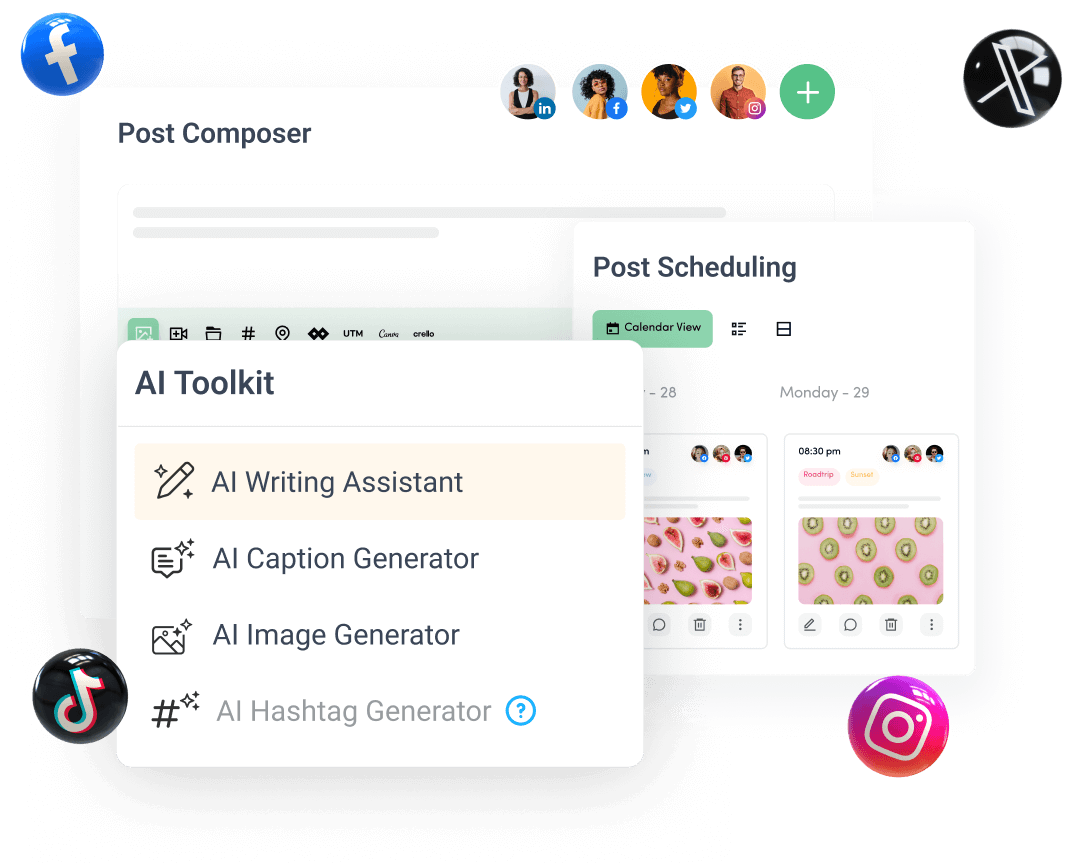
Create, plan, schedule, and publish posts on all social media networks