Marketing proposal

What is a marketing proposal?
A marketing proposal is a strategic document created by marketers, agencies, or consultants to outline a comprehensive marketing plan for potential clients. It serves as both a persuasive sales tool and a detailed roadmap for achieving specific marketing objectives.
A well-crafted marketing proposal communicates value, strategies, timelines, deliverables, and pricing to demonstrate how the proposed marketing efforts will help clients achieve their business goals. Whether for a comprehensive marketing strategy or a specific social media marketing campaign, a strong proposal establishes trust and sets clear expectations for the working relationship.
Key components of an effective marketing proposal
A successful marketing proposal includes several essential elements that work together to create a compelling case for your services. Each component plays a critical role in demonstrating your understanding of the client's needs and your ability to deliver results.
Executive summary
Begin with a concise overview that captures the essence of your proposal. This section should highlight the client's primary challenges, your proposed solution, and the expected outcomes.
An effective executive summary engages the reader immediately and entices them to explore the full proposal. This is also where you might briefly introduce your marketing strategy approach and unique value proposition.
Client background and needs analysis
Demonstrate your understanding of the client's business by including relevant background information and a thorough analysis of their current situation.
This section should showcase your research skills and prove that you've taken the time to understand their industry, target audience, and specific challenges. Identifying key pain points shows clients you've done your homework and are prepared to address their specific needs rather than offering a generic solution.
Objectives and goals
Clearly define what the marketing initiative aims to achieve with specific, measurable goals. These might include increasing brand awareness, generating leads, boosting social media engagement, driving website traffic, or improving conversion rates. Using the SMART framework (Specific, Measurable, Achievable, Relevant, Time-bound) helps create objectives that will serve as benchmarks for measuring success.
Target audience and market analysis
Provide insights into the client's target audience using demographic, psychographic, and behavioral data. Include a competitive analysis to position your strategy within the market landscape.
This section demonstrates your marketing research capabilities and shows that your proposed strategy is based on solid data rather than assumptions.
Proposed marketing strategy
Detail your comprehensive marketing approach, explaining how each element works together to achieve the stated objectives. This section might cover:
- Content marketing plan: Outline the types of content you'll create and how they'll support business goals
- Social media strategy: Explain which platforms you'll use and why they're appropriate for the target audience
- SEO approach: Detail how you'll improve search visibility and organic traffic
- Email marketing: Describe nurture sequences or campaign concepts
- Advertising plan: Include paid media strategies when applicable
Scope of work and deliverables
Clearly define what is and isn't included in your proposal. This section should outline specific deliverables, such as the number of social media posts, content pieces, or ad campaigns.
Being detailed here helps prevent scope creep and ensures both parties have aligned expectations. For social media marketing proposals, you might include details about content calendars, posting frequency, and engagement management.
Timeline and milestones
Present a clear schedule that outlines when key activities will take place and when significant milestones will be reached.
Visual timelines or Gantt charts can effectively communicate this information. For ongoing services, outline what will happen during different phases, from onboarding and strategy development to implementation and optimization.
Budget and pricing
Detail your fee structure clearly, whether you're charging a flat project rate, monthly retainer, or using another pricing model. Break down costs by service category to help clients understand where their investment is going.
Consider offering tiered pricing options to provide flexibility while showcasing the value of higher-tier services. This transparency builds trust and helps clients make informed decisions.
Measurement and reporting
Explain how you'll track progress and measure success against the established objectives. Detail which metrics and KPIs you'll monitor and how frequently you'll provide reports. This section demonstrates accountability and shows clients how they'll be able to evaluate the ROI of their marketing investment. Social media analytics tools can provide valuable data for tracking campaign performance.
Team introduction and qualifications
Introduce the key team members who will work on the client's account, highlighting relevant experience and expertise. This personalization helps build trust and gives the client confidence in your capability to deliver results. For agency proposals, this section is particularly important to showcase your collective experience and specializations.
Terms and conditions
Include clear terms regarding payment schedules, cancellation policies, ownership of deliverables, and other legal aspects.
While this section may seem tedious, it's essential for establishing professional expectations and protecting both parties. Consider having this section reviewed by a legal professional to ensure it adequately covers all necessary aspects.
Call to action and next steps
End with a clear path forward, outlining exactly what happens next if the client approves your proposal. This might include signing the agreement, scheduling a kickoff meeting, or beginning the onboarding process. Making these next steps explicit reduces friction in moving from proposal to project initiation.
Best practices for creating winning marketing proposals
Creating effective marketing proposals requires more than just following a template. These best practices will help your proposals stand out and increase your win rate:
- Customize for each client: Avoid using generic templates without substantial customization. Research the client's industry, competitors, and specific needs to create a tailored proposal that addresses their unique challenges.
- Lead with value, not features: Focus on the benefits and outcomes your services will deliver rather than simply listing features. Explain how your marketing strategies will help achieve business objectives.
- Incorporate visual elements: Use charts, graphs, images, and formatting to make your proposal visually appealing and easier to digest. Visual representations of data or concepts can communicate complex ideas more effectively than text alone.
- Keep it concise yet comprehensive: Balance providing enough detail to demonstrate expertise without overwhelming the reader. Use clear, concise language and avoid industry jargon that might confuse clients.
- Include social proof: Add case studies, testimonials, or data from previous successful campaigns to build credibility. Tangible examples of how you've helped similar clients achieve results are powerful persuasion tools.
- Anticipate and address objections: Proactively address potential concerns or questions the client might have about your approach or pricing. This demonstrates thoroughness and builds confidence in your recommendation.
- Make it action-oriented: Structure your proposal to drive toward a decision, with clear next steps and a sense of momentum. The proposal should facilitate moving the relationship forward rather than simply presenting information.
- Proofread thoroughly: Ensure your proposal is free of spelling, grammatical, or formatting errors. A polished, professional document reflects the quality of work the client can expect from your services.
By crafting thoughtful, client-centered marketing proposals that clearly communicate value and expected outcomes, you'll significantly increase your chances of winning new business and establishing productive client relationships that lead to successful marketing campaigns.
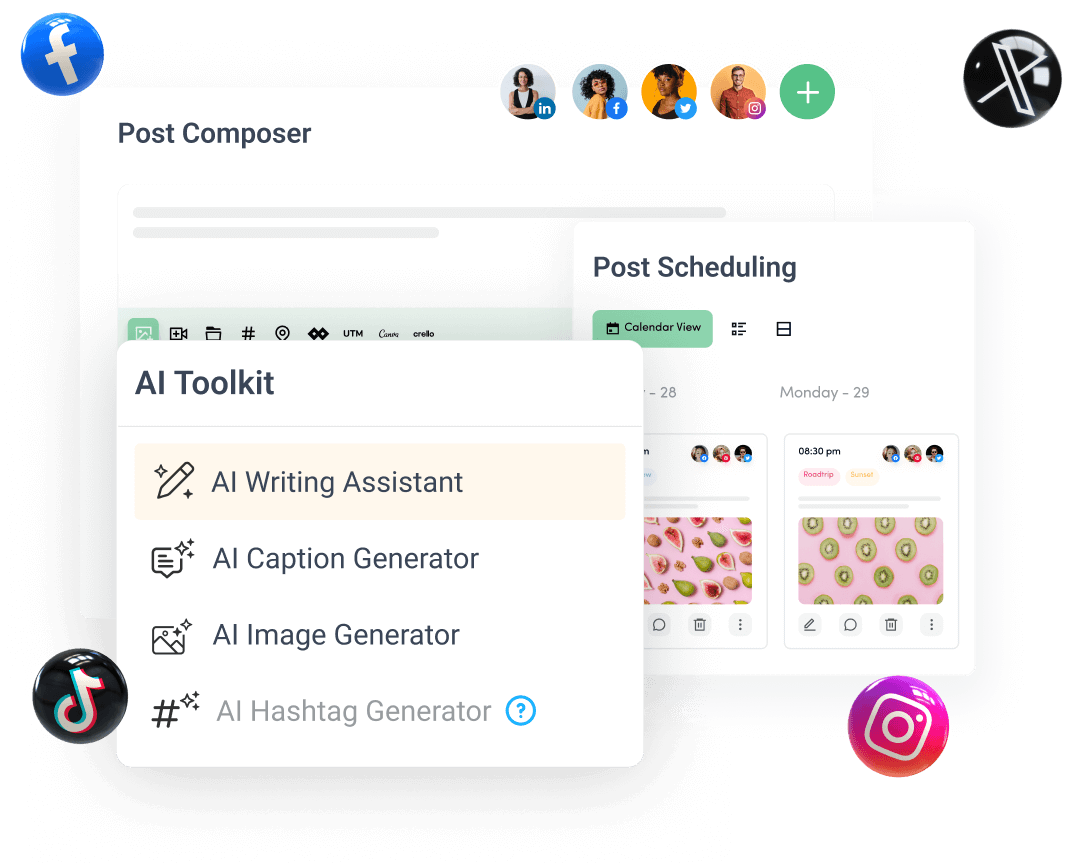
Create, plan, schedule, and publish posts on all social media networks