
95% of marketers use AI. Only 39% see better performance. The gap isn’t the AI
Oct 7, 20268 minutes

Written by
Saif AliUpdated
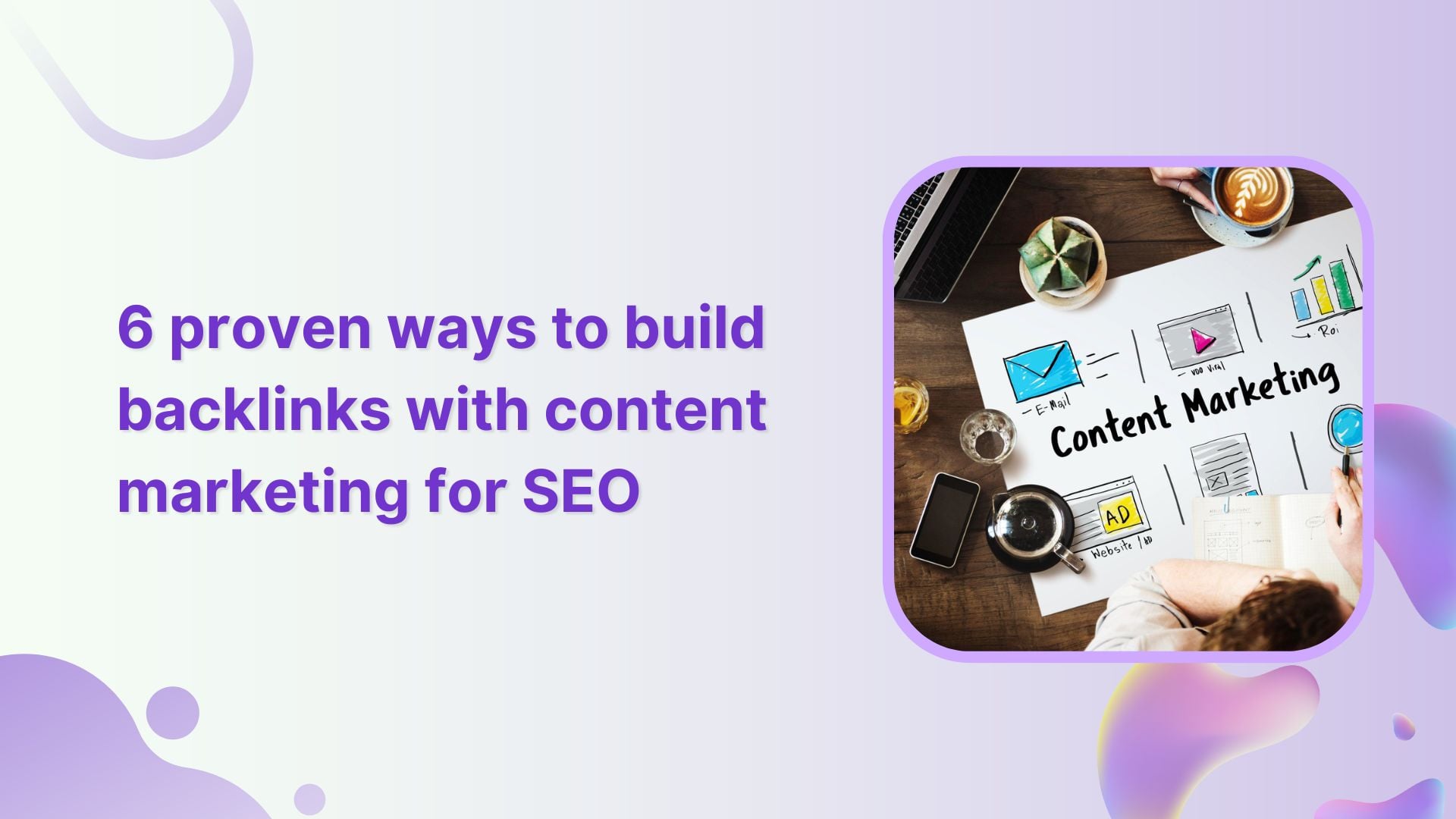
Content marketing for SEO is one of the most cost-efficient ways to attract, educate, and convert customers. Many marketing professionals pair it with paid ads and search to build steady, high-intent traffic.
Yet its role in building a strong backlink profile is often overlooked. This is where link building and content marketing for SEO intersect, helping you strengthen authority, increase brand visibility, and attract relevant visitors from search and referrals.
Below, you’ll find six proven ways to use content marketing for SEO backlinks, plus planning, promotion, and measurement tips. Use these methods to turn every strong piece of content into a lasting SEO asset.
The easiest way to manage and grow your social channels.
Try ContentStudio for FREE
Backlinks are still one of the strongest signals search engines use to assess authority, with studies showing that SEO effectiveness in marketing correlates directly with quality backlink profiles.
But not all links are equal. The safest, most sustainable links come from content people genuinely want to reference.
That’s where content marketing for SEO shines:
Instead of chasing random link exchanges, you build a library of helpful content that continually earns links, rankings, and leads.

Writing blog posts doesn’t only happen on the blogger’s native website. Some bloggers come as guests to other resources to write and get rewarded.
This is called guest blogging and it helps to increase brand visibility, build authority, and drive leads.
Guest blogging is also an effective way to build content backlinks, which, among other things, help achieve the above-mentioned goals of creating visibility and authority. This is due to the search engines ranking websites based on the link equity transported via backlinks.
Guest blogging is one of the most reliable ways to build content-based backlinks. When a reputable site links from a guest article to your pages, it passes link equity that supports higher rankings.
To earn valuable backlinks, you don’t need to write blog posts yourself. You can order and buy some from professional guest posting services, which will also ensure the timely and relevant placement of the purchased guest posts on quality resources.
Buy guest posts one by one, pointwise, or consider bulk purchase to quickly enhance your backlink profile and attract consistent article backlinks over time.

Data in content marketing is like a hook in an academic essay — it captures attention and encourages others to link to your content.
A plain text may be exponentially relevant, insightful, and with plenty of great ideas, but it will never hold as many opportunities to drive backlinks as a text with data.
Studies indicate that content featuring original research and statistics receives 39% more backlinks and generates 77.2% more engagement than content without data.
By incorporating link building with content marketing into your data-driven strategies, you can create content that naturally attracts valuable backlinks.
Social Media Analytics
Fine-tune your social media strategy for success with in-depth analytics and white-labeled reports.
Get Started for FREE
How can you leverage the power of data-driven content to your maximum benefit? Here are a few techniques that work:
It’s not enough to just make linkable content with original data. Keeping it updated is no less important. Successful content marketers regularly refresh, repurpose, and republish their content to consistently generate backlinks and increase their content’s authority.
A single infographic is oftentimes easier to digest than a long text with the same stats and numbers but spread out across several pages.
For this reason, infographics and pictures get shared on social media and in private communication hundreds of times more often than texts. Site owners also report increased dwell time and time on page metrics when introducing infographics.
Isn’t it another good way to build backlinks? Content that contains infographics and pictures is a natural way to attract links, engage the audience, and improve ranking.
This is how you can amplify the use of infographics and visuals for backlinks:
Infographics and visuals are concise and effective ways to share information, capture users’ attention, and drive backlinks. They may take time to create, but the effect is going to be long-lasting.

Collaboration may be a buzzword in the business world with vague meaning and application, but it remains one of the core strategies for SEO and link-building.
A well-executed content collaboration strategy often includes white label link building to ensure consistent, high-quality backlinks.
White-label link-building is when an agency or a freelancer gets hired to do content-driven link building on behalf of a customer: SEO firms, digital marketing agencies, or private businesses of any size and form.
So, the combination of the words “white label” denotes a carte blanche or a white check — a fully legit technique when someone is given the right and freedom to use the work done by someone else.
Among all collaborative content strategies, the following stand out as the most effective:
Building content partnerships opens the doors to mutually beneficial, long-term relationships. This contributes to brand awareness and helps to create the resilience necessary in our turbulent times.
Ego bait content is another interesting content marketing technique often used in link-building. The idea, or the psychology behind it, is to manipulate someone’s ego to connect with the content you (or your contractor) create, and where you mention that person/brand’s name.
For example, you create and publish a blog post mentioning an industry influencer’s name. If your content is good and gets cited and shared widely across social media, that person mentioned is likely to cite it as well.
Why would the person do that? Because it appeals to one of their psychological triggers: recognition, reciprocity, and social validation. In simple terms, they want to become connected with your content as it showcases their authority and expertise.
Let’s take a look at some ego-bait content strategies that work and earn backlinks:
Don’t sit and wait till influencers and celebrities will know on your door. Make your content easily shareable (e.g., by embedding HTML codes) and reach out to influencers asking if they’d like to link back.
Content syndication is when you republish your existing content on third-party websites and platforms. This greatly saves your time, as you don’t need to create content from scratch, and allows you to reach a wider audience.
What about duplicate content and possible Google penalties? Well, to avoid search engine penalties, always use the correct canonical tag to highlight the original content and prevent penalties.
The following content syndication strategies will guarantee you a steady intake of backlinks:
Earning backlinks doesn’t have to be the end goal of content syndication. In other words, backlinks are not the only merit it provides.
Through backlinks, content syndication can also help to improve your domain authority, boost organic traffic, and enhance brand visibility, and content ROI.
To improve content marketing for SEO over time, you need to know what’s working. Set up a simple measurement routine so you can double down on the tactics that perform best.

You don’t need a huge stack to measure performance:
Review these metrics at least monthly. Identify which topics, formats, and tactics consistently earn links and conversions, then prioritize more content in those areas.
Link building in content marketing means creating helpful, high‑quality content that other websites want to reference and link to.
Instead of buying links or using spam tactics, you earn backlinks by publishing articles, research, tools, and resources that offer real value.
Backlinks act like endorsements. When reputable sites link to you, search engines see that as a sign of authority and relevance.
A strong backlink profile helps your pages rank higher, attract more organic visitors, and support the overall impact of content marketing for SEO.
Guest blogging lets you publish content on other websites that your audience already reads. In those articles, you can add contextual links back to relevant pages on your own site.
These backlinks build authority, increase visibility, and send qualified referral traffic.
Content that performs best for backlinks usually falls into a few categories: original research and data, comprehensive guides, infographics and visual explainers, tools and templates, and well-structured opinion pieces from credible experts.
When you combine these formats with content marketing for SEO, they tend to earn links for years.
It depends on your niche and authority. Some pieces may start earning backlinks within days, especially if you promote them aggressively.
For most brands, meaningful growth in backlinks, rankings, and organic traffic from content marketing for SEO appears over a period of several months.
Consistent publishing, promotion, and outreach speed up the results.
Plan 0 Days of Content in 0 Minutes
Create, schedule, publish and analyze your content across all your social media channels from one simple dashboard.
4.7 on Capterra • 16,500+ marketers trust ContentStudio
Saif Ali is a Content Marketing Strategist at ContentStudio with over five years of experience across SaaS, IT, and digital marketing. He specializes in SEO-led content, AI content creation, and social media strategy, and leads editorial review at ContentStudio, fact-checking and refining articles for accuracy, SEO, and a consistent brand voice.
View all posts by Saif AliRecommended for you
95% of marketers use AI. Only 39% see better performance. The gap isn’t the AI

Seedance 2.0: What it does, key features, and use cases
Evergreen content: How to create Long-lasting traffic for your website

16 ways to make your blog post go viral – tips for bloggers