Social media MCP server to run your accounts with AI
Connect ContentStudio to Claude, ChatGPT, Cursor, or any MCP-compatible AI. Schedule posts, check analytics, and manage accounts all through natural conversation.
Server URL
https://mcp.contentstudio.io/v1/mcp7 day free trial, no credit card required
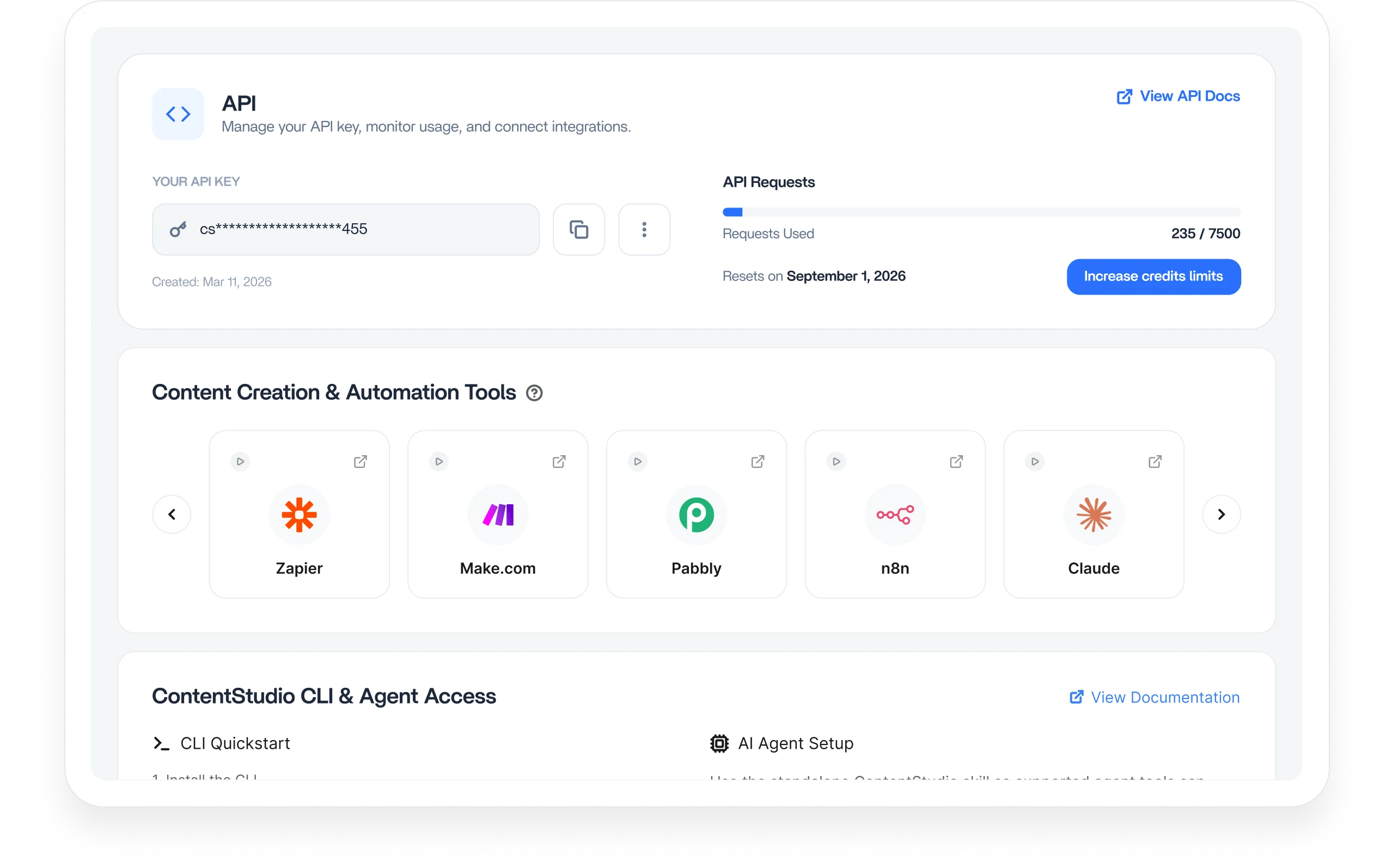
Integrated with





 AI
AI AI
AI AI
AI AI
AI AI
AI AI
AI AI
AI AI
AI
Trusted by 16,500+ leading brands and agencies
Connect it in under a minute
Copy the server URL, add it to the AI tool you already use, then sign in once. Nothing to download, nothing to configure.
https://mcp.contentstudio.io/v1/mcpThe same URL works everywhere, and a browser sign-in handles access. If your client cannot sign in through a browser, pass your key in the URL instead: mcp.contentstudio.io/v1/mcp?key=YOUR_API_KEY
Setup by client
Claude
Desktop and Web
- 1Open Settings, then Connectors, and choose Add custom connector.
- 2Paste the URL and save, then sign in when the browser opens.
ChatGPT
Developer mode
- 1Open Settings, then Apps and Connectors, and turn on Developer mode.
- 2Click Create, paste the URL, save, then approve access.
Claude Code
One terminal command
- 1Run the command below, then sign in on first use.
claude mcp add --transport http \
  contentstudio https://mcp.contentstudio.io/v1/mcp
Cursor and Windsurf
Remote server config
- 1Open your MCP server settings and add a new remote server.
- 2Paste the URL as the server config, save, then sign in.
Grok
Key in the URL
- 1Add a connector and paste the URL below, with your key already in it.
- 2Save, and Grok connects using the key. No browser sign-in needed.
https://mcp.contentstudio.io/v1/mcp?key=YOUR_API_KEYAny other MCP client
OpenClaw, n8n, LangChain, LlamaIndex, Semantic Kernel, or something you built yourself. Anything that speaks MCP works. Paste this wherever it takes a server config.
{
  "mcpServers": {
    "contentstudio": {
      "type": "http",
      "url": "https://mcp.contentstudio.io/v1/mcp"
    }
  }
}
Full walkthroughs for every client live in the setup docs.
What you can build with the social media MCP server
See how agencies, teams, and creators use the ContentStudio MCP server to run their whole social workflow from an AI assistant.

Create & Schedule Posts
Create posts as drafts, queued, or scheduled across all your connected networks and set them to publish later without opening the calendar yourself.

Update & Delete Posts
Edit any unpublished post to tweak copy before it goes live, or remove one you no longer need, straight from your assistant.

Filter Posts
List and filter every post by draft, scheduled, or published status in just a couple of seconds.

Generate Media
Create images and videos for your posts from a simple prompt, if enabled through the MCP server.

View Analytics
Pull performance data for your posts and accounts, so you can see what's landing without opening a dashboard.

Manage Inbox
Read and reply to messages and comments across your connected networks, all from one conversation.

Run Approvals
Check approval workflows and approve posts without leaving the conversation, keeping client sign-off moving.

Add Comments
Add comments or internal notes to any post through your assistant, no tab switching required.

Organize Workspaces & Content
Fetch every workspace, plus the content categories, campaigns, and labels inside them quickly and cleanly.

The perfect tool for agency-client collaboration and content approvals.

Frequently asked questions

Book a 30 min call
Have questions? Schedule a quick call and we will guide you through everything.
Book a free call