How to monetize YouTube shorts: Tips and tricks for success
Oct 9, 2026
Black Friday: save up to 50% on all plans

Written by
Wasiq NaeemUpdated
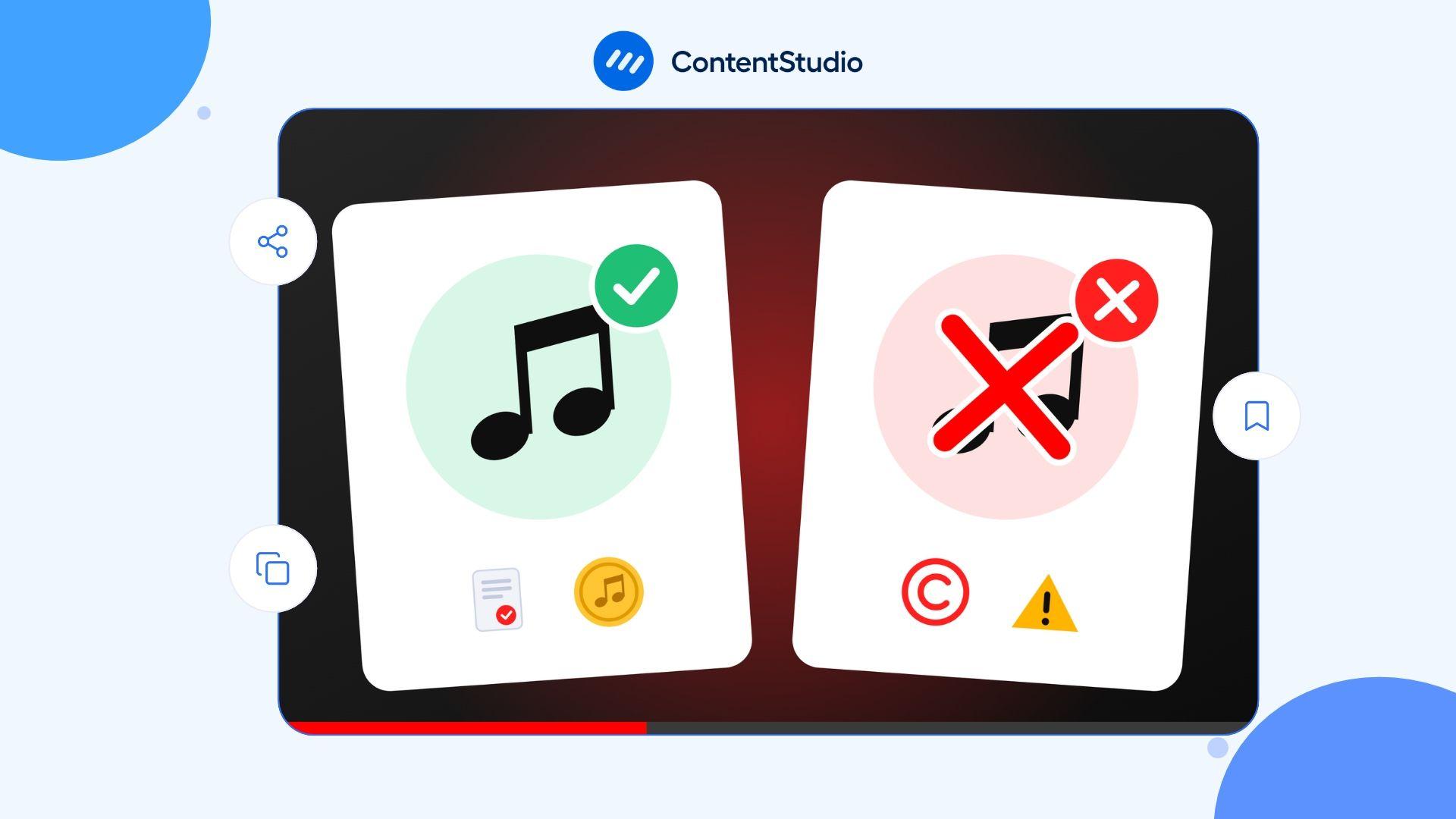
A song can make a video more engaging, but using the wrong track can turn a finished upload into a copyright problem. A Content ID claim, muted audio, restricted monetization, or a removed video can disrupt a channel that otherwise took weeks to prepare.
The issue is not simply whether music is “copyrighted.” It is whether you have the right to use that specific recording in that specific video, for that audience, and for that intended purpose.
This guide explains how YouTube copyright rules work, how to check the music you plan to use, and how to reduce the risk of claims or takedowns. A YouTube marketing guide can help you connect music and video decisions to a broader channel strategy.
Once the music, footage, and messaging are approved, a YouTube scheduler can keep the final upload, title, description, and release plan organised in one place.
Copyright protects original creative works, including songs, recordings, lyrics, and compositions. The person or organization that owns the rights can control certain uses, including reproduction, distribution, public performance, and adaptation.
A single song can involve more than one right. The composition may belong to a songwriter or publisher, while the recording may belong to an artist, label, or producer. Using a recording does not automatically give you permission to use the underlying composition. You may need clearance for both.
Copyright protection generally arises automatically when an original work is created and fixed in a tangible form. Registration can provide additional legal benefits in some jurisdictions, but it is not normally what creates copyright.
“Copyright-free” is not always a complete answer. Before using a track, establish:
A track described as royalty-free may still require attribution, restrict commercial projects, or prohibit redistribution. Royalty-free does not necessarily mean free of charge or unrestricted.
A YouTube channel growth plan should treat music clearance as part of the publishing workflow, not a last-minute upload decision.
Do not rely on a video description alone to establish permission. A description may contain a disclaimer, but it does not prove that the uploader owns the rights or that you may reuse the audio.
Before using music, check the original source, the license terms, the permitted platforms, the permitted commercial use, attribution requirements, any editing or adaptation restrictions, territory restrictions, and expiry conditions.
YouTube’s upload checks can identify potential copyright issues before a video goes public. This is a practical pre-publication screen, not a legal clearance certificate.
A “No issues found” result means YouTube did not identify a matching claim at that point. It does not prove that every right has been cleared or that a later claim is impossible.
Step 1: Sign in to YouTube Studio and begin uploading your video.
Step 2: Complete the video details and click Next through to the Checks step.
Step 3: Review the Copyright section. A green checkmark indicates no issues were found at upload. A flag indicates a potential match.
Step 4: If a flag appears, review the claim details before publishing. You can address a known issue before the video goes live.
| Route | What it may permit | What it does not automatically permit |
| Direct permission | Use defined by the rights holder | Uses beyond the written permission |
| Sync or music license | Use defined by the agreement | Monetization, ads, territory, or adaptation unless stated |
| YouTube Audio Library | Use of eligible Audio Library material under its terms | Use outside YouTube or contrary to the applicable terms |
| Creator Music | Use under the applicable YouTube terms and license | Uses not covered by the selected license |
| Public-domain work | Use subject to the applicable law | Use of a modern recording or arrangement that remains protected |
| Fair use or fair dealing | A possible legal exception in defined circumstances | A guaranteed result or a fixed clip length |
YouTube says fair use is a legal doctrine that may permit reuse of copyright-protected material in certain circumstances without permission. It also says only a court can determine whether a particular use qualifies as fair use, fair dealing, or public domain. Fair use is not a formula, a fixed clip length, or a guaranteed defence.
The work to grow YouTube subscribers should support a recurring audience relationship, not replace the need to clear music rights.
A composition may be in the public domain while a particular recording, arrangement, or master remains protected. Public-domain status depends on the country, the work, the publication date, the authorship, and the applicable law. There is no universal fixed year that makes a recording safe to use.
Before using music described as public domain, verify both the composition and the specific recording you plan to use. A new orchestral recording of a 19th-century piece may still have its own copyright protection.
Content ID is YouTube’s system for identifying and managing copyright-protected content. When a rights holder registers their content with Content ID, YouTube scans uploads against that database and can flag matches automatically.
Content ID is not a licensing option and is not a way to legally use music. A match means a rights holder’s content was detected in your video.
Depending on the rights holder’s settings, a Content ID claim may:
A Content ID claim does not normally result in a copyright strike. These are two different actions with different consequences.
A copyright removal request is different from a Content ID claim. If a valid removal request is submitted and YouTube acts on it, the video may be removed and a copyright strike applied to the channel. Three copyright strikes within a 90-day period can result in channel termination.
Do not dispute a Content ID claim without a valid legal basis. YouTube says that disputing without a valid reason can lead the rights holder to submit a removal request, which can result in a strike.
YouTube now offers a Replace Song tool inside YouTube Studio that lets creators swap claimed audio for an alternative track. As of November 2026, YouTube expanded this tool globally to include AI-generated instrumental tracks of up to three minutes. When a Content ID claim affects nonessential music, this provides an operational remedy without requiring a dispute.
Replacing the audio is not permission to keep using the original track. It is a way to restore monetization or availability when the claimed music is not essential to the content.
A guide to how much YouTube pays per view belongs in the monetization review. A Content ID claim can interrupt that revenue, which is why checking music rights before upload matters more than resolving claims after.
The YouTube Audio Library provides royalty-free production music and sound effects. YouTube says this music is copyright-safe and will not be claimed by a rights holder through Content ID. The Audio Library is the most reliable source for music that can be used without a licensing workflow.
Step 1: Sign in to YouTube Studio.
Step 2: Select Audio Library from the left-hand menu.
Step 3: Browse or filter tracks by genre, mood, duration, and attribution requirement.
Step 4: Filter by Attribution not required only when that fits your intended use.
Step 5: Download the track and confirm any attribution requirements before publishing.
Some Audio Library tracks require attribution in the video description. Read the specific track’s terms before use, particularly for commercial or sponsored projects.
Review the claim details in YouTube Studio under Content. Each claim shows the affected video, the claimed asset, and the rights holder’s chosen action.
If you have a valid license or legal basis, you can dispute the claim. Include specific details: the license source, the license number if applicable, and why you believe the use is permitted. A vague dispute is likely to be rejected and may prompt a removal request.
If the music is not essential to the video, use the Replace Song option to swap the claimed audio and restore monetization or availability without a dispute.
If a removal request results in a copyright strike, YouTube provides a process to appeal or submit a counter notification. YouTube’s guidance on this process is available in its Help Center. Obtain qualified legal advice before submitting a counter notification in complex or high-value situations.
Music clearance is one part of a complete publishing workflow. A guide to adding captions to YouTube videos belongs in the production phase, while the planning decision is whether captions are required for the audience and campaign.
A guide to adding a timestamp on YouTube can help viewers navigate longer tutorials or demonstrations. A guide to promoting a YouTube video can support the distribution decision once rights are confirmed.
The decision about a YouTube video license affects how other creators may reuse your video, not whether you have permission to use someone else’s music. Confirm that detail separately.
A guide to YouTube Shorts can support format decisions. Music rules apply to Shorts under the same Content ID system, so the same clearance process applies regardless of video length.
Music should support the video, not create an avoidable publishing risk. Before the next upload, confirm the source, license, permitted use, attribution requirements, and destination. Keep the approval record with the final asset so the team can answer questions later.
A guide to YouTube analytics can help you understand how music-related restrictions affect video performance over time. For teams managing regular uploads, ContentStudio organises video titles, descriptions, and publishing schedules in one shared workflow. Start a seven-day free trial. No credit card required.
No. There is no universal 30-second rule. A short clip can still trigger a Content ID claim or infringe copyright. Fair use or fair dealing may apply in limited circumstances, but YouTube says only a court can determine that.
No. Attribution may be required by a particular license, but it does not replace permission. A credit in the description does not create a right to use a song.
Not automatically. A cover may require permission for the underlying composition, even if you record and perform it yourself. A license for one recording does not necessarily cover another recording or arrangement.
No. A composition may be in the public domain while a particular recording, arrangement, or master remains protected. Public-domain status depends on the country, the work, the publication date, and the applicable law. Check the specific recording before use.
A Content ID claim is a rights-management action that may affect monetization, availability, or audio. It does not normally create a strike. A valid copyright removal request can remove content and apply a strike to the channel.
It depends on the rights holder’s settings. A claim may restrict monetization, redirect revenue to the rights holder, block the video in some locations, or mute the claimed audio. Review the specific claim details in YouTube Studio.
Wasiq Naeem is a Senior Content Strategist at ContentStudio and a research-driven content and digital marketing veteran. He writes on social media strategy, analytics, audience growth, and competitor analysis, covering topics like best posting times and competitor mapping. As a senior editor, he also reviews and fact-checks articles for depth and accuracy.
View all posts by Wasiq NaeemRecommended for you
How to monetize YouTube shorts: Tips and tricks for success
YouTube Shorts analytics: Diagnose retention, swipes, and subscriber gains
Expand your marketing to YouTube with ContentStudio – Youtube Direct Publishing
15 Best YouTube Automation Tools to Grow Your Channel in 2023


Plan, create and publish to 12 social channels
Up to 50% off on every plan
Offer ends in:
 Claim your deal
Managing social media doesn't get cheaper than this