POV (Point of View)

What is POV (Point of View)?
POV stands for "Point of View" and refers to the perspective from which content is created, filmed, or presented on social media platforms. In social media marketing, POV content puts viewers in a specific perspective or scenario, creating an immersive experience.
Originally gaining popularity on TikTok and later spreading to platforms like Instagram Reels, YouTube Shorts, and Facebook, POV content, especially POV video, has become a significant trend in social media content strategy.
When you see "POV:" at the beginning of a video caption, it's signaling that the content aims to make you feel as though you're experiencing a specific scenario from a particular viewpoint. This format helps creators establish deeper connections with their audience through relatable content.
What is a POV video?
A POV video is content filmed or structured to represent a specific perspective, putting viewers in a particular position or mindset.
Unlike traditional videos where the audience watches as outside observers, POV videos make viewers feel like active participants in the experience. These videos typically begin with "POV:" in the caption to establish the scenario.
For example, a makeup brand might create a video captioned "POV: You're getting ready for your first date in years" – filmed from the perspective of someone looking into a mirror applying makeup.
This technique creates an immediate emotional connection, making viewers feel seen and understood. POV videos have become especially popular on TikTok and Instagram Reels, where creators tell concise, engaging stories that resonate deeply—and those running active channels can bulk schedule Instagram posts to keep up with the format's high-frequency demand.
Different types of POV in social media content
POV content comes in various formats across different platforms. Understanding these variations can help you create more engaging content for your audience.
First-person POV
First-person POV content is filmed from the creator's perspective, making it appear as though the viewer is seeing through the creator's eyes. This technique creates an intimate, immersive experience that places the audience directly in the action.
Common uses of first-person POV include:
- Day-in-the-life content: Showing daily routines, work processes, or behind-the-scenes activities
- Tutorial videos: Teaching skills from the creator's viewpoint
- Travel content: Showcasing destinations as experienced by the traveler
- Reaction videos: Capturing genuine reactions to events, products, or other content
This approach is particularly effective for Instagram Stories and TikTok content, where authenticity and personal connection are valued.
Character POV
Character POV content involves the creator acting out a scenario from a specific character's perspective.
This format is especially popular for comedy, storytelling, and relatable situation videos. The creator typically specifies the character perspective in the caption (e.g., "POV: You're the barista dealing with a difficult customer").
This format has become a staple in TikTok marketing strategy for brands looking to create humorous, relatable content that connects with their audience.
Observational POV
Observational POV puts the viewer in the position of watching a scene unfold, often with the creator performing for the camera.
Unlike first-person POV, the viewer isn't meant to feel like they're actively participating but rather witnessing a scenario from a specific vantage point.
This approach is widely used in Instagram Reels and YouTube Shorts for storytelling and entertainment content.
Why POV content works on social media?
POV content has proven especially effective on social media for several reasons that align with fundamental principles of social media engagement.
Creates immersive experiences
By placing viewers directly into scenarios, POV content creates an immersive experience that traditional content formats can't match.
This immersion helps grab attention in crowded social feeds and encourages viewers to watch videos for longer periods, which social media algorithms tend to reward with greater reach.
Enhances relatability
POV videos often depict universal experiences or feelings that viewers can relate to, creating an immediate connection.
This relatability factor makes POV content highly shareable and comment-worthy, driving social media engagement rates higher.
Simplifies storytelling
The POV format allows creators to tell complex stories quickly and effectively. By dropping viewers directly into a scenario, creators can bypass lengthy setups or explanations, making content more digestible for today's fast-scrolling social media users.
Encourages emotional response
When done well, POV content triggers emotional responses more effectively than other content formats by making the viewer feel like an active participant rather than a passive observer.
This emotional connection is essential for building brand loyalty and driving engagement on platforms like Instagram and TikTok.
How to create effective POV content?
Creating compelling POV content requires strategic planning and execution. Here are key steps to craft POV content that resonates with your audience:
Understand your platform audience
Different social platforms have distinct user expectations for POV content:
- TikTok: Often embraces more creative, experimental POV scenarios
- Instagram Reels: Tends to favor aspirational or aesthetically pleasing POV content
- YouTube Shorts: Works well with educational or longer-form narrative POV content
- Facebook: Typically connects with relatable, everyday POV scenarios
Researching platform-specific trends can help you tailor your approach accordingly.
Start with a relatable scenario
The most successful POV content begins with a scenario that your target audience can instantly recognize and relate to.
Consider common experiences, pain points, or aspirations within your niche. For example, if you're a coffee brand, you might create content from the POV of someone desperately needing their morning coffee.
Keep it authentic
Authenticity is crucial for POV content to resonate. Even when creating character-based POV content, the emotions and reactions should feel genuine. This authenticity helps build trust with your audience and supports brand authenticity on social media.
Use appropriate technical elements
Technical aspects can significantly enhance POV content:
- Camera angles: Position the camera to reinforce the intended perspective
- Sound design: Use sounds that complement the POV scenario
- Lighting: Adjust lighting to match the mood and setting of your POV
- Captions: Clearly explain the POV scenario in your caption or on-screen text
Test and iterate
As with all social media content creation, testing different POV approaches and analyzing performance is essential. Use social media analytics tools to track which POV formats resonate best with your audience, then refine your approach based on these insights.
POV content best practices by platform
Each social media platform has its own nuances when it comes to creating POV content. Here's how to optimize your approach for different platforms:
TikTok POV content
TikTok is where the POV trend gained mainstream popularity.
On TikTok, POV content tends to be:
- Fast-paced and hook-driven in the first 3 seconds
- Often character-based with clear scenarios
- Frequently using trending sounds and effects
- Heavily reliant on text overlays to explain the POV
When scheduling TikTok posts, ensure your POV content aligns with current trends while still offering a unique perspective. Using TikTok caption generators can help craft compelling descriptions that clarify your POV scenario.
Instagram Reels POV content
For Instagram Reels, POV content should be:
- Visually polished and aesthetically pleasing
- Aligned with your overall Instagram aesthetic
- Often more aspirational or lifestyle-focused
- Typically more brand-friendly than some TikTok POV content
When scheduling Instagram Reels, consider how your POV content fits within your broader Instagram feed strategy. Using Instagram caption generators can help ensure your POV context is clearly communicated.
YouTube Shorts POV content
YouTube Shorts POV content often features:
- Slightly longer scenarios than TikTok or Reels
- More educational or informative POV approaches
- Higher production quality on average
- Stronger narrative structures
When creating YouTube POV content, consider how it might lead viewers to your longer-form content. Using YouTube title generators can help you create compelling titles that clearly communicate your POV concept.
Facebook POV content
Facebook users typically engage with POV content that is:
- Relatable to broader, more diverse audience demographics
- Often focused on universal experiences rather than niche trends
- More likely to incorporate humor or emotional elements
- Sometimes more text-heavy in explanation
When scheduling Facebook posts featuring POV content, focus on scenarios that appeal to Facebook's broader user base. Using Facebook post generators can help craft effective captions that explain your POV clearly.
POV content in brand marketing
Brands are increasingly incorporating POV content into their social media marketing strategies. Here's how different types of businesses are leveraging this format:
E-commerce and retail
Retail brands use POV content to:
- Show products in use from the customer's perspective
- Create "unboxing experience" content from the recipient's POV
- Showcase "day in the life" scenarios featuring their products
- Demonstrate before-and-after transformations from a first-person view
These approaches are particularly effective for social media for ecommerce strategies.
Services and B2B
Service-based businesses can use POV content to:
- Demonstrate the client experience from start to finish
- Show the transformation or results of their services
- Create relatable scenarios highlighting pain points their services solve
- Provide a glimpse into work processes from team members' perspectives
This approach works well for B2B social media strategy and B2C social media marketing.
Restaurants and hospitality
Food and hospitality businesses often create POV content that:
- Shows the dining experience from the guest's perspective
- Takes viewers on a journey through venues or properties
- Captures the preparation of food or drinks from a first-person view
- Recreates memorable customer experiences or scenarios
These techniques are valuable components of social media marketing for restaurants.
Common POV content mistakes to avoid
While POV content can be highly effective, certain pitfalls can diminish its impact:
Unclear POV setup
One of the most common mistakes is failing to clearly establish the POV scenario, leaving viewers confused about the perspective they're supposed to be experiencing. Always explicitly state the POV in your caption or through on-screen text.
Inconsistent perspective
Maintaining consistency in your chosen POV is crucial. If you establish a first-person perspective, switching to third-person mid-content can break immersion and confuse viewers. Maintain the chosen perspective throughout the content.
Overcomplicating the scenario
The best POV content typically focuses on simple, relatable scenarios. Overly complex situations or contexts that require extensive explanation often perform poorly. Focus on universal experiences that need minimal explanation.
Missing platform-specific opportunities
Each platform has unique features that can enhance POV content. Failing to use platform-specific tools like TikTok effects, Instagram Reels templates, or YouTube Shorts features means missing opportunities to maximize engagement.
Measuring POV content success
To evaluate whether your POV content is resonating with your audience, focus on these key metrics:
Engagement metrics
Pay close attention to:
- Watch time and completion rates: Effective POV content typically holds viewer attention longer
- Shares and saves: Strong indicators that your content resonated deeply
- Comments mentioning relatability: Comments like "this is so me" or "I feel seen" suggest successful POV content
- Stitch and duet rates: On TikTok, these response formats indicate strong audience connection
Use social media analytics to track these metrics consistently.
Content performance comparison
Compare performance of POV content against your non-POV content to identify:
- Which POV scenarios resonate most with your audience
- Optimal video length for your POV content
- Best-performing POV types (first-person, character, observational)
- Platform-specific POV preferences
Tools like ContentStudio's Analytics can help streamline this comparison process.
Cross-platform promotion
While POV content originated on TikTok, adapt your approach for each platform:
- Create platform-specific variations: Adjust length, style, and production quality
- Repurpose strategically: Modify successful POV content for different platforms
- Consider platform demographics: Tailor scenarios to platform-specific audience preferences
- Leverage platform-unique features: Use each platform's distinctive tools and effects
Tools like ContentStudio's multi-platform scheduler can streamline this cross-platform approach.
The future of POV content
As social media continues to evolve, POV content is likely to develop in several directions:
- Enhanced immersion through AR/VR: As augmented and virtual reality become more accessible, POV content may become even more immersive
- Platform-specific POV formats: Each platform will likely develop distinctive POV formats optimized for their environment
- Integration with other trends: Expect to see POV content combining with other trends like UGC (user-generated content)
- More sophisticated storytelling: As audiences become familiar with basic POV formats, creators will develop more nuanced approaches
Staying current with social media trends will help you adapt your POV content strategy as these evolutions unfold.
By understanding the nuances of POV content and implementing it strategically across platforms, marketers can create more engaging, relatable content that resonates deeply with audiences and drives meaningful social media engagement.
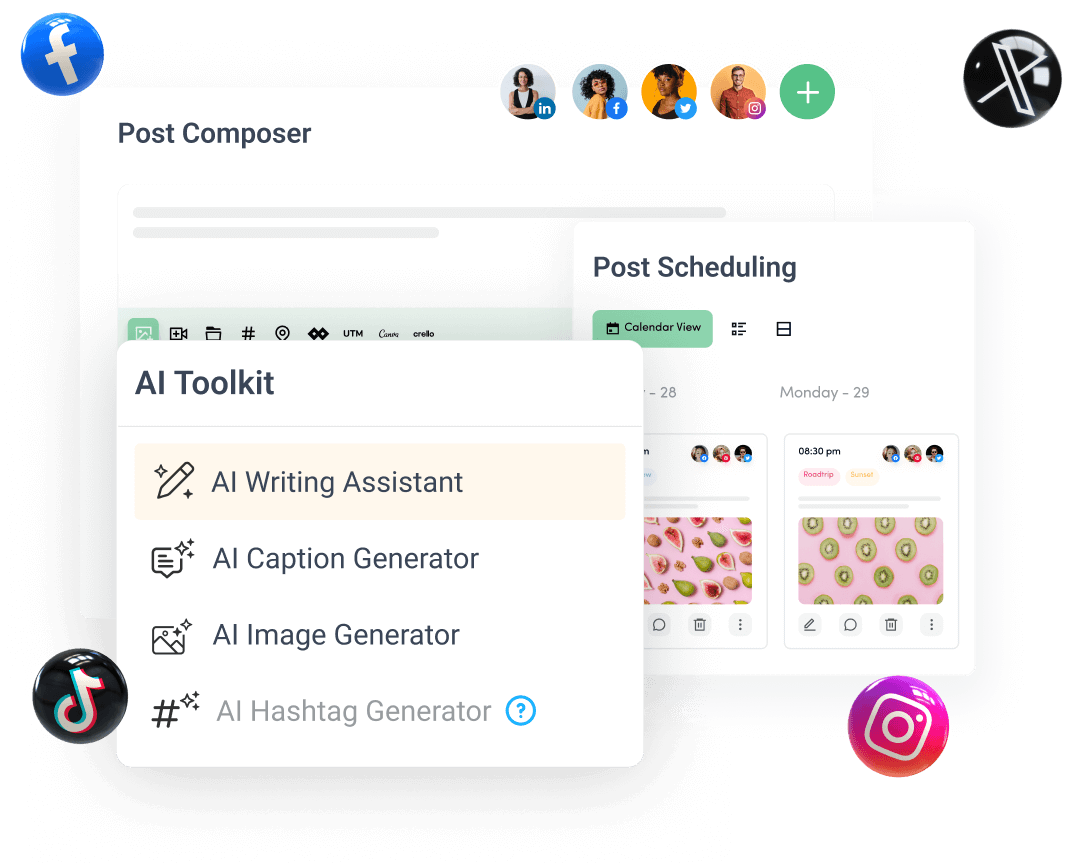
Create, plan, schedule, and publish posts on all social media networks
Recommended for you
The clock's on: save up to $840


Plan, create and publish to 12 social channels
Up to 50% off on every plan
Offer ends in:
 Claim your deal
Managing social media doesn't get cheaper than this