AI FAQs generator
Create a first draft of FAQs for a page, product or topic in seconds. Free, no sign-up.
- Free forever
- No sign-up
- Edit before you publish
- 16,500+ brands use ContentStudio
What is an AI FAQ generator?An AI FAQ generator is a tool that writes a set of frequently asked questions and short answers from a topic you enter, such as a product, service or policy. You choose a tone, review the draft and add your own details. ContentStudio's AI FAQs generator is free and works without an account.
How to use it
How to use the AI FAQs generator
Start with the topic the FAQ section is for. A clear topic usually gives you better questions than a very broad one.
Enter the FAQ topic
Add the page, product, service or subject you want FAQs for. "Refund policy for online courses" works better than "refunds".
Choose a tone of voice
Pick the tone that fits the page, for example simple, friendly, professional or direct.
Generate FAQs
Click Generate FAQs and review the questions and answers the tool gives you.
Edit the answers
Add real details, remove weak questions, and check anything about pricing, policies, features or availability.
Tip: add the audience to your topic, such as "for first-time buyers" or "for agency owners". The questions then match what that reader actually worries about.
What it is
What is an AI FAQs generator?
An AI FAQs generator creates question-and-answer drafts from a topic you enter. You add the subject, choose a tone, and get a set of FAQs that you can review before adding them to a page.
It is meant for the early draft stage. It gives you a structured starting point, but you still need to check the answers, remove anything that does not apply, and add the details that are specific to your product, service or page. People also call it an FAQ maker or FAQ writer. The job is the same: turn what customers keep asking into clear, short answers.
Why use it
Why use an AI FAQs generator?
A good FAQ section should not feel like extra content added at the bottom of a page. It should answer the questions people are likely to have before they contact you, sign up, buy or keep reading. Use it when you need to:
Landing and product pages
Answer objections about price, setup, contracts and results right where people decide.
Service pages
Explain what is included, how long it takes and what happens after someone books.
Customer concerns
Draft answers for shipping, returns, refunds, privacy and account questions.
Help center starters
Turn a broad topic into question format, then expand the answers that need a full article.
Social media replies
Build a set of saved replies for comments and DMs, so your team answers the same question the same way on every network.
Events and launches
Cover date, location, tickets, access and refunds before the questions flood your inbox.
How to write FAQs
How to write FAQs people actually read
Use the customer's words
Write the question the way a customer would type it, for example "Can I cancel anytime?", not "Cancellation policy overview". Your support inbox, sales calls and social comments are the best source.
Answer in the first sentence
Start with "Yes", "No" or the number, then explain. Readers and search engines both pick up the first sentence.
Keep answers short
Two to four sentences is enough for most questions. If an answer needs steps or screenshots, write a full help article and link to it.
One question, one topic
"How much does it cost and can I pay monthly?" is two questions. Split it so each answer stays clear.
Order by importance
Put the questions that block a purchase or sign-up first. Nice-to-know questions go last.
Review them every few months
Prices, policies and features change. An outdated FAQ answer creates more support tickets than no answer at all.
Create an FAQ page
How to create an FAQ page
- Collect real questions. Pull them from support tickets, chat logs, sales calls, reviews and social media comments.
- Group them. Use 3 to 6 categories such as Pricing, Account, Shipping and Privacy.
- Draft the answers. Enter each category as a topic in the generator, then edit the answers with your real details.
- Add links. Point to the pricing page, a help article or a contact form where a short answer is not enough.
- Make it easy to scan. Use expandable questions (an accordion) and a search box if you have more than 20 questions.
- Add FAQ schema. Mark up the questions and answers as structured data (see below).
On a product or landing page, keep it to the 5 to 8 questions that matter for that page. A separate FAQ page can hold the full list.
FAQ schema
FAQ schema: turn your FAQs into structured data
FAQ schema is structured data that labels each question and answer on a page so machines can read them. It uses the schema.org FAQPage type, usually written as JSON-LD in the page's code. Each question becomes a Question with an acceptedAnswer.
| Schema property | What goes in it |
|---|---|
| @type: FAQPage | Marks the whole page or section as a list of FAQs |
| mainEntity | The list of questions on the page |
| @type: Question, name | The question text, exactly as shown on the page |
| acceptedAnswer, text | The answer text, exactly as shown on the page |
Since 2023, Google shows FAQ rich results only for well-known government and health sites. FAQPage is still a valid schema.org type, though, and clear question-and-answer content is easy for search engines and AI assistants to understand. Only mark up questions that are visible on the page, and check your code with the Schema Markup Validator.
Many CMS plugins and site builders add FAQ schema automatically when you use their FAQ block. Paste the questions and answers from this generator into that block.
FAQ examples
FAQ examples by page type
- SaaS pricing
Can I change plans later? Yes. Upgrade or downgrade anytime and we prorate the difference.
- Online store
How long does shipping take? Orders ship in 1–2 business days and arrive in 3–5 days in the US.
- Agency services
What do you need from us to start? Access to your social accounts, your brand guide and one kickoff call.
- Online course
Do I get lifetime access? Yes. You keep access to all lessons and future updates.
- Event
Will the sessions be recorded? Yes. Ticket holders get the recordings by email within a week.
- Local business
Do I need an appointment? Walk-ins are welcome, but booking online saves you the wait.
- Social media account
Do you reply to DMs? Yes, we reply within one business day, Monday to Friday.
From FAQs to a steady stream of helpful posts
Your FAQs are a ready-made list of post ideas. ContentStudio is an AI social media management platform that helps you plan, write and publish them across your social channels. With it you can:
- Schedule an FAQ series. Plan one question a week on Instagram, LinkedIn, Facebook, X and more, and publish automatically with ContentStudio's social media scheduler.
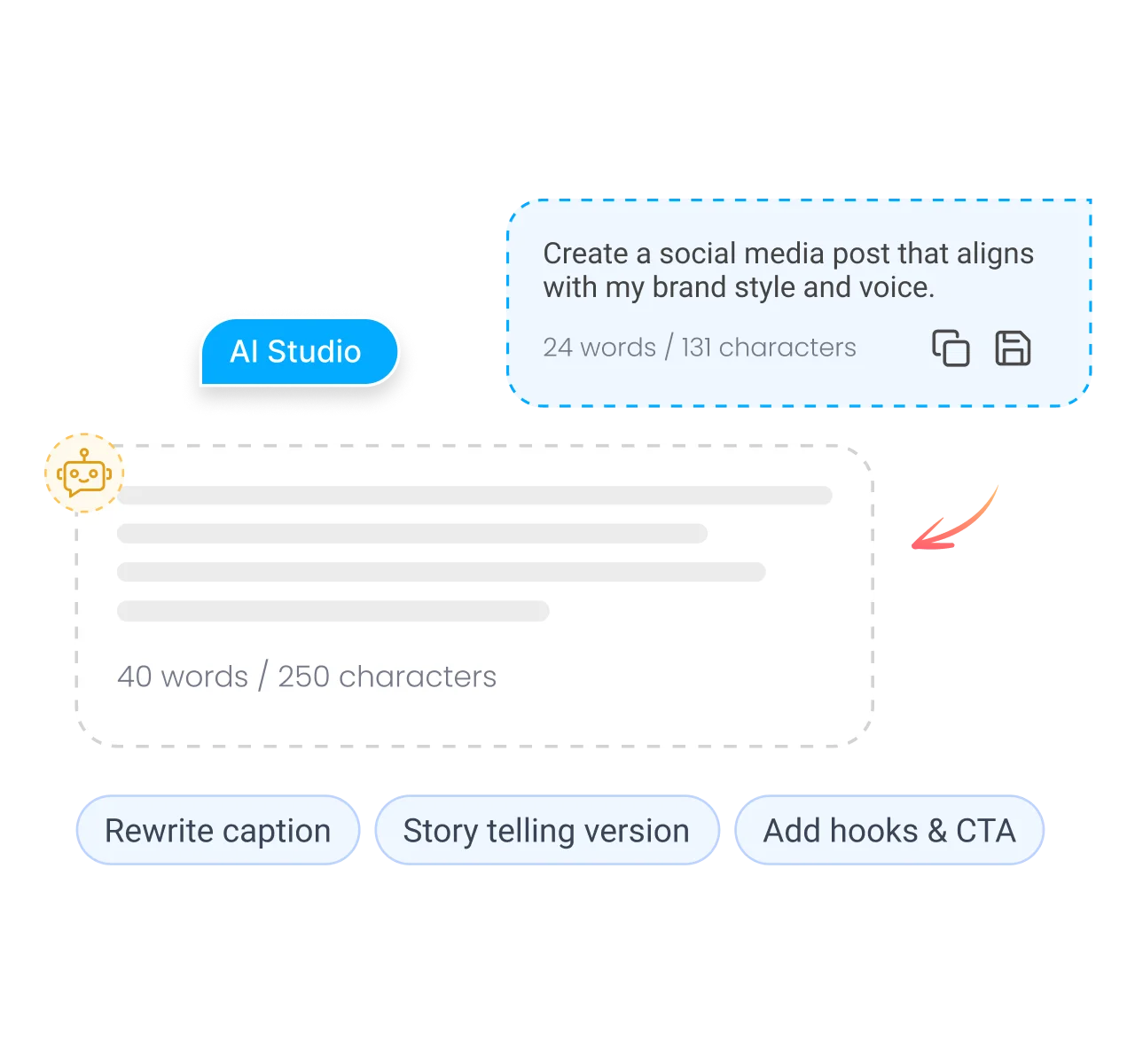
- Turn answers into posts. AI Studio, our AI social media content generator, rewrites each answer as a caption, adds hashtags and creates an image.
- Answer comments and DMs in one inbox. Reply to questions from every network in one place, with your team.
Is it free?
Is the AI FAQs generator free?
Yes. ContentStudio's AI FAQs generator is free to use and needs no account or sign-in. Enter a topic, pick a tone and generate as often as you need. It is part of ContentStudio's suite of free social media tools.
- Free forever
- No sign-up
- Edit before you publish
- 16,500+ brands use ContentStudio
Related free tools
All free social media tools →Frequently asked questions

Book a 30 min call
Have questions? Schedule a quick call and we will guide you through everything.
Book a free call
FAQs on social media
Reuse your FAQs on social media
The same questions people search for on your site show up in your comments and DMs. Once your FAQs are written, put them to work on social too:
Need the caption for those posts? Paste the answer into the AI caption generator. For customer emails that answer the same questions, use the AI email writer.