
How to run a holiday campaign calendar from chat with OpenClaw
Oct 1, 202610 minutes

Written by
Saif AliUpdated

Instagram marketing is the use of Instagram’s content formats, advertising tools, and community features to build brand awareness, generate leads, and drive sales.
According to Meta’s Q3 2025 earnings, Instagram reached 3 billion monthly active users. With so many monthly active users and a product suite that now spans short-form video, stories, shoppable posts, and a robust advertising platform, it has become one of the most commercially important channels in digital marketing.
Instagram marketing has changed dramatically over the past few years. New content formats, evolving algorithms, and shifting user behavior mean brands need more than great content to succeed. A well-planned strategy and the ability to schedule Instagram posts consistently are now essential for growing your audience and driving results in 2026.
Instagram marketing is the practice of using Instagram to reach business goals like awareness, leads, and sales. It combines four levers: organic content (Reels, Stories, carousels), paid ads through Meta, Shopping, and creator partnerships. What sets it apart is a visual, algorithm-driven feed that rewards saves and shares over passive likes.
It sits within the broader discipline of social media marketing but carries its own logic, culture, and algorithm that reward specific behaviors and content types.
What separates Instagram from other platforms is its visual-first nature combined with an increasingly sophisticated algorithm that rewards watch time, saves, shares, and comments over passive likes.
Instagram dominates in 2026 because it combines three things few platforms offer together: scale of over 3 billion monthly active users, built-in Shopping that closes the gap between discovery and purchase, and a visual feed that holds attention. For most brands, that makes Instagram both a discovery engine and a place where sales actually happen.
Instagram’s design also matters. A feed built around photos, Reels, and Stories lets brands show outcomes, not just talk about them. A fitness studio can share before-and-after carousels, a Shopify store can tag products in Reels, and a B2B SaaS team can turn customer wins into short case study videos.
Visual proof builds trust faster than text-only updates on platforms like X or LinkedIn. Shopping tools keep that momentum going. Instagram Shop, product tags, and shoppable Stories remove steps between interest and checkout.
When you pair those features with consistent content and community interaction, Instagram behaves like a storefront, newsletter, and TV channel in a single app.
Before any strategy, content plan, or ad campaign can take shape, you need the right type of account. Instagram offers two broad account categories: personal and professional.
For any brand, business, or creator using Instagram with a marketing purpose, a professional account is not optional; it is the foundation everything else is built on. Instagram’s professional accounts come in two varieties.
Instagram Creator accounts are designed for public figures, influencers, and artists who are primarily building a personal brand or audience. Business accounts are built for companies and brands seeking to reach customers, drive sales, and access the full suite of commercial tools Instagram offers.
For most marketing purposes, the Business account is the right choice.
Switching to a professional account is not just an administrative step; it unlocks a set of tools that directly inform and improve your marketing decisions.
Verification on Instagram signals authenticity and builds immediate trust with new visitors. There are two separate routes to verification, and depending on your brand’s profile and eligibility, you may qualify for one or both.
This is the blue checkmark awarded to public figures, celebrities, and notable brands. It is not available to everyone and requires an application. To apply, go to Settings, scroll to “For professionals,” select “Account type and tools,” and then tap “Request verification.”
Instagram evaluates applications based on authenticity, completeness, notability, and uniqueness.
Meta Verified is a paid subscription available to eligible personal and business Instagram accounts. It provides a verification badge alongside additional features including proactive account protection, direct access to account support, and increased visibility in some contexts.
You can sign up through the “For professionals” section in your Instagram settings.
You should market on Instagram because it offers a large, commercially active audience, mature Shopping tools, the strongest creator ecosystem of any platform, and precise ad targeting through Meta.
Few channels combine reach and intent this well. Even brands that do not sell physical products gain a visual space to build trust faster than text-based platforms allow.
Over 3 billion monthly active users is an enormous number, but more relevant for marketers is the intent behind those users. Instagram audiences skew toward people in their late teens through mid-forties, a demographic that is accustomed to discovering and buying products directly through social platforms.
The platform is also genuinely global. If your product or service has an international addressable market, Instagram’s reach is difficult to match outside of search advertising.
Some brands and products are inherently easier to sell through words and logic. Others need to be seen, felt, and experienced before someone understands why they want them.
Fashion, food, home decor, beauty, travel, fitness, architecture, and dozens of other categories thrive on Instagram precisely because the platform was built around visual communication.
Even for businesses that do not sell physical products, Instagram’s visual format creates opportunities for brand-building that are hard to replicate elsewhere.
Instagram Shopping has matured into a genuine commerce channel. Brands can tag products directly in feed posts, Stories, and Reels, and users can complete purchases without leaving the app in many markets.
For e-commerce brands, this removes friction from the discovery-to-purchase journey in a way that was not possible five years ago.
No other platform has a more established infrastructure for influencer marketing than Instagram.
The ecosystem of nano-influencers (1,000–10,000 followers), micro-influencers (10,000 to 100,000), and macro-influencers has been refined over a decade, and the trust that audiences extend to creators they follow is a form of social proof that paid advertising cannot replicate.
Instagram Ads operate through Meta’s advertising platform, which means marketers have access to some of the most sophisticated targeting infrastructure in digital advertising.
You can target by demographics, interests, behaviors, lookalike audiences, custom audiences built from your own customer data, and retargeting segments based on engagement or website visits.
Instagram Marketing
Schedule your Instagram posts, Reels, and Stories, and get recommended best time to publish for maximum engagement.
Get Started for FREE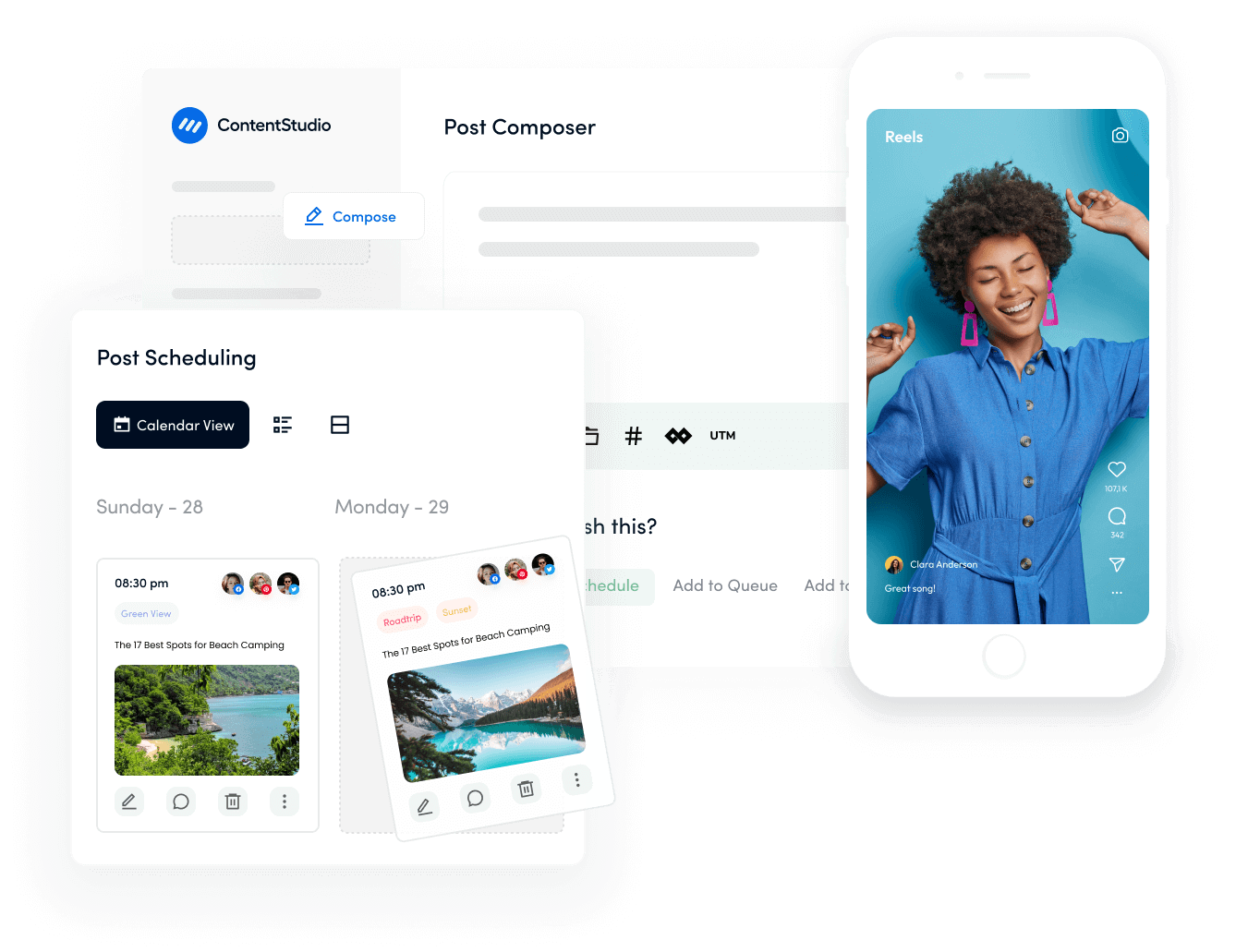
You will see several numbered rules passed around in Instagram advice. None of them come from Instagram or Meta. They are community conventions, useful as starting points but never as fixed laws. Here is what each one means and how we would actually use it.
The 5-3-1 rule is a community engagement habit, not official Instagram guidance. Each day you like five posts, leave three genuine comments, and follow one relevant account inside your niche. The idea is to earn attention through real interaction rather than bots. In our view, it works best as a warm-up, not a growth plan on its own.
The 3-3-3 rule is an informal content planning convention, not an Instagram policy. One common version splits your posting into three educational pieces, three entertaining pieces, and three promotional pieces across a cycle. We treat it as a starting ratio you should tune to your own audience data rather than a fixed law, since every account converts differently.
The 5-3-2 rule is a content mix convention for keeping a feed balanced. Out of every ten posts, five are useful curated or industry pieces, three are your own original content, and two are personal or behind the scenes. It exists to stop feeds becoming one long sales pitch. Adjust the mix once your analytics show what your audience actually saves and shares.
| Rule | What it governs | Our take |
| 5-3-1 | Daily engagement behaviour (like 5, comment 3, follow 1) | A warm-up routine, not a growth strategy by itself |
| 3-3-3 | Content mix (educational, entertaining, promotional) | A starting ratio to tune against your own data |
| 5-3-2 | Content mix (curated, original, personal) | Useful for avoiding an all-sales feed, then adjust |
A winning Instagram marketing strategy is built in four steps: study competitors for gaps, define a brand aesthetic, choose three to five content pillars, and set a realistic posting cadence. Everything else, formats, ads, analytics hangs off those four decisions.
Posting consistently matters, but consistency without direction produces noise, not results. A real Instagram marketing strategy starts with four foundational questions.

Competitive analysis on Instagram should give you direction, not pressure you into copying others. The goal is to understand what already works in your niche and where there is room for your own angle.
If you approach it that way, competitor research saves you months of testing.
Start by selecting three to five direct competitors and a few aspirational accounts in your space. Review their last 30 to 60 posts and log details such as:
Then look for gaps. Maybe no one shares behind-the-scenes Stories, even though your industry relies heavily on trust. Maybe every brand posts polished product shots, while unboxing Reels or customer reactions are missing. Content gaps like these are places where your Instagram marketing tactics can stand out without extra budget.
A strong brand aesthetic on Instagram makes your posts recognizable before someone even reads the handle. That level of recognition lifts recall, keeps your grid cohesive, and signals to the Instagram algorithm that your account has a clear identity.
Start with three elements on paper before you publish anything:
Look at brands such as Apartment Therapy and Taco Bell for inspiration. Apartment Therapy leans on bright, organized interiors and gentle captions that feel like a friend giving advice. Taco Bell uses bold colors, fast‑food close‑ups, and internet humor to match its young audience.
A content pillar is a thematic area that your account returns to consistently. For a fitness brand, pillars might include workout tutorials, nutrition content, client transformations, and behind-the-scenes culture. For a B2B SaaS company, they might be product demos, customer success stories, industry insights, and team spotlights.
Pillars matter because they give your account a coherent identity that attracts a specific audience. If your content is all over the place, each post might appeal to a different person, but no consistent audience forms around your account.
Consistency is one of the clearest signals Instagram’s algorithm uses to decide how often to distribute your content. Accounts that post regularly and predictably are rewarded with broader reach than those that post in bursts and then go quiet. But consistency at the cost of quality is a losing trade. A mediocre post published daily will underperform a strong post published three times a week.
The right cadence depends on your resources, but a workable baseline for most accounts in 2026 is three to five feed posts per week (a mix of Reels and carousels), five to seven Stories per day, and one to two Reels per week specifically produced for reach.
The formats that perform best in 2026 are Reels, carousels, Stories, and Live used together, not in isolation. Reels extend reach to new audiences, carousels drive saves, Stories keep current followers engaged daily, and Live handles big moments. When you mix them, the Instagram algorithm reads your account as active and healthy and distributes it more widely.
Short‑form vertical video sits at the center. Reels now earn more reach than standard photo posts for most business accounts, especially when those Reels use trending audio and on‑screen captions. That does not mean static images are useless, but it does mean video should carry a serious share of your weekly schedule.
Think of your content mix like this:
This structure keeps your feed interesting without exhausting your team.

In 2026, using Reels to reach new audiences has become essential. The Reels tab and Explore feed both highlight clips that hold attention and spark interaction. If organic growth matters to you, Reels deserve a permanent slot in your Instagram growth plan.
Focus first on the hook. The opening three seconds decide whether someone swipes away or stays. Use bold on‑screen text, movement toward the camera, or a surprising visual to make people pause. Then move quickly into one clear idea, such as a single tip, a mini tutorial, or a short story.
Subtitles are non‑negotiable. Many viewers watch with sound off, and accessible captions also help retention when people replay your clip. Featuring real people on camera, whether creators, customers, or team members, usually outperforms faceless product shots. Music and topic tags matter too.
Carousels, Stories, and Live broadcasts support your Reels by adding depth and real‑time contact. Each format plays a different role, so you can assign them clear jobs in your Instagram marketing strategy.
Using Instagram carousels works well for:
When users swipe through multiple slides, dwell time increases, which sends a strong positive signal to the algorithm. You can pair carousels with timely topics, such as seasonal checklists or tool roundups, to earn saves and shares.
Stories function like a daily heartbeat for your account. Use them to share quick updates, repurpose feed posts, run polls, and host AMAs. That makes Stories the perfect place for behind‑the‑scenes looks and low‑pressure offers.
Live sessions are best reserved for bigger moments. Product launches, expert Q&A sessions, or event coverage give followers a reason to join on time. Because Instagram sends notifications when you go live, these sessions can pull in people who have not seen your posts in a while.
Content creation is where most Instagram marketing time gets spent, so a simple system pays off quickly. High‑quality captions, smart hashtags, and strong visuals work together to stop thumbs and drive action. When those elements line up, you need fewer posts to hit your goals.
Captions carry context and calls to action. Instagram allows up to 2,200 characters, yet only the first three or four lines appear before the See more cut. That means your hook and main promise need to sit right at the top.
Instagram hashtag usage has shifted from a volume game to a relevance game. Instead of stuffing 30 tags into every post, most brands see better results with three to five tightly aligned tags. Branded hashtags remain valuable for gathering user‑generated content (UGC) and tracking campaign activity over time.
Visuals complete the picture. Clean framing, consistent colors, and clear text placement all suggest a professional brand even when shot on a smartphone.

Try now: Instagram caption generator
A good Instagram caption does three things: it hooks interest, delivers value, and tells people what to do next. When you get those pieces right, you get more followers and customers.
A simple structure that works well:
For example, you might open with a line about three simple changes that lifted Story views by half, then break down each change below. Keep paragraphs short and use line breaks to make reading easier on mobile screens. Close with a clear call to action such as saving the post, tagging a colleague, visiting your bio link, or sending a direct message.
Hashtags sit in service of that message. Use a mix of:
Broad tags reach more people but face heavy competition, while niche tags reach fewer people who are more likely to care. Branded tags like WeWork’s well‑known #DogsOfWeWork give customers a simple way to add their voice to your story and make UGC easier to find.
Try out: Instagram hashtag generator
Strong visuals on Instagram start with simple photography habits rather than expensive gear. If you can control light, framing, and editing, you are already ahead of many accounts.
Consider these basics:
Editing should support the image instead of hiding mistakes. Apps like VSCO and Facetune 2 help adjust exposure, contrast, and sharpness before you open Instagram. Inside the app, the Lux slider offers a quick way to balance highlights and shadows. Pick one or two filters that match your brand and stick with them so your grid feels consistent over time.
Running Instagram ad campaigns work best when you treat it as a structured part of your Instagram marketing strategy rather than an occasional Promote button tap. Meta Ads Manager gives you control over objectives, audiences, and placements so each Instagram ad campaign supports a clear outcome.
DataReportal reports Instagram ads reached about 1.74 billion users in early 2025. When you combine control with good creative, ads stop feeling like guesswork. Start with the campaign objective that matches your goal. Brand Awareness and Reach suit top‑of‑funnel aims, while Traffic, Leads, and Conversions focus on measurable action. Next, decide how you measure success.
For awareness, you might track cost per thousand impressions. For traffic, cost per click and bounce rate matter more. For conversions, you care about cost per purchase or cost per lead compared to customer lifetime value.
Set simple targets before turning your ads on. Budget discipline matters as well. Start with modest daily budgets to test audiences and creative versions, then move spend toward what performs best instead of pushing everything at once.
Ad format and targeting choices decide how well your Instagram ad campaigns perform. When you match format to objective and audience, your spend goes further.
Common ad formats include:
Targeting starts with demographics such as age, gender, and location, then narrows through interests and behaviors. You can aim at people who follow similar pages, shop online frequently, or consume certain types of content. Custom and lookalike audiences built from your email list or site visitors often perform even better.
When setting placements in Ads Manager, always choose Edit Placements and confirm Instagram is selected. That step prevents your budget from drifting mainly to Facebook when your focus is Instagram.
As results come in, compare cost per lead or cost per click against the revenue or lifetime value those leads create, then shift budget toward the highest‑performing segments.
Instagram influencer marketing in 2026 leans heavily on micro and nano creators rather than celebrities. Smaller creators usually have tighter communities and better comment quality, which translates into stronger trust for your brand.
Nano influencers often sit between 1,000 and 10,000 followers, while micro influencers usually fall between 10,000 and 100,000. For niche products or B2B offers, that relevance matters more than raw reach.

Start by identifying creators whose audience matches your target buyer. Study their past collaborations and make sure your product fits naturally into their life. For example, Goal Zero working with climber Alex Honnold makes sense because portable power solves a real problem in his world. That kind of authentic alignment between product and creator is what makes the partnership credible to the audience.
Partnership structures can range from free product in exchange for honest content to paid campaigns with clear deliverables. Brief creators on key messages, legal requirements, and creative guardrails, then give them room to speak in their own voice.
Instagram analytics turn posting from guesswork into a learning loop: you track what your audience saves, shares, and acts on, then make more of what works. Start with native Instagram Insights for reach, follower growth, and post performance, and connect every metric back to a goal. Saves and shares matter more than likes.
Native Instagram Insights provide a strong starting point. Inside the app, business and creator accounts can see and understand Instagram impressions, reach, follower growth, and basic audience demographics. You can also open post‑level stats to review likes, comments, saves, and shares, along with Reel views and Story exits.
The key is to connect metrics back to goals. If your main focus is awareness, you care about reach and impressions. If you sell directly through Instagram, you pay closer attention to link clicks, shopping interactions, and DMs about pricing or shipping. For community building, comment quality and Story replies give better clues.
The right Instagram metrics help you see both content quality and business impact. This table covers the core numbers to review at least once a month.
| Metric | What it tells you |
| Engagement rate | How strongly your content resonates with the people who see it |
| Follower growth rate | Whether your account is steadily attracting the right new audience |
| Reach vs impressions | How many unique users see your posts compared to total views |
| Story completion rate | Whether your Stories hold attention from the first frame to the last |
| Reel views and shares | How far the algorithm carries your video content beyond current followers |
| Link in bio click‑through rate | How effectively your content drives traffic to owned properties |
| Shopping post interaction rate | How often viewers tap product tags and move toward purchase |
Social Media Analytics
Fine-tune your social media strategy for success with in-depth analytics and white-labeled reports.
Get Started for FREE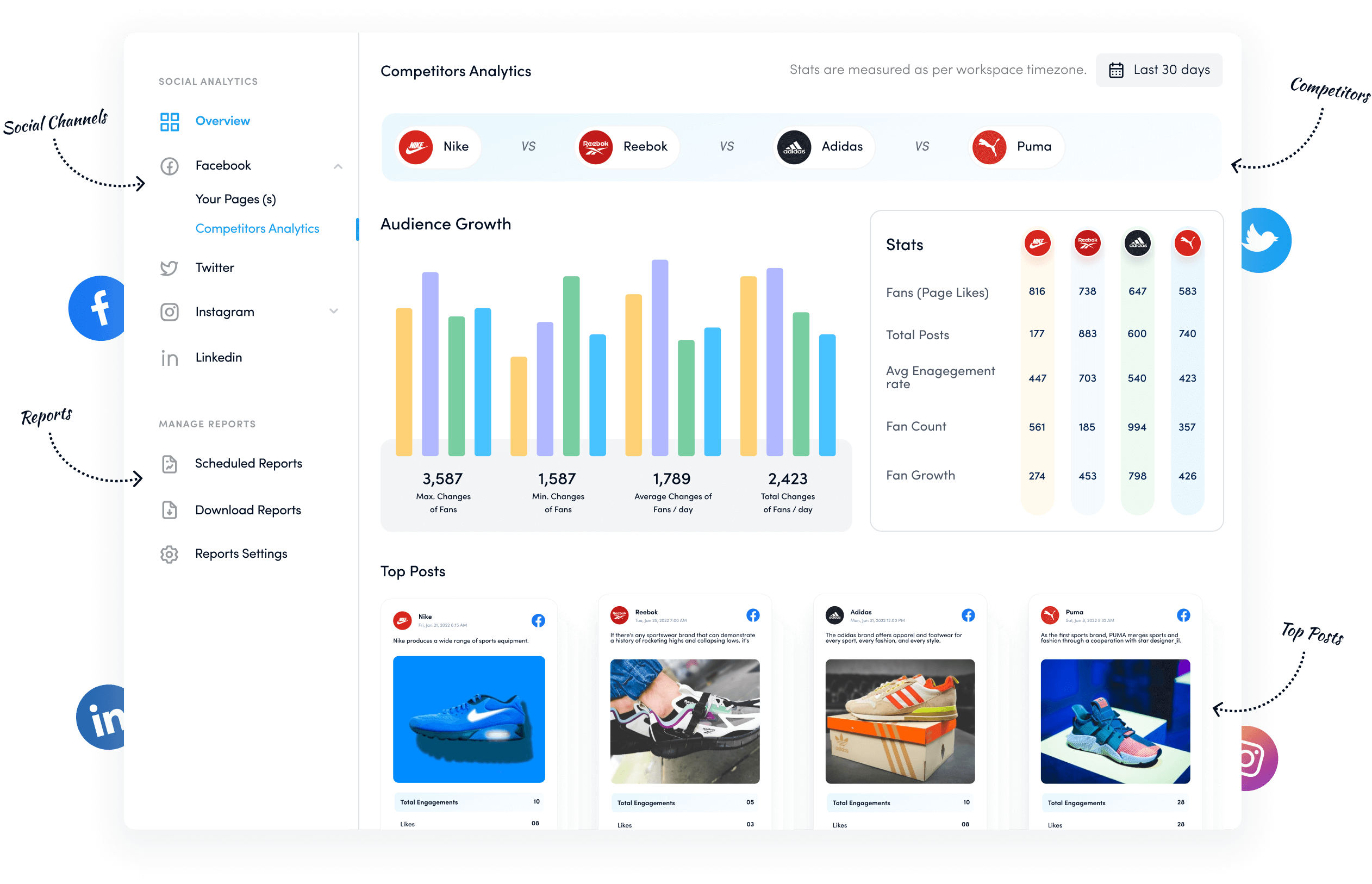
Beyond the fundamentals, there is a set of Instagram marketing hacks that separate accounts performing at a high level from those that are doing everything “right” but not seeing results.
Instagram’s algorithm is not purely chronological, but recency still plays a role in initial distribution. Posts published when your audience is most active get their first wave of engagement faster, which signals to the algorithm that the content is worth distributing more broadly.
Use Insights to identify the best time to post on Instagram, which varies significantly by account and demographic, and schedule your most important posts to land in those windows.
The three pinned posts at the top of your grid function as your profile’s most valuable real estate. Most visitors to your profile make a follow/no-follow decision within seconds, and what they see in those first moments determines whether they stay.
Pin content that answers the question “what will I get from following this account?” as clearly and compellingly as possible.
A strong Reel that introduces your brand, a carousel that delivers your best educational content, and a post that showcases your product or service at its best is a reasonable pinned post combination.
Likes are a vanity metric in 2026. Saves and shares are the signal that your content delivered enough value or resonance that someone wanted to either keep it for themselves or pass it along to someone else.
Building your content strategy around maximizing saves and shares rather than likes or follower counts tends to produce content that the algorithm distributes more generously, and it tends to attract a higher-quality follower base.
Instagram’s direct messaging feature is a valuable communication channel that many brands overlook in favor of their public feeds. To make the most of this opportunity, it’s important to respond to every comment and direct message promptly.
Additionally, you can create Stories specifically designed to encourage responses in DMs, such as asking questions that invite private replies rather than public comments.
Instagram Ads make it easy to run controlled creative tests, but even on the organic side, you can run informal tests by varying one element at a time, such as the caption hook, the cover image, or the call to action, and measuring which version drives better outcomes.
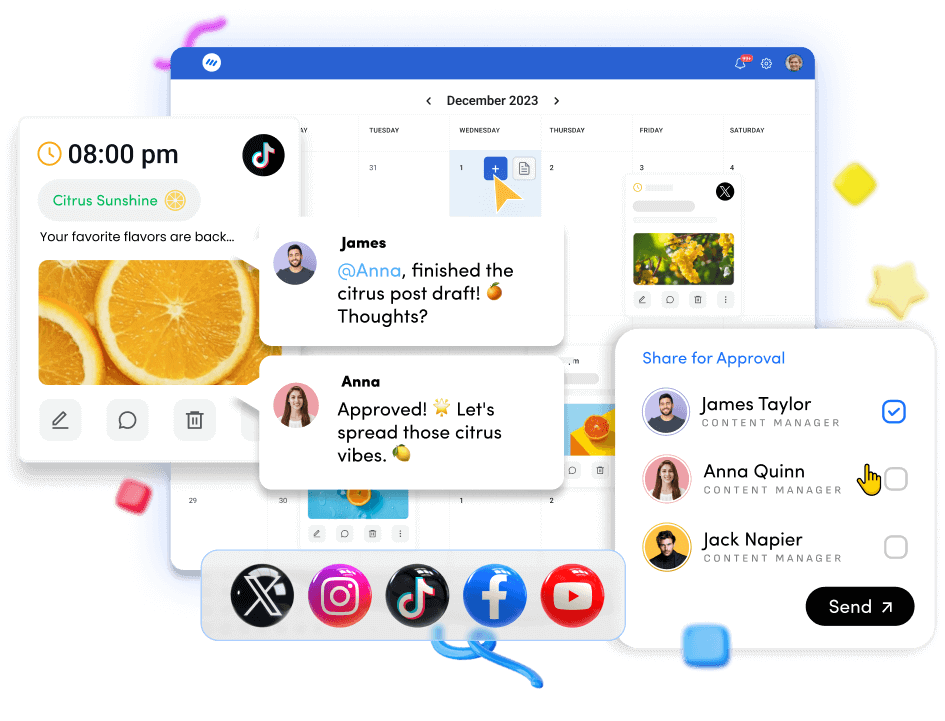
Most accounts post intuitively without ever learning what actually moves the needle for their specific audience. Social media management tools like ContentStudio, including its built-in AI Studio, let you schedule posts, track performance, and refine your content strategy from one dashboard.
A piece of content that performs well as a Reel can often be adapted into a carousel, a Story series, and a caption-driven feed post, but the adaptation matters. Simply posting the same video across multiple formats produces diminishing returns.
Translating the core idea into the native format of each surface, rather than just recycling the same asset, is what produces consistent performance across formats.
Instagram’s Close Friends feature, originally designed for personal use, has become a viable tool for brands to create a premium inner-circle experience. Brands use Close Friends Stories to share early access, exclusive deals, behind-the-scenes content, or community-only communications with a highly engaged subset of followers.
The people who opt into your Close Friends group are among your most loyal audience members, and treating them differently from the general follower base builds the kind of loyalty that drives word-of-mouth.
Even experienced marketers make mistakes on Instagram that quietly cap their results. Most of these are not obvious in the moment; they look like reasonable decisions right up until the analytics tell a different story.
Here are the ones worth knowing about before they cost you time, budget, or audience trust.
A follower base of 5,000 genuinely interested people will almost always outperform 50,000 followers who found you through a giveaway, a follow-for-follow exchange, or content that has nothing to do with what you currently offer.
Inflated follower counts suppress your engagement rate, distort your Instagram Insights data, and produce near-zero commercial returns. Focus on attracting the right people, and let the number follow from that.
Instagram audiences tolerate promotion from accounts they trust, and that trust is built through consistent value delivery, not constant selling.
Accounts that mix educational, entertaining, and behind-the-scenes content with commercial posts see dramatically higher engagement on their promotional content because their audience has been trained to pay attention. If every post is asking for something, people stop reading them.
When someone leaves a complaint publicly on your post, how you respond is visible to everyone who reads that thread. Thoughtful, human replies to criticism build more credibility than any carefully curated feed post.
Ignoring negative feedback, or worse, deleting it, signals to potential customers that your brand does not stand behind what it sells. Your DM inbox, too, is a high-intent touchpoint that most brands underinvest in.
Instagram users scroll fast, and the algorithm allocates wider distribution based on early engagement signals. If your cover image or the first second of your Reel does not earn a pause, everything that follows goes unseen.
This is one of the most fixable problems in content production and one of the most commonly overlooked. Treat your hook as a non-negotiable, not an afterthought.
Replicating what appears to be working for another account rarely produces the same results, because you are missing the context: their audience history, their posting cadence, their algorithm relationship, and their brand positioning. Surface-level imitation produces surface-level results.
Your goal is not to keep pace with others but to understand your own audience well enough to serve them better than anyone else can.
The Instagram algorithm rewards accounts that maintain a predictable publishing rhythm. Going quiet for two weeks and then posting daily for a week does not average out to consistent; it reads to the algorithm as an inactive account that suddenly spiked.
If your bandwidth is limited, a sustainable cadence of three posts per week beats an unsustainable sprint every time. Use tools like ContentStudio for consistent social media publishing.
Likes are a passive, low-commitment action that correlate weakly with business outcomes. Saves, shares, and conversion actions are the signals that indicate your content is actually moving people.
Brands that optimize their content strategy around saves and shares tend to produce content the algorithm distributes more generously, and they tend to build audiences that convert at higher rates.
Paid campaigns amplify what is already there: good creative performs better at scale, and weak creative fails faster. Before putting significant budget behind an ad, test the core concept organically or with a small paid test.
The accounts seeing the best returns on Instagram Ads are the ones that treat creative quality as the primary variable, not audience targeting.
Effective Instagram marketing in 2026 is not a single tactic or a single content type. It is a system where strategy, content, growth, analytics, and paid amplification work together in a coherent direction. Instagram rewards sustained, intentional effort.
Success comes from aligning goals, audience insight, content formats, and measurement rather than chasing every viral sound. When you mix organic content, Instagram advertising, influencer partnerships, and Shopping into one connected plan, the platform starts to deliver real business results.
With a social media management tool like ContentStudio supporting that plan, your team can focus less on posting logistics and more on ideas that your customers actually care about.
The easiest way to manage and grow your social channels.
Instagram marketing is the planned use of Instagram content, ads, and community features to reach business goals like sales or leads. With billions of monthly users and 90 percent following at least one business, the platform combines brand discovery with direct response.
There is no single posting frequency that fits every account, but consistency matters more than volume. Use Instagram Insights to learn when your audience is most active, then schedule content around those times.
The Instagram algorithm uses separate systems for feed, Reels, and Explore, each tuned to different signals. Saves, shares, watch time, and comment quality all help determine how widely a post is shown. Reels gain the most distribution to non‑followers, while feed posts and Stories mainly serve your current audience.
Instagram advertising costs vary widely based on your objective, target audience, industry, and competition level. Most campaigns pay either for impressions or clicks, often measured as CPM or CPC. The best approach is to begin with a modest test budget, watch cost per result, and compare those numbers with customer value or conversion rates.
Instagram Reels are short vertical videos up to three minutes that focus on broad discovery. They appear in the Reels tab and Explore, where users can find accounts they do not follow yet. Stories last 24 hours and mainly reach your existing followers, which makes them ideal for updates, polls, and Q&As.
Success measurement depends on your primary goal. Brands focused on awareness track reach and impressions, while those focused on sales watch link‑in‑bio click‑through rates and shopping interactions. Across all accounts, key metrics include engagement rate, follower growth rate, Story completion rate, and Reel shares.
Influencer marketing on Instagram remains valuable in 2026, especially when you work with micro and nano creators. These partners often have higher engagement rates and more focused communities than mega influencers, which leads to a better fit for many brands. ROI improves when a creator’s audience closely matches your target buyer and the partnership feels natural.
Instagram does not pay a flat rate per 1,000 views the way some platforms do. Creator earnings come from bonuses, brand deals, affiliate links, and Shopping, and they vary widely by niche and engagement. For a full breakdown of how creators actually earn, see our guide on how to make money on Instagram.
A strong Instagram bio does three jobs in a few short lines: it says who you help, what you offer, and what to do next. A widely used convention is a three-line bio, one line for your value, one for proof or personality, and one clear call to action above your link. Keep it scannable, since most visitors decide in seconds.
Plan 0 Days of Content in 0 Minutes
Create, schedule, publish and analyze your content across all your social media channels from one simple dashboard.
4.7 on Capterra • 16,500+ marketers trust ContentStudio
Saif Ali is a Content Marketing Strategist at ContentStudio with over five years of experience across SaaS, IT, and digital marketing. He specializes in SEO-led content, AI content creation, and social media strategy, and leads editorial review at ContentStudio, fact-checking and refining articles for accuracy, SEO, and a consistent brand voice.
View all posts by Saif AliRecommended for you
How to run a holiday campaign calendar from chat with OpenClaw
Google Ads metrics: What to track and what each one tells you
10 social media goals for marketers

How to Make Money on Instagram in 2026 (9 Proven Ways)