95% of marketers use AI. Only 39% see better performance. The gap isn’t the AI
Oct 7, 20268 minutes

Written by
Nawal MansoorPublished
Do you know 87% of Instagram users worldwide say they have taken an action after seeing a product on Instagram? Many other similar statistics prove that Instagram is an essential platform for businesses to showcase their products and build strong brand awareness.
However, there are many situations in which you might want to revert from a business account to a personal profile, such as for better privacy or simply due to a changing content strategy. So, let’s discover how to turn off your business account on Instagram in this detailed guide, starting with the basics.
Instagram Marketing
Schedule your Instagram posts, Reels, and Stories, and get recommended best time to publish for maximum engagement.
Get Started for FREE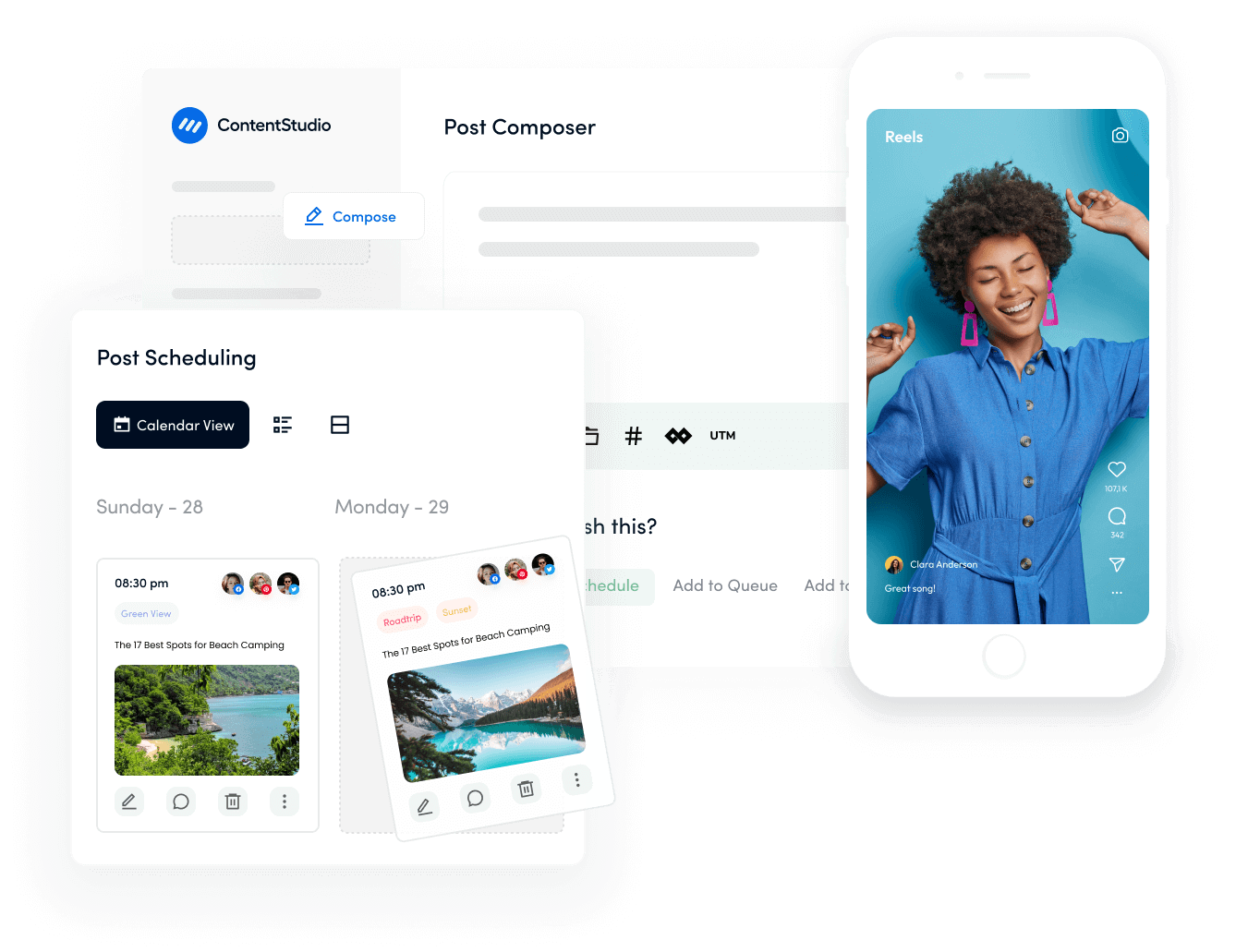
An Instagram business account is a specialized profile type designed specifically for brands, companies, and professional creators. Unlike personal accounts, business profiles provide access to professional tools, including detailed analytics, advertising capabilities, and enhanced contact options that help businesses grow their presence and measure their success on the platform.
Business accounts display specific features that set them apart from personal profiles. You’ll notice a category label beneath the business name (such as “Restaurant,” “Clothing Store,” or “Marketing Agency”), clickable contact buttons for email and phone, and the ability to view detailed performance metrics for every post and story.
The following image shows the Instagram profiles of Adidas, FIFA, and The Wall Street Journal, which are all examples of business accounts.

Before deciding to turn off your business account, it’s important to understand what features you’ll be giving up. Instagram business accounts offer several powerful advantages that can significantly impact your marketing efforts and audience engagement.
Business accounts unlock Instagram Insights, a comprehensive analytics dashboard that tracks post performance, audience demographics, reach, and engagement metrics. You can see when your followers are most active, which content resonates best, and how your audience is growing over time.

This data-driven approach allows you to refine your content strategy, optimize posting schedules, and create content that genuinely connects with your target audience.
Business profiles can add dedicated contact buttons directly to their profile, making it effortless for customers to reach you. Options include email, phone calls, and directions to your physical location.

This streamlined communication is particularly valuable for service-based businesses, local retailers, and companies that rely on direct customer interactions to drive sales and build relationships.
Only business accounts can create and run Instagram ads through Meta’s advertising platform. You can promote posts, stories, and reels to targeted audiences based on demographics, interests, behaviors, and location.

This powerful advertising tool enables precise targeting and helps expand your reach beyond organic followers, driving website traffic, generating leads, and increasing conversions.
If you sell physical products, business accounts enable Instagram Shopping features that transform your profile into a digital storefront. You can tag products directly in posts and stories, allowing users to view prices and purchase without leaving the app.

Also read: Step-by-step guide to creating a profitable Instagram sales funnel.
While business accounts offer numerous advantages, there are legitimate reasons why switching back to a personal account might be the right move for you. Understanding these scenarios will help you make an informed decision that aligns with your current goals.
If you find the business features overwhelming or no longer need professional analytics and advertising tools, switching to a personal account can streamline your Instagram experience.
Personal profiles have a simpler, more intuitive interface with fewer options to navigate, allowing you to focus purely on creating and sharing content without the complexity of managing business metrics and promotional campaigns.
Business accounts are required to remain public, meaning anyone can view your profile, posts, and stories without your approval.

If you value privacy and want the ability to control who sees your content, a personal account allows you to set your profile to private. With a private personal account, you can approve or deny follow requests individually, giving you complete control over your audience and who accesses your content.
Your business objectives may have evolved to focus on different social media platforms where your target audience is more active.
If Instagram is no longer your primary marketing channel or you’ve discovered better results on platforms like TikTok, LinkedIn, or YouTube, maintaining a simpler personal account makes practical sense while keeping your username secured and your existing audience accessible for casual updates.
Personal brands, influencers, or businesses with a strong founder-centric identity might find a business account to be too corporate and impersonal. Switching to a personal account can help establish a more relatable, authentic presence that resonates with your audience on a deeper level. This approach works particularly well for coaches, consultants, artists, and solo entrepreneurs who want to emphasize the personal connection over business formality.
Some users report that business accounts experience reduced organic reach compared to personal accounts, as Instagram’s algorithm may prioritize personal connections and engagement.
While Instagram hasn’t officially confirmed this, many creators have noticed improved engagement after switching to personal accounts. If you’ve experienced declining reach and engagement despite creating quality content, testing a personal account might help you reconnect with your audience more effectively.
Switching from a business account to a personal account is a straightforward process that takes just a few minutes.
Follow these detailed steps to turn off your business account while preserving your followers, posts, and engagement history.
Important warning: Once you switch to a personal account, you will permanently lose access to all your historical Instagram Insights and analytics data. This data cannot be recovered even if you switch back to a business account later.
Launch the Instagram app on your mobile device (Android or iOS) and tap your profile picture in the bottom right corner to access your profile page. Make sure you’re logged into the business account you want to convert.

Tap the three horizontal lines (hamburger menu) in the top right corner of your profile.

Scroll down the the For professionals section and tap Business tools and controls to open your account’s configuration.

In the business tools settings menu, scroll down and tap on Switch account type. This section contains all the options related to your account type, including the ability to switch between personal, business, and creator accounts.

You have two different options. Tap on Switch to personal account to make your account personal from business.

Instagram will explain what features you’ll lose by making this change. Review this information carefully to ensure you understand the implications.
The screen will display a summary of features you’ll lose, including:

Provide your confirmation by tapping Switch to personal account. The conversion happens instantly, and your account will immediately revert to a personal profile with all business features disabled.
Congratulations!
You’ve successfully turned off your business account on Instagram. Your followers, posts, comments, and engagement history remain completely intact. The only changes are the removal of business features like insights, contact buttons, and advertising capabilities. You can now enjoy the simplicity and privacy options that come with a personal account.
Changed your mind?
The good news is that switching back to a business account is just as simple as turning it off. If you realize you need those professional features again, you can restore your business account status in minutes.
Here’s how to make the switch back.
Open the Instagram app and navigate to your profile. Tap the three horizontal lines in the top right corner.

Scroll down in the Settings menu and tap on Account type and tools. Then select “Switch account type” to see your available options.

Tap Switch to professional account.

Choose the category that best describes your business from the provided list. This helps Instagram understand your account type and appears on your profile for visitors to see.

Review your selection and tap OK to complete the switch.

Your account is now a business account again with full access to insights, advertising, and professional tools.
Remember: When you switch back to a business account, you’ll start collecting fresh insights and analytics from that point forward. Your previous insights data that was lost when you switched to personal cannot be recovered. Your profile will also be required to be public again, so adjust your privacy expectations accordingly.
Additionally, if you had Instagram Shopping enabled previously, you’ll need to reconnect your product catalog through Facebook Commerce Manager. Any previous ad campaigns will still be accessible through Facebook Ads Manager, but you’ll need to ensure your account is properly linked.
Making the switch from business to personal doesn’t have to disrupt your Instagram presence. With proper planning and execution, you can maintain your audience engagement and continue building your online community.
Here are seven expert tips to ensure a smooth transition.
Before making the switch, export all your Instagram Insights to preserve your historical analytics. You’ll have to access Meta Business Suite for this purpose.

You can export:
This information is invaluable for understanding what content worked well and can inform your future strategy even without access to real-time business analytics.
Inform your followers about the upcoming change before you make the switch. Create a post or story explaining why you’re transitioning to a personal account and reassure them that you’ll continue providing valuable content. This transparency builds trust and prevents confusion.
Consider posting something like:

Let them know what to expect, whether it’s more personal content, different posting frequency, or simply a more casual approach to your Instagram presence. If you’re changing how they can contact you (since contact buttons will be removed), provide alternative ways to reach you in your announcement.
Without access to detailed analytics, you’ll need to rely on engagement signals like comments, saves, and shares to understand what resonates with your audience. Focus on creating authentic, engaging content that encourages interaction.
Use Instagram’s native features to gather feedback:
Pay attention to which posts generate the most meaningful conversations, saves, and shares. These signals are often more valuable than vanity metrics like likes. Without the pressure of analytics, you might find yourself creating more freely and authentically, which can actually improve your content quality.
Update your bio, profile picture, and any links to reflect your new account type and current goals. This is an excellent opportunity to refine your personal brand messaging. Since you won’t have business contact buttons, make sure your bio includes clear information on how people can reach you if needed.
Consider these elements for your updated profile:
Remember that you only have 150 characters for your bio and one clickable link, so make them count. If you need to share multiple links, use a link-in-bio tool like Linktree, Beacons, or Stan Store.
If you still want to track your performance metrics after switching to a personal account, consider using third-party analytics platforms. While they won’t provide the same depth as Instagram’s native business insights, they can give you valuable data about your performance.
ContentStudio is a powerful all-in-one social media management and analytics tool. You can use it to schedule and post Instagram content and also get detailed analytics. It can track follower growth, engagement rates, best posting times, and content performance.
After successfully switching to a personal account, focus on these strategies to maintain and grow your presence without business tools.
Turning off your business account on Instagram is a significant decision, but it doesn’t have to be complicated or stressful.
Whether you’re prioritizing privacy, simplifying your social media experience, or shifting your business focus to other platforms, switching to a personal account can provide the flexibility and authenticity you’re seeking.
The process itself is straightforward, as it involves just a few taps in your Instagram settings. But the preparation and strategy around the transition matter far more.
By exporting your analytics data, communicating transparently with your audience, adapting your content strategy, and maintaining consistent engagement, you can successfully transition without losing the community you’ve built.
Remember that this decision isn’t permanent. Instagram allows you to switch between account types as your needs evolve, giving you the flexibility to experiment and find what works best for your current situation.
No, you will not lose any followers when switching from a business to a personal account. All your followers, posts, comments, likes, and engagement history remain completely intact during the transition.
The only things that change are the features available to you. Business tools such as insights, contact buttons, and advertising capabilities will be removed, but your content and community will stay exactly the same.
Yes, you can absolutely still promote your business with a personal account, though you’ll need to rely on organic strategies rather than paid advertising. You can share content related to your business, products, or services through regular posts, stories, and reels.
Focus on creating high-quality, valuable content that resonates with your target audience and encourages engagement and sharing. Use relevant hashtags, collaborate with other creators, engage authentically with your community, and use Instagram’s native features like polls and questions to maintain visibility.
The process is instant! As soon as you confirm the switch in your Instagram settings, your account immediately changes to a personal profile, and all business features are removed right away. The entire process takes less than a minute with just a few taps through your settings menu.
Yes, you can switch back to a business account at any time with no penalties or restrictions. The process is just as simple as switching to personal, navigating to your account settings, selecting “Switch account type,” choosing “Business,” selecting your category, and adding your contact information. Your account will immediately regain access to business features like insights, advertising capabilities, and contact buttons.
When you switch to a personal account, all active Instagram ads will immediately stop running and cannot be accessed or managed through Instagram anymore. However, your ad campaign history and data remain saved in Meta Ads Manager, where you can still view past performance metrics and insights. If you plan to switch back to a business account in the future, you can access this historical data and create new campaigns.
Plan 0 Days of Content in 0 Minutes
Create, schedule, publish and analyze your content across all your social media channels from one simple dashboard.
4.7 on Capterra • 16,500+ marketers trust ContentStudio
Nawal Mansoor is a Digital Marketing Specialist at ContentStudio who tracks the latest trends and technologies. She writes on social media strategy, AI scheduling and video tools, Instagram advertising, LinkedIn marketing, and emerging platforms like Snapchat, and reviews articles for relevance, accuracy, and currency in a fast-moving social media landscape.
View all posts by Nawal MansoorRecommended for you
95% of marketers use AI. Only 39% see better performance. The gap isn’t the AI
How to run a holiday campaign calendar from chat with OpenClaw
Google Ads metrics: What to track and what each one tells you
10 social media goals for marketers