Black Friday vs. Cyber Monday: The real difference for software buyers
Oct 22, 202614 minutes

Written by
Esha ShabbirUpdated
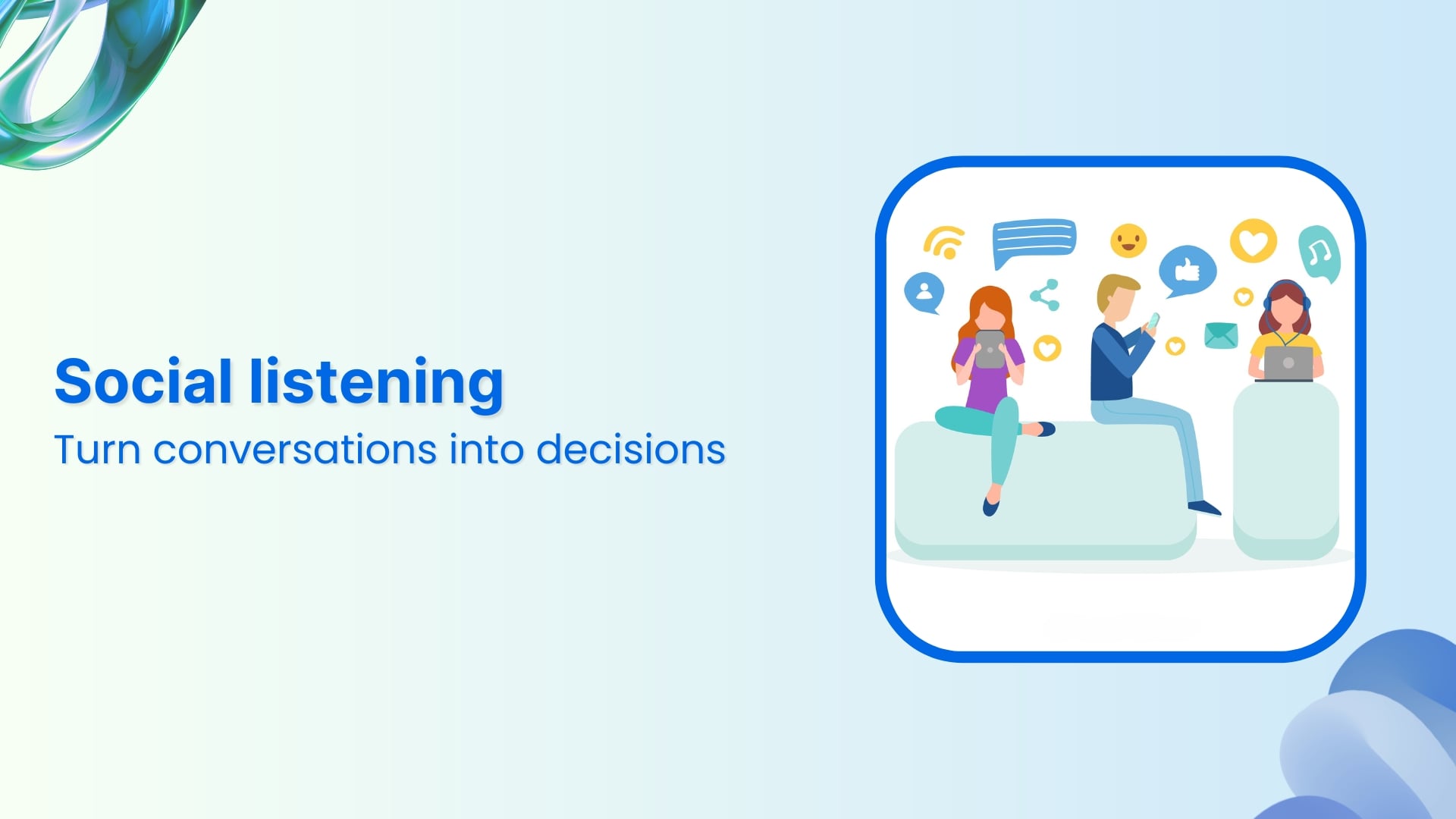
Your notifications show you a fraction of what people say about your brand. The rest lives in comment sections, Reddit threads, group chats, and forum posts where nobody tagged you and nobody expected you to see it.
That gap is exactly where social listening operates.
It’s not about tracking mentions. It’s about understanding conversations, the ones directed at you and the ones happening without you, and using that understanding to make sharper decisions.
By the end of this guide, you will know exactly what social listening is, how to set it up, and how to make sure it produces something your team can act on.
Social listening is the process of tracking what people say about your brand, your competitors, and your industry across social platforms and the web, then analyzing that information to make smarter decisions.
It helps you look beyond mention counts and understand what those conversations actually mean. You can see what people care about, what frustrates them, what they expect from brands like yours, and how their opinions change over time.
That context is what makes social listening useful. It turns individual comments, support tickets, tagged posts, and competitor mentions into patterns your team can actually learn from.
Social listening and social media monitoring are closely connected, but they serve different purposes.
Monitoring helps teams keep up with direct interactions as they happen. Social listening goes a step further by looking at the wider conversation around your brand, competitors, and industry.
Here’s a closer look at how the two differ.
| Aspect | Social listening | Social media monitoring |
| Approach | Proactive: seeks out conversations, whether or not your brand was addressed | Reactive: responds to conversations already directed at you |
| Scope | Tagged and untagged brand mentions, competitor talk, category keywords, industry trends | Tagged mentions, branded hashtags, direct replies to your accounts |
| Primary question | What does this conversation mean, and what should we do about it? | What did this person say, and how do we respond? |
| Output | Strategic insights, content opportunities, competitive intelligence, reputation risks | Responses, escalations, community engagement |
| Time horizon | Longitudinal: patterns tracked over weeks and months | Real-time: individual interactions are handled as they arrive |
| Who owns it | Marketing, brand strategy, product teams | Community managers, customer service teams |
| Strategic value | Tells you what your market thinks, where it’s heading, what competitors are missing | Tells you what needs a response today |
Most marketing decisions get made with incomplete information. Social listening fills that gap.
Here’s what that looks like in practice.
Social listening is easier to understand in context. Let’s look at a few common ways brands use it.
A sentiment spike rarely announces itself. It starts as a pattern, the same complaint phrased differently across different platforms, building volume before any single post goes viral. Social listening catches that pattern at the cluster stage, giving your team time to investigate, prepare a response, and get ahead of the narrative.
That window between the first signal and mainstream attention is where the real value sits. Brands that act in that window control the story. Brands that wait for the tag lose that chance.
Nestlé Canada case study:
When Nestlé Canada quietly changed a popular iced tea recipe, complaints clustered in reviews and social conversations before any formal feedback arrived. The team caught it early through social listening, reinstated the original recipe, and recovered the product’s rating from 1.7 to 4 stars.
When a competitor changes pricing, ships a feature that misses the mark, or makes a decision their audience didn’t ask for, that audience says so publicly and often in detail. Social listening lets you track that conversation in real time and identify exactly what those customers are looking for instead.
That is not just intelligence. It is a brief for your content team, your product team, and your positioning. You know the gap, you know the language your audience uses to describe it, and you can move before your competitor corrects course.
Chili’s case study:
Chili’s used social listening to track growing consumer frustration over rising fast food prices in 2024. That intelligence directly shaped their repositioning strategy against McDonald’s, pitching Chili’s as the lower-cost, higher-quality alternative. The brand reported a 24% sales increase and 17 consecutive quarters of growth.
By the time a trend appears in Google Trends or gets covered by industry media, most brands are already late. Social listening tracks conversation volume at the category level, which means you see topics gaining momentum in niche communities and forums before they cross into the mainstream.
That early visibility gives your content and product teams a meaningful head start. You are not chasing the trend. You are already positioned when the wider audience arrives.
Customer surveys and support tickets tell you what people choose to report formally. Audience listening captures what they say publicly, unprompted, and often more honestly. That layer of unfiltered conversation reveals what customers actually want, including audiences a brand didn’t know it had.
When those signals are tracked and acted on consistently, they become an input into product decisions, content strategy, and market positioning that no traditional research generates as naturally or as fast.
Stanley case study:
Stanley had marketed almost exclusively to men for over a century when social listening revealed women were organically discussing the Quencher tumbler in large numbers. The brand pivoted its colours, marketing, and positioning toward that audience and grew from $70 million in annual revenue in 2019 to $750 million by 2023.
The difference between brands that extract real value from it and those that end up with irrelevant data comes down to which techniques they use.
These methods help teams turn scattered online conversations into clearer social listening insights.

Keyword monitoring is the starting point of social listening. You choose the brand names, competitor names, product terms, campaign phrases, and industry keywords you want to track, and your tool pulls in public conversations around them.
The key is to go beyond your official brand name. Include abbreviations, misspellings, nicknames, and category-level terms so you can catch how people actually talk, not just how your team describes the brand.
Sentiment analysis groups mentions as positive, negative, or neutral, but the real value is in watching how sentiment changes over time. A sudden drop after a campaign, product update, or announcement usually means something needs attention.
It is also worth reviewing important mentions manually. AI can misread sarcasm, slang, and context, so sentiment should guide investigation rather than replace human judgment.
AI in social listening helps teams spot patterns they were not actively searching for. It can surface unusual spikes, emerging themes, repeated complaints, or fast-growing conversations before they become obvious.
This is especially useful when conversation volume changes suddenly. Instead of waiting for a problem to show up in reports, anomaly detection helps teams notice early signals and respond with more context.
Volume spike detection shows when mentions of a brand, keyword, or topic rise sharply in a short period. This often points to a specific event, campaign reaction, product issue, or news moment.
Trend detection looks at longer-term growth. A sudden spike may need a quick response, while steady growth around a topic can reveal a bigger shift in audience interest or market demand.
Competitor gap listening focuses on what people say they dislike, miss, or wish they had from competing brands. It helps turn public competitor conversations into useful product, content, and positioning insights.
This method is strongest when tracked over time. Repeated complaints, switching language, and alternative searches can show where competitors are falling short and where your brand may have a clearer opening.
Influencer and community mapping helps you find the people and spaces shaping conversations in your category. The goal is not just to find accounts with large followings, but voices that consistently influence opinions and engagement.
It also shows where important conversations happen. Niche communities, Reddit threads, forums, and private groups can reveal more honest audience insights than polished public posts.
Also read: Influencer marketing
A strong social listening strategy is less about which tool you use and more about how deliberately you set the program up.
This five-step framework is what separates teams that act on insights from teams that accumulate data they never use.

Before you track anything, get clear on what you want social listening to help you understand. Without a goal, your setup will collect mentions but not always surface useful insights.
Start with the business question you want to answer. Are you trying to:
That goal will shape the keywords you track, the platforms you monitor, the tool you choose, and how listening feeds into your social media strategy.
Not every tool is built for the same team or the same scale. If you decide based on feature count rather than fit, you can end up paying for a platform nobody fully uses, or settling for a free tool that can’t handle what your program actually needs.
Choosing the right social listening tools depends on three things:
Most teams configure their queries once and never revisit them. That is where listening programs quietly start producing irrelevant data without anyone noticing.
Start with broad keyword tracking to capture overall volume, then layer in Boolean logic to filter it down to what is actually useful. A good starting structure covers three query types:
Revisit your query setup at least quarterly. Your audience’s language evolves, and your queries need to keep up.
Raw mention volume tells you very little on its own. What you are looking for are patterns, shifts, and anomalies that point to something worth acting on.
Group your data into buckets when you review it. What is the sentiment trend, and has it shifted? What topics are clustering around your brand or competitors? Are the same pain points surfacing across multiple platforms?
The goal of analysis is not to read every mention. It is to identify what changed, why it changed, and what it means for your team. That is the layer that converts data into a decision.
A listening program that does not connect back to your goals eventually gets deprioritized. Measuring your social listening ROI is what keeps the program relevant and gives leadership a reason to invest in it.
Track the social media listening metrics that tie directly to what you set out to learn:
The output of your listening program should be showing up in briefs, product roadmaps, campaign decisions, and leadership reviews. When it does, social listening stops being a marketing activity and starts being a business input.
Most listening programs are set up well enough to collect data. These six tips are about making sure that data actually gets used.
Social listening is a powerful input for any marketing team, but like any tool, it has blind spots worth knowing before you build too much of your strategy around it.
A significant portion of brand conversations happen in spaces no listening tool can access. DMs, WhatsApp groups, private Facebook groups, and Slack communities generate word-of-mouth every day that never surfaces in any dashboard.
When someone recommends your product in a group chat or criticises it in a private community, that conversation is completely invisible to your program. What social listening shows you is the public layer of a much larger conversation.
NLP-based classification fails on sarcasm, slang, cultural context, and non-English languages more often than most teams expect.
A five-star review written sarcastically can register as positive. A detailed, calm complaint can register as neutral. The score is a starting point, not a conclusion. Anything your team plans to act on still needs a human looking at the actual content behind the number.
A single post from a large account can move your sentiment score and spike your mention volume in ways that look significant but represent one person’s opinion reaching a wide audience.
Social data is generated by people who actively choose to post publicly, which makes it self-selected by nature. It tells you what vocal people are saying, not what your broader customer base thinks. Making product or strategic decisions based on volume alone, without accounting for who is actually driving it, leads to conclusions that do not reflect reality.
Social listening surfaces what people are saying and how often. It does not explain the reason behind it.
A sentiment drop could mean your product changed, your competitor ran a campaign, a creator posted something negative, or a news story shifted perception. The data alone will not tell you which one it was.
Two analysts reviewing the same report can reach completely different conclusions depending on the context they bring to it. The insight is only as good as the thinking applied on top of the data.
The brands that get the most out of social listening treat it less like a tool and more like a discipline. They listen consistently, act on what they find, and build it into how they make decisions, not just how they monitor mentions.
The signal is already out there. Your audience is talking about your brand, your competitors, and your category every day across platforms you may not even be watching. The only question is whether your team is positioned to hear it.
That is what a strong social listening program gives you. Not just data, but the awareness to stay ahead of what is coming before it arrives.
1. What is the social listening process?
The social listening process usually includes defining what to track, setting up keywords and queries, collecting conversations, analyzing patterns, and turning insights into action. The goal is to move from raw mentions to decisions your team can actually use.
2. What are the best strategies for social listening?
The best strategies include tracking brand mentions, competitor names, industry keywords, sentiment changes, and repeated customer questions. Review these insights regularly so your team can spot trends early and act on them.
3. How can you use social listening to improve customer service?
Social listening helps customer service teams catch complaints, questions, and product issues that may not be tagged directly. It gives teams a faster way to respond, escalate problems, and spot recurring issues before they grow.
4. How do you use social listening tools effectively?
Use social listening tools by setting clear goals, building focused keyword lists, and reviewing insights regularly. Track brand, competitor, category, and campaign terms, then refine noisy searches as you learn.
5. What are the essential features of a top social listening platform?
A top social listening platform should include keyword tracking, sentiment analysis, competitor monitoring, alerts, reporting, and relevant platform coverage. It should help teams find useful signals without too much noise.
6. What are the best social listening tools for monitoring brand reputation?
Popular social listening tools for brand reputation include ContentStudio, Brandwatch, Sprout Social, Brand24, and Talkwalker. The right choice depends on budget, platform coverage, mention volume, and reporting needs.
7. What skills are needed for social listening?
Social listening requires keyword research, analysis, sentiment interpretation, competitor awareness, reporting, and good judgment. The key skill is knowing which conversations matter and what action they should lead to.
Plan 0 Days of Content in 0 Minutes
Create, schedule, publish and analyze your content across all your social media channels from one simple dashboard.
4.7 on Capterra • 16,500+ marketers trust ContentStudio
Esha Shabbir is a content marketer at ContentStudio, specializing in social media strategy, SEO-led content, and editorial workflows for marketing teams. She writes practical, research-backed content that helps marketers understand what to publish, how to organize their content, and how to build a more consistent social media presence.
View all posts by Esha ShabbirRecommended for you
Black Friday vs. Cyber Monday: The real difference for software buyers
Black Friday social media post ideas: Captions and posting plan for 2026
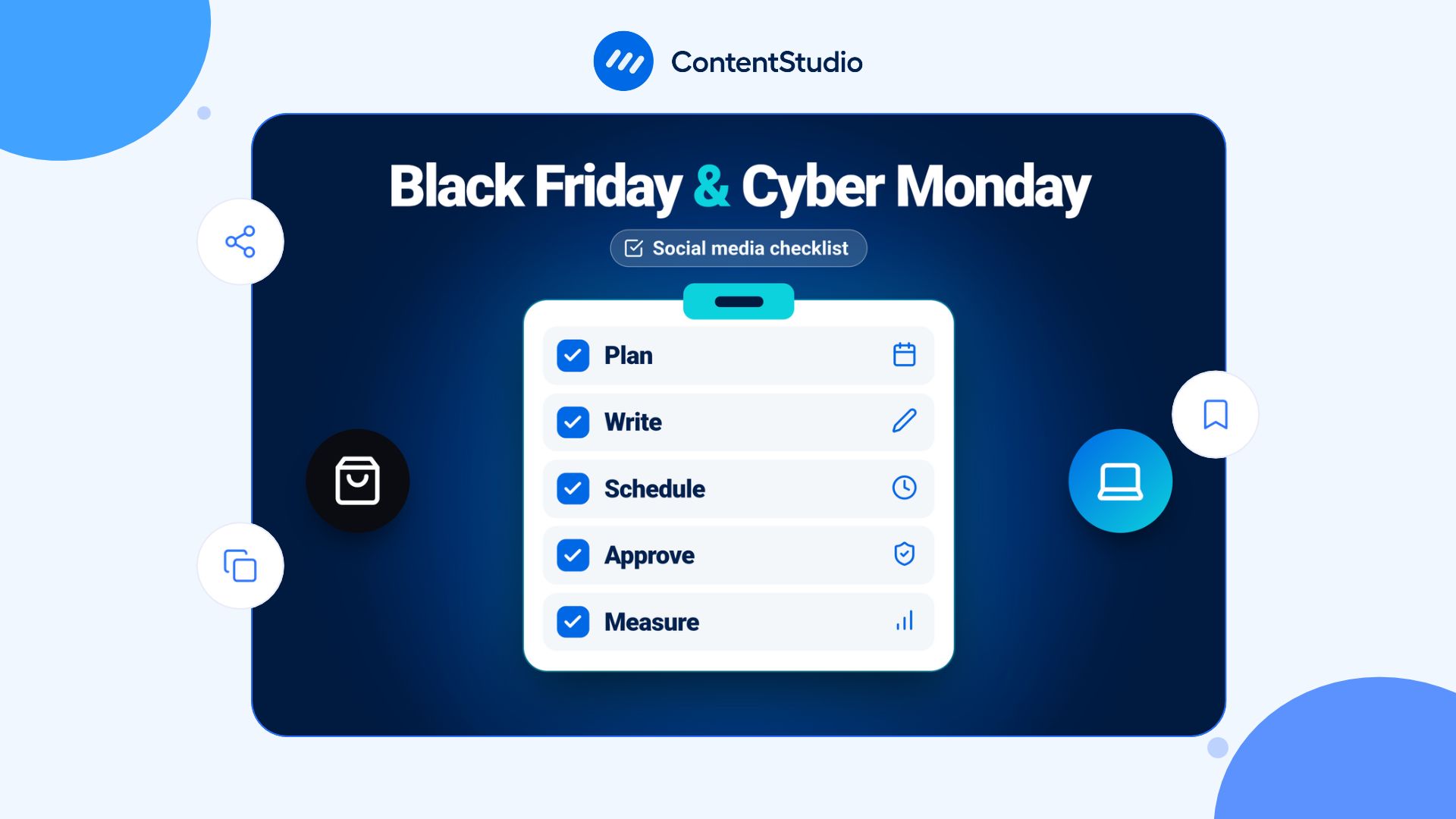
Black Friday and Cyber Monday social media checklist 2026
Cyber Monday social media post ideas: Captions, hashtags & retargeting posts