Black Friday vs. Cyber Monday: The real difference for software buyers
Oct 22, 202614 minutes

Written by
Esha ShabbirPublished
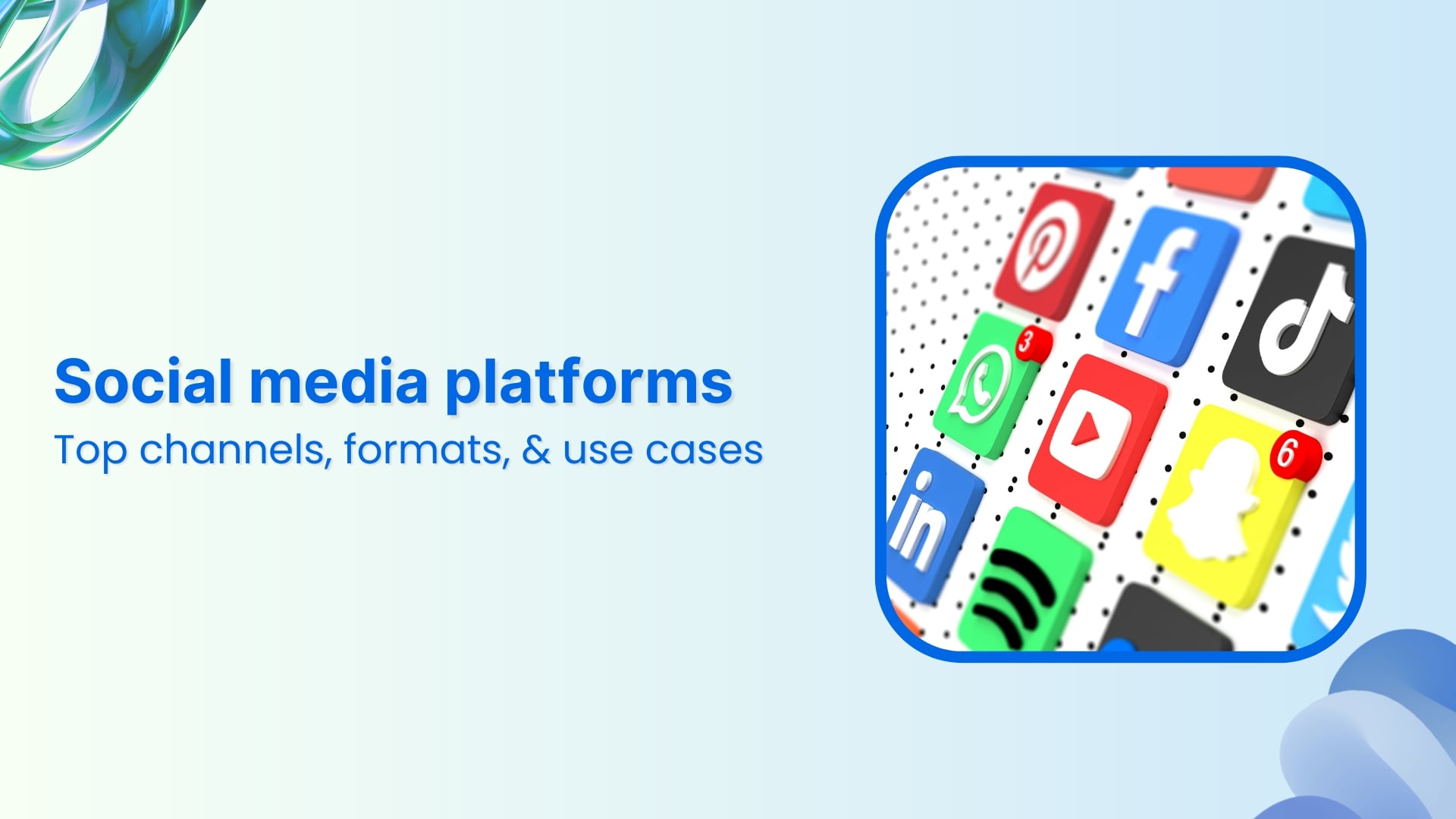
People don’t think about the internet as one big feed anymore. They move between apps depending on what they want to watch, read, share, search, or discuss.
That is why social media platforms are not easy to compare at a glance. Each one has its own audience, pace, content style, and reason people keep using it.
In this guide, we’ll cover the top social media platforms, from global giants like Facebook, YouTube, Instagram, WhatsApp, and TikTok to community-led, regional, and emerging platforms worth watching.
Social media platforms are online spaces where people create, share, and interact with content. They can be used to follow friends, discover creators, join communities, message others, or keep up with public conversations.
The important part is participation. People are not only consuming content. They are reacting to it, sharing it, saving it, replying to it, and sometimes creating the next version of it.
This is why social media has become such a big part of how ideas spread. A video, comment, review, or conversation can move from one person to a much larger audience through feeds, recommendations, communities, and private chats.
For marketers, understanding these platforms starts with understanding user behavior. Each platform gives people a different reason to show up, and that reason shapes the kind of content that feels natural there.
Here’s a quick look at the top social media platforms and what each one is best known for.
| # | Platform | Audience size/reach | Platform type | Main formats | Best for |
| 1 | 2.28B+ ad reach | Social networking platform | Posts, Reels, Stories, Groups, Live | Broad reach, communities, groups, events, and local businesses | |
| 2 | YouTube | 2.53B+ ad reach | Video-sharing platform | Long-form videos, Shorts, livestreams, Community posts | Tutorials, reviews, education, entertainment, and search-led discovery |
| 3 | 3B monthly active users | Visual social platform | Reels, Stories, posts, carousels, Lives | Creators, lifestyle content, product discovery, and short-form video | |
| 4 | 3B+ monthly active users | Messaging platform | Messages, Status, Channels, Communities, Groups | Direct messaging, customer updates, communities, and support | |
| 5 | TikTok | 1.59B adult ad reach outside China | Short-form video platform | Short videos, Lives, Stories, photo posts | Trends, creator-led content, entertainment, and short-form discovery |
| 6 | 1.414B monthly active users | Messaging and social ecosystem | Messages, Official Account posts, Channels, mini programs | China-focused communication, services, brand accounts, and communities | |
| 7 | Telegram | 1B+ monthly active users | Messaging and broadcast platform | Channels, groups, messages, bots, Stories | Broadcast updates, private communities, groups, and direct communication |
| 8 | Snapchat | 943M monthly active users | Camera-first social app | Snaps, Stories, Spotlight, Lenses, chat | Visual messaging, AR campaigns, casual content, and younger audiences |
| 9 | Douyin | 766M+ reported monthly active users | Short-form video platform | Short videos, livestreams, shopping content | China-focused short video, creators, livestream commerce, and product discovery |
| 10 | Kuaishou | 731M monthly active users | Short-video and livestreaming platform | Short videos, livestreams, shopping streams | Creator content, livestream commerce, and regional Chinese audiences |
| 11 | 578M monthly active users | Microblogging platform | Short posts, hashtags, images, videos, livestreams | Trends, public conversation, brand awareness, and influencer campaigns in China | |
| 12 | 600M monthly active users | Visual discovery platform | Pins, boards, video Pins, shopping Pins | Inspiration, planning, product discovery, and evergreen content | |
| 13 | X / Twitter | Around 550M+ reported monthly users | Real-time conversation platform | Posts, threads, images, videos, Spaces | News, commentary, public conversations, and industry updates |
| 14 | 517M mobile monthly active users | Messaging and social platform | Messages, groups, file sharing, voice/video chat | Messaging, groups, gaming communities, and China-focused audiences | |
| 15 | 116M daily active uniques | Community discussion platform | Text posts, links, images, videos, comments, AMAs | Niche communities, audience research, Q&A, and social listening | |
| 16 | Threads | 400M monthly active users / 150M daily active users | Text-based conversation app | Text posts, replies, images, videos, links | Casual updates, public conversations, and Instagram-connected audiences |
| 17 | 1.3B+members | Professional networking platform | Posts, articles, newsletters, videos, events | B2B marketing, hiring, employer branding, and thought leadership | |
| 18 | Quora | 400M+ monthly unique visitors | Q&A platform | Questions, answers, Spaces, posts | Educational answers, expertise, audience research, and search-led questions |
| 19 | RedNote / Xiaohongshu | 300M+ monthly active users | Lifestyle and product discovery platform | Image posts, short videos, reviews, notes, livestreams | Reviews, shopping inspiration, beauty, fashion, travel, and food content |
| 20 | Twitch | 240M+ reported monthly active users | Livestreaming platform | Livestreams, chat, clips, VODs | Gaming, creator communities, live events, and entertainment |
| 21 | Discord | 200M+ monthly active users | Community platform | Servers, text channels, voice channels, video calls, events | Private communities, creators, gaming, tech groups, and member engagement |
| 22 | LINE | 194M monthly active users | Messaging and social app | Messages, Official Accounts, stickers, calls, timeline posts | Regional messaging, customer updates, official accounts, and communities |
| 23 | Tumblr | Around 135M reported monthly active users | Blogging and social platforms | Text posts, images, GIFs, links, reblogs | Fandoms, memes, creative communities, and niche interests |
| 24 | Bluesky | 40M+ registered users | Emerging text-based social platform | Short posts, replies, reposts, images, custom feeds | Creators, journalists, tech users, and early-adopter communities |
| 25 | Mastodon | Under 1M monthly active users | Decentralized social platform | Short posts, replies, boosts, links, hashtags | Niche communities, open-source audiences, privacy-focused users, and federated networking |
Now let’s look at each platform more closely, including what it is mainly used for and why it matters.
Facebook is a social networking platform used for public posts, private groups, business pages, events, and local community activity. Over time, it has shifted from a personal update feed into a broader space where people discover businesses, join interest-based groups, follow local updates, and interact with communities.
Its strength is versatility. A business can use Facebook for community building, event promotion, local discovery, paid campaigns, customer conversations, and content distribution without relying on a single format.
YouTube is a video-sharing platform used for tutorials, reviews, entertainment, interviews, explainers, podcasts, and long-form creator content. It also has a strong short-form layer now, with Shorts reaching around 200 billion daily views, which shows how the platform has expanded beyond long-form search and education.
Few platforms give content the same shelf life. A useful video can continue to attract views through search, recommendations, embeds, and external results long after it is published.
Related: YouTube community-building hacks you must know
Instagram is a visual social media platform built around photos, videos, creator content, Stories, Reels, and direct messages. It is especially important for younger audiences, with Pew’s 2025 U.S. social media report showing that Instagram usage is substantially stronger among younger adults than older age groups. That age gap helps explain why the platform remains central to creator content, visual discovery, and lifestyle-led marketing.
The platform is especially strong at turning visual identity into audience connection. It gives brands and creators several ways to show personality, product use, behind-the-scenes moments, and community activity in one place.
WhatsApp is a messaging platform used for private conversations, group chats, calls, business messages, and community updates. Its role is different from feed-based platforms because people usually use it to communicate with contacts, groups, and businesses they already know or trust.
The value comes from proximity. Messages appear in the same space where people already talk to family, friends, customers, local groups, and communities, which makes relevance and timing especially important.
Also read: How to use WhatsApp for marketing
TikTok is a short-form video platform built around discovery, entertainment, trends, creator content, and fast-moving recommendations. Users can find videos from accounts they do not follow, which gives new creators, products, sounds, and ideas a chance to spread quickly.
Audience growth is not tied only to follower count. A single video can reach a much wider audience when it matches the platform’s pace, format, humor, trend behavior, or search demand.
WeChat is a major digital ecosystem in China that combines messaging, content, payments, services, commerce, brand accounts, and mini programs. Its role extends far beyond communication, with WeChat Pay handling around 40% of China’s mobile payment market and processing more than 1.3 billion transactions daily. That makes WeChat one of the clearest examples of a social platform becoming part of everyday infrastructure.
WeChat’s power comes from how much of the customer journey can happen inside one environment. A user can message, read, shop, pay, follow a brand, access a service, or use a mini program without switching apps.
Telegram is a messaging and broadcast platform used for channels, groups, direct updates, media sharing, and community communication. It is popular with creators, publishers, organizations, startups, and interest-based groups that want a more direct way to reach their audience.
Telegram gives audiences a focused way to follow updates without depending on a crowded social feed. Channels work well for distribution, while groups give communities space for active conversation.
Snapchat is a camera-first social app focused on quick visual messages, Stories, AR filters, private chats, and short-form content. Its audience continues to respond strongly to playful, personalized effects, with the AI Face Swap Lens generating over 1 billion interactions in Q3 2025. That kind of usage shows why Snapchat remains closely tied to fast, expressive, camera-led communication.
Its experience feels immediate and low-pressure. The camera, AR tools, and private sharing features make Snapchat especially useful for visual interaction that feels spontaneous rather than heavily produced.
Reddit is a community discussion platform organized into topic-based spaces called subreddits. People use it to ask questions, share opinions, compare products, discuss experiences, follow niche interests, and get feedback from others who care about the same topic.
The conversations are often more specific and direct than on broader social feeds. For marketers, Reddit can reveal real audience language, objections, product questions, frustrations, and recommendations.
Douyin is ByteDance’s short-form video platform for China and operates separately from TikTok. It is used for entertainment, creator content, livestreaming, product discovery, local services, and social commerce within China’s digital market.
Douyin connects content and commerce closely. Users can move from watching a creator video to exploring products, joining livestreams, and taking action within the same platform experience.
Kuaishou is a Chinese short-video and livestreaming platform with a strong focus on creators, community interaction, and live commerce. It is widely used for short videos, product demonstrations, livestream selling, and creator-led engagement.
The platform is known for stronger creator-audience relationships. Livestreams and repeated interactions can build trust over time, which makes Kuaishou important in China’s social commerce ecosystem.
Weibo is a Chinese microblogging platform used for public conversation, trending topics, entertainment news, influencer activity, and brand campaigns. It plays a major role in how stories, announcements, cultural moments, and public reactions gain visibility in China.
Weibo is built for visibility and momentum. Hashtags, reposts, comments, and influencer participation can move conversations quickly across entertainment, news, culture, and brand campaigns.
Pinterest is a visual discovery platform where people search, save, and organize ideas for future plans. Its value is closely tied to shopping intent, especially for brands using visual discovery to reach people before they make decisions. Brands using Pinterest Shopping ads see 15% higher ROAS and 2.6x higher conversion rates, which reinforces the platform’s role in product discovery and purchase planning.
Pinterest is closely tied to planning behavior. People often use it before they buy, design, cook, travel, decorate, or start a project, which gives useful content a longer lifespan than many feed-based posts.
X is a real-time conversation platform used for news, commentary, public reactions, industry updates, live events, and fast-moving discussions. It remains active around politics, sports, entertainment, media, technology, finance, and culture.
Speed is its main advantage. X is often where people react while events are still unfolding, which makes it useful for timely commentary, public conversation, media visibility, and opinion-led content.
QQ is one of Tencent’s long-running messaging and social platforms in China. It supports messaging, groups, file sharing, gaming-related activity, entertainment features, and digital social interaction, especially among specific online communities.
QQ has deep roots in China’s internet culture. Its relevance comes from the long-standing habits around messaging, groups, entertainment, file sharing, and online identity.
Threads is a text-based conversation app from Meta that is connected to Instagram. People use it for short posts, replies, links, commentary, public conversations, and quick updates without needing the same level of visual production expected on Instagram.
Its connection to Instagram makes adoption easier for creators, brands, and users who already have an audience there. The format also gives them a lighter space for commentary, updates, and personality-led posts.
LinkedIn is a professional networking platform for career updates, industry conversations, hiring, company news, thought leadership, and B2B relationship-building. Newsletters have become one of its strongest content formats, growing 150% year over year and reaching more than 450 million subscribers. That growth shows how LinkedIn is becoming a deeper publishing channel for professionals, not just a networking site.
The professional context changes how content is received. Practical advice, hiring updates, leadership lessons, industry opinions, and business insights feel natural because people are already thinking about work and growth.
Recommended: LinkedIn marketing
Quora is a question-and-answer platform where people look for explanations, recommendations, comparisons, opinions, and personal experiences. It also plays a role in purchase research, with around 67.8% of online shoppers researching new products on Quora before making a purchase. That makes it useful for understanding the questions, doubts, and comparisons people consider before making decisions.
Quora captures demand in the form of questions. It can show what people are confused about, what they compare, and how they phrase problems when they are actively looking for answers.
RedNote, also known as Xiaohongshu, is a lifestyle and product discovery platform popular for reviews, recommendations, travel ideas, beauty advice, food spots, fashion inspiration, and shopping research. It is especially influential in categories where personal experience affects buying decisions.
Trust is central to the platform’s appeal. Users often look for detailed, experience-led recommendations from other people, which makes peer-style content more effective than polished promotion.
Discord is a community platform built around servers, channels, voice chat, video calls, and private group spaces. It is widely used by gaming communities, creators, tech groups, education communities, fandoms, and teams that need a dedicated place to gather.
Discord creates depth rather than broad feed-based reach. Members can return to the same space, recognize each other, follow ongoing conversations, and participate in a community that feels more connected.
Twitch is a livestreaming platform best known for gaming, but it also supports music, talk shows, live events, sports commentary, esports, and creator-led entertainment. The platform is built around real-time viewing, where audience participation is part of the experience.
The live chat gives Twitch its energy. Viewers not only watch the stream but they also react, subscribe, send emotes, clip moments, and help shape the atmosphere while the creator is live.
LINE is a messaging and social app with a strong presence in Japan, Taiwan, Thailand, Indonesia, and other Asian markets. People use it for daily chats, calls, stickers, official account updates, community communication, and local digital services.
Regional relevance is its biggest strength. In markets where LINE is part of everyday communication, it can be a key channel for customer updates, brand messages, local services, and community engagement.
Tumblr is a blogging and social platform known for creative expression, fandom culture, memes, GIFs, art, commentary, writing, and niche communities. It combines blog-style publishing with social sharing, which gives users room to build highly personal spaces.
Tumblr has a distinct culture that values personality, humor, fandom, and creative expression. It is less about broad, polished reach and more about communities that develop their own language, references, and style.
Bluesky is an emerging text-based social platform built around short posts, replies, reposts, custom feeds, and open social networking. It has gained attention from creators, journalists, tech users, and communities looking for more control over how they discover and follow conversations.
Custom feeds make the experience feel more flexible than a single central timeline. Users can shape what they follow, how they discover conversations, and which communities they want to stay close to.
Mastodon is a decentralized social platform made up of independent servers, often called instances. Users choose a server based on their interests, values, or community, while still being able to interact with people across the wider federated network.
Its structure gives communities more control over rules, moderation, and culture. Mastodon is more niche than mainstream platforms, but it matters in conversations about privacy, decentralization, open-source communities, and user-controlled social networking.
Social media is no longer a single lane of online communication. It is where people watch, search, message, compare, react, recommend, build communities, and decide what deserves their attention.
The platforms may look different on the surface, but together they show how wide the social web has become. A video app, a messaging tool, a professional network, a forum, and a livestreaming platform can all shape the same conversation in different ways. The platforms will keep changing. New ones will rise, older ones will adapt, and user behavior will keep shifting. But the brands and marketers that understand how each platform works will be better equipped to build a social media strategy around where attention is actually moving.
1. What are the most popular social media platforms in 2026?
The most popular social media platforms include Facebook, YouTube, Instagram, WhatsApp, TikTok, WeChat, Telegram, Snapchat, and Reddit. Popularity can vary by region, age group, and how each platform reports audience size.
2. What are the main types of social media platforms?
The main types include social networking platforms, video-sharing platforms, messaging apps, visual discovery platforms, discussion forums, professional networks, and livestreaming platforms.
3. What is the difference between social media platforms and social media apps?
A social media platform is the network or service people use to create, share, and interact with content. A social media app is a mobile or desktop application used to access that platform.
4. Which social media platform is best for business?
There is no single best platform for every business. The right choice depends on your audience, industry, content format, region, and whether your goal is awareness, engagement, leads, sales, or community building.
5. Which social media platforms are best for B2B marketing?
LinkedIn is usually the strongest platform for B2B marketing. YouTube, X, Reddit, and Quora can also work well for B2B brands that create educational content, industry commentary, or answer-driven content.
6. Which platforms are best for short-form video?
TikTok, Instagram Reels, YouTube Shorts, Snapchat Spotlight, Douyin, and Kuaishou are strong platforms for short-form video. The best choice depends on your target audience and region.
7. Should brands be active on every social media platform?
No. Most brands are better off focusing on the platforms where their audience is active and where they can publish consistently. Being everywhere often leads to weaker content and less clear results.
8. How many social media platforms should a small business use?
A small business should focus on the few platforms it can update consistently and use well. For most, that usually means one primary platform where the audience is most active, plus one or two supporting platforms for discovery, community, or customer communication.
9. How do I manage content across multiple social media platforms?
Manage it with a clear content plan, platform-specific posts, and a consistent publishing workflow. A centralized system, like a social media management tool such as ContentStudio, can make this easier by keeping your content, schedule, and team coordination in one place.
Plan 0 Days of Content in 0 Minutes
Create, schedule, publish and analyze your content across all your social media channels from one simple dashboard.
4.7 on Capterra • 16,500+ marketers trust ContentStudio
Esha Shabbir is a content marketer at ContentStudio, specializing in social media strategy, SEO-led content, and editorial workflows for marketing teams. She writes practical, research-backed content that helps marketers understand what to publish, how to organize their content, and how to build a more consistent social media presence.
View all posts by Esha ShabbirRecommended for you
Black Friday vs. Cyber Monday: The real difference for software buyers
Black Friday social media post ideas: Captions and posting plan for 2026
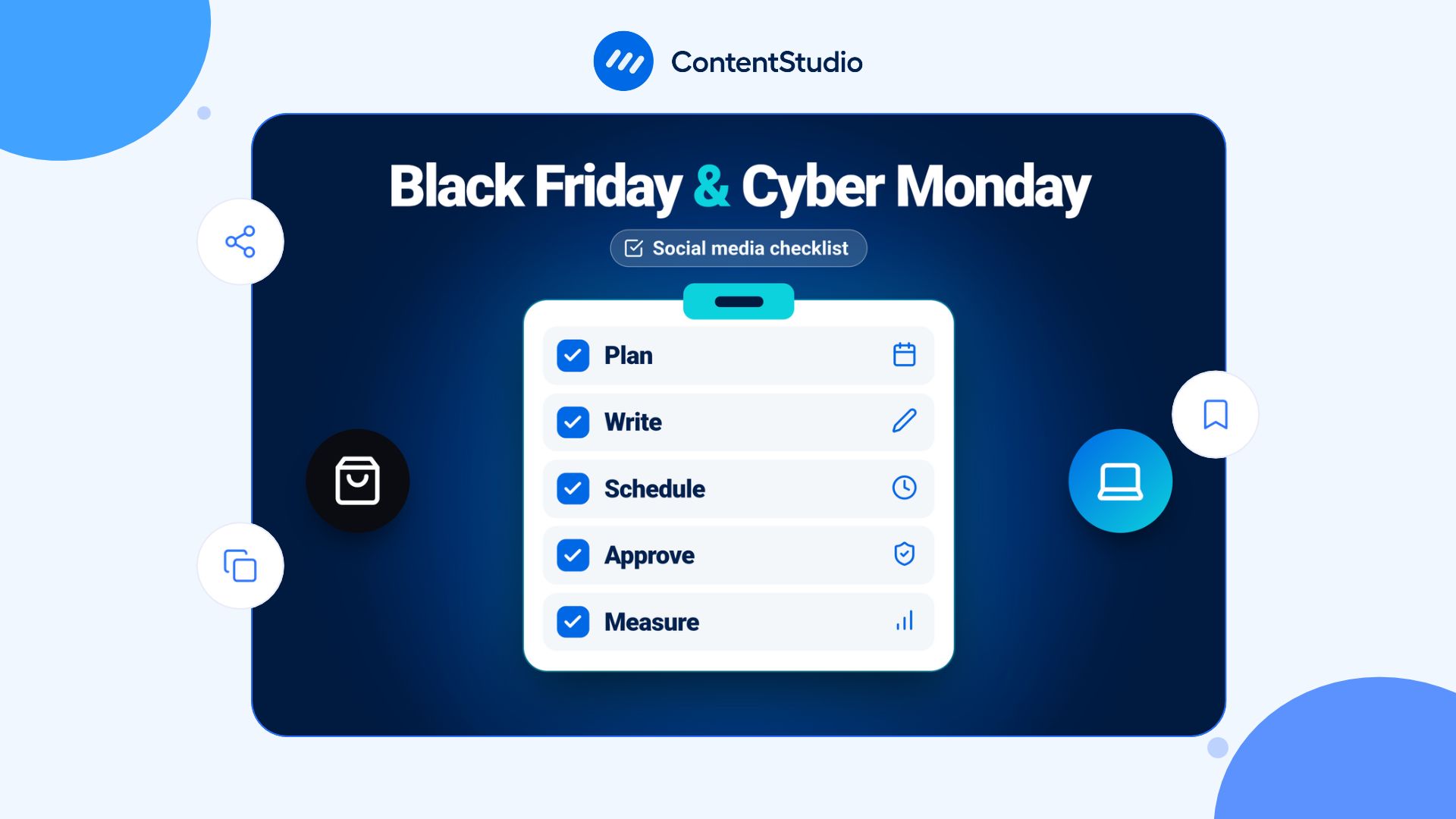
Black Friday and Cyber Monday social media checklist 2026
Cyber Monday social media post ideas: Captions, hashtags & retargeting posts