
How to build an executive’s LinkedIn content workflow with Claude Code
Oct 1, 202615 minutes

Written by
Abdullah MansoorUpdated
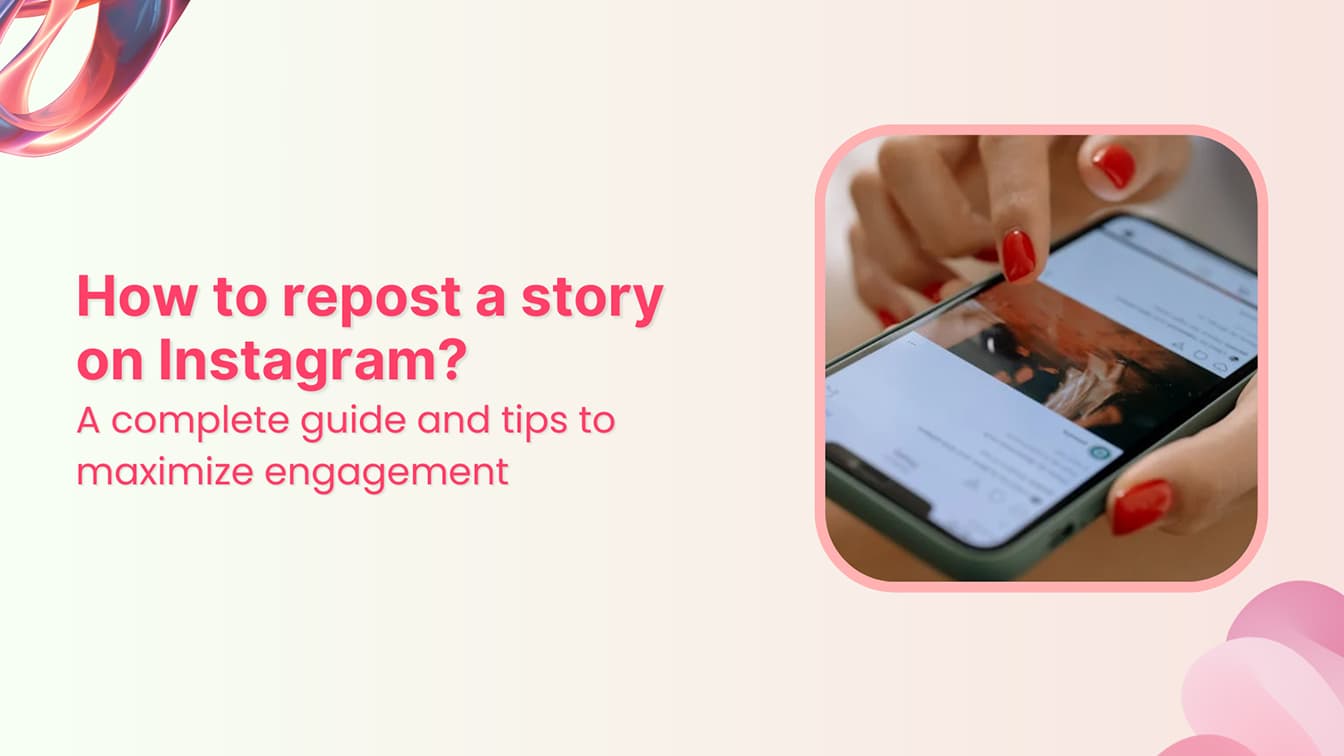
When someone tags you in their Instagram story, you get a direct message with a one-tap option to add it to your own story. If you’re not tagged, Instagram has no native repost feature, but three workarounds cover most situations.
This guide covers both scenarios step by step: what to do when the repost option doesn’t appear, how to reshare your own feed posts to stories, and the practices that make reposting worth doing consistently.
You can repost a story if the original creator tagged your account in it. Instagram automatically sends a DM notification with the story and an “Add to your story” button. Without a tag, the platform offers no built-in way to redistribute that story to your profile.
This restriction is a deliberate design decision. Understanding how Instagram Stories work as a format helps here. Stories are temporary and tied to the original account. Without a tag, Instagram treats that content as off-limits for distribution, regardless of whether the account is public or private.
Here’s a quick reference for each scenario:
| Scenario | Native repost available? |
|---|---|
| You were tagged in the story | Yes |
| You weren’t tagged | No |
| Creator disabled story resharing | No, even with a tag |
| You’re resharing your own feed post | Yes |
One detail that catches people off guard. The repost option disappears when the original story expires. You have 24 hours from when that story was posted to share it, and once it’s gone, the option goes with it.
When someone mentions your account, Instagram sends a notification in your Direct Messages that reads “Mentioned you in a story.” From there, the process takes six steps, and the repost goes live immediately.
Here’s the full walkthrough:
The reposted story automatically credits the original creator. Their handle appears as a tappable sticker, and anyone who taps it goes directly to their profile. You don’t need to do anything to attribute the content.
The first is that the creator turned off story resharing in their privacy settings. Some accounts, especially those with large public followings, disable this to control where their content goes. If the option isn’t there even though you were tagged, send them a DM and ask.
The second is a common mix-up. You may have been mentioned in a feed post caption rather than tagged in a story itself. Caption mentions don’t trigger the story repost flow.
If you’re managing Instagram for multiple clients or brands, an Instagram scheduler helps you build reposting into a planned content schedule rather than reacting to tagged mentions as they come in.
Reposting tagged mentions is one of the lower-effort tactics in marketing on Instagram that compounds over time, particularly for brands building community through user-generated content and creator partnerships.
Instagram provides no built-in option for stories you’re not tagged in. The three alternatives below cover most situations, though each one comes with a different trade-off on quality, attribution, or reach.
Before trying any of them, message the creator first. Let them know you’d like to share their content. In many cases, they’ll simply tag you, which gives you access to the native repost and handles attribution automatically.
For image stories, screenshot the frame. For video, screen record while it plays. You can then upload the saved file as a new story on your account.
Screenshot quality degrades slightly when re-uploaded, particularly for text-heavy stories viewed on older devices. If this is for branded content or a formal collaboration, ask the creator to send the original file directly.
Before going the screenshot route, know your Instagram screenshot notifications. Standard stories don’t notify the creator when screenshotted, but the rules differ for disappearing messages and certain other content types. Always tag the original creator when you post to give clear attribution.
If the account is public, you can copy the story’s link and send it to specific followers by DM. This doesn’t republish the story on your profile, but it works when the goal is to get someone in your audience to see a specific piece of content rather than broadcasting it to everyone.
Tap the three dots in the top right corner of the story and select “Copy link.” That link is shareable across Instagram and outside of it, including WhatsApp, Telegram, and X, as long as the original account is public.
If you want to use Instagram’s native repost and keep automatic attribution, DM the creator and ask them to add your handle before their story expires. Once they tag you, the “Add to your story” option appears in your DMs.
This only works within the original story’s 24-hour window, so timing matters.
You can share any post from your own profile directly to your story. This works for photos, carousels, and videos, and it’s a clean way to surface older content or extend a recent post’s reach beyond your regular feed.
The post appears as a framed card inside your story. Anyone who taps it lands on the original feed post, which is useful when you want to push views, saves, or comments from story traffic.
This is worth doing when a post didn’t reach as many people as it should have. Stories sit at the top of the feed and get views even from followers who scroll past regular posts.
Reposting isn’t filler. Done with intention, it signals to your audience that real people engage with your brand, and it keeps your account active without requiring original content every day.
When you reshare a partner’s story and publicly credit them, their audience sees the connection. Creators often reciprocate, which gives both accounts exposure at no cost. Over several months of consistent cross-posting, these mutual shares build visibility that shows up in engagement numbers.
When a customer mentions your brand and you reshare it, you’re showing the rest of your audience that real people choose your product. That carries more credibility than brand-produced content and requires almost no production time.
Consistent activity matters because how Instagram ranks stories considers account-level engagement patterns. Accounts that post regularly tend to stay near the top of the story queue for followers who interact with them most. Reposts fill the gaps between original content without requiring shoots, copywriting, or design work.
A tagged mention that arrives on a Tuesday morning is only useful if you share it when your audience is active. Knowing the best time to post for your specific account means a strong repost lands when people are actually watching stories, not hours later when attention has moved on.
Most accounts repost without any editing, and the result looks passive. The reposts that generate real engagement share a few things in common.
Don’t reshare without saying something. Even a short text overlay telling your audience why you’re sharing this gives the repost purpose. A bare reshare with no context reads as low-effort regardless of how good the original content is. Two words can be enough. The key is that something signals intention.
The native repost flow handles this automatically by adding their handle as a sticker. If you’re uploading a screenshot, add the tag manually. Beyond the ethical side of it, crediting creators publicly often results in them resharing your post back, which puts your account in front of their audience with no additional work.
You don’t have to keep the story looking exactly like the original. Adjust the background color, add a branded overlay, or include a short caption that gives your audience context. Your story feed reflects your brand. Content that looks deliberate performs better than content that looks copied and pasted.
Stories disappear after 24 hours, but saving reposts to Highlights makes them permanently visible on your profile. A Highlight dedicated to customer mentions, testimonials, or collaboration stories acts as a trust signal for anyone who visits your profile for the first time. It tells the story of who engages with your brand before they read a single post.
Not every tag is worth a reshare. Before posting, ask whether the content adds something for your audience or just flatters your account. Sharing everything dilutes the reposts that genuinely matter.
If you’re not receiving many tags yet and find yourself struggling to fill your story feed, building a bank of new Instagram story ideas gives you original content to post between reposts and keeps your account consistently active.
For teams managing multiple brand accounts, routing story reposts through a social media management platform removes the manual overhead of switching between profiles every time a tagged mention comes in.
The core mechanic here is simple. If you’re tagged, you have a 24-hour window to reshare with one tap. If you’re not, the workarounds are functional but require more effort and less attribution. Most confusion about reposting comes from not knowing which situation applies, so the first thing to check is always whether a tag notification appeared in your DMs.
Reposting works best when it’s part of a deliberate approach rather than a spontaneous reaction. A consistent habit of crediting creators, resharing strong mentions, and saving the best reposts to Highlights builds an Instagram presence that feels active and community-driven without requiring new original content every day.
Instagram has no native option for stories where you’re not tagged. You can screenshot and re-upload the content, share the story link by DM, or ask the creator to tag you before the story expires.
A reposted story lasts 24 hours from the time you share it. The original story’s 24-hour window and your repost’s window run on separate countdowns.
You can’t repost a private account’s story unless they’ve tagged your account directly. Even with a tag, some private accounts disable resharing in their settings, which removes the option even for people they’ve tagged.
The most common reason is that the creator turned off story resharing in their privacy settings. The other is that you were mentioned in a feed post caption rather than tagged in the story itself. Send them a DM to confirm which one applies.
Yes, Instagram notifies them when you use the native “Add to your story” feature. If you screenshot and re-upload manually, they receive no notification from Instagram.
Plan 0 Days of Content in 0 Minutes
Create, schedule, publish and analyze your content across all your social media channels from one simple dashboard.
4.7 on Capterra • 16,500+ marketers trust ContentStudio
Abdullah Mansoor is a Senior Content Writer at ContentStudio with a proven track record creating engaging content across SaaS, technology, marketing, and e-commerce. He focuses on Instagram growth, how-to guides, carousel posts, user-generated content, and white-label social media management, and reviews blog content for structure, clarity, accuracy, and a consistent brand voice.
View all posts by Abdullah MansoorRecommended for you
How to build an executive’s LinkedIn content workflow with Claude Code
How to turn one product photo into 5 video Ads with Claude Code
Social media MCP server: How to automate posting with ContentStudio
How to automate social media with n8n: A practical guide