95% of marketers use AI. Only 39% see better performance. The gap isn’t the AI
Oct 7, 20268 minutes

Written by
Wasiq NaeemUpdated
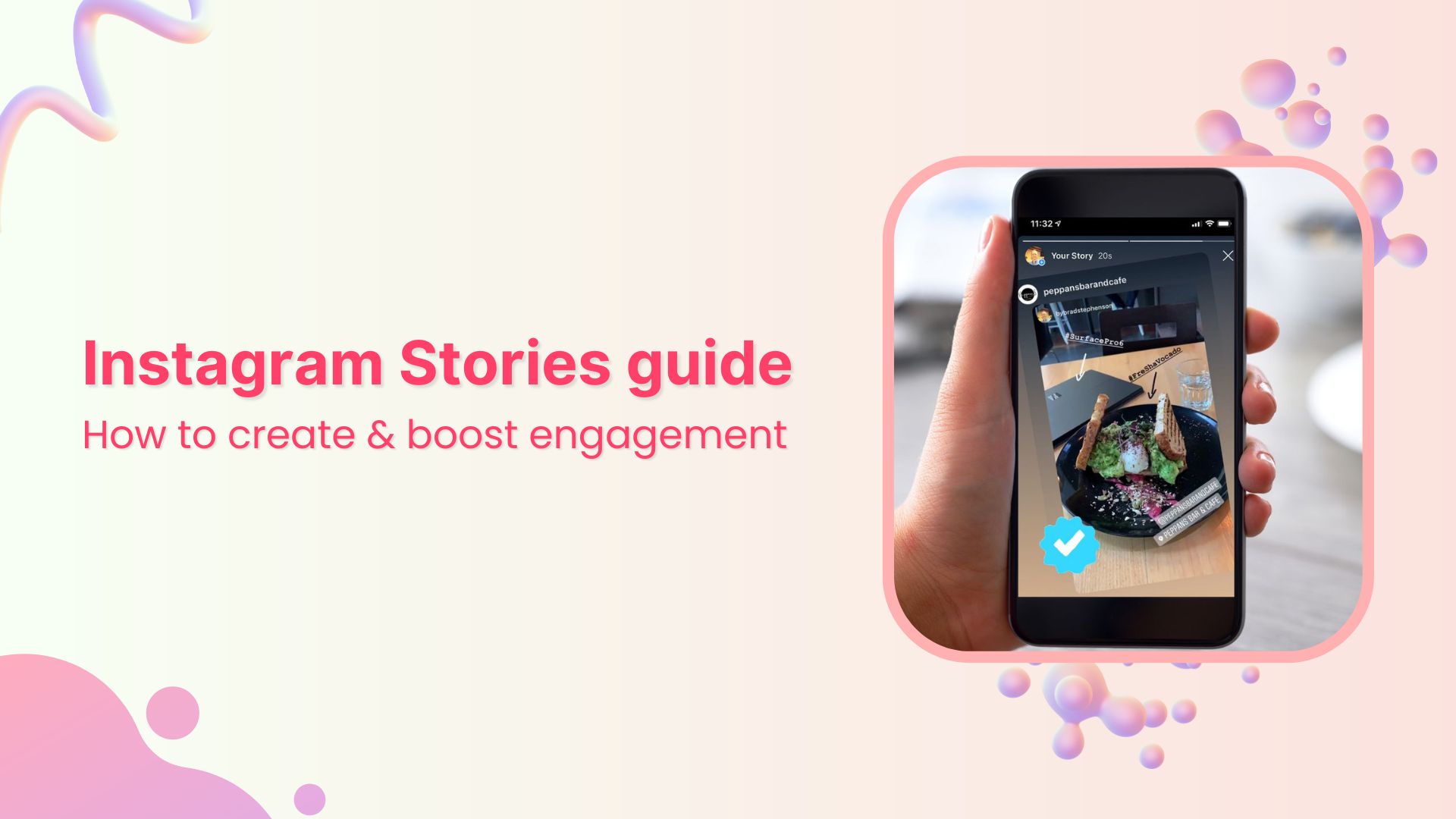
Instagram Stories are full-screen, vertical posts that appear at the top of followers’ feeds and disappear automatically after 24 hours. They support photos, videos, text, stickers, music, and interactive elements like polls and question boxes.
This guide covers how Stories work, how to create and schedule them, which formats get results, and how to read your performance data once they’re live.
Instagram Stories are temporary posts that appear as circular bubbles at the top of the Instagram app, completely separate from your main profile grid. Each Story expires 24 hours after posting unless you save it to a Highlight.
Stories occupy the top of the screen. They’re the first thing most users see when they open Instagram. That placement gives you a recurring, high-visibility slot in front of your followers that feed posts don’t have.
Understanding the format is foundational to marketing on Instagram as a whole. Stories serve a different function than feed posts or Reels. They’re the daily, lower-pressure format where you show up consistently, build familiarity, and drive interaction.
The format supports several content types:
A few behaviors worth knowing before you start posting:
Creating a Story takes under two minutes from the Instagram app. You can also plan and publish Stories from a desktop using a scheduling tool, which makes more sense when you’re managing content in advance or across multiple accounts.
From the Instagram app:
Technical specifications:
For anyone managing more than one Instagram account or planning content more than a day ahead, posting manually each time adds unnecessary friction. An Instagram scheduler lets you create Stories from desktop, set an exact publish time, preview how the content will look before it goes live, and keep everything inside a content calendar alongside your other posts.
No single Story format outperforms all others. The right type depends on what you’re trying to accomplish that day. The accounts that see consistent results mix formats throughout the week rather than defaulting to one style.
Here are the formats worth incorporating regularly:
If you’re planning a full week of Story content and need variety, a structured list of Instagram Story content ideas makes it much faster to fill a posting schedule without repeating yourself.
One format question that trips up a lot of accounts: when to use a Story versus a Reel. Stories go to your existing followers in their feed. Reels get pushed to non-followers through the algorithm’s Explore and Reels tabs. The Stories and Reels differences go deeper than length. The audience, the algorithm treatment, and the content style are all distinct.
Interactive stickers are what separate Stories that get watched from Stories that get replied to. Instagram offers several of them, but a few are consistently more useful than others.
Here’s what each one is best suited for:
A note on using these: adding a sticker to every Story is not a strategy. The question box only works if you plan to respond to what comes in. A poll is worth running when the result is relevant to your audience and not just to you. Use each feature when the content actually calls for it.
Scheduling Stories in advance removes the pressure of manual daily posting, especially when you’re managing campaigns or multiple accounts at once. Instagram’s native app doesn’t support Story scheduling directly, but two options cover most use cases.
A social media management software gives you a desktop dashboard purpose-built for this. The workflow is straightforward and removes the need to post manually every day. Here’s what you can do from one:
Your Instagram Insights tab, under “Your audience,” shows active hours broken down by day of the week. That data is your benchmark for scheduling.
Meta Business Suite allows basic Story scheduling from a desktop browser. Go to Planner, connect your Instagram account, and create a Story from there. Interactive stickers can’t be added through Meta Business Suite’s composer, so this option is better suited to simple, image-based announcement Stories.
A practical posting rhythm for most accounts: 3 to 5 Stories per day, spread throughout the day. Posting 10 at once drives completion rates down because most viewers run out of patience before reaching the end of the sequence.
Story analytics are available through Instagram Insights for professional accounts. Go to your profile, tap the three-bar menu in the top right, select Insights, choose Content, and filter by Stories.
Instagram stores Story-level data for 90 days, but individual Story metrics (views, exits, taps) are only accessible while the Story is active or for up to 14 days after it expires. Check your data before it disappears.
Here are the metrics that matter most and what each one tells you:
| Metric | What it tells you |
|---|---|
| Reach | Number of unique accounts that saw the Story |
| Impressions | Total views, including replays |
| Completion rate | Percentage of viewers who watched the full sequence |
| Taps forward | Viewers who skipped to the next frame |
| Taps back | Viewers who rewound to re-watch a frame |
| Exits | Where viewers left the Story mid-sequence |
| Link sticker clicks | Traffic driven from the Story to an external URL |
| Replies | Direct messages triggered by Story interactions |
Three metrics are worth prioritizing above the rest:
A strong Stories strategy isn’t built on one standout post. It’s built on a consistent rhythm, varied formats, purposeful use of interactive features, and decisions guided by what your analytics actually show.
Instagram Stories reward consistency in a way most formats don’t. The 24-hour window means your audience knows you’ll be back tomorrow. That expectation is actually an advantage: it creates a daily touchpoint that’s harder to build through feed posts alone.
The accounts that do this well aren’t posting anything extraordinary. They show up regularly, use interactive features to turn passive viewers into participants, and check their analytics often enough to know what’s working. That’s the actual practice.
Start simple: a few Stories per day, a mix of formats across the week, and a monthly look at which content held attention and which lost it. Let those numbers tell you what to do more of.
Instagram Stories are visible for 24 hours after posting. After that, they disappear from public view and move to your Story archive, where they stay for 30 days.
Yes. You can schedule and publish Stories from desktop using a third-party scheduling tool or through Meta Business Suite. Instagram’s web browser also supports basic Story creation if you switch the browser to mobile view mode.
While your Story is active, tap on it and swipe up to see the full viewer list. This data is available during the 24-hour window and for a short time after expiry, after which Instagram removes individual viewer data.
The recommended dimensions are 1080 x 1920 pixels at a 9:16 aspect ratio. Keep text and key graphics within the central safe zone to avoid them being cropped by the UI elements at the top and bottom of the screen.
Yes. Story engagement influences how Instagram ranks your content broadly. Followers who regularly interact with your Stories are more likely to see your feed posts, and consistent Story activity signals to the algorithm that your account is active.
Highlights are saved Story collections pinned permanently below your profile bio. You build them from your Story archive by selecting individual Stories and grouping them under a category, such as Products, Reviews, or FAQ. They stay on your profile until you delete them.
Plan 0 Days of Content in 0 Minutes
Create, schedule, publish and analyze your content across all your social media channels from one simple dashboard.
4.7 on Capterra • 16,500+ marketers trust ContentStudio
Wasiq Naeem is a Senior Content Strategist at ContentStudio and a research-driven content and digital marketing veteran. He writes on social media strategy, analytics, audience growth, and competitor analysis, covering topics like best posting times and competitor mapping. As a senior editor, he also reviews and fact-checks articles for depth and accuracy.
View all posts by Wasiq NaeemRecommended for you
95% of marketers use AI. Only 39% see better performance. The gap isn’t the AI

How to run a holiday campaign calendar from chat with OpenClaw
Google Ads metrics: What to track and what each one tells you
10 social media goals for marketers