149 Best Cyber Monday & Black Friday software deals in 2026
Nov 28, 2025118 minutes

Written by
Saif AliUpdated
A Black Friday marketing campaign is a planned promotion built around the Friday after US Thanksgiving. It connects one offer, one audience plan, and a set of channels into a single push, then carries buyers into Cyber Monday and the rest of the holiday season.
In 2026, Black Friday falls on Friday, November 27. More money is on the table, and more brands are fighting for it. The ones that win usually decide their goals, offer, and calendar weeks before anyone else hits “send.”
This guide walks you through the whole lifecycle: goals, audience, offer, timeline, channels, content ideas, budgets, measurement, and what to do once the sale ends. Templates and checklists are at the end.
Key takeaways
Black Friday 2026 is on Friday, November 27, the day after US Thanksgiving. The weekend runs through Cyber Monday on November 30.
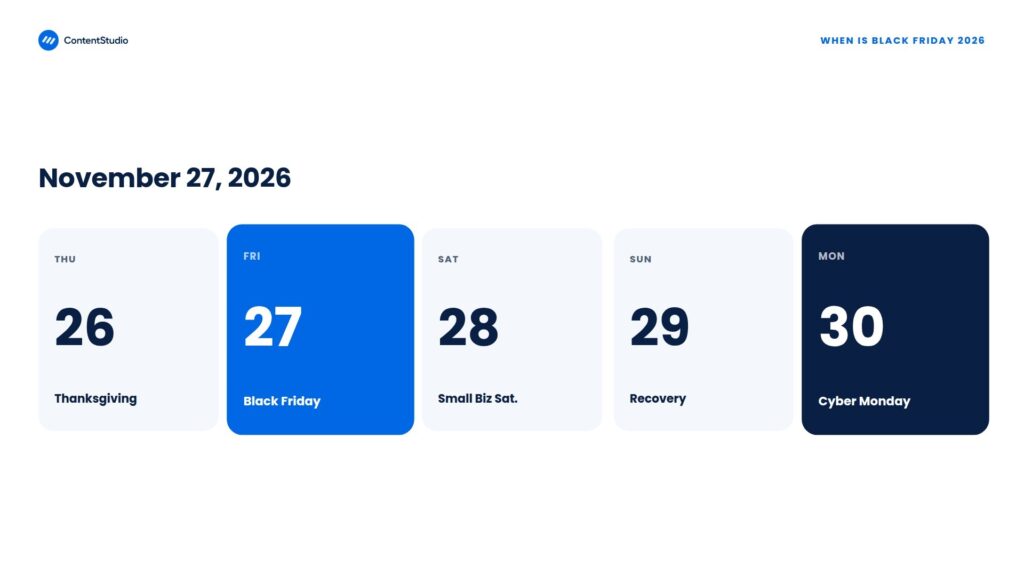
| Day | Date | What to plan for |
| Thanksgiving | Thu, Nov 26 | Early access opens, impulse mobile shopping |
| Black Friday | Fri, Nov 27 | Main launch, peak traffic, support coverage |
| Small Business Saturday | Sat, Nov 28 | Local and independent brand messaging |
| Sunday | Sun, Nov 29 | Reminder content, cart recovery |
| Cyber Monday | Mon, Nov 30 | Handoff offer or extension, last call |
The real window is much wider. Adobe expects $95.8 billion in US online spending in October 2026, up 8%, as retailers push promotions earlier. The NRF reached a similar conclusion after 2025: Thanksgiving weekend is now the midpoint of the holiday season, not the start (WJLA/NRF).
So treat November 27 as your peak, not your starting line.
Shoppers arrive earlier, research more, and buy mostly on phones. They compare Black Friday deals across marketplaces, social feeds, and increasingly AI assistants before they commit.
Here is what the data says, and how sure we can be about each point.
Retailers have stretched black friday sales into “Black November” and beyond. Adobe expects Black Friday to outgrow Cyber Monday in 2026 partly because discounts now land earlier.
What it means for you: Your teasers, list growth, and early access need to start in early November at the latest.
In 2025, mobile passed desktop in online holiday sales for the first time, with a 52.2% revenue share in the first four weeks of the season (RTTNews/Nasdaq, citing Adobe). Adobe forecasts 57.4% of 2026 holiday online sales on mobile (Digital Commerce 360).
What it means for you: Design every landing page, email, and checkout for a thumb first.
Salesforce found that social media drove 15% of global digital traffic to retail sites during Cyber Week 2025, and TikTok’s share of social traffic grew 55% year over year (Salesforce).
What it means for you: Social posts are not just awareness. They are a traffic source you should track to revenue.
Adobe reported an 805% increase in AI-driven traffic to US retail sites on Black Friday 2025 compared with 2024 (SGI Europe, citing Adobe). For 2026, Adobe forecasts AI traffic on Black Friday to rise another 95%.
What it means for you: Clear product pages, honest pricing, and plain-language FAQs help both search engines and AI assistants understand your offer.
Salesforce data showed US Black Friday 2025 prices rose about 7% while order volumes slipped 1%, so part of the growth came from higher prices rather than more buyers (Bernama, citing Salesforce).
What it means for you: Shoppers are price-sensitive and value-focused. A clear “why this is worth it” message matters as much as the size of the discount.
| Claim | Status | Source |
| Black Friday 2025 US online sales hit $11.8B | Reported result | Adobe (via RTTNews) |
| Shopify merchants did $14.6B over BFCM 2025, up 27% | Reported result | Shopify |
| Social drove 15% of global retail traffic in Cyber Week 2025 | Reported result | Salesforce |
| Black Friday 2026 will reach $12.9B | Forecast | Adobe, Sept 2026 |
| AI traffic on Black Friday 2026 up 95% | Forecast | Adobe, Sept 2026 |
| 57.4% of 2026 holiday sales on mobile | Forecast | Adobe, Sept 2026 |
Plan around the results. Treat the forecasts as direction, not guarantees.
Your Black Friday goal decides everything downstream: which products you promote, how deep you discount, which channels get budget, and what you report. Pick one primary goal and at most two secondary ones.
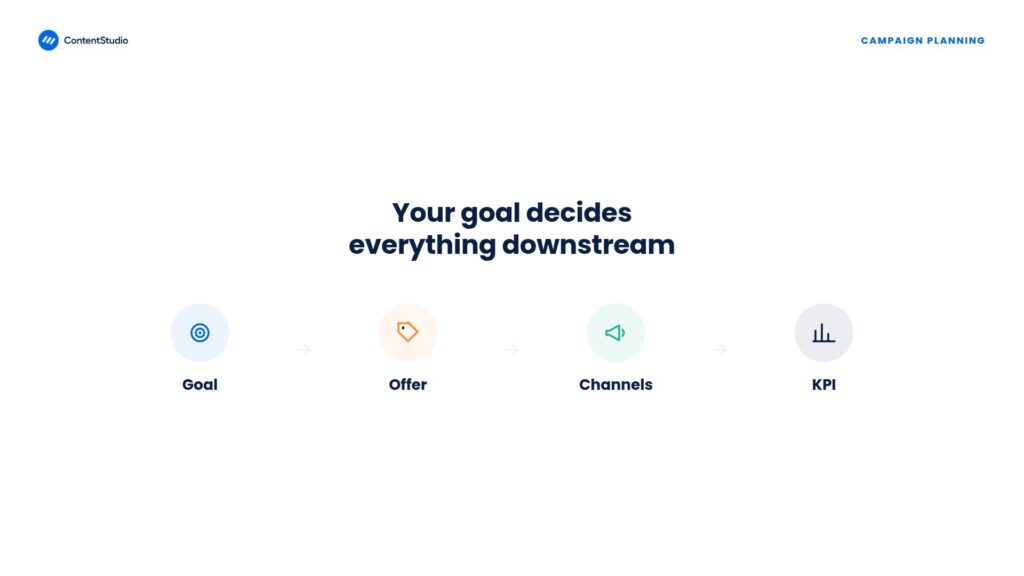
| Goal | Offer that fits | Channels that lead | Primary KPI |
| Revenue | Sitewide or category discount | Email, paid retargeting | Revenue, contribution margin |
| New customers | First-order discount, low-risk entry product | Paid prospecting, creators, social | New-customer revenue, CAC |
| Higher AOV | Bundles, tiered spend thresholds | Email, on-site | Average order value |
| Inventory clearance | Deep discount on specific SKUs | Email, marketplace, social | Sell-through rate |
| List growth | Early access for subscribers | Social, pop-ups, paid lead ads | New subscribers, cost per subscriber |
| Annual plan upgrades (SaaS) | Discount on annual plans | Email, in-app, LinkedIn | Annual conversions, net revenue retention |
| Retention | Loyalty perks, early access | Email, SMS | Repeat purchase rate |
Write the KPI down with a number and a date. “Grow revenue” is a wish. “Hit $80,000 in contribution margin from November 20 to November 30 with at least 35% from new customers” is a goal you can manage.
Set a baseline first. Pull last year’s Black Friday numbers and a normal November week so you can tell how much of the result was really the campaign.
Most Black Friday campaigns underperform because one message goes to everyone. Your loyal customers, your inactive subscribers, and a cold prospect seeing an ad for the first time need different reasons to buy.
Start with these segments. If audience segmentation is new to your team, keep it to three or four groups this year.
| Segment | What they need | Best message |
| Loyal customers | Recognition | “You get in first,” early access, a perk not available publicly |
| Recent first-time buyers | A reason to come back | Complementary product, refill, upgrade path |
| Engaged non-buyers (subscribers, followers) | A push past hesitation | The offer plus proof: reviews, guarantees, comparisons |
| Lapsed customers | A reason to return | “Here’s what changed,” win-back offer |
| Cold prospects | Trust and clarity | Simple offer, social proof, low-risk entry product |
Shoppers have dozens of black friday deals open at once. Your positioning answers why they should choose you even if someone else is cheaper.
Three questions sharpen it:
Example (illustrative): A skincare brand that cannot outspend big retailers positions its campaign around “routines matched by a licensed esthetician,” with bundles built from quiz results. The discount is moderate. The reason to buy is the guidance.
The best Black Friday offer is the one your customers value and your margins can carry. Deep sitewide discounts are only one option, and often not the most profitable one.
| Offer | Works best when | Watch out for |
| Percentage off (for example, 25% off) | Prices are low to mid range, and you want a simple headline | Margin erosion on already thin products |
| Fixed amount off (for example, $50 off $200) | Higher price points, where “$50” reads bigger than “25%” | Needs a minimum spend to protect margin |
| Tiered spend (for example, 10% off $100, 20% off $200) | Raising AOV | Complexity; keep to two or three tiers |
| Bundles | Products used together, gift buying | Bundle must be clearly cheaper than buying separately |
| Gift with purchase | Premium brands that avoid visible discounting | The gift needs real perceived value |
| Free shipping | High shipping costs are a known objection | Hidden cost to you; set a threshold |
| BOGO or volume discounts | Consumables, refills, multipacks | Inventory planning |
| Early access for members | Building loyalty and list growth | Must be a real head start, not a label |
| Annual plan discount (SaaS) | Recurring revenue, cash flow | Renewal price expectations next year |
| Extended trial (SaaS) | Products that sell after hands-on use | Needs strong onboarding to convert |
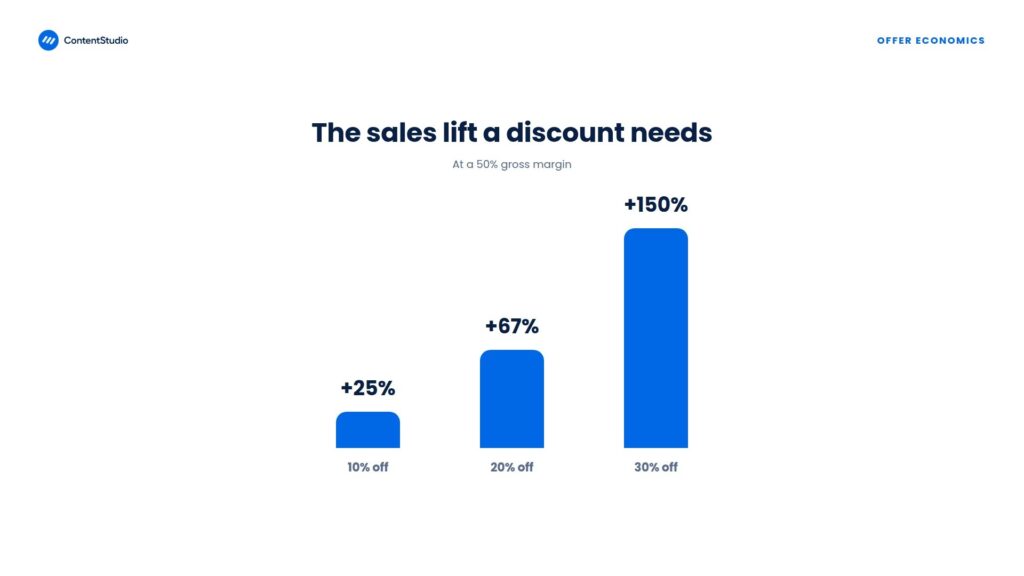
Use this formula to see how many more units a discount needs to earn the same gross profit:
Required unit lift = Gross margin % ÷ (Gross margin % – Discount %)
Illustrative example: Your product sells for $100 with a 50% gross margin ($50 profit per unit). At 20% off, you earn $30 per unit.
0.50 ÷ (0.50 – 0.20) = 1.67
You need to sell about 67% more units just to match normal gross profit. At 30% off, you would need 2.5 times the volume. That is why many profitable brands discount a few hero products deeply and use bundles or gifts elsewhere.
Software has near-zero marginal cost per user, so the math is different. The risks are churn and anchoring.
Real deadlines and real stock limits are fine. Fake countdown timers that reset, “only 2 left” banners that never change, and inflated “original” prices damage trust and can create legal risk under consumer protection rules.
Do this instead:
A campaign is the offer plus a story, a destination, and a plan for who does what. Write it on one page so everyone works from the same brief.
| Field | Example (illustrative) |
| Campaign name | “Restock Your Routine” |
| Goal and KPI | $60k contribution margin, 40% from new customers |
| Core message | “The routine our customers reorder most, at the best price of the year” |
| Offer | 3 bundles at 25% off; 15% off everything else; free shipping over $75 |
| Audience segments | VIPs, subscribers, recent buyers, lookalike prospects |
| Dates | Early access Nov 25; public Nov 27 to Nov 30 |
| Landing page | /black-friday (same URL every year) |
| Channels | Email, Instagram, TikTok, Meta Ads, SMS |
| Owners | Offer: ecommerce lead. Creative: designer. Social: social manager. Support: CX lead |
| Approval deadline | All assets approved by Nov 13 |
| Contingency | Backup hero product, pre-written “sold out” and “site issue” posts |
Send every channel to one Black Friday landing page instead of the homepage. It should show the offer above the fold, list what is included and excluded, and repeat the end date.
Keep the same URL every year. Google recommends using a recurring URL such as /sale/black-friday rather than adding the year to the address (Search Engine Journal).
Write down what a shopper sees at each stage:
Every stage needs one piece of content and one owner. Gaps here show up later as abandoned carts and support tickets.
Black Friday is the worst day to discover your discount code does not work. Prepare:
This calendar works backward from November 27. Small teams can merge phases. Larger teams should add a week of buffer before launch for approvals.
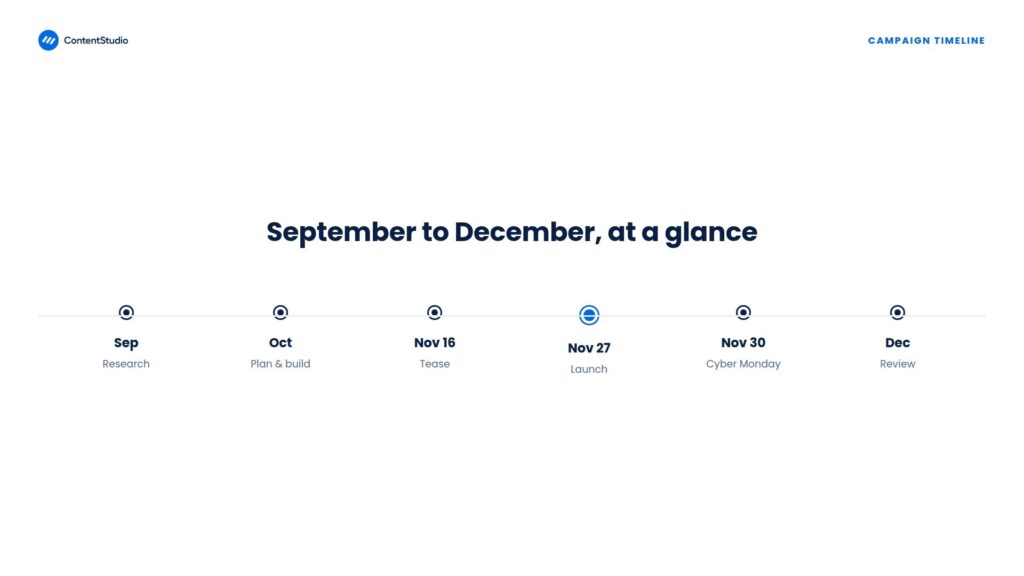
| Phase | Dates (2026) | Key tasks | Deliverables |
| 1. Research and goals | Sep 14 to Oct 9 | Review last year, set goals, check margins, study competitors | Goals, KPI targets, budget |
| 2. Offer and plan | Oct 12 to Oct 23 | Finalize offer, segments, channel mix, owners | One-page brief, offer sheet |
| 3. Build | Oct 26 to Nov 13 | Landing page, creative, email and SMS flows, ad accounts, tracking | Approved assets, tested tracking |
| 4. Warm up | Nov 2 to Nov 20 | List growth, retargeting pools, teasers, creator briefs | Growing lists, warm audiences |
| 5. Tease and early access | Nov 16 to Nov 26 | Countdown content, VIP early access, gift guides | Early-access sales, waitlist |
| 6. Launch | Nov 27 | Go live, monitor, reply fast, swap underperforming creative | Live dashboards, support log |
| 7. Weekend | Nov 28 to Nov 29 | Reminders, cart recovery, social proof posts | Daily performance notes |
| 8. Cyber Monday handoff | Nov 30 | Final call or new CM offer | Last-chance sends |
| 9. Retention and review | Dec 1 to Dec 18 | Post-purchase flows, retrospective, documentation | Report, lessons for 2027 |
If you are reading this in late October, you still have time for a focused campaign.
Skip anything that needs new SEO pages to rank. Spend that energy on email, social, and your existing customers.
Not every channel deserves the same effort. Pick channels by your goal, budget, and where your buyers already are. Use this table to decide, then go deeper on the ones you choose.
| Channel | Best for | Budget needed | Lead time |
| Revenue from existing audience, early access | Low | 2 to 4 weeks | |
| Organic social | Awareness, community, traffic | Low to medium | 3 to 6 weeks |
| Paid social and search | New customers, retargeting | Medium to high | 4 to 8 weeks (creative and learning) |
| Landing page and site | Conversion for every channel | Low to medium | 3 to 6 weeks |
| SEO and content | Discovery, long-term demand | Low | 2 to 6 months |
| SMS | Time-sensitive reminders | Low to medium | 4 to 8 weeks (opt-ins) |
| Creators and affiliates | Trust, new audiences | Medium | 4 to 8 weeks |
| Community and support | Conversion, retention | Low | 2 to 3 weeks |
Social media is where many shoppers first hear about your sale and where they ask questions before buying. Treat it as a traffic and support channel, not just a billboard.
Publishing the same image everywhere wastes the reach each platform gives native content.
With five platforms and three weeks of posts, a spreadsheet breaks fast. A shared social media content calendar lets you plan by campaign, filter by label or channel, and see every account in one view.
If several people touch the campaign, add an approval workflow so nothing with a wrong price or expired code goes live. For large volumes, bulk scheduling lets you schedule posts in batches instead of one at a time.
On launch day, comments become support tickets: “Does the code work on bundles?” “Do you ship to Canada?” A unified social inbox keeps comments and DMs from every platform in one queue, so questions do not sit unanswered while buyers leave.
Social KPIs: link clicks, landing-page sessions from social, conversion rate from social traffic, response time, saves and shares on gift guides.
Email is usually the highest-return Black Friday channel for brands with an existing list, because you are talking to people who already know you.
| # | Date | Audience | |
| 1 | Nov 10 | “Something’s coming”: teaser plus early-access sign-up | All subscribers |
| 2 | Nov 18 | Gift guide or product roundup | All subscribers |
| 3 | Nov 24 | “You’re in”: early access details | VIPs and early-access list |
| 4 | Nov 26 | Early access is live | VIPs and early-access list |
| 5 | Nov 27 | Black Friday is live | All subscribers |
| 6 | Nov 28 | Best sellers and what’s running low | Engaged non-buyers |
| 7 | Nov 29 | Reviews and FAQs | Clickers who did not buy |
| 8 | Nov 30 | Last chance or Cyber Monday handoff | Non-buyers |
| Flows | Ongoing | Abandoned cart, browse abandonment, post-purchase | Triggered |
Suppress buyers from promotional sends after they purchase. Nobody likes a “Don’t miss out!” email for the thing they bought yesterday.
Pair each subject line with preview text that adds information instead of repeating it. Example: Subject “Ends tonight at 11:59 pm ET,” preview “Free shipping on orders over $75 still applies.”
Email KPIs: revenue per recipient, click rate, conversion rate, unsubscribe rate, spam complaint rate.
Paid ads get expensive during Black Friday week because everyone bids at once. The brands that do well usually build their audiences and test creative before costs rise.
Creative and offer testing
Test two or three angles before launch, such as the discount, the bundle, and social proof. Move budget to the winner before costs peak.
Budget pacing
Plan daily budgets for each phase rather than one lump sum. Many teams spend lightly in early November, more during early access, and most from Thanksgiving to Sunday.
Landing-page match
The ad, the landing page headline, and the offer should say the same thing. If the ad says “25% off bundles,” the page should open with bundles.
Track the right numbers
ROAS, CPA, conversion rate, and new-customer share. If you want to see Meta and Google results next to your social data, ContentStudio’s Meta Ads analytics and Google Ads analytics bring ad metrics into the same reporting space.
Common paid mistakes: launching new creative on Black Friday itself, sending traffic to the homepage, ignoring frequency (the same ad shown 15 times), and judging success by ROAS without checking margin.
Every channel ends on your site. A slow, confusing page wastes all the effort above it.
Landing page checklist
Checkout
Remove optional fields, offer guest checkout, and support mobile wallets. Test your discount code on every product type, on mobile and desktop, before launch day.
Tracking
Confirm analytics events, ad pixels, and UTM parameters fire correctly. Run a test purchase through every channel’s link.
SEO for Black Friday rewards the brands that started early. Some work still helps in November. Some is too late to matter.
Still worth doing in November
Unlikely to help if started in late November
Good practice for every year
Google’s guidance for deals pages is to create a dedicated page per sales event, include the event name in the page title, and describe the sale in the page text (Google Search Central). After the sale, keep the page live with a “see you next year” message and a sign-up form instead of deleting it.
SMS works for short, time-sensitive messages to people who asked to hear from you. It is not a channel for long explanations.
KPIs: click rate, revenue per message, opt-out rate.
Creators and partners bring trust you cannot buy with ads. Book them early, because good creators fill their November calendars by October.
KPIs: attributed revenue, new customers per partner, cost per acquisition.
The fastest way to lose a sale is an unanswered question.
These ideas follow the campaign arc from teaser to thank-you. Each includes its purpose, a format, and a hook you can adapt. For ready-made lines and hashtags, use ContentStudio’s list of Black Friday quotes, hashtags, and slogans.
| # | Idea | Purpose | Format | Sample hook |
| 1 | Teaser | Build curiosity | Blurred product photo, Story | “Something is getting cheaper next week. Guesses?” |
| 2 | Early-access sign-up | Grow your list | Reel with link sticker | “Subscribers shop 24 hours before everyone else” |
| 3 | Countdown | Remind and build urgency | Story countdown sticker, carousel | “3 days. Here’s what you can get.” |
| 4 | Product highlight | Show the hero product | 15-second demo Reel or TikTok | “Why customers reorder this every 6 weeks” |
| 5 | Before and after | Prove results | Split-screen video | “Day 1 vs day 30 with the starter kit” |
| 6 | Customer testimonial | Build trust | Review screenshot or customer video | “In her words: ‘I wish I’d bought two.'” |
| 7 | Behind the scenes | Humanize the brand | Packing orders, team prep | “4,000 boxes. 6 people. Here’s launch prep.” |
| 8 | Deal reveal | Announce the offer | Carousel, one deal per slide | “Swipe for every Black Friday deal” |
| 9 | Bundle announcement | Raise AOV | Flat-lay photo, pin | “The full routine for less than two products” |
| 10 | FAQ post | Remove objections | Carousel or text post | “Shipping, returns, codes: everything in one post” |
| 11 | Gift guide | Help gift buyers | Pinterest pin, carousel | “Gifts under $50 for people who are hard to buy for” |
| 12 | UGC repost | Social proof | Customer Reel or photo, with permission | “@customer showed us how she uses it” |
| 13 | Creator collaboration | Reach new audiences | Collab post or creator Reel | “We asked @creator to test our bestseller for a week” |
| 14 | Last chance | Final conversion push | Story, short video | “Final hours. Sale ends 11:59 pm ET.” |
| 15 | Thank-you and next steps | Retention | Video from founder or team | “You made this our biggest week. Here’s how to get the most from your order.” |
Teaser (Instagram): “We don’t run sales often. Next Friday, we are. Subscribers get in a day early, link in bio. 👀”
Deal reveal (LinkedIn, SaaS): “Our Black Friday offer is simple: 40% off annual plans, first year only, for new and existing customers. No tricks on renewal; the regular price applies after year one. Details in the comments.”
Bundle (TikTok): “POV: you buy the whole routine for less than two products. The 3-step bundle is 25% off until Monday.”
FAQ (Facebook): “Quick answers before you shop: codes work on bundles, free shipping starts at $75, and returns are open until January 15. Anything else? Ask below and we’ll answer within the hour.”
Last chance (Stories): “Final call. The sale ends at 11:59 pm ET tonight. After that, prices go back up.”.
The campaigns below are real, with sources. They show that the most memorable Black Friday marketing is often the least like a generic sale.
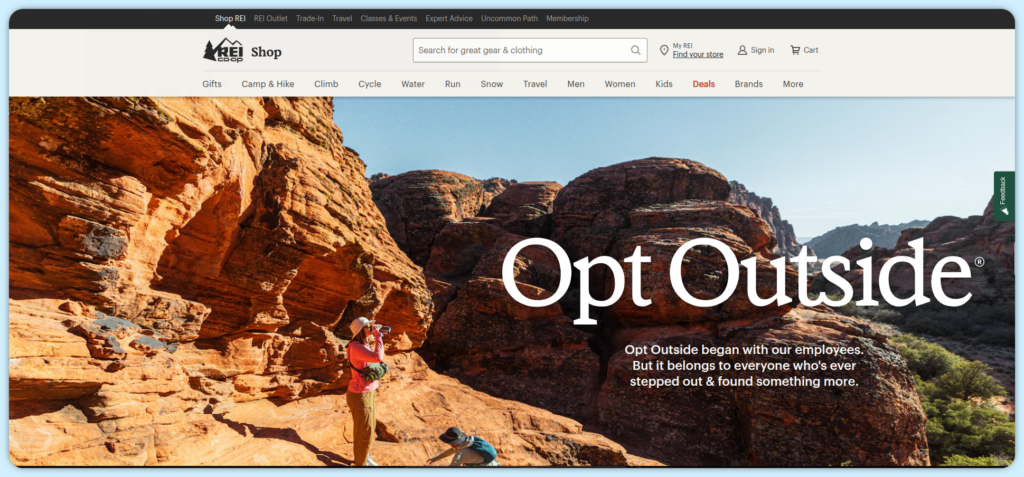
What they did: In 2015, REI announced it would close its stores on Black Friday, pay employees for the day, and invite everyone to spend it outdoors. More than 1.4 million people and 170 organizations joined that first year, and REI made the closure permanent in 2022.
Channel and audience: A public announcement weeks ahead, plus a social hashtag, aimed at outdoor enthusiasts and co-op members.
Why it worked: It matched who REI already was. Then-CEO Jerry Stritzke summed it up: “We’d rather be in the mountains than in the aisles” (ABC7). Retail Dive later reported that REI’s web sales grew 23% and membership grew by more than a million that year (Retail Dive).
Lesson you can apply: If your brand stands for something specific, a Black Friday stance can earn more attention than a discount. It only works if your customers already believe it.
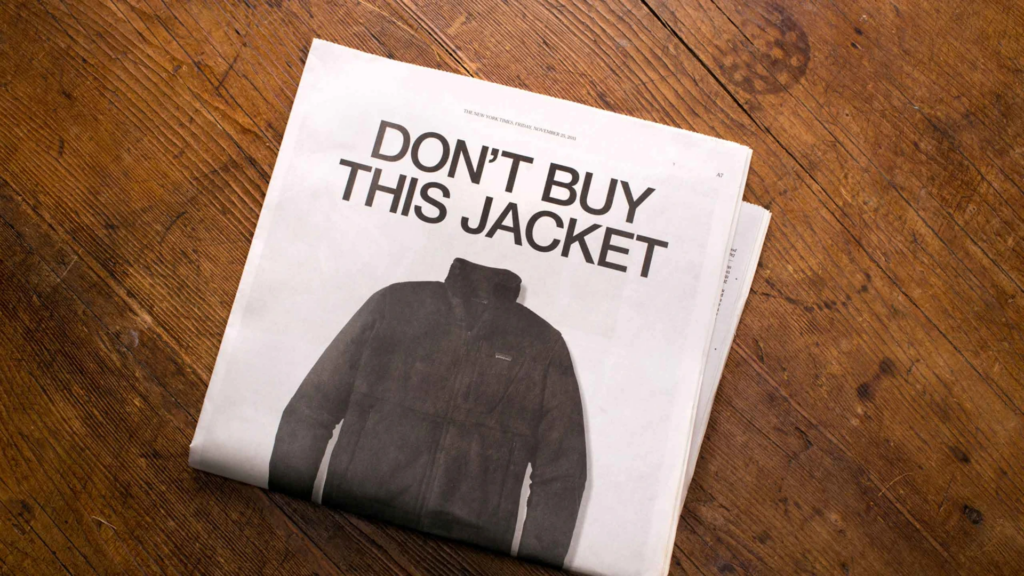
What they did: On Black Friday 2011, Patagonia ran a full-page New York Times ad telling readers not to buy its jacket, and invited them to repair, reuse, and buy less through its Common Threads Initiative.
Channel and audience: Print ad, plus Patagonia’s own site and email, aimed at environmentally minded outdoor buyers.
Why it worked: It flipped the day’s message and was backed by real programs. Patagonia’s own explanation: “Customers need to think twice before they buy.”
Lesson you can apply: A contrarian message needs proof behind it. Pair any values-led campaign with a concrete action customers can take, such as repair, trade-in, or donation.
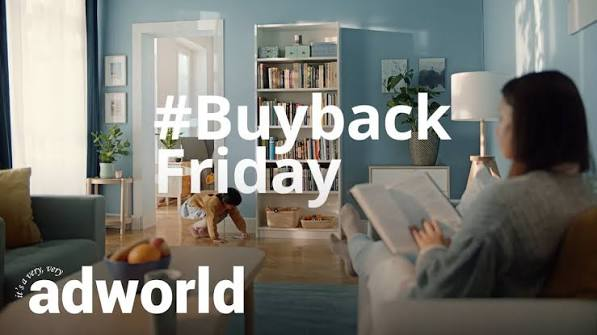
What they did: In 2020, IKEA ran “Buy Back Friday” in 27 countries from November 24 to December 3, offering store credit worth up to 50% of the original price for used IKEA furniture.
Channel and audience: Announced weeks in advance, with an online valuation form and in-store returns, aimed at existing IKEA owners.
Why it worked: It gave existing customers a reason to visit during Black Friday, and the store credit brought them back to buy.
Lesson you can apply: Trade-in credit can be a Black Friday offer. It brings back past buyers and keeps the money in your store.
A project management tool for agencies skips sitewide discounts. Instead, it offers 30% off the first year of annual plans to teams that upgrade from monthly, plus a free onboarding session. The campaign runs on LinkedIn, in-app banners, and a four-email sequence to trial users and monthly customers.
Why the structure makes sense: It moves monthly users to annual plans, which cuts churn, and onboarding helps new users stay past year one.
This is a hypothetical example, not a real campaign.
A neighborhood bakery runs “Pre-order Friday”: customers who pre-order holiday pies on Black Friday get a free dozen cookies at pickup. It promotes the offer on Instagram, Google Business Profile, and a sign at the counter.
Why the structure makes sense: It locks in December revenue, smooths kitchen planning, and avoids discounting its most popular product.
The same playbook does not fit everyone. Here is how priorities shift.
A Black Friday budget should start from what you can afford to spend per order, not from what competitors seem to spend.
Contribution margin per order = Average order value – product cost – shipping and fulfillment – payment fees – discount
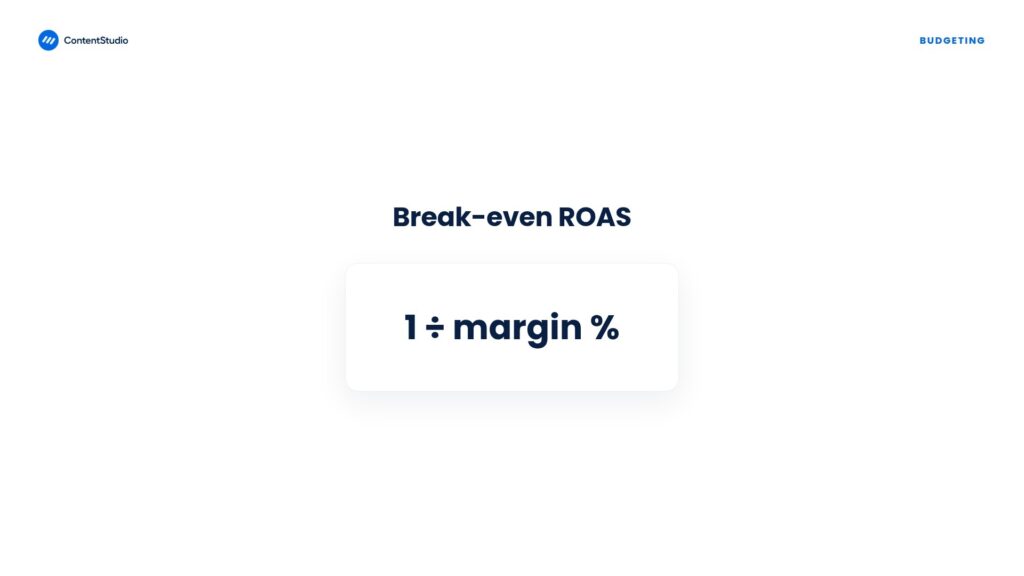
Break-even ROAS = 1 ÷ contribution margin %
Illustrative example:
Any campaign below a ROAS of 2.2 loses money on the first order. Above it, you are profitable on that order before overhead. If new customers come back to buy again, you can accept a lower ROAS on first orders, but only if your repeat rate data supports it.
Allowable CAC = contribution margin per first order + expected margin from repeat orders within 12 months
Be conservative with the repeat-order number. Deal-driven buyers often repeat less than full-price buyers.
Illustrative allocation for a $20,000 campaign at a mid-size DTC brand:
| Line | Share | Amount |
| Paid prospecting (Oct to mid Nov) | 30% | $6,000 |
| Paid retargeting (launch week) | 25% | $5,000 |
| Creators and affiliates | 15% | $3,000 |
| Creative production | 15% | $3,000 |
| Email and SMS tools and sends | 5% | $1,000 |
| Extra support hours | 5% | $1,000 |
| Reserve for winners | 5% | $1,000 |
These shares are a starting point, not a benchmark. A SaaS company might put most of its budget into email, in-app messaging, and LinkedIn. A small shop might spend almost nothing on ads.
Budget for extra support hours, temporary warehouse help, faster shipping options, and higher payment volume. These costs are easy to forget and hard to fix mid-sale.
Check results daily from Thanksgiving onward. Move spend from ads below break-even ROAS to the ones above it, and use the reserve on proven winners.
Good measurement answers one question: did the campaign make money we would not have made otherwise?
| Metric | Formula | What it tells you |
| Conversion rate | Orders ÷ sessions | How well the site turns visits into sales |
| Average order value | Revenue ÷ orders | Whether bundles and tiers worked |
| Customer acquisition cost | Marketing spend ÷ new customers | What each new customer cost |
| ROAS | Ad revenue ÷ ad spend | Ad efficiency, not profit |
| Contribution margin | Revenue – variable costs – discounts | Real profit from the campaign |
| Discount cost | Regular price revenue – actual revenue | How much the offer gave away |
| New-customer revenue share | New-customer revenue ÷ total revenue | Whether you reached new people |
| Email revenue per recipient | Email revenue ÷ emails delivered | Email performance across list sizes |
| Checkout completion rate | Completed checkouts ÷ started checkouts | Friction at the last step |
Revenue can rise while profit falls. If you doubled revenue but gave away 35% on every order and paid more for ads, you may have earned less than last year.
Always report revenue and contribution margin side by side.
Most attribution tools give credit to the last click, which overstates retargeting and branded search. Two simple checks help:
Use UTM parameters on every link so traffic from social, email, creators, and ads is tracked separately. For social specifically, social media analytics that show clicks and engagement by post help you see which content drove traffic, not just likes.
While details are fresh, answer:
Write the answers in a shared doc, and you will start the next Black Friday ahead of where you started this one.
| Mistake | How to prevent it |
| Starting preparation in November | Lock goals and offer by mid October |
| Choosing a discount without checking margins | Run the unit-lift and break-even ROAS formulas first |
| Sending one message to everyone | Use at least three segments with different messages |
| Relying only on paid ads | Build email and social audiences before November |
| Ignoring mobile and checkout friction | Test the full purchase on a phone before launch |
| Sending too many emails or texts | Raise frequency gradually and suppress recent buyers |
| Running out of stock or support | Forecast demand by SKU and extend support hours |
| Using fake urgency or unclear terms | Show real deadlines, regular prices, and exclusions |
| Skipping tracking tests | Place test orders from every channel link |
| Forgetting post-purchase communication | Set up shipping, onboarding, and care emails before launch |
| Ending without a review | Book the retrospective before the sale starts |
The days after Black Friday decide whether you bought customers or just sales.
Decide in advance whether Cyber Monday is an extension of the same offer or a different one. Either is fine. Changing the plan mid-weekend confuses shoppers and your team.
Retarget non-buyers with a new reason to buy, such as a gift guide or holiday shipping deadline, not the same ad. Set frequency caps and only market to people who agreed to hear from you.
Going from daily discounts to more discounts trains customers to wait for sales. After the weekend, switch to helpful content, gift ideas, and service messages before your next promotion.
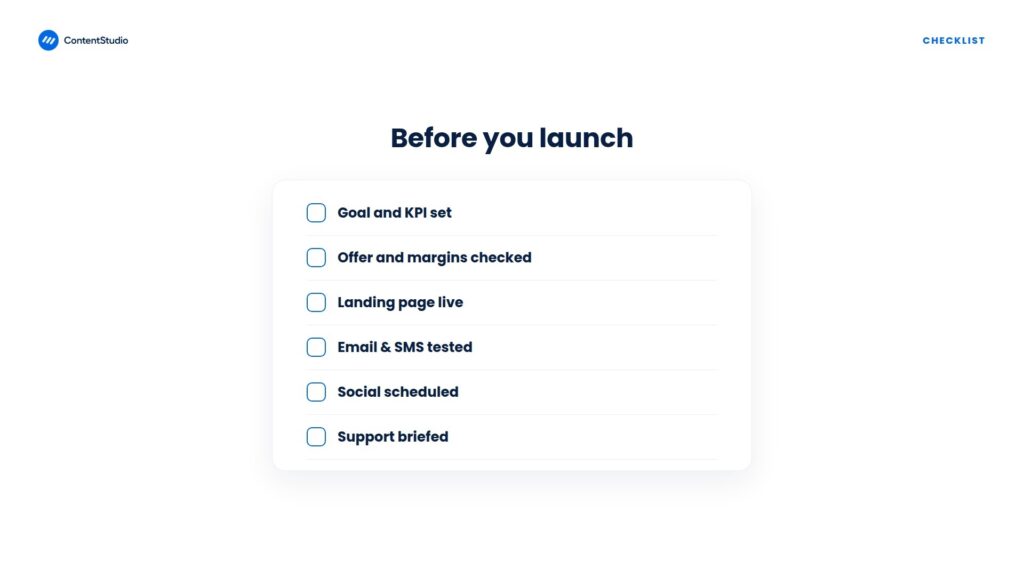
Copy these into your project tool and assign owners.
| Date | TikTok | |
| Nov 9 | Gift guide carousel | Product demo |
| Nov 13 | Behind-the-scenes Reel | Creator collab |
| Nov 17 | Teaser Story plus early-access link | Teaser video |
| Nov 20 | Testimonial post | “Guess the deal” video |
| Nov 24 | Countdown Story | Countdown video |
| Nov 26 | Early access live (Story) | Early access announcement |
| Nov 27 | Deal reveal carousel plus Stories | Deal reveal video |
| Nov 28 | UGC repost | Bundle explainer |
| Nov 29 | FAQ carousel | “Still in stock” update |
| Nov 30 | Last call Story | Last call video |
| Dec 2 | Thank-you Reel | Thank-you video |
| KPI | Target | Day 1 | Day 2 | Day 3 | Day 4 | Total | Notes |
| Revenue | |||||||
| Contribution margin | |||||||
| Orders | |||||||
| AOV | |||||||
| Conversion rate | |||||||
| New-customer revenue % | |||||||
| Ad spend | |||||||
| ROAS (vs break-even) | |||||||
| Email revenue per recipient | |||||||
| Social sessions | |||||||
| Support response time |
Answer these five questions for each offer before approving it:
If any answer is unclear, the offer is not ready.
Black Friday marketing in 2026 rewards the brands that plan early and stay honest. The day itself is November 27, but the campaign starts in October, and its value is only clear in December, after you count margin and repeat buyers.
Start with one goal. Build an offer your margins can carry. Give each segment its own message, put every channel on one calendar, and measure profit alongside revenue. Then use what you learn to start next year’s campaign ahead of this one.
If social media is a big part of your plan, ContentStudio helps you plan Black Friday posts on one calendar, route them through approvals, schedule across every platform, answer comments from one inbox, and report on results. Start a free trial of ContentStudio and get your Black Friday posts scheduled this week.
Start planning in September and finalize your offer by mid-October. Adobe expects October 2026 online spending to reach $95.8 billion as promotions arrive earlier, so teasers and list growth should begin in early November at the latest.
Offer the smallest discount that still motivates your customers and fits your margins. Check how many extra units you need to break even first. Many brands discount a few hero products deeply and use bundles, gifts, or free shipping for the rest.
Yes, if you keep it simple and focus on existing customers. One clear offer, an email sequence, and two well-planned social platforms often beat a sprawling campaign. Small Business Saturday on November 28 gives local brands a natural hook.
Most brands send five to eight promotional emails between mid-November and Cyber Monday, plus triggered flows like abandoned cart. Increase frequency gradually, segment by engagement, and stop promotional sends to people who already bought.
SaaS companies usually discount annual plans, offer extended trials, or add credits rather than cutting monthly prices. The goal is annual revenue and retention past year one, so renewal terms should be stated clearly.
Yes. Use a permanent URL such as /black-friday and update the content each year. Google recommends recurring URLs for annual sales, and keeping the page live after the event helps it rank again next season.
Plan 0 Days of Content in 0 Minutes
Create, schedule, publish and analyze your content across all your social media channels from one simple dashboard.
4.7 on Capterra • 16,500+ marketers trust ContentStudio
Saif Ali is a Content Marketing Strategist at ContentStudio with over five years of experience across SaaS, IT, and digital marketing. He specializes in SEO-led content, AI content creation, and social media strategy, and leads editorial review at ContentStudio, fact-checking and refining articles for accuracy, SEO, and a consistent brand voice.
View all posts by Saif AliRecommended for you
149 Best Cyber Monday & Black Friday software deals in 2026
100+ Black Friday quotes, captions, hashtags & slogans for 2026
How to promote affiliate links on social media in 2026
Multi-location social media management workflow guide