Multi-location social media management workflow guide
Oct 2, 202616 minutes

Written by
Saif AliUpdated
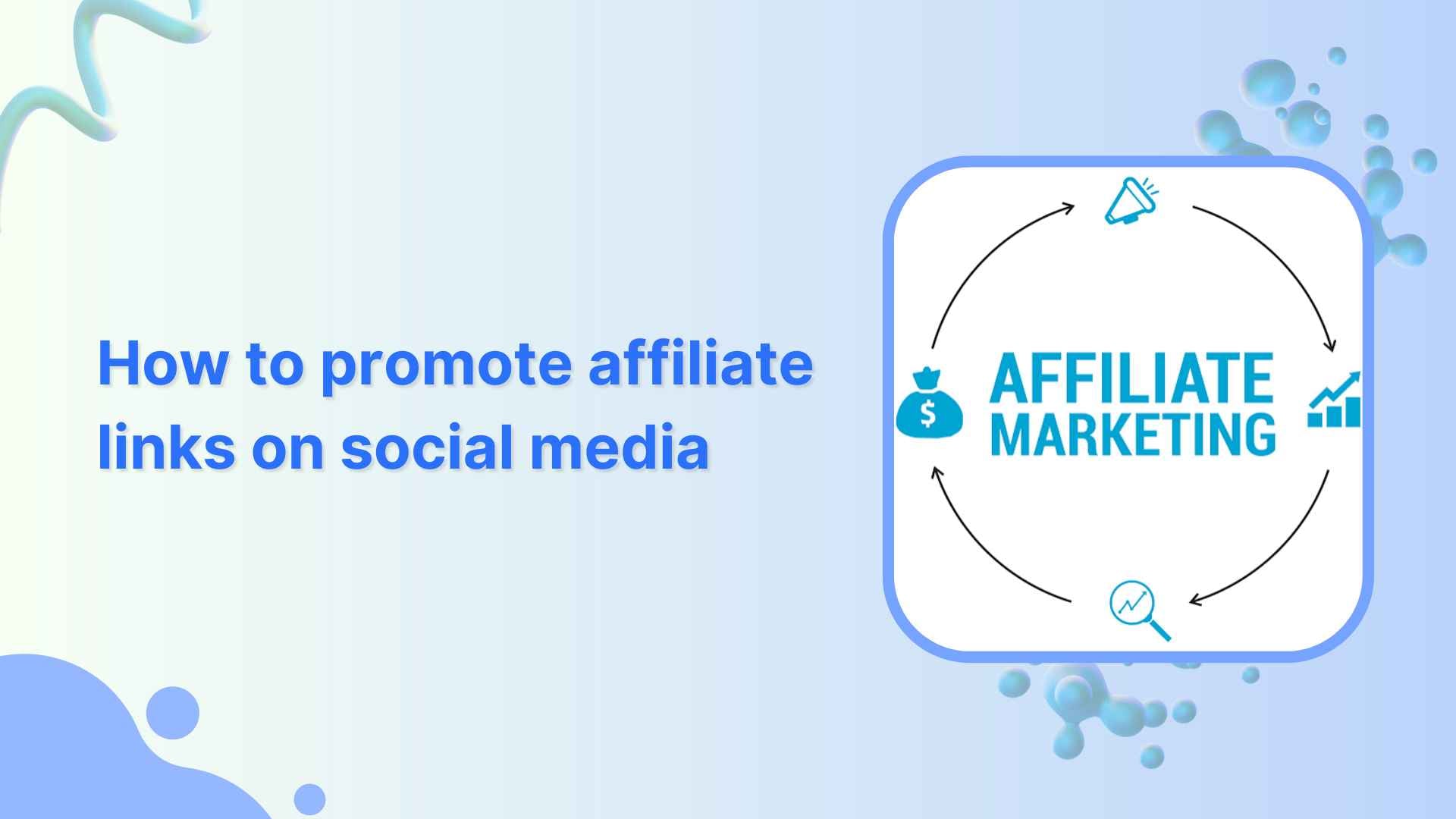
Figuring out how to promote affiliate links on social media without sounding like a walking advertisement trips up even experienced creators. Every platform treats outbound links differently, and one wrong move can get a post buried or an account flagged for spam.
This guide breaks down proven social media affiliate link tactics for Instagram, TikTok, X, LinkedIn, Facebook, Pinterest, and YouTube.
You’ll find platform-specific placement options like the affiliate link in bio, pinned comments, and video descriptions, plus the content formats that turn casual scrollers into buyers. We’ll also cover posting cadence, disclosure basics, and how to track which post or platform actually drives commissions.
If you’re still getting familiar with the basics, our guide on affiliate marketing explained covers the fundamentals this post builds on, including commission models, cookie windows, and disclosure rules.
Most major social networks limit clickable affiliate links because they want people scrolling inside the app, not clicking away to a merchant’s site. Instagram, TikTok, and Pinterest won’t turn a URL typed into a caption into something tappable, which pushes affiliates toward bio links, link-in-bio tools, Story stickers, or pinned comments instead.
These workarounds aren’t a loophole so much as the accepted standard for promoting affiliate links on social media today. Knowing this upfront saves time and stops you from writing captions around a link that visitors can never actually tap.
Beyond blocking clickable URLs outright, several platform algorithms quietly reduce the reach of posts carrying outbound links, treating them as a weaker signal than content that keeps viewers on the app. This is exactly why strong, context-rich content matters more than the precise spot you drop a link.
A post built around a genuine review or demo earns engagement on its own merit, so a restricted link placement becomes a small detail instead of a dealbreaker. Treat each platform’s rules as a format to design around, not a wall to fight against.
Promoting affiliate links on Instagram means routing traffic through bio links, Story stickers, and product tags, since regular captions won’t carry a clickable URL. The platform rewards creators who build trust through carousels, Reels, and honest storytelling before ever mentioning a product.
Because the Instagram feed works more like a discovery space than a checkout counter, affiliates generally need two steps: earn attention in the post, then send interested followers to the one clickable spot you control. Coupon codes also give you a cookieless backup for tracking when a direct click simply isn’t possible on this platform.
Your bio link and Instagram’s Link Sticker in Stories are the two workhorse tools for getting followers to an affiliate offer. A link-in-bio page works like a small hub page, listing several affiliate products at once so you don’t need to swap the single bio URL every time a promotion changes.
The Link Sticker, now available to most accounts regardless of follower count, suits time-sensitive offers like flash sales or limited discount codes.
A caption’s job on Instagram is to create enough curiosity or value that someone leaves the post to find your link, even though they can’t tap anything directly in the text. Describe the result or benefit the product delivers rather than listing its features, then close with a clear direction to your bio.
Carousel posts built around a short review or side-by-side comparison tend to earn more saves and shares, which widens the post’s reach and puts your bio link in front of more eyes. Tagging the brand’s account in the post also raises the odds of a repost, giving your content a second life in front of that brand’s own audience.
Promoting affiliate links on TikTok usually works best as a funnel rather than a final destination, since the bio link and video description get far less visual attention than on other apps. TikTok rewards short, entertaining video first, with the affiliate pitch arriving almost as an afterthought for viewers who are already engaged.
Many creators treat TikTok as the top of the funnel, using it to build an audience that moves to YouTube or a blog where deeper product information and the actual affiliate link live. On-screen text and coupon codes tend to outperform spoken-only mentions, since viewers often watch with the sound off.
TikTok’s strength is reach and discovery, not direct conversion, so the smartest affiliates build short, entertaining clips and then point viewers somewhere with more room to explain the product.
A quick demo or reaction video can end with “full review on my channel” or “link in bio” rather than trying to close the sale in fifteen seconds. For affiliates juggling several products at once, a third-party multi-link tool in the bio keeps things organized without cluttering the profile with a dozen separate URLs.
Coupon codes solve two problems at once on TikTok: they give viewers a real reason to act, and they let you track conversions even when a viewer never clicks a link at all. Display the code clearly on-screen for several seconds, since many viewers scroll with sound muted and will miss anything said but not shown.
Repeating the code verbally still helps for viewers who are listening, and mentioning it again in the caption gives a second chance for it to register. Keep the reason for using the code honest and specific, rather than a generic “use my code” with no context.
X, LinkedIn, and Facebook all allow a genuinely clickable link inside a regular post, which puts them in a different category than Instagram, TikTok, or Pinterest. That technical freedom doesn’t mean the obvious move, a link dropped straight into the main post, always performs best.
On Facebook in particular, posts carrying outbound links sometimes see reduced reach compared to posts that keep the link in a comment instead. LinkedIn’s professional audience also responds better when an affiliate link rides inside expert commentary rather than appearing as a standalone pitch.
Where you place the link, not just whether you include one, often decides how far a post travels on these platforms. On Facebook, posting the main content without a link and then adding the affiliate link as the first comment can help the post dodge algorithmic link penalties while still giving interested readers a path to click. On X, a short thread works well: set up the context and the recommendation in the first post or two, then place the link in the final post of the thread.
LinkedIn audiences, especially the agencies, consultants, and marketing teams who make up a large share of this platform’s users, respond to recommendations framed as professional insight rather than product promotion.
Build the post around a problem your network actually faces, walk through how you solved it, and let the affiliate link appear as the natural next step rather than the headline. LinkedIn’s native article format works well for longer breakdowns, giving you space to embed the link partway through a detailed, problem-solving piece rather than cramming it into a short post.
Pinterest and YouTube share one advantage that Instagram and TikTok don’t offer: both let you link directly to your affiliate URL without routing traffic through a bio or a separate landing page. Pinterest users actively search for product ideas and comparisons, so a well-designed pin can link straight to an affiliate offer without feeling out of place.
YouTube’s video description remains one of the most reliable spots across all of social media for a direct, clickable affiliate link. Pairing either platform’s direct-link advantage with genuinely useful content, rather than just the link itself, is what separates affiliates who convert from those who get ignored.
New pins built specifically around an affiliate product give you full control over the image, text overlay, and destination link from the start. Vertical pins sized around 1000 by 1500 pixels perform best in Pinterest feeds, and a short text overlay naming the product or its main benefit helps the pin stand out among search results.
Older pins that already drove solid traffic can also be updated, swapping the original destination URL for your affiliate link so that existing interest converts into new commissions without any extra content creation.
Placing the affiliate link near the top of your video description, where it’s visible before a viewer clicks “show more,” gives it the best chance of actually being seen and clicked. A single clear line explaining why the link is worth clicking, such as the discount it unlocks or what it leads to, performs better than a bare URL with no context.
Mentioning the product on camera during a demo or review gives viewers a reason to go looking for that link in the first place, since a verbal recommendation carries more weight than text alone. Creators reviewing anything from software to physical gear consistently find that combining a spoken mention with a well-placed description link outperforms either tactic used on its own.
Reviews, tutorials, comparisons, and demos consistently generate more affiliate clicks than plain link drops because they reach people who are already close to a buying decision.
Someone watching a tutorial or reading a comparison has already decided they’re interested in solving a problem; the content just needs to connect that interest to your specific recommendation.
Being honest about a product’s limitations, rather than presenting only positives, tends to increase trust and, somewhat counterintuitively, increases the number of people who follow through on the link. The format matters as much as the platform, since the wrong format can bury even a perfectly placed link.
Each high-converting format does a slightly different job, so matching the format to your audience’s stage in the buying process matters. A clear verdict should cover real, hands-on use, note both strengths and drawbacks, and end with a clear verdict rather than a vague recommendation.
A comparison pits your affiliate product against one or two real alternatives, which helps undecided readers make a faster decision instead of leaving the page to keep researching elsewhere.
Matching a content format to the platform where it naturally performs best saves time and avoids forcing a format where it doesn’t fit the audience’s habits. The table below offers a quick reference for pairing formats with the channels where they tend to land.
| Content format | Best-fit platform |
| Review | YouTube or blog |
| Tutorial | TikTok or YouTube |
| Comparison | Blog or Pinterest |
| Demo | Instagram Reels or TikTok |
Posting affiliate links too often trains an audience to tune out your account, which quietly lowers both reach and conversions over time. Spacing promotional posts between genuinely useful, non-promotional content keeps followers engaged instead of feeling constantly sold to.
Audiences generally tolerate affiliate content well when it feels like a small, occasional part of a feed that’s mostly helpful rather than the entire point of following you. Keeping a steady, planned cadence across several platforms by hand is close to impossible once you’re managing more than one or two channels, which is exactly where scheduling tools earn their keep.
A simple ratio works better than a fixed daily quota, since audience size and platform habits vary so much from one affiliate to the next. A common guideline is one affiliate-focused post for roughly every four or five value-driven posts, which keeps promotion present without becoming the dominant theme of your feed.
Rotating which platform carries the promotional post on any given day also matters, since posting the identical affiliate link everywhere at once can make the push feel more obvious and less organic to anyone who follows you on multiple networks.
Every post containing an affiliate link needs a visible disclosure sitting before or alongside the link itself, not buried in a footer or hidden among unrelated hashtags. A short, clear callout like “#ad” or “contains affiliate links” satisfies the core expectation set by the FTC’s Endorsement Guides without requiring a full legal explanation in every caption.
Beyond compliance, clean tracking is what actually tells you which platform, post, and format deserve more of your time. Link shortening and UTM tagging turn a messy, hard-to-read affiliate URL into something trackable and presentable at the same time.
Long affiliate URLs packed with tracking parameters look out of place on Pinterest pins or Instagram Stories, so link shortener makes content feel more native and less like an obvious ad. The built-in link shortener, along with integrations like Bitly and Replug, handles this without extra steps outside your normal posting workflow.
Intelligent UTM assignment automatically tags each shared link by platform and post, so performance data stays accurate instead of lumping every click together. Retargeting pixels added through the Replug integration also let you re-engage people who clicked but didn’t convert the first time around, giving a second chance at a commission.
Checking multi-channel analytics across Facebook, Instagram, Pinterest, LinkedIn, and YouTube reveals which network actually drives clicks for your specific audience, rather than assuming every platform performs equally.
Click-through rate and conversion rate tell two different stories: a high click rate with few conversions usually points to a product-audience mismatch rather than a placement problem. Once the data is clear, drop the formats and platforms sitting at the bottom and put that freed-up time into whichever channel is already converting best.
This loop of testing, measuring, and reinvesting is what separates affiliates earning consistent commissions from those posting links at random.
Readers already using ContentStudio for scheduling can apply every tactic in this guide to promote the platform itself through its own affiliate program. See how its terms stack up against other options in our breakdown of the best SaaS affiliate programs for social media marketers. It runs a tiered structure paying 15% to 40% recurring commission, which rewards affiliates who bring in more active, paying referrals over time rather than paying a flat rate to everyone.
Commission runs for 12 months on the Partner, Silver, and Gold tiers, and extends to 24 months on the Elite and Agency Partner tiers, with a 90-day cookie window giving visitors time to convert after their first click.
The same review, tutorial, and comparison formats covered earlier in this guide apply directly here, since genuine, hands-on content about scheduling, the AI Assistant, or analytics tends to convert far better than a generic banner ad.
The Partner tier starts every new affiliate at 15% for 12 months, with no minimum referral count required to join. Referring 5 to 14 active customers moves an affiliate to the Silver tier at 20%, while 15 to 39 active referrals unlocks Gold at 30%, both still running for 12 months.
Reaching 40 active referrals, or $2,000 in referred monthly recurring revenue, qualifies an affiliate for the Elite tier at 40% for 24 months, and the separate Agency Partner track pays 25% for 24 months. Affiliate terms: a $200 minimum balance and at least 2 active referrals, tracked through FirstPromoter and paid monthly by the 15th.
Promoting affiliate links on social media comes down to solving a placement problem first (bio links, pinned comments, video descriptions) and a content problem second (reviews, tutorials, comparisons, and demos that earn clicks on merit).
Consistent, planned posting through a content calendar and smart scheduling prevents the link fatigue that quietly drains engagement, while clear disclosure and UTM tracking keep an account compliant and reveal exactly what’s working.
None of this needs to run on guesswork or manual reposting across six different apps every week. ContentStudio’s calendar, Smart Scheduling, and bulk scheduling tools make it realistic to maintain a steady, multi-platform affiliate promotion workflow without burning hours on repetitive tasks, leaving more time for the content that actually drives the clicks.
There’s no fixed universal number, since the right frequency depends on your platform and audience size. A ratio-based approach works better than a daily count, such as one promotional post for every four or five value-driven posts. Spread that single affiliate post across different platforms on different days instead of repeating the same link everywhere at once.
No, Instagram doesn’t turn links typed into captions into clickable text. Use your bio link, the Link Sticker in Stories, or direct followers with a clear “link in bio” callout instead. Product tagging can also point interested followers toward a brand’s shop page as a supplementary option.
Yes, disclosure applies every time a post includes an affiliate link, not just once in your bio or profile description. Keep the disclosure short and visible right before or alongside the link itself. Burying it in a wall of hashtags or a separate comment doesn’t meet the standard regulators expect.
The right starting platform depends on your content strength rather than any universal answer. Written or video reviewers often do well starting on YouTube or a blog, while visual creators tend to see faster traction on Instagram or TikTok. Pick one platform, build consistency there, then expand once you understand what converts.
Cookie windows vary by program; ContentStudio, for example, uses a 90-day window after a click. A longer window means a viewer can still convert weeks after first discovering your content, so repeated, spaced-out mentions of the same product keep paying off long after the original post.
Repurposing your core content saves real time, but it should be reformatted to match each platform’s style and link mechanics rather than copied word for word. Adjust the call to action per platform, such as “link in bio” for Instagram versus a direct, clickable link for X or LinkedIn.
Plan 0 Days of Content in 0 Minutes
Create, schedule, publish and analyze your content across all your social media channels from one simple dashboard.
4.7 on Capterra • 16,500+ marketers trust ContentStudio
Saif Ali is a Content Marketing Strategist at ContentStudio with over five years of experience across SaaS, IT, and digital marketing. He specializes in SEO-led content, AI content creation, and social media strategy, and leads editorial review at ContentStudio, fact-checking and refining articles for accuracy, SEO, and a consistent brand voice.
View all posts by Saif AliRecommended for you
Multi-location social media management workflow guide
Best SaaS affiliate programs for social media marketers in 2026
19 best social media management tools to plan, schedule, and grow in 2026

Influencer marketing: Types, strategy, and how to run campaigns that actually work