
How to run a holiday campaign calendar from chat with OpenClaw
Oct 1, 202610 minutes

Written by
Esha ShabbirUpdated
![How to create Instagram carousel posts? [Complete guide 2026]](https://internal-blog.contentstudio.io/wp-content/uploads/2024/05/Instagram-carousel-Complete-guide-to-5x-your-engagement-in-2025.png)
An Instagram carousel post lets you share up to 20 photos or videos in a single post, with viewers swiping left through each slide. To create one, open Instagram, tap the ‘+’ icon, select your images or videos using the ‘Select Multiple’ option, write a caption, and tap ‘Share.’
Carousels are one of Instagram’s most durable content formats. They suit step-by-step tutorials, product comparisons, before-and-after reveals, and any content that earns more from multiple frames than from one. Where Reels push content outward to new audiences through the discovery feed, carousels hold attention from people who’ve already stopped scrolling. The saves they generate send strong signals that drive broader distribution.
This guide covers how to create Instagram carousel posts, which content types perform well, and best practices for 2026.
An Instagram carousel is a multi-slide format that lets users swipe through up to 20 photos, videos, or a mix of both in a single share. Instagram introduced the format in 2017, and it has remained one of the platform’s most engagement-efficient formats for brands and creators who need more than one frame to make their point.
A carousel uses one hashtag set and one aspect ratio across all slides. As of June 2026, Instagram lets you choose between a single caption for the full post or a unique caption for each individual slide, giving you more flexibility to match the text to what each frame actually shows. Hashtag reach still applies to the full post regardless of which caption option you choose.
When a carousel appears in someone’s feed, a small dot indicator signals there are more slides. That detail matters. It creates curiosity before the viewer has even read the caption, and it is part of why carousel posts pull above-average save and comment rates, as the latest Instagram statistics consistently show.
Key specifications for Instagram carousels in 2026:
Carousels give content genuine room to breathe. They suit ideas that need structure, sequence, or comparison to land properly. A single image and a caption can rarely do that on their own. Understanding where carousels fit within Instagram marketing fundamentals makes it easier to decide when they are the right call and how to build them effectively.
To create a carousel on Instagram, tap ‘+’, select ‘Post’, choose ‘Select Multiple’, pick up to 20 images or videos in the order you want viewers to see them, edit as needed, add a caption and hashtags, and tap ‘Share.’ The whole process takes under two minutes once your assets are ready.
Here are the full steps:
Your first slide has one job. Stop the scroll. The order you select your images is the order viewers see them, so lead with your strongest, most visually immediate image as the cover. The first slide determines whether someone swipes; everything after determines whether they save.
If you are managing Instagram for a brand, a client, or multiple accounts, publishing carousels from the app each time adds friction that compounds quickly. A social media management platform solves this by centralizing the full workflow. You upload assets, write captions, set publish times, and queue posts across accounts from one place without switching between apps or being tied to your phone at posting time.
For teams managing client approvals, that workflow matters even more. The step where carousel publishing tends to stall most often is the review process, chasing sign-offs over email, re-exporting updated slides, and losing track of which version was approved. A platform with a built-in approval workflow routes each carousel for client review before it queues, cutting out the back-and-forth entirely.
ContentStudio’s Instagram scheduler handles both. You compose the carousel in the Composer, upload multiple images or videos, write the caption and hashtags, and either publish immediately or schedule using the built-in best-time recommendations. Performance data for each carousel sits in the same dashboard, so you can track which formats and topics generate the most saves without pulling Insights manually.
Carousels, Reels, and Stories serve different functions in Instagram content strategy. Reels prioritize reach to new audiences, Stories serve existing followers with real-time updates, and carousels drive depth engagement (saves, dwell time, and comments) from people who have already found your post. The choice comes down to what you are trying to accomplish with the content.
The table below maps each format to its primary function and strongest engagement signals:
| Format | Primary function | Reach type | Key engagement signal |
|---|---|---|---|
| Carousel | Education, comparison, storytelling | Feed and Explore via saves | Saves, dwell time, comments |
| Reel | Discovery, entertainment, trends | High (Reels tab and Explore) | Views, shares, watch time |
| Story | Real-time updates, community | Existing followers mainly | Replies, poll responses |
| Single image | Announcements, brand moments | Existing followers mainly | Likes, quick comments |
The distinction that matters most for planning is reach versus retention. Use Instagram Reels for reach when you want the algorithm to push content to people who do not yet follow you. Use carousels when you want people who have already found you to spend time with your content, save it, and return to it later.
Instagram’s ranking algorithm treats saves as one of the strongest quality signals across all formats. Carousels generate saves more reliably than other formats because swipeable, educational content is inherently worth bookmarking. That saves signal feeds back into distribution and gives well-built carousels a compounding reach advantage over time.
Keep a practical rule in mind. If your content communicates clearly in under three seconds and fits on one frame, post it as a single image or Reel. If it takes multiple frames to do the idea justice (a walkthrough, a comparison, a multi-step process), a carousel is the right format.
The best carousel posts lead with a strong cover slide, keep the slide count between 7 and 10 for most content types, maintain visual consistency across the deck, and write captions that give viewers a clear reason to swipe. These fundamentals outperform any algorithm tactic because they address how people actually read and interact with the format.
The cover slide is the only one visible in the feed before someone commits to engaging. It should communicate the payoff visually. Show an outcome, a contrast, or a curiosity gap that makes swiping worth it. A slide that restates the post topic in plain text does less work than one showing a bold visual or a specific result.
Instagram allows up to 20 slides, but that is a ceiling rather than a target. For most content types, 7 to 10 slides is the sweet spot. Viewer attention typically drops after slide 8 unless the structure clearly needs all the frames, as it does in detailed tutorials or product catalogs.
Reaching 20 slides to fill space produces carousels that feel padded and see high drop-off rates on the back half.
Use the same aspect ratio for every slide. Mixing 1:1 and 4:5 within a single carousel creates a jarring layout shift that interrupts the reading experience. Keep fonts, color palette, and graphic style consistent throughout so the carousel reads as one coherent piece of content. Staying aware of current Instagram photo trends gives you a useful reference for which visual styles are resonating with audiences in a given period.
Your caption should hint at what is inside without giving everything away. Phrases like “slide 5 is the one most people skip” or “the last slide has the full breakdown” pull viewers into the deck. Captions that acknowledge the carousel’s structure prompt more deliberate engagement than captions that treat the post like a single image and ignore the swipeable format entirely.
Early engagement velocity matters for carousel distribution. Posting when your followers are active gives the post the best chance of generating the initial saves and comments that drive broader reach. Check your Instagram Insights for peak Instagram posting times specific to your account, since they vary significantly by niche, audience location, and industry.
Use 5 to 10 tightly relevant hashtags per carousel. A focused set of niche-specific tags outperforms 30 broadly scattered ones for discoverability. Since hashtags apply to the full post, choose tags that reflect the carousel’s central theme.
A mix of niche tags (specific to your topic) and content-specific tags (describing the format or angle) works better than defaulting to high-volume generic ones.
Content that requires multiple frames to communicate its full value performs best as a carousel. The 15 types below cover the full range, from tutorials and data summaries to behind-the-scenes posts and seasonal content, all formats where swiping through slides adds something a single image cannot.
Each slide maps to one step, and viewers can swipe back to reference earlier stages, which is something they cannot do with a Reel. Tutorial carousels earn saves at consistently high rates because people bookmark content they plan to apply later. Photography techniques, recipe walkthroughs, design processes, and marketing how-tos all translate naturally into this format, and the sequential structure gives viewers a clear reason to keep swiping.
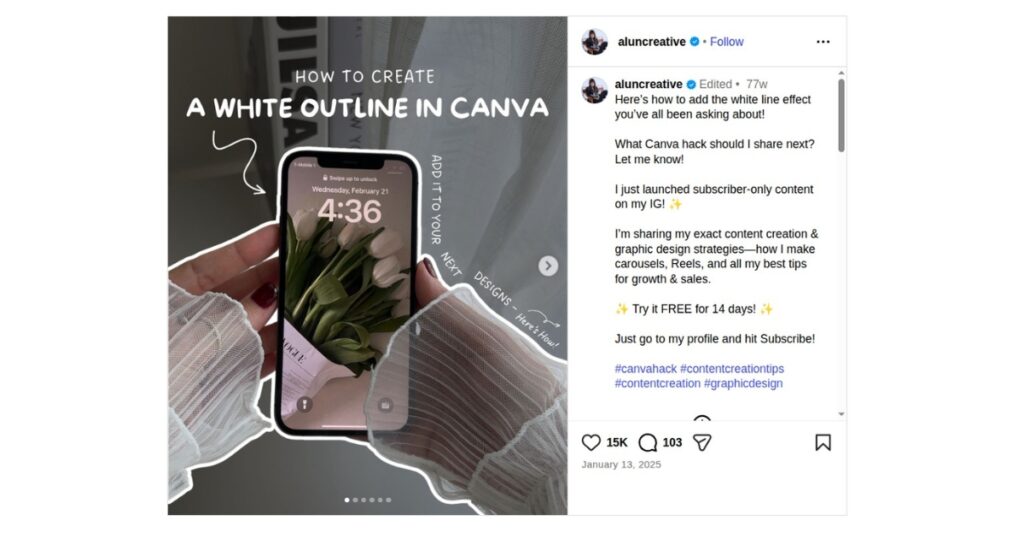
The first slide shows the starting point or problem. The final slide shows the result. That delayed reveal is inherently swipe-worthy, and the visual contrast between the two states drives comments. This format works across fitness, home renovation, design, SaaS product results, and any content where a visible change makes the case better than a written description alone.

A carousel lets each slide focus on one feature of your product without overwhelming viewers with everything at once. Each slide covers one capability, one use case, or one benefit, giving your audience the space to absorb each point before moving to the next. This format works particularly well for product launches, feature announcements, and onboarding content where the goal is education rather than a quick sell.
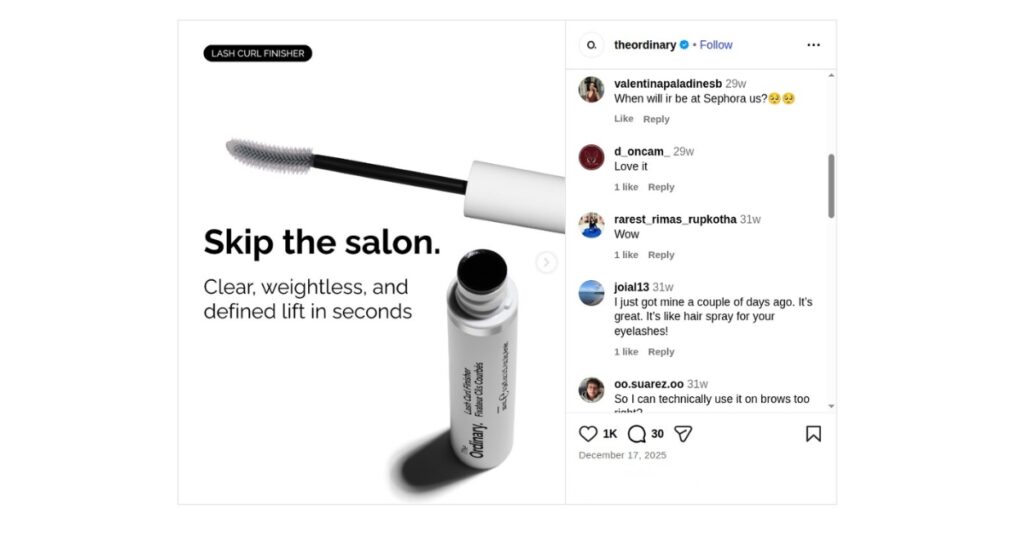
A carousel gives you space to tell a client story with structure. The first slide introduces the challenge, the middle slides document the process or results, and the final slide closes with a quantified outcome or testimonial. That sequence is more credible than a screenshot quote alone and gives the post enough depth to hold a viewer’s attention across multiple slides.
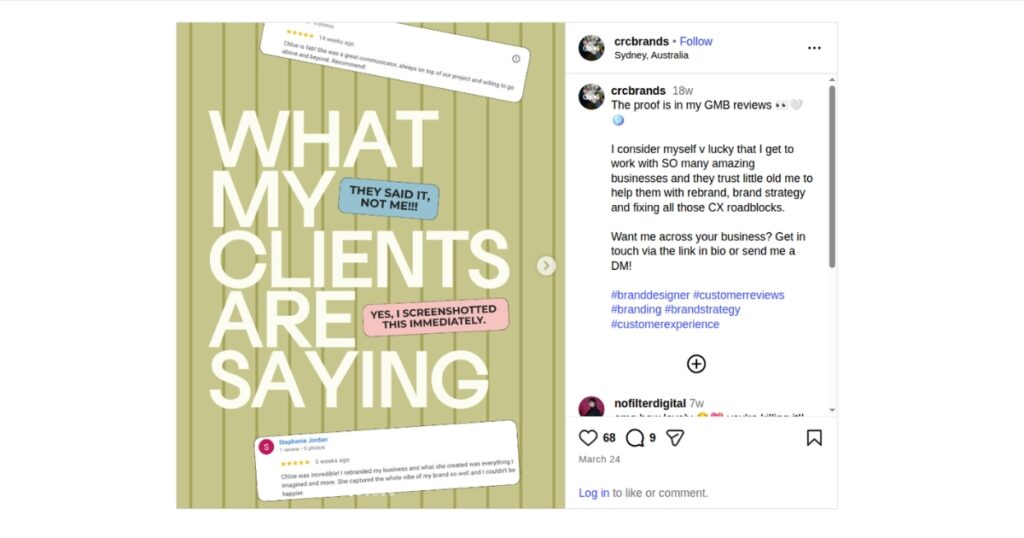
Content that corrects common misconceptions generates saves from people who want to reference the information later and shares from people who want others to see it. Each myth-fact pair gets its own slide, and the format is inherently sequential. Viewers cannot skip to the end without seeing the setup, which keeps engagement through the full deck.

When you are sharing research findings, benchmark data, or a set of statistics, a carousel lets you give each data point its own frame and context. Rather than producing a dense infographic, you guide the viewer through a sequence where each slide builds on the last. Including your source on the final slide adds credibility and positions the account as a trustworthy reference.

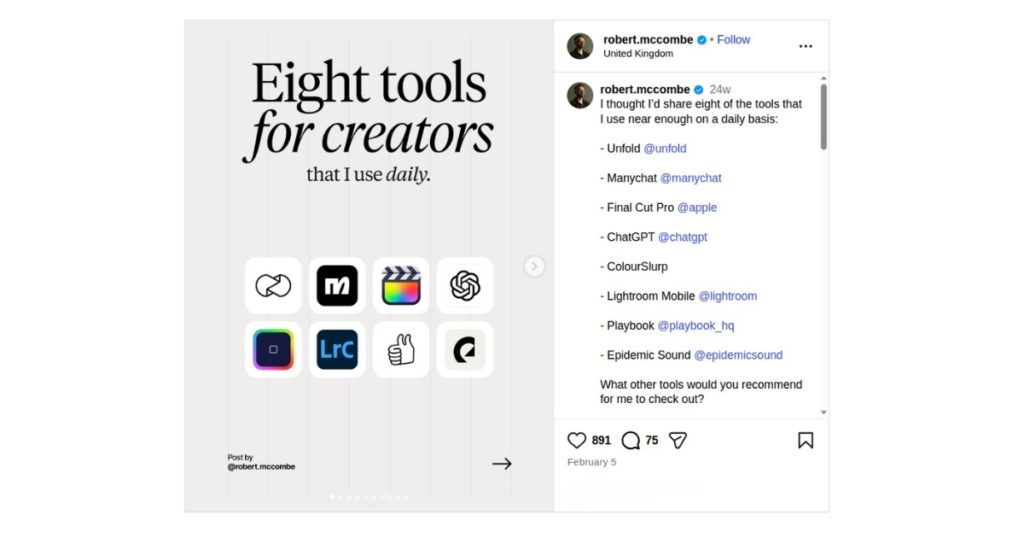
A list of tools, templates, articles, or recommendations presented one item per slide is one of the most consistently save-worthy carousel formats. The structure is straightforward to produce, easy to update over time, and gives viewers a reason to return to the post. Resource carousels work particularly well as evergreen content that holds its value across months without needing constant revision.
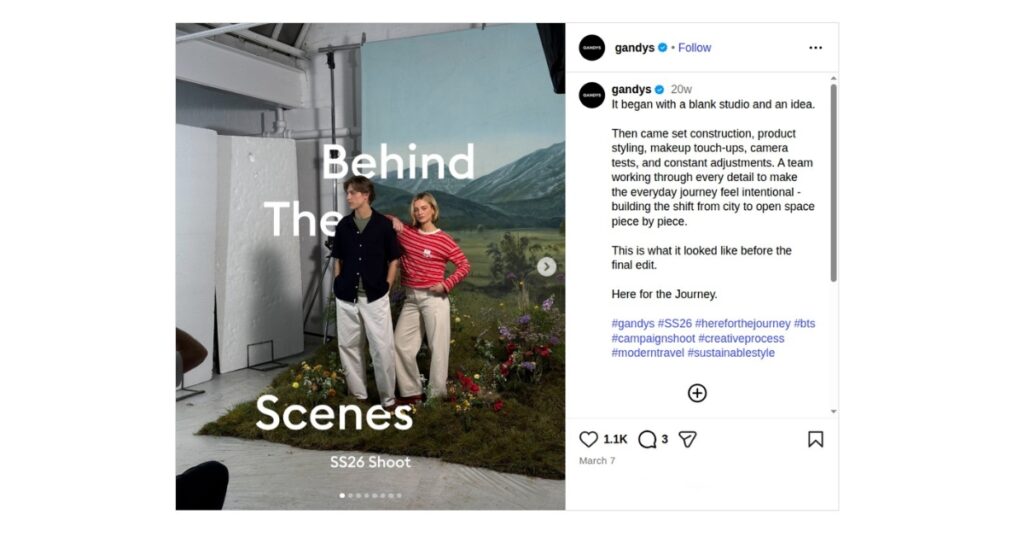
Audiences respond to access. A look into your process, workspace, or day-to-day team activity humanizes the brand in a way polished product posts cannot. A carousel suits this well because each slide can show a different moment from the same session, such as the setup, the work in progress, and the finished result, without requiring video production. Keep it candid; the less staged it looks, the more trust it builds.
Short, immediately applicable advice earns saves because people bookmark it for later use. A carousel with one tip per slide gives each piece of advice its own frame, making the content easier to scan and revisit than a long caption or a Reel that moves too fast to write anything down. Keep each tip self-contained so the carousel is useful even for viewers who only see two or three slides before moving on.

Putting faces to the brand builds trust in a way that product content alone rarely does. A team introduction carousel can profile each person on one slide with their role, a personal detail, and what they work on, giving followers a reason to feel connected to the people behind the account. This format also works well for hiring content and employer brand building, where showing culture matters more than listing job requirements.

Conferences, product launches, workshops, and brand activations produce a lot of content in a short window. A carousel is one of the most practical ways to package that volume into a single coherent post. Lead with the most striking visual from the event, use the middle slides for key moments or takeaways, and close with a slide that extends value for people who were not there.

Time-sensitive content tied to holidays, cultural moments, or industry trends can perform well in carousel form when the topic warrants more than one frame. The format works best when each slide offers something distinct, such as a tip, a product recommendation, or a piece of context, rather than repeating the same seasonal theme across slides with different visuals. Carousels built around a clear angle hold up better than ones that simply acknowledge the occasion.

Featuring content created by customers or community members builds credibility through real voices rather than brand-produced assets. A carousel lets you bring together multiple examples in a single post, making the social proof feel more substantial than a single repost. It also signals to your audience that their content is worth sharing, which tends to encourage more submissions over time and gives you a steady pipeline of future carousel material.

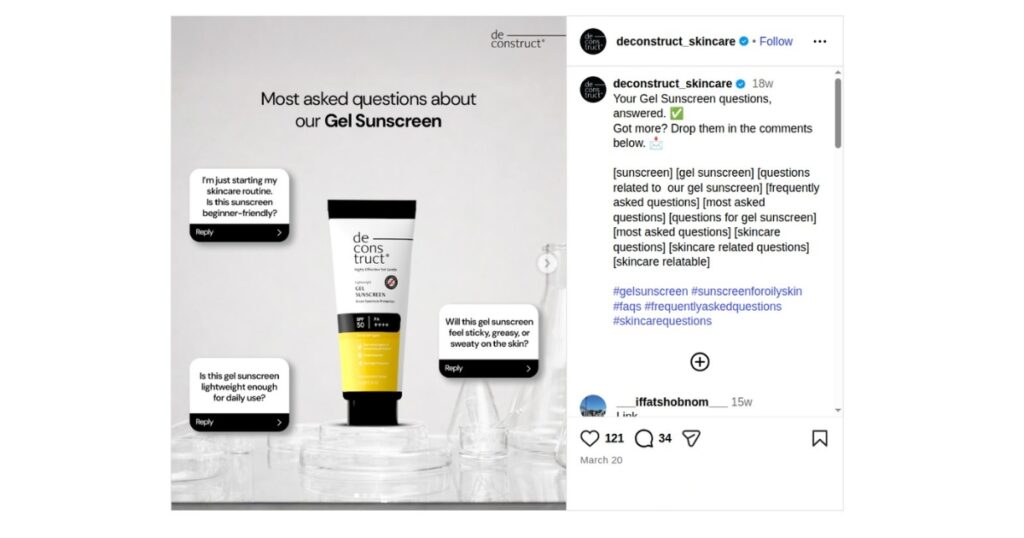
Common questions your audience asks repeatedly translate naturally into carousel format. One question per slide, with the answer on the bottom half of the same slide or the slide that follows, gives the content a logical structure that viewers can follow at their own pace. This format reduces support enquiries while demonstrating that you understand the problems your audience actually faces, which builds a different kind of credibility than promotional content.
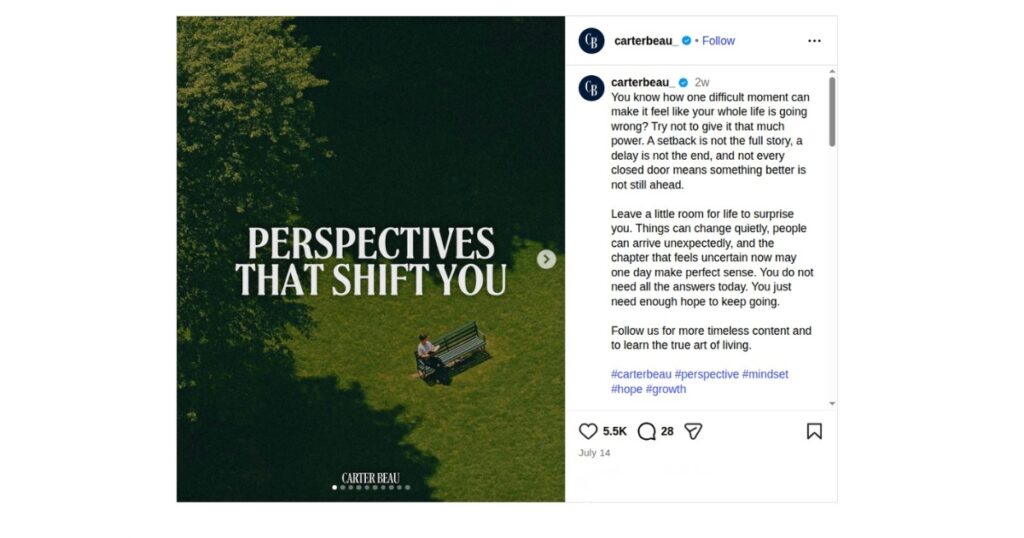
Quotes, reframes, and perspective shifts earn shares because people pass them on when something resonates. A carousel that builds toward a central idea across several slides can generate more shares than a single quote image because the journey to the final slide makes the conclusion land harder. Keep the writing tight. One idea per slide, no padding, and a final slide that gives the viewer something concrete to take away.
Track carousel performance through Instagram Insights using saves, reach, impressions, shares, and comments as your primary signals. Saves are the most meaningful metric for carousels because they indicate the content was valuable enough to bookmark, and they feed directly into how broadly the algorithm distributes the post over time.
Inside Instagram Insights, tap on any carousel post to see post-level analytics. The metrics that matter most are:
Instagram does not natively show per-slide analytics for all accounts, so you cannot yet see at which individual slide most viewers stopped or which frame generated the most engagement at a slide level. What you can do is compare full carousel performance against your Reels and single-image posts to understand which format resonates most with your specific audience.
ContentStudio’s analytics dashboard tracks carousel-level performance across all connected accounts in a single view. For teams managing content across multiple clients, that aggregated reporting surfaces patterns you would otherwise have to pull manually from each profile’s Insights tab. It saves time and gives you a clearer picture of what is actually working across accounts.
Carousel posts earn their place in an Instagram strategy because they are structurally suited to content that needs room to work. A well-built carousel teaches something, captures a visible change, or walks a viewer through a decision. Viewers return to it precisely because of that utility, which is something a single image rarely delivers on its own.
The difference between a carousel that gets saved and one that gets scrolled past comes down to execution. A cover slide that earns the swipe, a structure that respects the viewer’s attention, and a topic that benefits from more than one frame matter far more than production budget or posting frequency.
Instagram allows up to 20 photos or videos in a single carousel post. You can mix photos and videos within the same carousel, and the limit applies to the combined total of all media items.
The recommended sizes are 1080 x 1080px for square (1:1), 1080 x 1350px for portrait (4:5), and 1080 x 566px for landscape (1.91:1). All slides must use the same aspect ratio for a consistent appearance across the full deck.
Carousel posts consistently generate higher save and comment rates than single-image posts. The swipeable format increases dwell time, which sends a stronger quality signal to Instagram’s algorithm and improves distribution over time.
Tap ‘+’, select ‘Post’, tap the ‘Select Multiple’ icon in the gallery, choose up to 20 images or videos in the order you want them displayed, edit as needed, add a caption and hashtags, and tap ‘Share.’
As of March 2026, you can delete slides and reorder them after posting. Open the post, tap the three dots, select Edit, then long-press any slide to drag it to a new position. You still cannot add new slides after publishing.
No. Hashtags on an Instagram carousel apply to the full post. Instagram treats the carousel as a single piece of content, so one hashtag set covers all slides. Use 5 to 10 relevant hashtags focused on the carousel’s central theme.
For most content types, 7 to 10 slides is the sweet spot. Instagram allows up to 20, but viewer attention typically drops after slide 8 unless the content is structured as a sequential tutorial that genuinely needs all the frames.
Plan 0 Days of Content in 0 Minutes
Create, schedule, publish and analyze your content across all your social media channels from one simple dashboard.
4.7 on Capterra • 16,500+ marketers trust ContentStudio
Esha Shabbir is a content marketer at ContentStudio, specializing in social media strategy, SEO-led content, and editorial workflows for marketing teams. She writes practical, research-backed content that helps marketers understand what to publish, how to organize their content, and how to build a more consistent social media presence.
View all posts by Esha ShabbirRecommended for you
How to run a holiday campaign calendar from chat with OpenClaw

Google Ads metrics: What to track and what each one tells you

10 social media goals for marketers

How to Make Money on Instagram in 2026 (9 Proven Ways)