Black Friday vs. Cyber Monday: The real difference for software buyers
Oct 22, 202614 minutes

Written by
Arooj IshtiaqUpdated
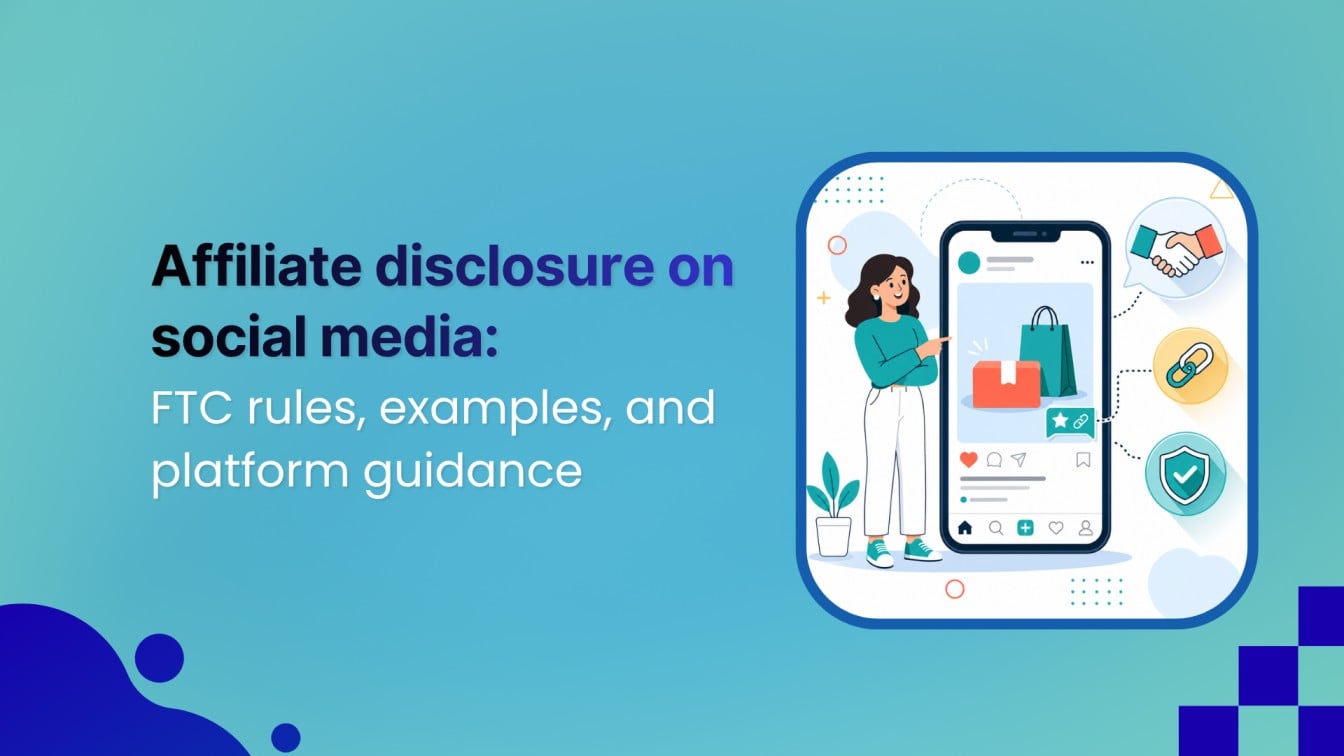
Affiliate disclosure on social media means telling people, clearly and at the right moment, that you may earn money or receive another benefit when they act on your recommendation. If a follower can buy through your link, use your code, or sign up after seeing your content, they should understand your relationship with the brand before they make that decision.
That principle is simple, but applying it well takes more than adding a vague hashtag at the bottom of a caption. Different formats create different disclosure challenges. A TikTok viewer may never read the caption. A person watching an Instagram Story may not visit your profile. Someone who finds a YouTube video through search may only see the description links, not the opening of the video.
The FTC’s guidance focuses on whether people can see, understand, and connect the disclosure to the endorsement they are viewing. It does not matter whether you have a small following, whether the commission is modest, or whether the link appears through a bio page, product tag, coupon code, or shortened URL. If a material connection exists, the disclosure must be clear and conspicuous.
An affiliate disclosure is a statement that tells followers you may benefit when they purchase, sign up, or take another action through your recommendation. It helps people understand that the content is not simply an independent recommendation with no commercial connection.
A straightforward disclosure might say:
“This post contains affiliate links. I may earn a commission if you purchase through them, at no extra cost to you.”
The sentence is effective because it answers the questions a reader is likely to have. It explains that the links are affiliate links, it states that you may earn a commission, and it tells the buyer that the commission does not increase the listed price.
Affiliate relationships are common across creator, editorial, and social media content. They can support useful product reviews, tutorials, tool recommendations, and comparison content. For example, professionals who recommend social media management platforms may participate in programs such as the ContentStudio affiliate program. The affiliate link itself is not the problem. The issue arises when followers are not informed that the recommendation could produce compensation for the person making it.
Transparency also supports better audience relationships. People can still value your experience, recommendations, and product expertise when they know you have an affiliate relationship. In fact, many readers see clear disclosure as a sign that the creator respects their ability to make an informed choice.
You need a disclosure when you have a material connection with the company or product you are endorsing, and that relationship would not be obvious to the audience. The FTC uses the term material connection to describe relationships that could affect how people evaluate an endorsement.
An affiliate commission is a material connection because you may earn money when someone acts on your recommendation. You should disclose that connection even if no one has purchased yet and even if you have not received a payout.
You should also disclose relationships involving payment, gifts, discounts, free products, event invitations, free subscriptions, travel, equity, or employment. The disclosure should describe the relationship accurately so that followers understand what you received or may receive.
The important distinction is that disclosure follows the relationship, not the payment outcome. If a product link can create a commission opportunity, the relationship should be disclosed even if the post produces no sales.
The FTC does not provide a single mandatory disclosure sentence for every platform. Instead, its guidance requires disclosures to be clear and conspicuous, which means people should be able to notice, understand, and connect the disclosure to the endorsement without searching for it.
For social media managers, creators, and affiliate marketers, this usually comes down to four practical requirements.
Your disclosure should describe the relationship in everyday language. A viewer should not have to guess whether you were paid, received a free product, or can earn commission from a sale.
These phrases are clear:
These phrases can be unclear when used alone:
A word such as “partner” may suggest a commercial relationship, but it does not always tell people what kind of relationship exists. If you are earning commission, say that. If you were paid, say that. If you were given the product for free, say that.
A disclosure should appear before or beside the affiliate link, product recommendation, discount code, product tag, or purchase prompt. It should not be placed where a follower is unlikely to see it.
A disclosure may be ineffective if it appears only in a bio, at the bottom of a long caption, after several affiliate links, in a hidden comment, or on a separate disclosure page. The FTC’s social media guidance also cautions against putting disclosures only on profile pages, in a place where people must click “more,” or at the end of a video.
This is particularly important when you use Link in Bio calls to action. If you tell followers to use the link in your bio, disclose the affiliate relationship in the post that sends them there.
For example:
“The link in my bio is an affiliate link. I may earn a commission if you purchase through it.”
A written caption may work for a static Facebook post, but it may not be enough when the endorsement appears visually or verbally in a short-form video. The FTC advises that when an endorsement is communicated through both sound and visuals, the disclosure should also appear in both forms.
For a TikTok, Reel, or YouTube video, a stronger approach is to include a visible on-screen statement, a spoken disclosure, and a caption or description disclosure near any links.
For Instagram Stories, a text overlay should be placed directly on the Story. It should be readable, high contrast, and visible long enough for viewers to process. A tiny disclosure placed against a busy background or in an area covered by app interface elements is unlikely to serve its purpose.
A follower may encounter one post through search, a reshare, a For You feed, Explore, or a recommendation algorithm. They may never see the earlier post where you mentioned your affiliate relationship.
For that reason, each individual post, video, Story, thread, or livestream that contains an affiliate recommendation should carry its own disclosure. You should also repeat disclosures where necessary in longer formats that include multiple links or separate recommendation sections.
A good affiliate disclosure is brief, direct, and close to the action. It should tell people what they need to know without turning a useful recommendation into a dense legal statement.
Use this framework:
“This content includes affiliate links. I may earn a commission if you purchase through them.”
You can then add relevant context if it helps the reader:
“This content includes affiliate links. I may earn a commission if you purchase through them, at no extra cost to you. I use this tool to plan campaigns and manage client approvals.”
That structure works because it separates the disclosure from the recommendation while allowing both to appear naturally in the same post.
| Content type | Example disclosure |
| Product recommendation with affiliate link | “This post contains affiliate links. I may earn a commission if you purchase through them.” |
| Link in Bio promotion | “The link in my bio is an affiliate link, so I may earn a commission if you buy through it.” |
| Affiliate discount code | “Use code AROOJ10 for 10% off. I may earn a commission if you use this affiliate code.” |
| Software referral link | “Affiliate link: I may earn a commission if you sign up through this link.” |
| Gifted product | “Gifted by [Brand]. I received this product for free and am sharing my honest experience.” |
| Paid campaign | “Paid partnership with [Brand]. I was compensated to create this content.” |
| Paid campaign with commission code | “Paid partnership with [Brand]. I was compensated for this post and may earn a commission if you use my code.” |
| Video tutorial | “This video includes affiliate links. I may earn a commission if you purchase through them.” |
Do not use wording that overstates your experience. If you have only tested a product briefly, do not claim that you have used it for years. FTC endorsement guidance also requires endorsements to reflect honest opinions, findings, beliefs, and experiences.
The legal standard remains consistent across channels, but social media affiliate disclosure requirements should reflect how users actually see content on each platform.
Instagram posts, Reels, Stories, carousels, broadcast channels, and product tags all create different paths to the same content. The most reliable practice is to make the affiliate relationship visible in the caption and, when content is visual or spoken, within the content itself.
For a feed post or carousel, place the disclosure in the first lines of the caption before the product mention or call to action.
For example:
“Affiliate links in this post. I may earn a commission if you purchase through them.
This is the scheduling platform I use to plan content, coordinate feedback, and keep client approvals organized.”
For Reels, add a readable text overlay and disclose verbally if you speak about the product. Include a supporting disclosure in the caption as well.
For Stories, use clear on-screen text such as:
“Affiliate link. I may earn a commission if you purchase.”
The FTC specifically advises that disclosures in Instagram Stories should be superimposed on the image or video so viewers can see them while watching the Story.
Instagram’s Paid Partnership label can provide additional transparency, especially for paid branded content. However, it should support your own clear disclosure rather than replace it. The FTC recommends that creators consider platform disclosure tools in addition to making effective disclosures themselves.
Facebook feed posts can accommodate a clear written disclosure near the beginning of a post. For video content, Stories, and Reels, use visible on-screen disclosure and a spoken disclosure when the product recommendation is discussed.
A simple Facebook post might begin:
“Affiliate link: I may earn a commission if you purchase through this link. This is the tool our team uses to manage campaign approvals and publishing schedules.”
For Facebook Live content, say the disclosure near the beginning and repeat it when you return to the product or link later in the broadcast. Live viewers arrive at different times, so one disclosure at the start may not reach everyone.
TikTok is fast-moving and visual. Many people will see the product recommendation before they read the caption, especially when the content appears in the For You feed.
For affiliate content on TikTok, include the disclosure in the video itself. A clear on-screen statement near the beginning is often the most practical approach.
For example:
“Affiliate link. I may earn a commission if you purchase.”
If you speak about the product, mention the relationship naturally:
“Before I show you this workflow, I want to be transparent that this is an affiliate link. I may earn a commission if you sign up through it.”
Then reinforce the disclosure in the caption:
“Affiliate link included. I may earn a commission if you purchase through it.”
A product tag, an affiliate link, or a branded content setting may be useful, but it should not be the only explanation of the commercial relationship.
YouTube descriptions often include multiple product links, but a description alone is not enough when the endorsement happens in the video. The FTC says affiliate relationships should be disclosed in both the video and the description near the links.
A practical YouTube disclosure approach includes three elements:
A spoken disclosure could say:
“Before we get started, some links in this video are affiliate links. I may earn a commission if you purchase through them.”
A description disclosure could say:
“Affiliate disclosure: Some links below are affiliate links. If you purchase through them, I may earn a commission at no additional cost to you.”
If your description includes links to several categories, such as software tools, cameras, courses, or office equipment, include disclosure near each group where needed. Someone may open the description, scroll directly to a particular tool, and never read the top of the page.
X gives you fewer characters, but a shorter disclosure can still be clear.
Use direct language before the link:
“Affiliate link: I may earn a commission if you purchase through it.”
Or:
“Ad. I may earn a commission if you sign up through this link.”
If you post a thread, include the disclosure in the first post and repeat it in later posts containing additional affiliate links. Users often encounter individual posts through replies, reposts, search, or screenshots rather than through the full thread.
LinkedIn affiliate content often appears as a professional recommendation, a workflow breakdown, a SaaS review, or a thought-leadership post. The platform’s professional tone does not remove the need for transparency.
Place the disclosure near the start of the post and connect it directly to the recommendation.
For example:
“Disclosure: This post includes an affiliate link, and I may earn a commission if you purchase through it. We use this platform to centralize content approvals and keep client publishing schedules visible.”
If you share a downloadable document, carousel, newsletter, or external link, check whether the disclosure remains visible in every version. A disclosure contained only in the post caption may not be visible when someone views a document on its own or sees a truncated preview.
Hashtags can support a disclosure, but they should not carry the full burden of explaining the relationship. The FTC does not require a particular hashtag. It expects a disclosure that people understand.
“#Ad” can be familiar to many audiences, but it does not always explain whether you were paid a flat fee, received a free product, or earned a commission through a link. A clear sentence provides that missing context.
For example:
“Affiliate link. I may earn a commission if you purchase through it. #ad”
This is stronger than adding “#affiliate” beneath a dozen unrelated hashtags. The first version makes the commercial relationship clear before a person reaches the link. The second makes disclosure easy to miss.
Avoid relying only on terms such as “#sp,” “#spon,” “#partner,” or “#ambassador.” These terms can be unclear, particularly for users who are not familiar with influencer marketing language.
Not every commercial relationship works the same way, so your disclosure should reflect the actual arrangement.
| Relationship type | What it means | Suitable disclosure |
| Affiliate relationship | You may earn a commission when a person buys, signs up, or takes another qualifying action | “I may earn a commission if you purchase through this link.” |
| Sponsored post | A brand pays you to publish or create the content | “Paid partnership with [Brand]. I was compensated to create this post.” |
| Gifted product | A brand gives you a product, service, or experience for free | “Gifted by [Brand]. I received this product for free.” |
| Employment relationship | You work for the company you are promoting | “I work with [Brand].” |
| Ownership interest | You own, founded, invested in, or otherwise benefit from the business | “I am a co-founder of [Brand].” |
| Combined arrangement | You are paid for the post and can earn commission from sales | “Paid partnership with [Brand]. I was compensated for this post and may earn a commission if you use my link or code.” |
Clear wording is especially important when a post involves multiple forms of compensation. If the brand paid you and you also receive affiliate commission, disclose both. People should not be left to assume that the link is your only commercial connection.
FTC guidance provides the transparency baseline, but affiliate programs can add their own requirements. A program may prescribe specific disclosure language, restrict promotional methods, prohibit certain claims, or set rules for paid advertising and coupon use.
Amazon Associates, for example, requires the statement: “As an Amazon Associate, I earn from qualifying purchases.” That program-specific wording does not replace clear disclosure in the social post, video, Story, or destination page where the affiliate links appear. You should meet both the program requirement and the FTC’s clear and conspicuous standard.
The same applies to SaaS affiliate programs, creator partnerships, and B2B referral schemes. When you compare SaaS affiliate programs for social media marketers, commission rates and cookie windows may be useful commercial details, but program terms deserve equal attention.
Before promoting any offer, check the exact requirements in the relevant agreement. For ContentStudio affiliates, the affiliate terms and conditions require clear and conspicuous disclosure of the affiliate relationship in line with FTC Endorsement Guides and other applicable requirements.
Most disclosure failures come from inconsistent execution, not from a lack of awareness. A team may understand the general rule but still miss it when adapting content between platforms, changing a caption at the last minute, or adding a discount code after a post has already been approved.
A profile bio is not a substitute for post-level disclosure. Followers can see your content in search, shared posts, recommendation feeds, or embedded previews without ever visiting your profile.
People should understand the relationship before clicking. A disclosure that appears after several links, purchase instructions, or promotional claims may arrive too late.
Long captions frequently collapse after one or two lines. If the disclosure is below the cut-off, many people will never see it. Lead with it when the post includes an affiliate recommendation.
“Partner,” “collab,” and “ambassador” may sound concise, but they often fail to explain whether you were paid, gifted the product, or may earn from sales.
A TikTok video may have an on-screen disclosure, but the same clip could lose that text when republished as a YouTube Short, an Instagram Reel, a Facebook video, or an embedded post. Review each format independently.
Native labels are helpful, but people may not interpret them consistently. A clear statement in your own words remains the safest way to make the relationship understandable.
A link shared in a comment can still be an affiliate link. If you post a commission-earning link in replies to followers, include a short disclosure in that reply.
Templates improve speed, but they can create errors when a creator applies “affiliate link” wording to sponsored content or uses a “paid partnership” label where the only compensation is a commission. Match the wording to the real relationship.
Affiliate disclosure should be part of your publishing process, not an afterthought added moments before scheduling. This is especially important for agencies, social media teams, and brands managing multiple creators, clients, platforms, and affiliate programs.
Include a disclosure check in every review process. The reviewer should confirm that the post identifies the correct relationship, places the disclosure where the audience will encounter the recommendation, and follows any program-specific requirements.
A useful pre-publish checklist includes:
A documented social media compliance workflow can help turn these questions into a consistent editorial control. Teams that route affiliate content through a multi-stage social media approval workflow can assign disclosure checks to a named reviewer before posts are scheduled.
For agencies, this becomes particularly valuable when each client uses different programs. One client may require specific Amazon disclosure language, while another may have a SaaS referral agreement with separate promotional restrictions. Centralized approval does not eliminate responsibility, but it makes the process easier to audit and repeat.
Affiliate disclosure on social media works when it is visible, specific, and attached to the recommendation itself. Tell people when you may earn a commission, explain other forms of compensation honestly, and make sure the disclosure appears in the format people are actually consuming.
When you write disclosures in clear language, place them before the purchase decision, and build checks into your publishing workflow, you protect more than your affiliate account. You give your audience the context they need to trust your recommendations.
Yes. Your genuine experience does not remove the need for disclosure if you may earn a commission from the recommendation. You can and should explain your honest experience, but followers still need to know that a purchase through your link could financially benefit you.
A natural way to combine both points is:
“I use this tool in my weekly workflow, and this is an affiliate link. I may earn a commission if you purchase through it.”
Yes, if the comment includes an affiliate link or directs someone to a commission-earning link. A comment may be seen without the original post, especially when it appears in replies, search results, or a reposted screenshot.
Use concise wording such as:
“Affiliate link: I may earn a commission if you purchase through it.”
Yes, if the product tag creates a commission opportunity or forms part of an affiliate arrangement. Product tags can look like ordinary shopping features, so the surrounding caption or visual should make the commercial relationship clear.
Place the disclosure before the recommendation in the caption, and add an on-screen disclosure if the tag appears in a Reel, Story, or video.
A shortened or branded link still needs disclosure if it can generate commission. Link format does not change the underlying relationship. In fact, shortened URLs can make disclosure more important because followers may not be able to identify the destination or affiliate tracking structure themselves.
It depends on the relationship and the nature of the endorsement. If you received payment, a free product, or another benefit for mentioning or recommending the brand, disclose that connection even if you do not include a clickable link.
For example:
“Gifted by [Brand]. I received this product for free and have been testing it for the past two weeks.”
A pinned comment can support your disclosure, but it should not be your only disclosure when the recommendation appears in the main post or video. Not every viewer reads comments, and pinned comments may not be visible in every context.
Place the primary disclosure in the caption, video, Story, or description where people encounter the endorsement. Use a pinned comment only as an additional reminder or clarification.
Yes. Brands, agencies, and affiliate managers should provide written disclosure guidance, clear examples, and a review process for creators promoting their products. The FTC’s endorsement guidance addresses responsibilities across advertisers, agencies, influencers, and others involved in endorsements.
Plan 0 Days of Content in 0 Minutes
Create, schedule, publish and analyze your content across all your social media channels from one simple dashboard.
4.7 on Capterra • 16,500+ marketers trust ContentStudio
Arooj Ishtiaq is a Content Marketing Strategist with 5+ years of experience writing about social media, SaaS, and AI. At ContentStudio, she creates practical guides, tutorials, and how-to content that help marketers navigate social media trends, sharpen their strategies, and get more from their content.
View all posts by Arooj IshtiaqRecommended for you
Black Friday vs. Cyber Monday: The real difference for software buyers
Black Friday social media post ideas: Captions and posting plan for 2026
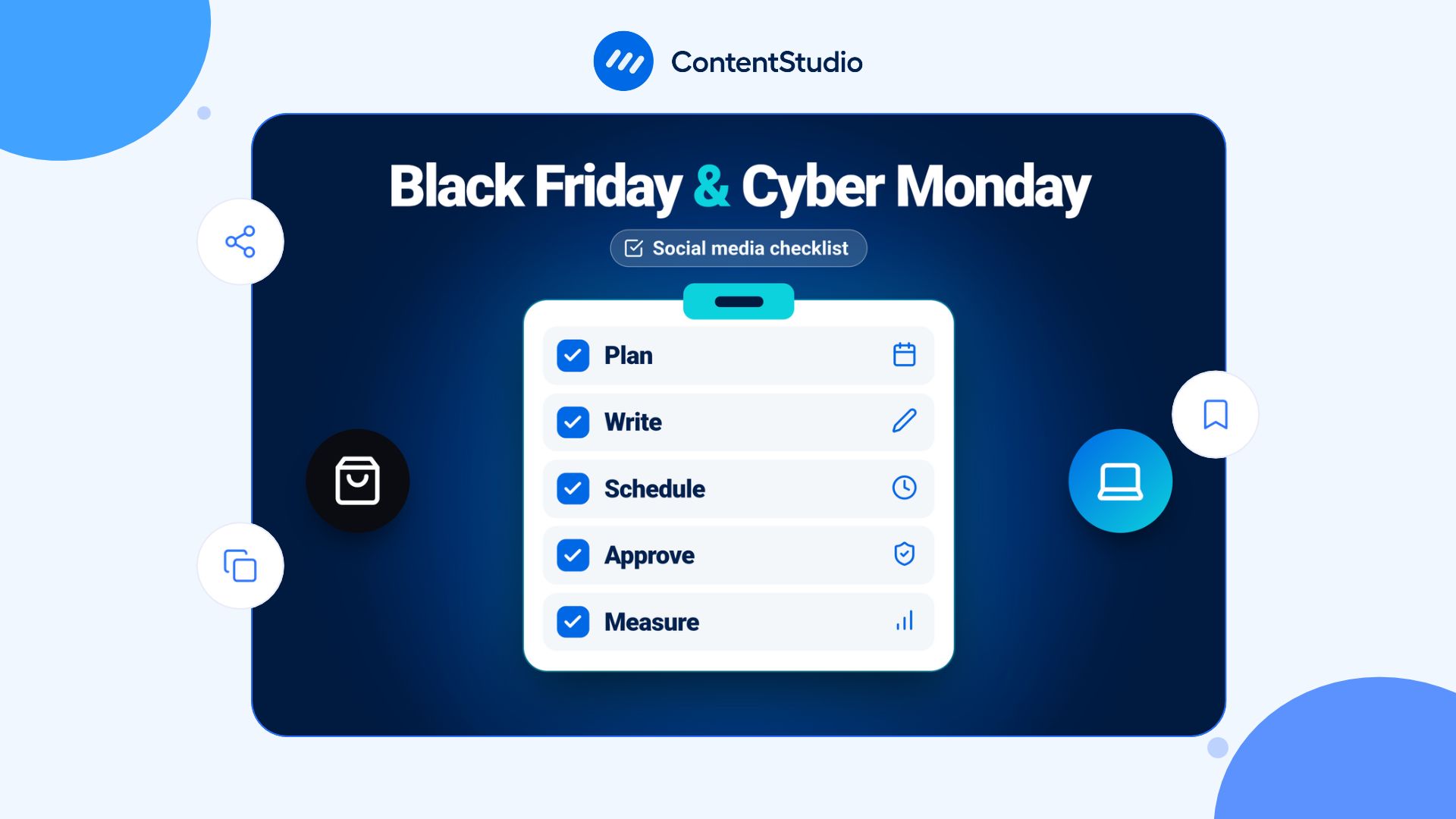
Black Friday and Cyber Monday social media checklist 2026

Cyber Monday social media post ideas: Captions, hashtags & retargeting posts