Google Business Profile marketing guide: Turn searches into customers
Nov 10, 202617 minutes

Written by
Saif AliPublished
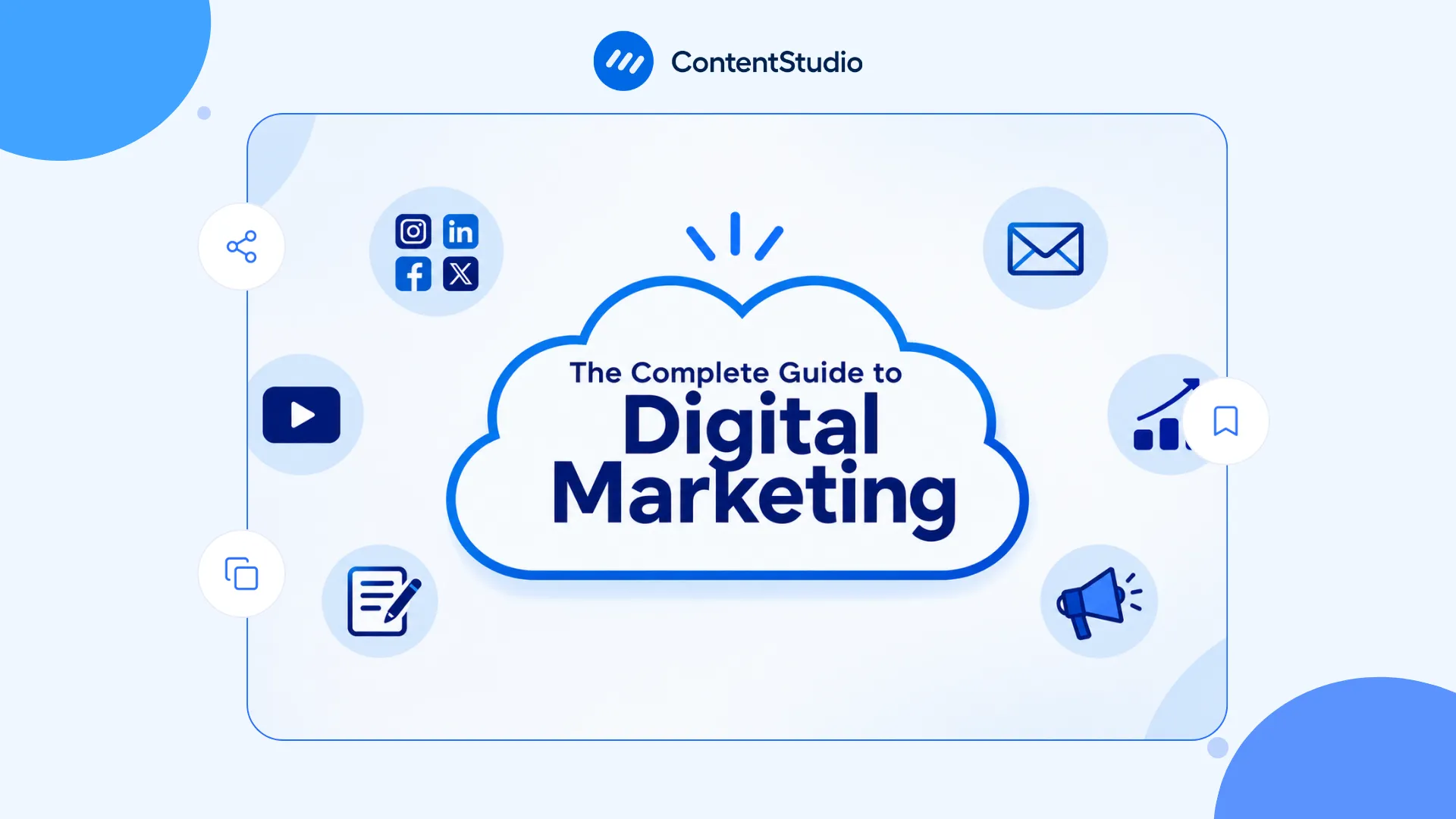
Digital marketing is the practice of promoting a brand, product, or service through online channels such as social media, search engines, email, websites, and paid ads.
It covers everything from the first post someone sees to the email that turns them into a repeat customer, and it gives brands something traditional marketing never could: the ability to reach specific people, measure what they do, and adjust in close to real time.
This digital marketing guide walks through the full picture: what digital marketing is, how to build a strategy, how funnels and calls to action fit together, how integrated and omnichannel campaigns work, how to execute and measure at scale, and what it takes to build a career in the field without burning out along the way.
| Term | What it means |
|---|---|
| Digital marketing | Promoting a brand through online channels like social media, search, email, websites, and ads |
| Marketing funnel | The stages people move through, from first hearing about a brand to buying and returning |
| Call to action (CTA) | A prompt that tells people what to do next, like “sign up,” “shop now,” or “learn more” |
| Integrated marketing | Coordinating messaging so every channel supports the same campaign and story |
| Omnichannel marketing | Giving customers a connected, consistent experience across every channel they use |
| Growth marketing | A test-driven approach focused on growth across the whole customer lifecycle |
| Niche marketing | Targeting a specific, well-defined audience instead of a broad market |
| KPI | A key performance indicator, the metric that shows whether a goal is being met |
Traditional marketing includes print ads, TV, radio, billboards, and direct mail. It can reach large audiences, but it’s hard to target precisely and harder still to measure. You often know how many people could have seen an ad, not how many actually acted on it.
Digital marketing flips that. You can target people by interest, location, behavior, or past interactions, see what they click, and change a campaign in days instead of months.
| Factor | Traditional marketing | Digital marketing |
|---|---|---|
| Targeting | Broad, based on placement | Precise, based on audience data and behavior |
| Measurement | Estimated reach | Clicks, engagement, conversions, revenue |
| Speed to adjust | Slow, often weeks or months | Fast, often days or hours |
| Cost to start | Usually high | Flexible, from free organic to scaled paid budgets |
| Interaction | One-way | Two-way, with comments, replies, and messages |
That doesn’t make traditional marketing obsolete. Many brands still use it alongside digital channels. But for most businesses, digital marketing is now where the majority of planning, testing, and budget decisions happen.
Every digital channel has a job. Search captures people who are already looking. Email nurtures people who have opted in. Ads buy reach. Social media does something a little different: it builds attention and relationships continuously, and it feeds every other channel.
A blog post gets most of its early traffic when it’s shared on social. An email list grows when social followers are invited to join it. Paid ads perform better when the brand already has a recognizable social presence. Customer questions and feedback show up in comments and DMs long before they reach a support inbox.
That’s why social media managers increasingly sit close to the center of marketing teams. Their work touches content, community, campaigns, and customer insight all at once.
Social media marketing uses platforms like Instagram, Facebook, LinkedIn, TikTok, X, YouTube, Pinterest, and Threads to build awareness, engage audiences, and drive traffic and sales.
It includes organic posting, community management, social ads, and creator partnerships.
Each platform has its own audience and culture, so the same message usually needs to be adapted rather than copied everywhere. A polished product photo on Instagram might become a quick behind-the-scenes video on TikTok and a practical insight post on LinkedIn.
Social is also the fastest feedback loop in digital marketing. Within hours of posting, you can see what people react to, what they ignore, and what they ask about.
Content marketing means creating useful, interesting content such as blog posts, guides, videos, podcasts, and newsletters that attracts and keeps an audience. Search engine optimization (SEO) helps that content get found by people searching for related topics.
Together, they build long-term, compounding traffic. A strong article can keep bringing in visitors for years, while a social post often fades within days. The two work best together: content gives social something worth sharing, and social gives content a faster start.
Email marketing reaches people who have chosen to hear from you. It’s one of the most direct channels you can own, because you aren’t depending on a platform’s algorithm to show your message.
Email works for newsletters, product updates, nurture sequences, promotions, and re-engagement campaigns. It also pairs naturally with social: social grows the list, and email turns followers into customers. Learning how to integrate social media and email marketing helps both channels do more than either could alone.
Paid advertising includes search ads, social ads, display ads, and video ads. It lets you reach specific audiences quickly, test messages, and scale what works.
The trade-off is that paid reach stops when the budget does. The strongest digital marketing strategies use ads to amplify proven content and offers, not to replace a weak organic presence.
Creator partnerships put your brand in front of audiences that already trust someone else. This can range from large influencers to small creators with highly engaged niche communities.
Smaller creators often deliver better engagement and more authentic content than bigger names, especially for niche products. Clear briefs, creative freedom, and proper disclosure make these partnerships work.
No brand needs to be everywhere. The right mix depends on your audience, your goals, your budget, and the resources you actually have. Comparing digital marketing platforms side by side helps you decide where your effort will go furthest before you commit.
| Channel | Best for | Time to see results | Main cost |
|---|---|---|---|
| Social media | Awareness, engagement, community | Weeks | Time and content creation |
| Content and SEO | Long-term traffic and authority | Months | Time and expertise |
| Nurturing and repeat sales | Weeks | List building and content | |
| Paid ads | Fast reach and testing | Days | Ad spend |
| Creators | Trust and niche reach | Weeks | Partnership fees or products |
A practical starting point for many brands is one or two social platforms, a simple content plan, and an email list, with paid ads added once you know what message and offer work.
A digital marketing strategy is the plan that decides what you’re trying to achieve, who you’re trying to reach, which channels you’ll use, and how you’ll measure success. Without one, digital marketing turns into a scattered list of posts and campaigns that are hard to evaluate.
Start with goals tied to real business outcomes, not vanity metrics. A good goal is specific enough to guide decisions and measurable enough to track.
Examples of strong goals:
Each goal should have a KPI attached. If the goal is more sign-ups, the KPI might be sign-up conversion rate from each channel. If the goal is brand awareness, it might be reach and follower growth in your target audience.
Keep the list short. Two or three clear goals beat ten competing ones.
Every part of a digital marketing plan depends on knowing who you’re talking to. That means going beyond basic demographics to understand what your audience cares about, what problems they’re trying to solve, where they spend time online, and what kind of content they respond to.
Useful sources of audience insight include:
Turn what you learn into simple audience profiles that your whole team can refer to when planning content and campaigns.
Trying to appeal to everyone usually means standing out to no one. Narrowing your focus to a well-defined audience makes your messaging sharper, your content more relevant, and your marketing spend more efficient.
Niche marketing is especially powerful for smaller brands competing against bigger players, because it lets you become the obvious choice for a specific group.
Once you know your goals and audience, choose the tactics that connect them. A brand focused on awareness might lean on social content and creator partnerships.
A brand focused on leads might combine educational content, SEO, and email nurture sequences. A brand focused on sales might prioritize retargeting ads and promotional emails.
There are dozens of proven digital marketing strategies, from content-led growth to referral programs, and the right ones depend on where your business is today. Start with a few you can execute well, measure them, and expand from there.
A strategy becomes real when it turns into a schedule. Map out your themes, campaigns, and recurring content on a shared content calendar so everyone can see what’s going out, where, and when.
A good digital marketing plan includes:
Review the plan monthly. Strategy isn’t something you set once a year and forget.
Getting attention is only half the job. The other half is guiding people from interest to action. That’s where funnels and calls to action come in.
The marketing funnel describes the stages people move through on their way to becoming customers. Different content and channels work best at different stages.
| Funnel stage | What people need | Content and channels that work |
|---|---|---|
| Awareness | To discover your brand exists | Social posts, short videos, creator content, SEO articles |
| Consideration | To understand if you can help them | Guides, comparisons, webinars, case studies, email nurture |
| Conversion | A reason to act now | Offers, demos, free trials, retargeting ads, product pages |
| Retention | A reason to stay and buy again | Onboarding emails, community, support, loyalty offers |
| Advocacy | A reason to recommend you | Referral programs, user-generated content, reviews |
Most brands put too much effort into awareness and too little into the stages that actually drive revenue. When a funnel is underperforming, the fix is usually at a specific stage rather than across the board.
It helps to optimize the marketing funnel one stage at a time, starting with wherever the biggest drop-off happens.
Every piece of digital marketing content should have a clear next step. That next step is the call to action. Strong CTAs in marketing are specific, action-focused, and matched to where the person is in the funnel.
A few principles that make CTAs work:
Social media often drives awareness, but it can do much more when it’s connected to the rest of the funnel. Link posts to useful content and landing pages, use social to grow email lists, retarget engaged followers with relevant offers, and track which posts send visitors who actually convert.
When social is measured only by likes, it looks like a branding exercise. When it’s measured by its role in the funnel, it becomes a clear part of how the business grows.
As brands add channels, a new problem appears: inconsistency. The website says one thing, social says another, email promotes a third offer, and customers get a fragmented experience. Integrated and omnichannel approaches solve that.
An integrated marketing campaign uses several channels to deliver one consistent message toward one goal. A product launch, for example, might combine teaser posts on social, a launch email, a blog post explaining the product, creator content, and retargeting ads, all built around the same core story and visual identity.
The benefits are clear: each channel reinforces the others, audiences hear the same message in several places, and results are easier to evaluate because everything ties back to one campaign goal.
Integrated marketing focuses on campaigns. Omnichannel marketing focuses on the customer experience as a whole. The goal is for someone to move between your website, social profiles, emails, ads, and even physical stores without feeling like they’re dealing with different companies.
That means consistent branding, shared customer information where possible, and messaging that picks up where the last interaction left off. Someone who asked a question in your DMs shouldn’t have to explain it all over again in an email.
Consistency doesn’t mean posting the same thing everywhere. It means keeping the core message, tone, and visual identity aligned while adapting the format to each channel.
Practical ways to stay consistent:
Growth marketing takes a more experimental, full-funnel approach than traditional marketing. Instead of focusing mainly on awareness, it looks for growth opportunities across acquisition, activation, retention, revenue, and referral, and it uses quick tests to find what works.
A growth mindset in digital marketing looks like:
As a business grows, what worked with a handful of customers often stops working at a larger scale. Manual processes become bottlenecks, one-person marketing teams get overloaded, and channels that were easy to manage become complicated.
Practical steps to grow your online business through digital marketing include building repeatable processes, documenting what works, investing in tools that save time, and adding people or partners where the workload is heaviest. Growth should make your marketing more organized, not more chaotic.
A strategy is only as good as the system that carries it out. As digital marketing grows across more channels, more content, and more people, the way work gets done starts to matter as much as what gets done.
Posting manually across several social platforms every day is one of the fastest ways to fall behind. Using a social media scheduler lets teams plan posts in advance, publish at the right times for each audience, and keep channels active without someone logging in to every platform throughout the day.
For campaigns with a lot of content, bulk scheduling takes this further, letting you load a week or month of posts in one sitting and spend the rest of your time on strategy, creative work, and engagement.
Publishing is only one side of social media marketing. Comments, replies, mentions, and direct messages are where relationships, support conversations, and buying questions happen.
When those conversations are spread across many platforms and accounts, messages get missed. A unified social inbox brings them into one place, so teams can respond faster, assign conversations to the right person, and keep a consistent tone across every channel.
Digital marketing becomes a team sport fast. Writers, designers, social media managers, marketing leads, and sometimes clients all touch the same content before it goes live.
A clear social media approval workflow makes sure every post is reviewed by the right people before it publishes, without endless email threads or last-minute surprises. For teams handling several brands, departments, or clients, separate workspaces keep each one’s content, assets, and team members organized so nothing gets mixed up.
| Tool category | What it helps with |
|---|---|
| Social media management | Planning, scheduling, publishing, engagement, and reporting in one place |
| Content creation | Designing graphics, editing videos, and writing copy |
| Email marketing | Building lists, sending campaigns, and automating sequences |
| SEO tools | Researching keywords, tracking rankings, and auditing websites |
| Analytics | Measuring traffic, conversions, and campaign results |
| Project management | Coordinating tasks, deadlines, and team responsibilities |
The goal isn’t to collect as many tools as possible. It’s to remove friction from the work that slows your team down most.
Many teams start by consolidating their social media work into a single platform like ContentStudio, since social tends to involve the most platforms, posts, and conversations to manage day-to-day.
You don’t need a large budget to start digital marketing, but you do need to be deliberate about where time and money go.
Organic channels like social media, content, and SEO mostly cost time. Paid ads and creator partnerships mostly cost money. A sensible starting point is to build a steady organic base first, then add paid spend once you know which messages and offers already resonate.
A simple way to think about allocation:
Smaller budgets reward focus. Pick the channel where your audience is most active, repurpose every strong piece of content across several formats, and only put money behind posts and offers that have already proven themselves organically. Reinvest in whatever produces the best return, and cut what doesn’t.
AI has become part of everyday digital marketing work, from drafting copy to analyzing performance. Used well, it saves hours of repetitive effort. Used carelessly, it produces generic content that audiences scroll past.
AI doesn’t know your brand voice, your customers, or your business goals the way your team does. Anything public-facing still needs a human edit for tone, accuracy, and judgment, especially posts tied to sensitive topics, current events, or customer complaints. Treat AI as a fast assistant, not an autopilot.
Digital marketing’s biggest advantage is that almost everything can be measured. The challenge is measuring the right things and acting on them.
| Funnel stage | Metrics to watch |
|---|---|
| Awareness | Reach, impressions, follower growth, video views |
| Consideration | Engagement rate, click-through rate, time on page, email sign-ups |
| Conversion | Conversion rate, leads, sales, cost per acquisition |
| Retention | Repeat purchases, churn rate, email engagement |
| Advocacy | Referrals, reviews, user-generated content, shares |
Track metrics that connect to your goals. If your goal is leads, follower count matters far less than how many visitors from social actually sign up.
To know which channels and posts drive results, tag your links with UTM parameters, set up conversion tracking on your website, and keep naming conventions consistent across campaigns.
Without this, social media and email traffic often show up as unclear sources in your analytics, and their real impact gets underestimated.
Reports should answer three questions: what happened, why it happened, and what you’ll change next. A good monthly report covers progress toward goals, top-performing content, underperforming channels, and a short list of actions for the coming month.
Share wins, but be just as clear about what isn’t working. Honest reporting builds trust with leadership and clients and keeps the strategy improving.
Digital marketing rewards people who combine creative and analytical thinking. The tools change constantly, but the underlying skills stay valuable.
The most valuable digital marketing skills include:
Social media managers need many of the same skills, plus a few that are specific to the role. Strong social media manager skills include platform expertise, community management, trend awareness, visual and video content creation, crisis handling, and the ability to turn social data into useful insights for the wider team.
The best social media managers also understand the full funnel. They know how social content supports email, SEO, ads, and sales, which makes them far more valuable than someone focused only on posting.
Certifications aren’t required to work in digital marketing, but they can help you learn structured skills, prove knowledge to employers or clients, and stay current.
Many social media marketing certifications are free or low-cost and cover areas like social advertising, analytics, content strategy, and platform-specific skills.
Treat certifications as a complement to real experience, not a replacement for it. A portfolio of results usually matters more than a list of badges.
There are several ways to build a career in digital and social media marketing, each with its own trade-offs.
| Career path | What it looks like | Best for |
|---|---|---|
| In-house marketer | Working on one brand’s marketing as part of an internal team | People who want depth, stability, and team support |
| Agency marketer | Managing marketing for several clients at once | People who enjoy variety and fast-paced work |
| Freelancer | Working independently with your own clients | People who want flexibility and control over their work |
| Consultant | Advising businesses on strategy rather than doing all the execution | Experienced marketers with strong strategic skills |
Going freelance offers flexibility but requires business skills like pricing, sales, and client management alongside marketing expertise.
Becoming a freelance social media manager is a common first step for marketers who want more independence. Those with deeper strategic experience often move toward advisory work and learn how to become a social media consultant, helping businesses shape their strategy rather than running every post themselves.
Whether you’re applying for jobs or pitching clients, a strong portfolio shows what you can actually do. A good social media manager portfolio includes real campaign examples, before-and-after results, the strategy behind your work, and samples of your content across different platforms.
Focus on outcomes, not just outputs. “Grew engagement and doubled newsletter sign-ups from social” says much more than “Posted daily on Instagram.”
Interviews for digital marketing and social media roles usually test strategy, creativity, platform knowledge, and how you handle data and pressure. Reviewing common social media manager interview questions helps you prepare clear, specific answers backed by real examples from your work.
Expect questions about campaigns you’ve run, how you measure success, how you’d handle a negative comment going viral, and which trends you’re watching right now.
Digital marketing, and social media in particular, never fully switches off. Notifications arrive at all hours, trends move fast, and there’s always another post to plan. Without boundaries, that pace wears people down.
Common signs of burnout include constant exhaustion, losing interest in work you used to enjoy, feeling anxious about notifications, and struggling to come up with ideas.
Learning practical social media burnout tips can help you catch these signs early and make changes before they become serious.
Stepping away from social platforms, even briefly, helps you reset and come back with fresh ideas. A planned social media break, with content scheduled in advance and clear coverage for engagement, lets you rest without your channels going silent.
Much of the stress in digital marketing comes from repetitive, manual work and last-minute scrambling. Systems reduce both.
Sustainable marketing beats heroic marketing. A steady, well-organized process produces better results over time than bursts of effort followed by exhaustion.
| Week | Focus | Key actions |
|---|---|---|
| Week 1 | Foundation | Set two or three goals and KPIs, define your audience, review your current channels and results |
| Week 2 | Strategy | Choose your channel mix, define content pillars, decide on one integrated campaign to run |
| Week 3 | Systems | Build a content calendar, set up scheduling, organize engagement and approval workflows |
| Week 4 | Launch and measure | Publish consistently, set up tracking, review early results, and adjust your plan |
Treat the first month as groundwork. The real gains in digital marketing come from repeating, measuring, and improving over the months that follow.
Digital marketing works best as a connected system: clear goals, a well-defined audience, a focused channel mix, content that moves people through the funnel, consistent messaging across every touchpoint, and a reliable process for executing and measuring all of it.
Social media often sits at the center, linking content, community, campaigns, and customer insight.
Whether you’re a brand building your first real plan, a team trying to get more organized, or a social media manager growing your career, the same principles apply. Start with strategy, keep things consistent, measure honestly, and build systems that make the work sustainable.
Pick one goal, one or two channels, and one campaign to start with this month. Get those working well, then expand. That steady, focused approach is how most successful digital marketing actually gets built.
Digital marketing is the promotion of a brand, product, or service through online channels such as social media, search engines, email, websites, and paid ads. It lets businesses target specific audiences, measure results, and adjust campaigns quickly.
The main types of digital marketing are social media marketing, content marketing, SEO, email marketing, paid advertising, and influencer or creator marketing. Most successful brands combine several of these into one connected strategy.
Start by setting two or three clear goals, defining your target audience, and choosing one or two channels where that audience spends time. Then build a simple content calendar, publish consistently, and track results so you can improve over time.
A digital marketing strategy is a plan that defines your goals, target audience, channels, content approach, and how you’ll measure success. It turns scattered online activity into a coordinated effort tied to business results.
Social media is important because it builds awareness, drives engagement, distributes content, and supports every other channel. It’s often where audiences first discover a brand and where early feedback on campaigns appears.
Key digital marketing skills include strategic thinking, content creation, copywriting, SEO basics, data analysis, paid advertising, and clear communication. Social media managers also need platform expertise and community management skills.
Integrated marketing coordinates several channels to deliver one consistent message for a specific campaign. Omnichannel marketing focuses on giving customers a connected, consistent experience across every channel throughout their entire relationship with a brand.
Measure digital marketing success with metrics tied to your goals, such as reach and engagement for awareness, click-through and sign-up rates for consideration, and conversions and revenue for sales. Tracking links and conversion tools help connect each channel to results.
Yes. Many digital marketers and social media managers build careers through hands-on experience, online courses, certifications, and a strong portfolio of real results. Employers and clients often value proven outcomes more than formal qualifications.
Avoid burnout by batching content creation, scheduling posts in advance, setting clear boundaries around notifications and response times, sharing workload with teammates, and taking planned breaks from social platforms.
Saif Ali is a Content Marketing Strategist at ContentStudio with over five years of experience across SaaS, IT, and digital marketing. He specializes in SEO-led content, AI content creation, and social media strategy, and leads editorial review at ContentStudio, fact-checking and refining articles for accuracy, SEO, and a consistent brand voice.
View all posts by Saif AliRecommended for you
Google Business Profile marketing guide: Turn searches into customers
YouTube marketing guide to content, campaigns, and results
Black Friday vs. Cyber Monday: The real difference for software buyers
Black Friday social media post ideas: Captions and posting plan for 2026